Menukishi — The Specialist Craftsmen and Technical System of the Small Carved Metal Decorations That Adorn the Tsuka
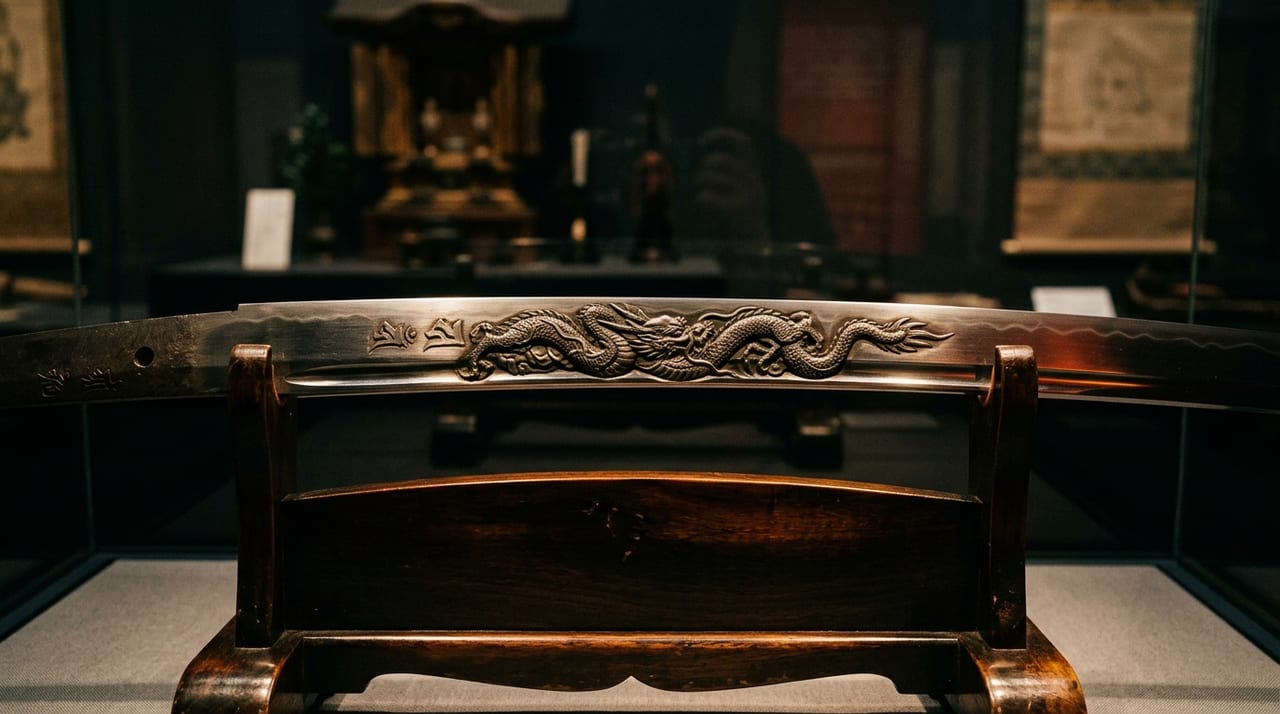 * Image is for illustrative purposes only.
Table of Contents
What Kind of Craftsman Is a Menukishi?
A "menukishi" is a metal-working craftsman who specializes in making "menuki" for attachment to the tsuka (hilt) of a Japanese sword. Menuki are small metal decorations attached to both faces of the tsuka, crafted from materials such as copper, shakudō, gold, and silver, and carved with a wide variety of subjects including plants, animals, mythology, and armor. Among tōsōgu (sword fittings), they were especially visible and were prized as items that directly expressed a warrior's taste, cultivation, and family standing.
Menuki are often placed where the fingers rest when gripping the tsuka, and they are not merely decorative — they also relate to the feel of the grip. For this reason, menukishi were required not only to have the creative vision to develop pictorial designs, but also to attend technically to ensuring that the height of the carving and the finish of the edges did not compromise the actual feel of the grip.
The Function and Structure of Menuki
Menuki serve both decorative and practical roles.
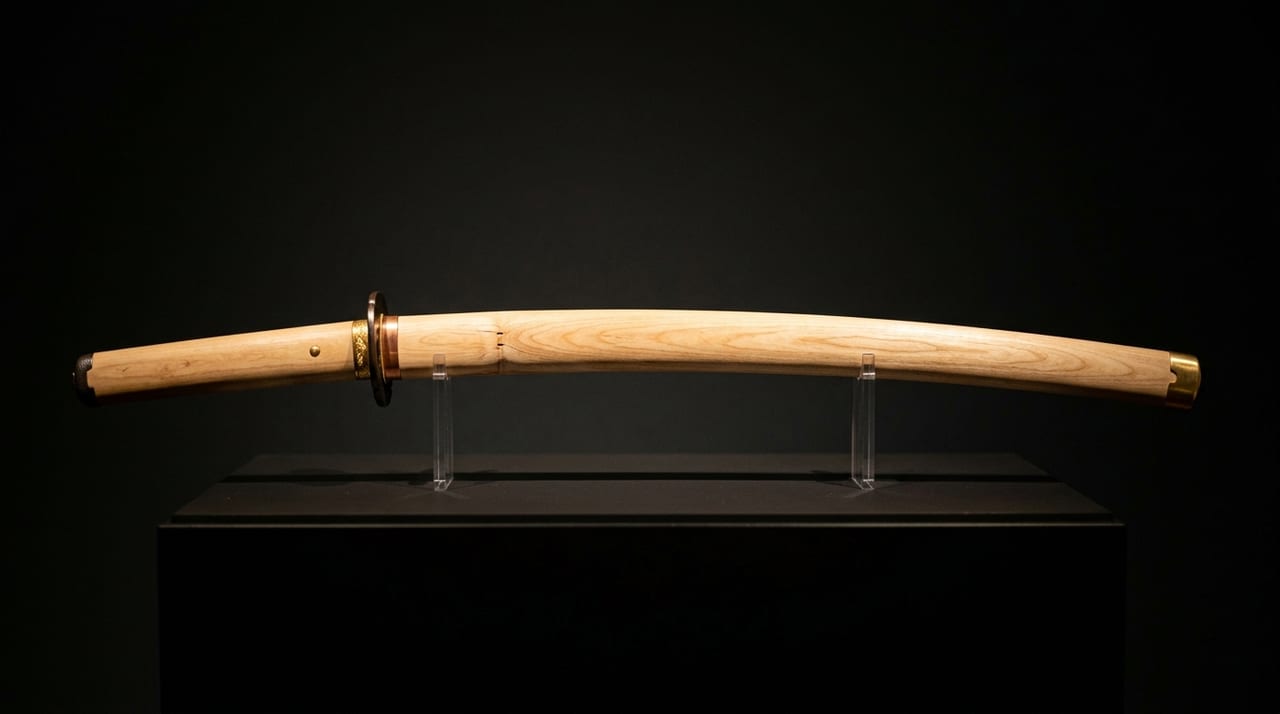
Practical function: The tsuka is made by hollowing out wood (often magnolia) and inserting the nakago (tang); a "mekugi" — a small pin of bamboo or antler — is inserted into this wooden tsuka to secure the nakago. Menuki are thought originally to have been metal fittings for decorating and reinforcing the head of this mekugi (or the area around the mekugi hole).
Decorative function: In practice, a single mekugi is sufficient for securing the nakago, but as warriors' aesthetic sensibilities developed, menuki increasingly took on meaning as pure craft objects and personal ornaments. Especially in the Edo period (a time of peace), a culture matured of treating swords more for etiquette and status display than actual combat, and menuki underwent increasing refinement and artistic elaboration.
Menuki as Part of the Mitokoromono
Menuki, kōgai (attached to the tsuka), and kozuka (housed in the saya) could be matched in design and made as a set; these three pieces together are called "mitokoromono." A mitokoromono by the same artist on the same subject has long been prized as giving unity to the design of the tsuka and the saya as a whole. Most menukishi are thought to have been involved not only in designing individual menuki, but also in the overall design of a set including kōgai and kozuka.
Major Schools and History of Menukishi
Many schools were established in the Edo period in the world of tōsōgu metal working, which includes menukishi.
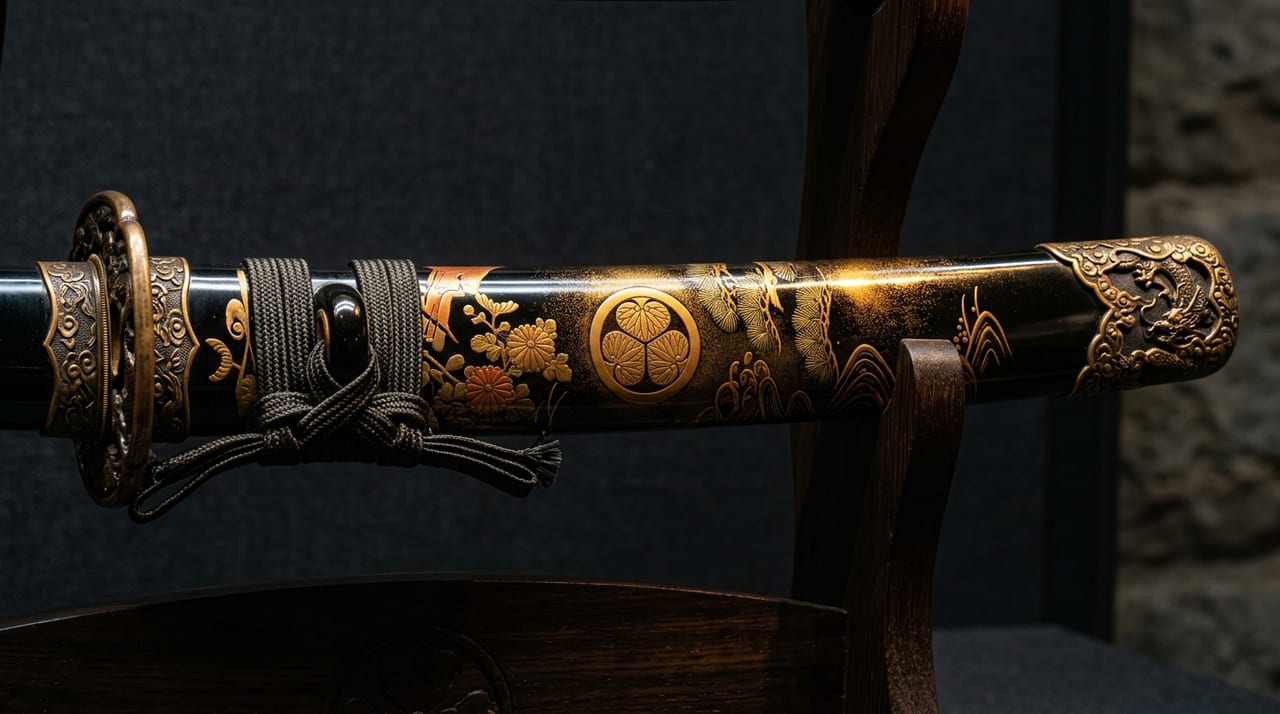
The Gotō family (Gotōke): Founded at the end of the Muromachi period by Gotō Yūjō (1440–1512). A prestigious school in official service to the shōgun and daimyo households; their "Gotō-bori" style — high-relief gold work on a black lacquer ground applied to menuki, kozuka, kōgai, and other pieces — received the highest acclaim. The Gotō family continued for successive generations as officially commissioned metal workers to the Edo shogunate, and their works bearing the mei (signature) are highly regarded to this day.
Menukishi of the nanban tsuba-smith lineage: Some metal workers incorporated nanban designs (Western patterns) that came to Japan during the Momoyama period, and subjects with an exotic nanban character appeared in menuki as well.
The Three Great Menukishi of Edo: In the late Edo period, prominent menukishi from various regions established their own schools and styles, distinguished by names such as "X-bori." While inheriting the legacy of the Momoyama period, freer and more playful designs became more prevalent.
The differences between such schools often manifest — even when handling the same subject — in the choice of ground metal, the depth of carving, and the treatment of contours, and these serve as one of the clues when comparing extant pieces.
The Technical System of Menuki Production
The main materials and techniques used by menukishi are as follows.
Materials:
- Shakudō: An alloy of copper with a small amount of gold, which develops a deep black color like black lacquer. The most commonly used material in Japanese tōsōgu.
- Shibuichi: An alloy of copper with one-quarter silver, which develops a blue-grey color.
- Gold, silver, and copper: Precious metals of high purity were also used directly as materials for menuki.
Main techniques:
- Takabori: A technique of carving in three-dimensional relief. Frequently used for motifs such as animals, dragons, and waves.
- Hirazōgan: A technique of inlaying different metals into grooves in the metal surface. Combining gold, silver, shakudō, and other materials achieves rich polychromatic expression.
- Nunomezōgan: A technique of engraving fine cloth-texture-like grooves in the surface and hammering in gold or silver foil. Enables intricate pattern expression.
- Nikubori: A technique of raising patterns by removing mass from the material. The subtle adjustment of line width and depth determines the expressive character of the work.
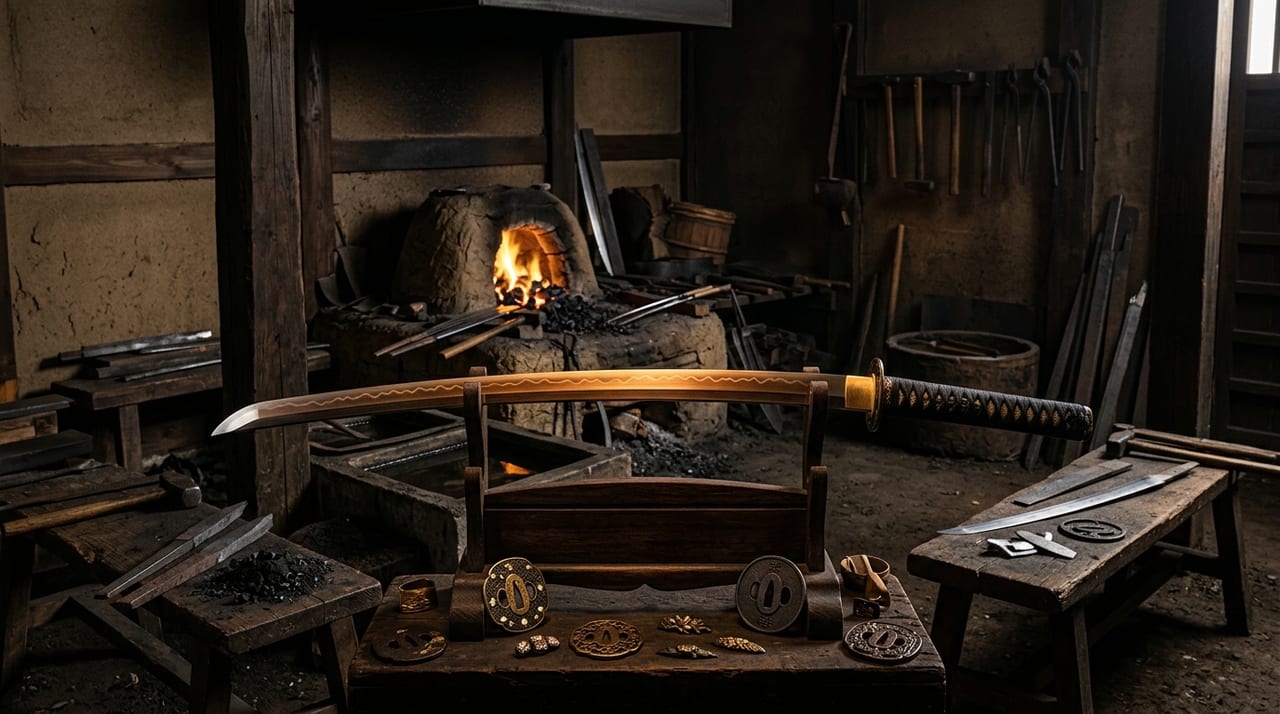
A General Overview of How Menuki Are Made
The production of menuki begins with deciding on a subject and refining a preliminary sketch. Next, the ground metal is chosen and the base form of the menuki is raised from sheet or block material. Takabori and nikubori are applied to the base using chisels (tagane), and zōgan is incorporated as needed to combine metals of different colors. Finally, coloring and finishing appropriate to the quality of the ground metal are performed, and a backing plate called "tomo-gane" is fitted to the reverse side to complete the piece. Since specialized skill is required at each stage of the process, there are said to have been workshops that divided the labor of sketching, carving, and finishing among different hands.
The Design of a Pair (Ittsui)
Menuki are always made in "front-and-back pairs (omote-ura ittsui)." They are attached to the front of the tsuka (the face that turns outward when the sword is worn) and the back (the face toward the body), and are evaluated as a set. While they form a pair, they are not identical; the interesting feature is that the subject and composition are designed to have a symmetrical and complementary relationship between front and back. For example, in a pair depicting "hawk and pine," the front menuki shows the hawk facing left, while the back shows it facing right, calculated so that the whole forms a single scene when the tsuka is held.
When appreciating a pair of menuki, looking not only at one face but considering whether a single story or scene is completed across front and back together makes it easier to read the designer's intent.
Menukishi in the Modern Era
In modern Japan, craftsmen working exclusively as menukishi are extremely rare. The more common form is for metal workers who handle tōsōgu in general to also produce menuki. Under the Agency for Cultural Affairs' designation systems for "Intangible Cultural Properties" and "Traditional Craftsmen," tōsōgu metal working is a protected category, but the shortage of successors is a serious challenge. On the other hand, the market for collecting and appreciating traditional menuki persists strongly both within Japan and abroad, and outstanding Edo-period pieces are traded at high prices at international auctions. The techniques of menukishi are one of the most concentrated expressions of the Japanese aesthetic sensibility and craftsman's spirit residing in a small piece of metal.
Basics of How to Look at and Appreciate Menuki
When appreciating menuki, the subject and composition are the first things that draw the eye, but the texture of the ground metal and the sharpness of the carving line are also important clues. For shakudō, one looks at whether a uniformly deep, lacquer-like black color has developed evenly; for takabori, whether the lines of the three-dimensional raised areas are maintained without sagging — the condition of the details is both a highlight of the work and a basis for judging the state of preservation. When a mei (signature) is present, it is best to appreciate it, including the position and method of engraving, as part of the overall design of a set.
Practical Points When Selecting and Owning Menuki
Since menuki are metal craft objects, their condition changes easily depending on how they are handled. The black color of shakudō is not natural rust but a color developed through treatment, so rubbing hard with abrasives or a stiff cloth when cleaning can damage the coloring itself. When picking them up, oils from bare hands adhere easily to the metal surface, so it is considered advisable to handle them through a dry, soft cloth. For storage, since verdigris (rokushō) and discoloration can easily occur in humid places, the basic practice is to store them in a dry environment in a breathable container such as a paulownia wood box.
When purchasing or owning menuki, as with sword blades, kanteisho (appraisal certificates) may be issued by appraisal organizations for tōsōgu as well, and at the time of purchase it is a practical guideline to confirm whether a kanteisho is present and to check the period and authorship assessment written therein. Furthermore, since the perspective of evaluation also differs depending on whether it is a single menuki or a complete mitokoromono set including kōgai and kozuka, it is advisable to confirm the composition before purchase.