The Science of Orikaeshi Tanren (Forge Folding) — The Kaji Technique That Creates the Strength and Beauty of the Nihontō
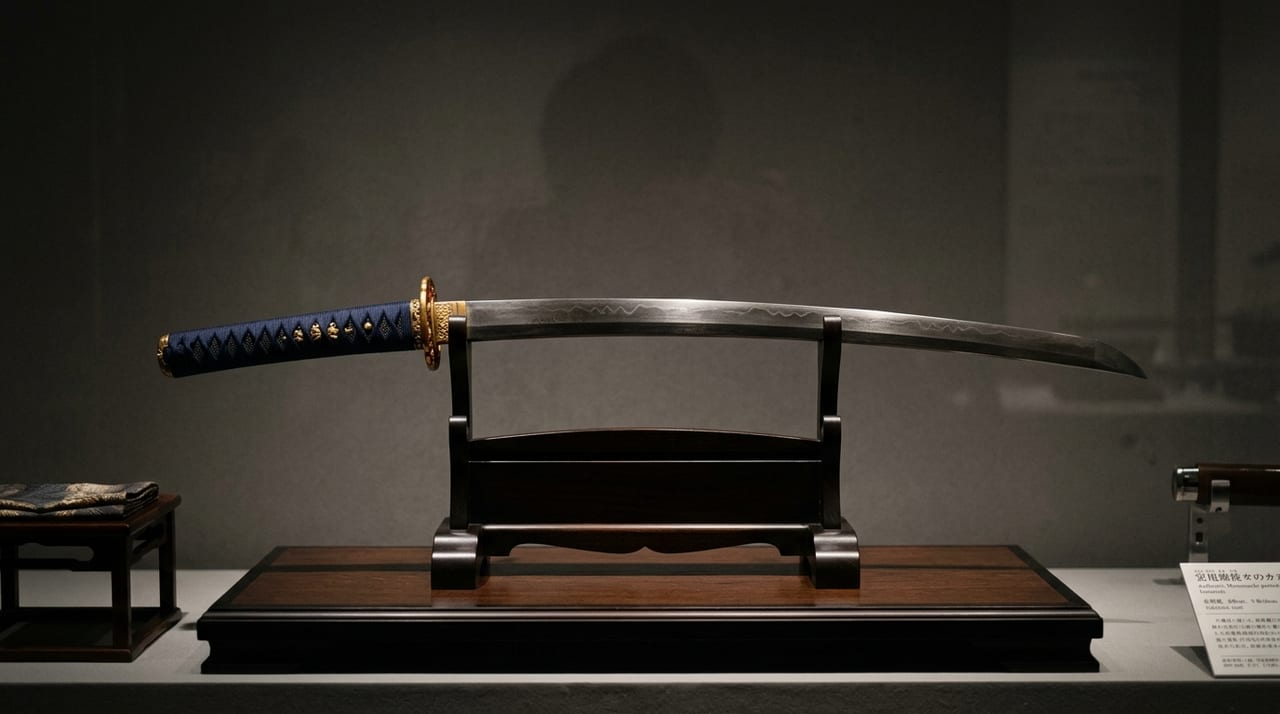 * Image is for illustrative purposes only.
Table of Contents
What Is Orikaeshi Tanren?
Orikaeshi tanren is a kaji technique in which tamahagane is repeatedly folded and hammered while being heated. In English it is called "forge folding" or the "folding process," and it is considered one of the most important and distinctive steps in making a nihontō.
The purpose of this process centers on three main points.
- Removal of impurities: Squeezing out impurities such as slag (furnace dross)
- Homogenization of carbon content: Making the non-uniform carbon distribution in tamahagane uniform
- Formation of fibrous steel structure: Creating a tough and beautiful steel structure (jihada)
Details of the Process
1. Kowari and Tsumiwakashi
First, tamahagane is broken into small pieces, and pieces with higher and lower carbon content are selected and combined. This is called tsumiwakashi. The detailed preparatory process is explained in Mizuheshi and Kowari.
The selected pieces of tamahagane are stacked, heated to 1,200–1,300°C, and struck together to form the initial "mass."
2. Repetition of Orikaeshi (Folding)
The heated steel is drawn out by hammering with iron hammers (large and small mallets) on an anvil (kanatoko), then folded at the edge and forge-welded and hammered again. This operation is repeated.
Number of Folds and Layers
| Number of folds | Number of layers |
|---|---|
| 10 | 1,024 |
| 12 | 4,096 |
| 15 | 32,768 |
| 20 | 1,048,576 (theoretical value) |
In actual sword forging, approximately 10 to 15 folds is the norm. More than 20 folds are not performed, as too much carbon is lost through combustion and oxidation.
3. Mechanism of Impurity Removal
As heating and striking are repeated, non-metallic inclusions such as slag collect at the forge-weld interfaces and are squeezed out. The impurities contained in 1 kg of tamahagane are ultimately reduced to a few tens of grams.
4. Carbon Homogenization
The carbon in tamahagane is unevenly distributed, with high-carbon and low-carbon zones. As folding progresses, carbon atoms redistribute within the crystal lattice of the steel, making the whole uniform.
Awasewaza: The Structure of Kawagane and Shingane
The steel produced by orikaeshi tanren is used selectively according to its purpose.
Kawagane (Jacket Steel)
A high-carbon steel that is hard and responsible for the cutting sharpness of the blade. It is used on the outside of the blade.
Shingane (Core Steel)
A low-carbon steel (or soft iron) that is tough and resistant to breaking. It is used inside (at the core) of the blade.
Structure of Awasewaza
In honsanmai, one of the representative structures, the steel is arranged as follows.
- Outside: kawagane (hard; forms the edge, spine, and sides)
- Inside: shingane (tough; prevents breaking)
This combination of different steels gives rise to the nihontō's unique properties, achieving both "a hard and sharp edge" and "tough resilience that does not break."
Formation of Jihada Patterns
As the final result of orikaeshi tanren, characteristic jihada patterns appear on the surface of the blade. The jihada divides into four basic patterns depending on the direction and method of folding and differences in steel quality.
| Jihada pattern | Characteristics | Representative school |
|---|---|---|
| Itame | A flowing pattern resembling the flat grain of a wooden board | Sōshū-den · Bizen-den |
| Mokume | A complex pattern resembling wood grain with burls | Yamato-den |
| Masame | Fine parallel straight-line pattern | Yamashiro-den |
| Ayasugi | Sawtooth pattern resembling a cedar tree | Dewa swords (Gassan school, etc.) |
The beauty of the jihada is an important element of nihontō appreciation and is also one of the criteria used in appraisal.
Orikaeshi Tanren from a Scientific Perspective
Analyzing orikaeshi tanren from the perspective of modern materials science reveals the following effects. The steel microstructure itself is explained from the basics in Ferrite, Pearlite, and Martensite.
- Grain refinement: Repeated working and recrystallization reduce the crystal grain size, improving toughness
- Control of inclusion morphology: Slag inclusions become elongated and finer, making them less likely to serve as crack initiation sites
- Imparting directional orientation to the microstructure: The fibrous microstructure aligns along the long axis of the blade, increasing resistance to chipping
These effects are consistent with modern metallurgical knowledge. It is shown that the traditional technique cultivated through experience also has scientific rationale.
Summary
Orikaeshi tanren is not merely "the act of striking iron." It is a precise materials-engineering process that simultaneously achieves the removal of impurities, control of the microstructure, and the combining of different steels. It is precisely because of this technique that the nihontō exists as a cutting instrument of rare distinction in the world — one that combines both beauty and strength.