The Birth of Shinshin-to and Mito Thought—The Bakumatsu Sword Revival Movement, Yamaura Kiyomaro, and the Ikeda-ya Incident
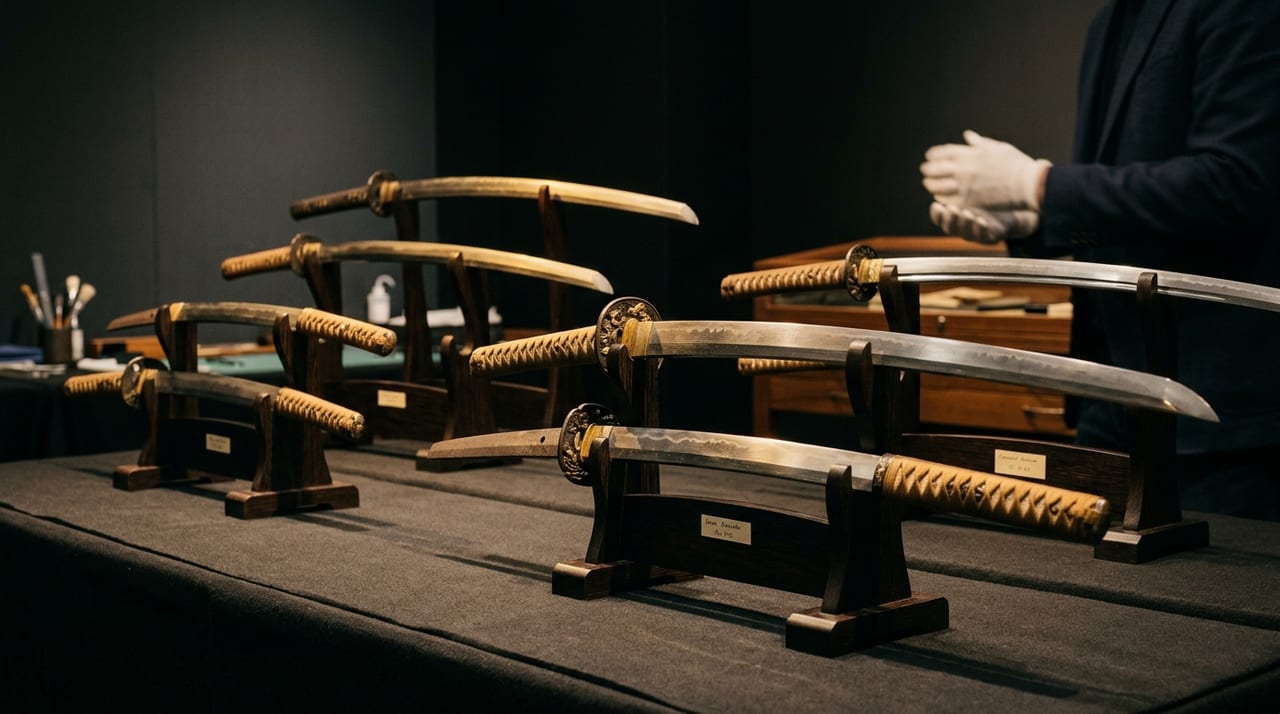 * Image is for illustrative purposes only.
Table of Contents
Background of Sword Revival—The Influence of Mito School and Kokugaku
From the mid-Edo period onward, amid a long period of peace, the interest in swords among the samurai class transformed from practical consideration to formal and decorative concerns. However, when the 19th century arrived, a significant change came to this trend. Behind this were the rise of two intellectual movements: the "Mito School," which developed centered on the Mito domain, and "Kokugaku" (Study of National Learning), systematized by scholars such as Motoori Norinaga.
The Mito School was an academic movement that began with the compilation of the "Dai Nihon Shi" (History of Great Japan) under the direction of Tokugawa Mitsukuni (Mito Komon), and in the 19th century it bore fruit as loyalist and exclusionist thought through scholars such as Fujita Yukoku, Fujita Tōko, and Aizawa Seishisai. "Shin Ron" (New Treatise), written by Aizawa Seishisai in 1825, was a treatise that advocated reverence for the Emperor and exclusion of foreign enemies in light of the approach of foreign ships, and was read and passed down through many patriots. In this ideology, the Japanese sword was reevaluated not merely as a weapon, but as a symbol of Shinto sanctity and the spirit of bushido.
Kokugaku, too, in seeking a return to ancient Japanese culture and spirituality, fostered a spiritual climate that revered swords as "the soul of warriors." With these intellectual currents combining, momentum rapidly grew among the samurai for "a return to old swords" and "spiritual revival of the sword."
The Birth and Characteristics of Shinshin-to
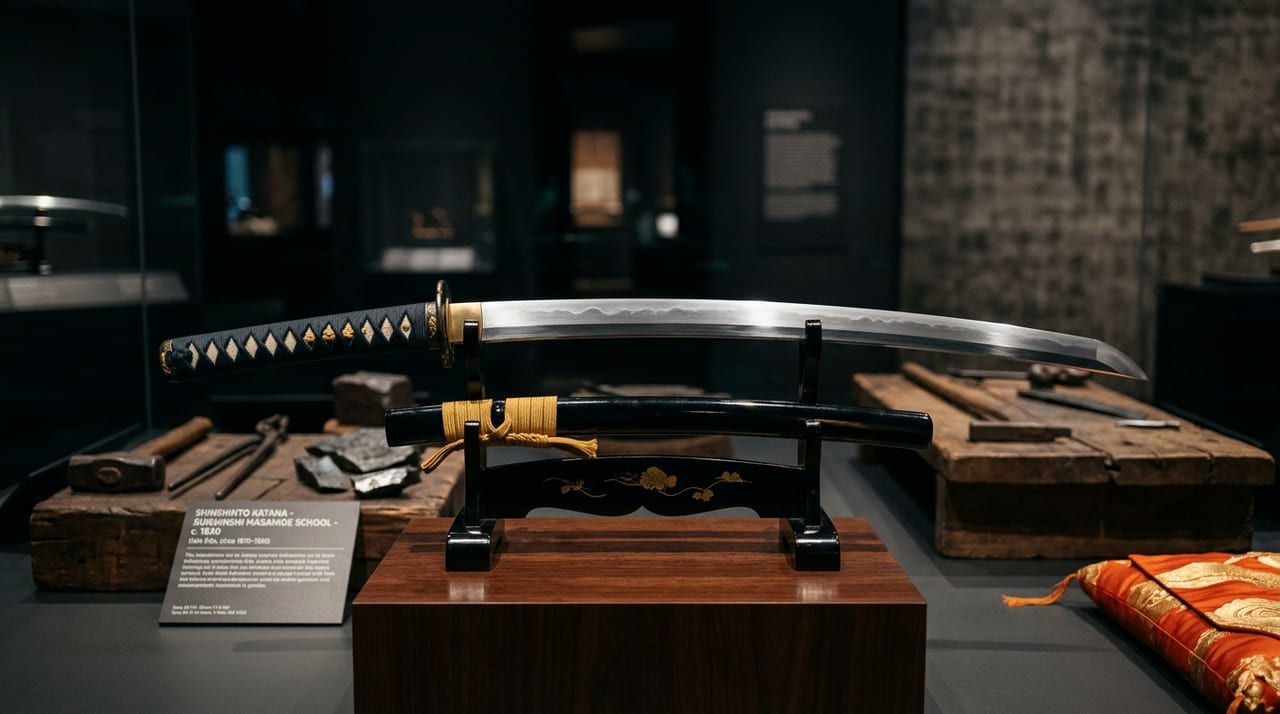
The history of swords in the Edo period is broadly divided into three periods: "Kotō" (old swords), "Shintō" (new swords), and "Shinshin-tō" (newest swords).
- Kotō: swords from before the Muromachi period
- Shintō: swords from the Keicho era (1596) onward
- Shinshin-tō: swords created from the Bunka and Bunsei eras (approximately 1804–1830) onward
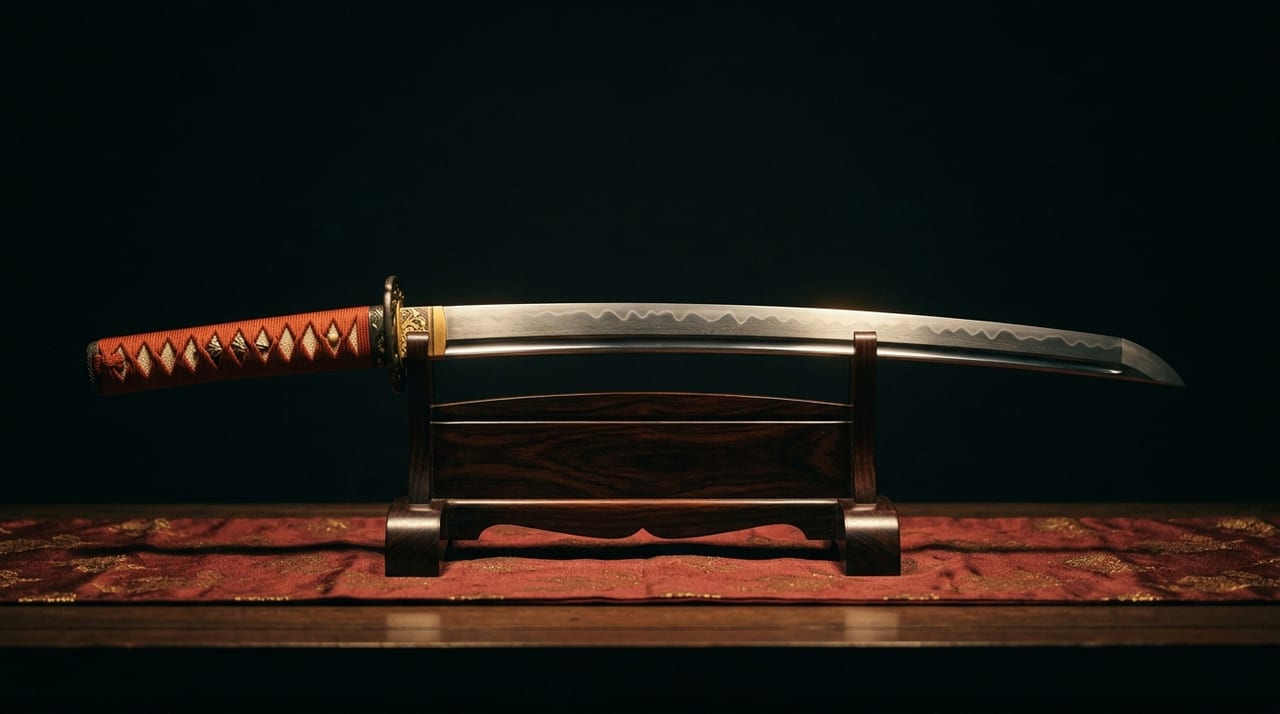
The shinshin-tō swordsmiths aimed at restoring the technical essence of kotō swords that had been forgotten throughout the Edo period. In particular, the recreation of the "gunome midare-ba" (cluster-of-eyes irregular blade) and the "strong nie in the jigane" (steel base) seen in swords from the Kamakura and Nanboku-cho periods was pursued. This was not merely a technical revival, but also aimed at a spiritual "resurrection of martial prowess."
A commitment to materials was also a major characteristic of shinshin-tō. Many swordsmiths abandoned the Western iron and refined iron that had proliferated since the early modern period, and insisted on using tamahagane made by the ancient "tatara" (traditional iron furnace) method as their material. The return to tamahagane was both a technical choice and an ideological declaration of resistance to foreign civilization.
Master Swordsmiths Representative of the Bakumatsu Period
Representative shinshin-tō swordsmiths include Yamaura Kiyomaro, Koyama Munetsugu, and Taikei Naotane.
| Swordsmith | Life dates and origin | Characteristics |
|---|---|---|
| Yamaura Kiyomaro | 1813–1855, born in Shinano (present-day Nagano Prefecture) | He moved to Edo and established his own forging technique, earning the title "finest swordsmith of the late Edo period." His work is characterized by fine-grained jigane and vigorous irregular blades combining strong "notare" and "gunome" patterns, which earned passionate support from samurai of the late Edo period. Several of his works are now designated Important Cultural Properties, but he died young at the age of 42, with his final years shrouded in poverty and mystery. |
| Koyama Munetsugu | 1803–1876, born in Mutsu Shirakawa | He later moved through Kuwana and Edo, supplying swords to the shogunate and various daimyo. Known for his classical revival style influenced by the Mito domain, his swords, which emphasized durability and practicality, were widely favored by samurai in the Tohoku and North Kanto regions. |
| Taikei Naotane | 1778–1857 | Important as a pioneer of shinshin-tō. As an Edo swordsmith, he had deep exchanges with kokugaku scholars and was a pioneer who systematically studied kotō and applied this knowledge to his own swordmaking. His work had a major influence on later swordsmiths. |
Beloved Swords of Bakumatsu Patriots
In the turbulent late Edo period, many renowned patriots and samurai wielded famous swords as they played their roles on the stage of history.
- Kondō Isami (Shinsengumi commander): His beloved sword was "Nagasone Kotetsu." Kotetsu was a swordsmith who was active in Edo during the Kanbun to Enpo eras (late 17th century), renowned for the sharpness and durability of his blades. However, regarding Kondo's Kotetsu, there is a persistent theory from later scholars that it "might be counterfeit," and its authenticity remains unclear.
- Hijikata Toshizo (vice commander): His lifelong favorite sword was "Izumi no Kami Kanesada." It is said to have been made by Nosada, connected to the Aizu domain, and he carried it all the way through the Boshin War and the Battle of Hakodate.
- Okita Soji (first squad commander): The legend that he favored "Kiku Ichimonji Norimune," a famous kamakura-period sword, is well-known, but historical evidence is sparse. Records indicate that the sword he actually used was made by "Kashū Kiyomitsu."
- Sakamoto Ryoma (pro-restoration side): He was notably devoted to modernization, and in his later years often carried a saber (Western-style sword) and a short pistol. Records show that during the Terada-ya Incident of Keio 2 (1866), he fought back with a short pistol, an episode known as a symbol of the historical transition from the era of reliance on Japanese swords alone.
The Ikeda-ya Incident and the Flourishing of Swordsman Culture
An indispensable incident when discussing the swordsman culture of the late Edo period is the Ikeda-ya Incident that occurred on the 5th day of the 6th month of Genji 1 (July 8, 1864).
At the inn "Ikeda-ya" on Sanjo Kobashi in Kyoto, loyalist and exclusionist patriots had gathered, and upon learning that they were planning to set fire to Kyoto and abduct the imperial court, the Shinsengumi, led by Kondō Isami, raided the establishment. After a fierce hand-to-hand combat, several men including Yoshida Toshimaro of the Choshu domain were cut down, and many were captured. Katsura Kogoro (later Kido Takayoshi) avoided the catastrophe because he was hidden in another location.
This incident brought the Shinsengumi's superior swordsmanship to public attention, and was set against the backdrop of flourishing dojo culture in the late Edo period. The "Tennen Rishin-ryu," which Kondo and Hijikata had learned, was a swordcraft school that spread throughout Musashi and Sagami regions, characterized by having practical dojo culture open to commoners as well as samurai.
It is said that hundreds of dojos existed in Edo during the late Edo period. The Genbu-kan, a dojo of the "Hokushin Itto-ryu" school perfected by Chiba Shusaku, was particularly popular, and Sakamoto Ryoma trained there as well. Numerous schools such as Shinto Munen-ryu and Kyōshin Meichi-ryū competed for prominence, and swordcraft spread not only among samurai but also among townspeople and farmers.
The Sword Prohibition Edict and New Life for Swords
After the Meiji Restoration, the new government issued the Sword Prohibition Edict in 1876 (Meiji 9). The samurai's privilege of wearing swords was abolished, and the Japanese sword's role as a practical weapon came to an end. The 1877 Seinan War, in which samurai clans led by Saigo Takamori challenged the modern-equipped government army with swords, symbolizes the literal end of the age of the sword.
However, this very Sword Prohibition Edict paradoxically became the catalyst for reevaluating the Japanese sword as a "work of art." From practical sword to art sword—in this transition, the masterpieces left by the late Edo swordsmiths came to be protected as cultural properties and have survived to the present day.
Masterpieces of shinshin-tō swordsmanship, beginning with Kiyomaro and Munetsugu, are currently housed in the Tokyo National Museum and the Japanese Sword Museum, and continue to shine as crystallizations of the spirit and technique born from the turbulent late Edo period. Even in 2026, opportunities to see these masterpiece swords firsthand are provided regularly, and the flame of "martial revival" lit by the Mito School and Kokugaku continues to be faithfully passed down to the present day in the form of sword art.