Senji Muramasa and the Cursed Sword Legend: The Historical Reality of the "Demonic Blade" Said to Curse the Tokugawa, and the True Craft of Muramasa
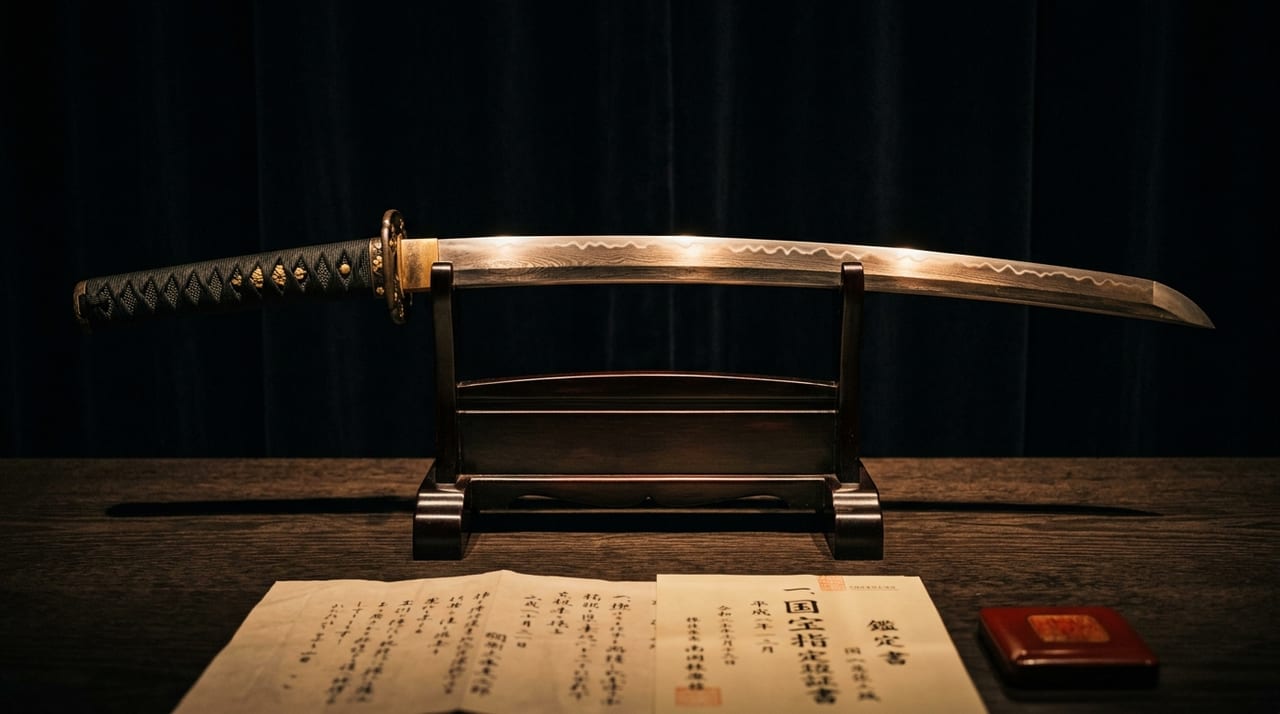 * Image is for illustrative purposes only.
Table of Contents
Who Was Muramasa? — A Master Craftsman of the Muromachi and Sengoku Periods
Senji Muramasa was a meisetsu (lineage name) of tōkō who were active from the middle of the Muromachi period through the Sengoku period in Ise Province (present-day Kuwana City area, Mie Prefecture). "Muramasa" was not a single tōkō but the go of a group of swordsmiths spanning multiple generations, and confirmed records show the line continued from the first generation through at least the fourth and beyond.
The name "Senji" is said to derive from the name bestowed through the prayer of first-generation Muramasa's mother at the Senjū Kannon of Hashiriimayama in Kuwana, and it does not refer to any specific place name. Muramasa blades were produced in the greatest numbers from the latter half of the fifteenth century through the first half of the sixteenth century, and were highly regarded as high-quality practical swords meeting the battlefield demands of the Sengoku period.
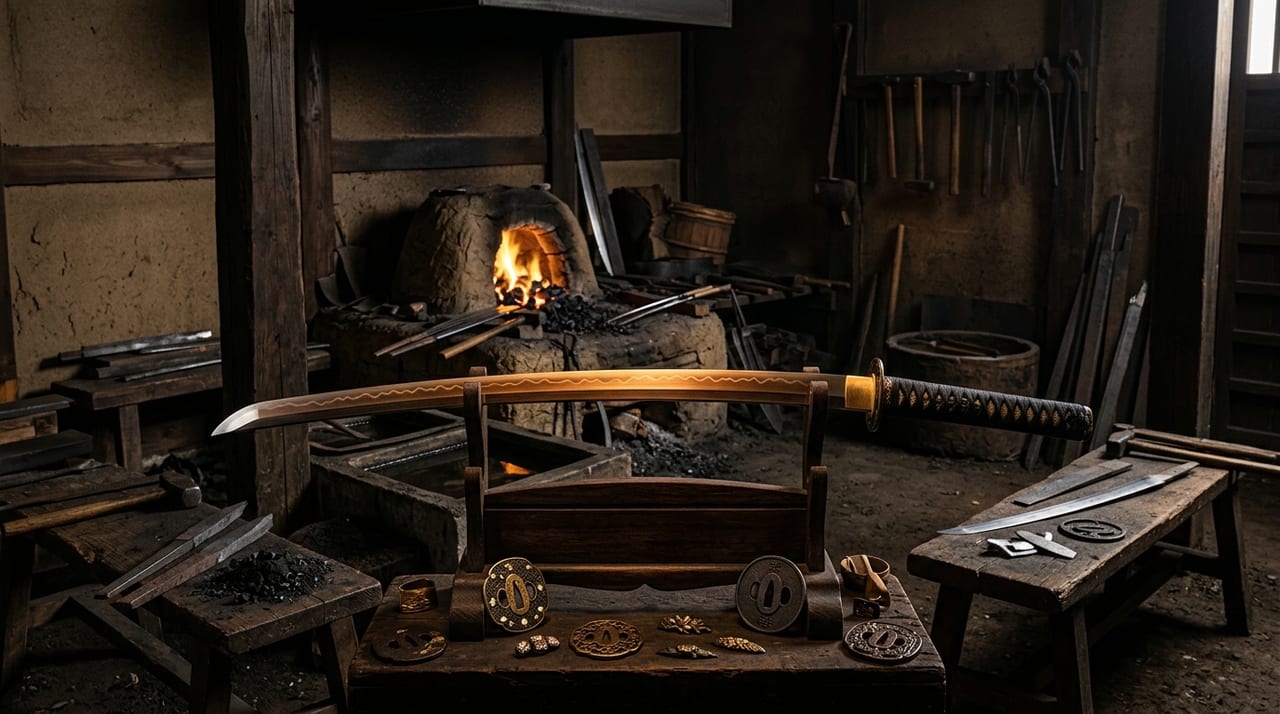
Kuwana in Ise Province was a post town on the Tōkaidō road and also a key hub of water transport, making it a region with strong demand for metalwork including swords. It was within this environment that the Muramasa meisetsu was passed down through successive generations of tōkō, and the go "Muramasa" itself became established as a byword for high technical skill. In practice, for the warriors of the day, the mei "Muramasa" is thought to have served as proof of practical reliability — a guarantee of "a sword assured of sharpness and craftsmanship above a certain standard" — beyond simply the name recognition of any individual maker.
Technical Characteristics of Muramasa Blades
The reason Muramasa blades were prized by the warriors of the day lies in clear technical superiority.
Characteristics of the Hamon (Temper Line)
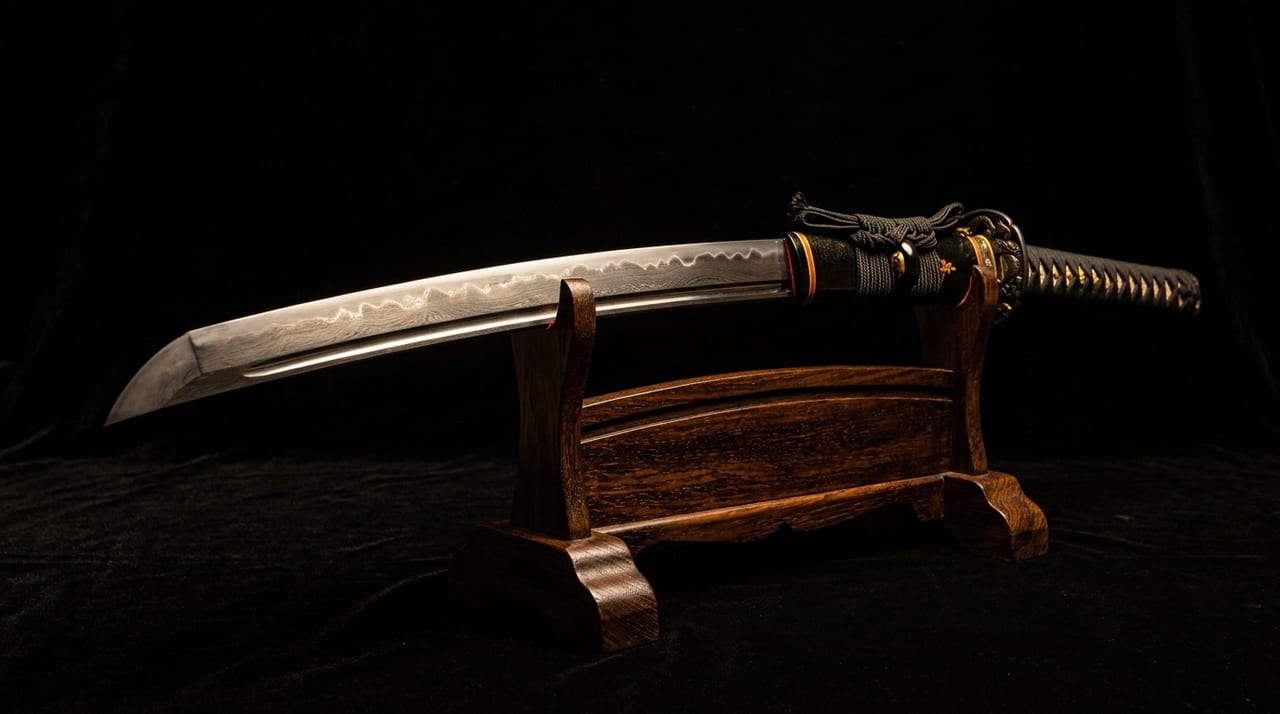
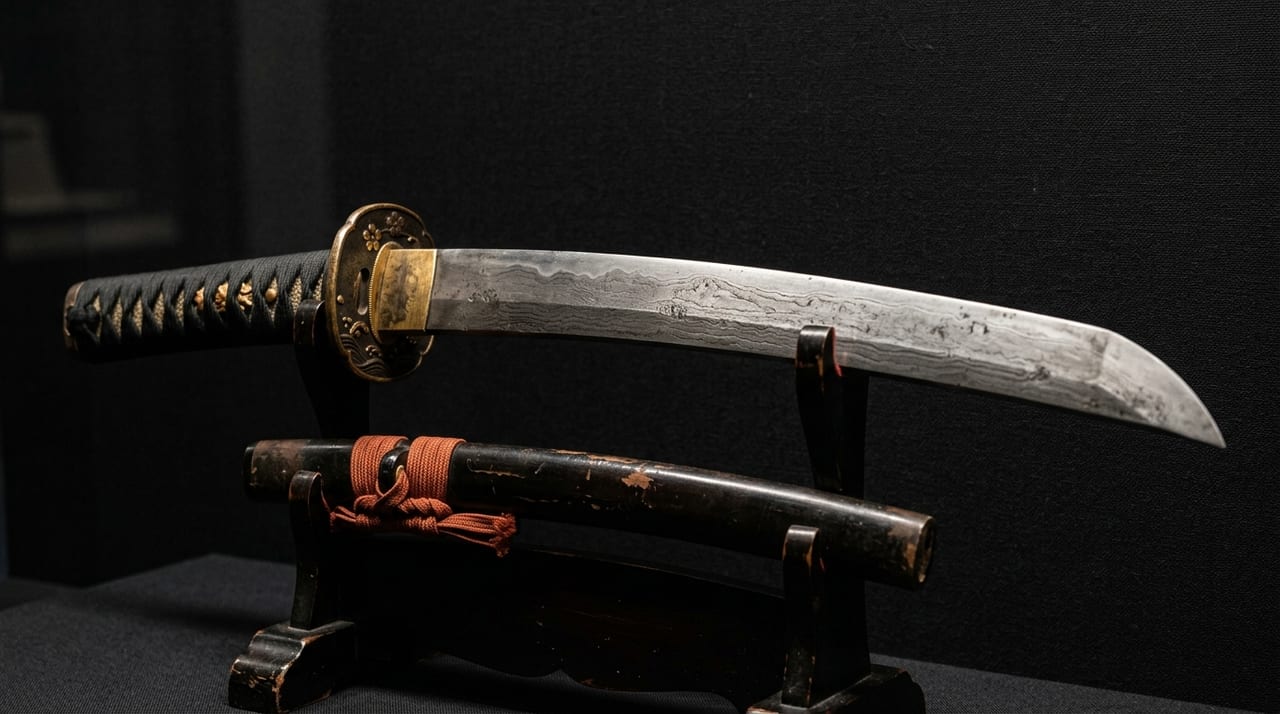
What most distinctively characterizes Muramasa blades is the combination of gunome-midare and togariba. The hamon undulates in large, vigorous waves with what might be called a "wild" beauty. This hamon, combined with the keenness of the blade, produced a finish with outstanding cutting performance in actual combat.
The nie is strong, the activity within the hamon is rich, and complex effects such as kinsuji and inazuma are visible throughout. The wave pattern of the hamon is steep and varied, showing different expressions depending on the viewing angle.
Jigane (Steel of the Blade Surface) and Forging
The jigane is fundamentally based on itame forging and frequently shows mixed nagare-hada. The forging is tight and highly uniform, with the strength to withstand the shock of actual combat.
Characteristics of the Shape (Sugata)
Muramasa blades tend to have shallow sori, wide mihaba, and thin kasane. This is a design for "drawing and cutting quickly" — a shape suited to the infantry combat of the Sengoku period. The nagasa is most often a standard uchigatana size, though wakizashi and tantō were also produced in large numbers.
The combination of these characteristics established Muramasa blades' reputation for "cutting well." It is thought that this reputation spread by word of mouth among warriors with battlefield experience, building their trust as practical swords. When viewing or evaluating a blade, focusing on the following points makes it easier to grasp the distinctive character typical of Muramasa.
- The breadth and height variation of the hamon's irregular pattern
- The fineness and uniformity of the nie granules
- The characteristic turnback of the bōshi (hamon in the kissaki area)
- The expression of the jigane where nagare-hada is mixed into the itame surface
The "Fateful Connection" with the Tokugawa Clan — The Birth of the Cursed Sword Legend
The Tales of "Muramasa's Curse" Connected to Ieyasu
The greatest story about Muramasa that spread in the Edo period was the legend that it was a curse upon the Tokugawa clan. The following anecdotes, cited as its basis, are well known:
- The blade with which Tokugawa Ieyasu's grandfather, Matsudaira Kiyoyasu, was cut down by a retainer was a Muramasa work
- The blade with which Ieyasu's father, Matsudaira Hirotada, was stabbed by a retainer was a Muramasa work
- The blade with which Ieyasu himself accidentally cut his finger as a child was a Muramasa blade
- The blade used by his heir, Nobuyasu, for his ritual suicide was a Muramasa work
These anecdotes constructed the pattern of "Muramasa = the blade that brings misfortune to the Tokugawa clan," and under Edo shogunate rule, possessing a Muramasa blade became effectively taboo.
The Political Background of the Legend
Most modern researchers regard this "curse of Muramasa" as a legend that was politically amplified.
Muramasa blades were widely distributed around Mikawa (the heartland of the Tokugawa clan) as practical battlefield swords of the Sengoku period, and many warriors — Tokugawa retainers and enemies alike — possessed them. The coincidence that "when misfortune befell the Tokugawa clan, the blade was a Muramasa" is, from a statistical standpoint, nothing more than a coincidence.
However, as the Edo shogunate became firmly established, Muramasa — carrying an anti-shogunate image — came increasingly to be spoken of as "the blade that curses the Tokugawa." From the middle of the Edo period onward, these anecdotes spread through popular entertainment such as kōdan storytelling and kabuki, and the image of "Muramasa = cursed sword" is said to have permeated among the common people as well. On the other hand, it is also said that during the Bakumatsu, loyalists in the movement to overthrow the shogunate deliberately wore Muramasa blades, making use of them as a political symbol.
Surviving Works and Holding Institutions
Despite the cursed sword legend, many Muramasa blades survive today and are carefully preserved, designated as jūyō bunkazai (Important Cultural Properties) or Jūyō Tōken.
Major holding institutions:
- Tokugawa Art Museum (Nagoya) — ironically, the museum associated with the Tokugawa clan holds multiple Muramasa blades
- Japanese Sword Museum (Tokyo)
- Museums around the country and private collections
Works attributed to first-generation Muramasa are particularly rare, and when accompanied by a kanteisho (especially Jūyō Tōken or above from NBTHK), they are traded at high prices.
NBTHK kanteisho are issued at the levels of Hozon Tōken, Tokubetsu Hozon Tōken, Jūyō Tōken, and Tokubetsu Jūyō Tōken, and examples of Muramasa's work exist that have received any of these designations. The higher the grade, the more rigorously the condition and quality of workmanship are evaluated; therefore, when considering a purchase or acquisition, confirming which grade of kanteisho is attached serves as a practical benchmark.
The Mei and Authentication
The mei "Muramasa" appears in bōmei (straight-column inscription) as "Muramasa" or in variations such as "Seishū Kuwana-jū Muramasa," "Seishū Senji-jū Muramasa," or "Seishū Kuwana-jū Uemonnojō Fujiwara Muramasa."
Key points for authentication:
- The hamon pattern (precision and consistency of the gunome-midare)
- Uniformity of the jigane (itame nagare)
- The shape, rust color, and yasurime of the nakago
- The presence or absence of a kanteisho from an authentication body (such as NBTHK)
Forgeries and later-generation works have proliferated since the Edo period, and blades bearing the mei "Muramasa" that appear on the current market vary widely in quality. It is advisable to avoid any purchase without a reliable kanteisho. For those considering a Muramasa blade for the first time, the surest way to avoid unexpected mistakes is to first consult a trustworthy specialist dealer or authentication body and make a judgment by comparing the content of the kanteisho against the condition of the actual blade.
Basics of Storage and Handling of Muramasa Blades
Basic knowledge of maintenance is indispensable for keeping any Japanese sword — not only Muramasa blades — in good condition over the long term. Because touching the blade with bare hands deposits sebum that causes rusting, handling it through cloth or cotton gloves is fundamental. Periodically removing old oil with uchiko and thinly reapplying sword oil such as chōji oil helps maintain the condition of the jigane. When storing a blade, it is advisable to place it in the saya and choose a location with minimal humidity fluctuation and no direct sunlight. Rapid temperature changes and high-humidity environments are factors that accelerate discoloration of the jigane and deterioration of the hamon.
Muramasa blades are precious cultural artifacts that have passed through several hundred years from the Sengoku period to the present day, and their state of preservation is directly tied to their historical value. When considering a purchase or acquisition, it is reassuring to confirm not only the grade of the kanteisho but also the history of storage conditions and maintenance up to that point.
Conclusion — A Master of Craft and a Victim of Politics
Senji Muramasa were not a "cursed sword" at all, but a highly skilled group of tōkō who continued to meet the practical demands of the Sengoku period. It was precisely because the blades they made were prized by many warriors as the most advanced practical swords of the day that they appear repeatedly in anecdotes concerning the Tokugawa clan.
The political taboo of the Edo period gave birth to the phantom image of a "demonic blade," but the fierce yet beautiful hamon that their blades possess, and the uniform and resilient jigane, are proof of a genuine craft that transcends legend.