Shikomizue: The Hidden Blade — History, Structure, and Modern Legal Status of Japan's Concealed Sword-Cane
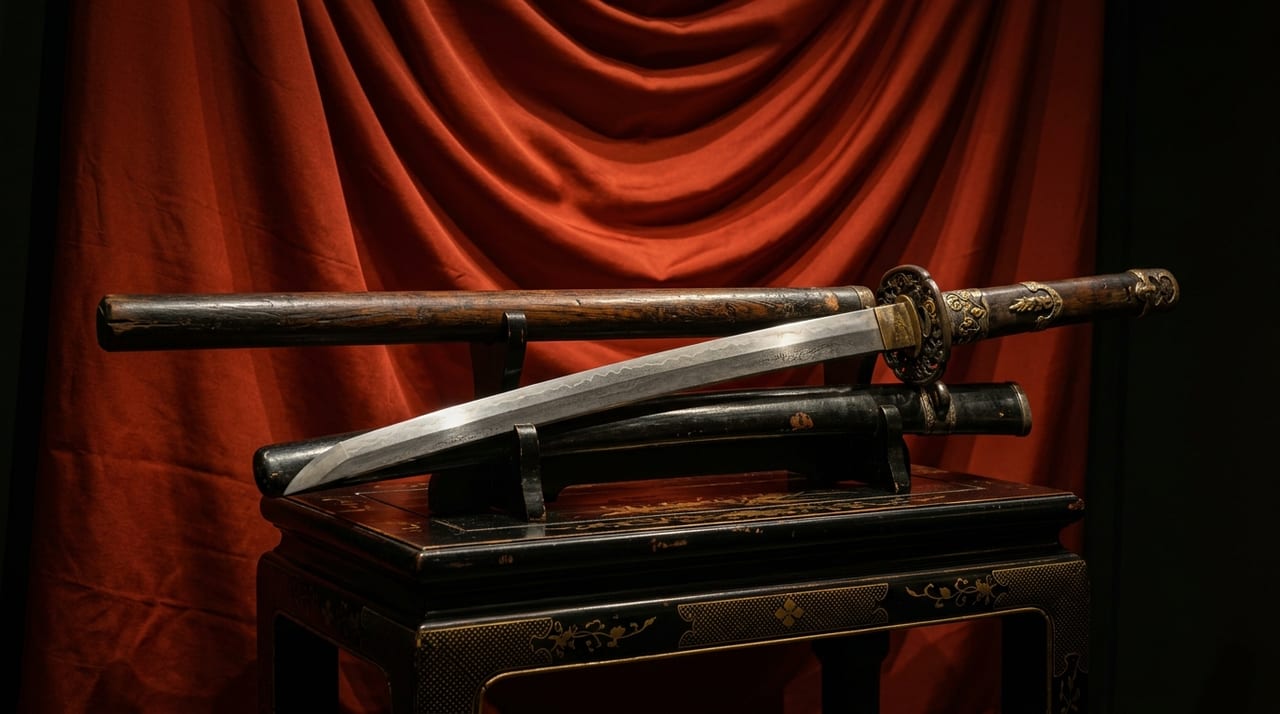 * Image is for illustrative purposes only.
Table of Contents
The Aesthetics of Deception—The Philosophy of Weaponry Behind the Shikomi-zue
In the history of Japanese weaponry, few things embody the contradiction between a "weapon meant to be seen" and a "weapon meant to be hidden" as thoroughly as the shikomi-zue. While conventional swords functioned as "weapons meant to be seen"—serving both as instruments of intimidation and markers of social status—the shikomi-zue emerged from an entirely different philosophy: one that placed deception itself at the very core of its function. Untangling its structure and history simultaneously illuminates both the light and shadow of Japanese sword culture.
Precise Concealment in Structure—Shikomi-zue as the Craft of Deception
The most challenging aspect of crafting a shikomi-zue is rendering the blade storage section completely inconspicuous to the eye. A superior shikomi-zue allows itself to be held, swung, and used to strike the ground as a walking staff without betraying any hint of the hidden blade within. To achieve this sophisticated concealment, craftsmen of the Edo period accumulated specialized techniques.
The outer casing—the staff itself, serving as both sheath and body—was deliberately engineered to counterbalance the weight of the inner blade, with the staff's center of gravity intentionally manipulated during manufacture.
- In wooden versions, dense hardwoods such as ebony and rosewood were employed to give the weight natural balance equivalent to an ordinary walking staff
- In bamboo versions, the placement of nodes had to be calculated to avoid interference with the blade storage chamber while still maintaining structural integrity
The inner blade was designed according to principles fundamentally different from conventional Japanese sword forging.
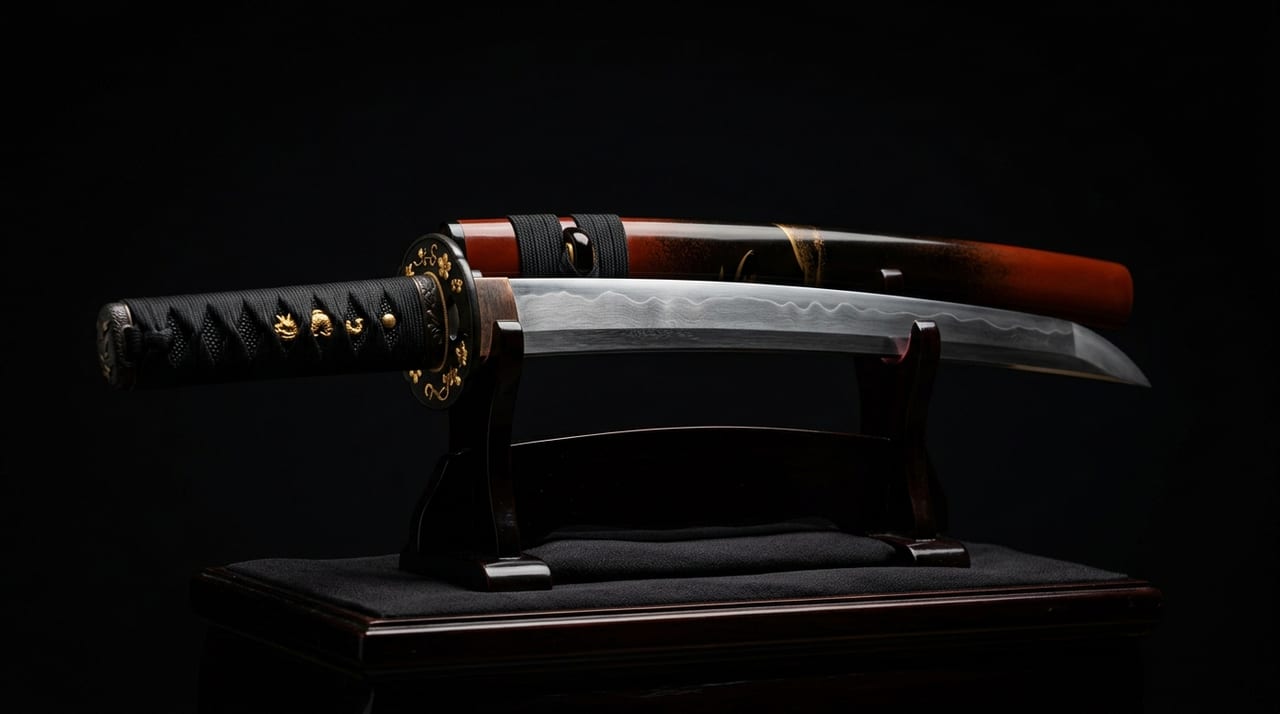
- The inner blade was required to possess sharpness as a functional sword while remaining slender and lightweight, with the mainstream form being a flat-ground tanto measuring approximately 30 centimeters in blade length
- The handle portion corresponding to the tsuka was sometimes fitted with invisible mechanisms to ensure a firm grip the moment the blade was drawn
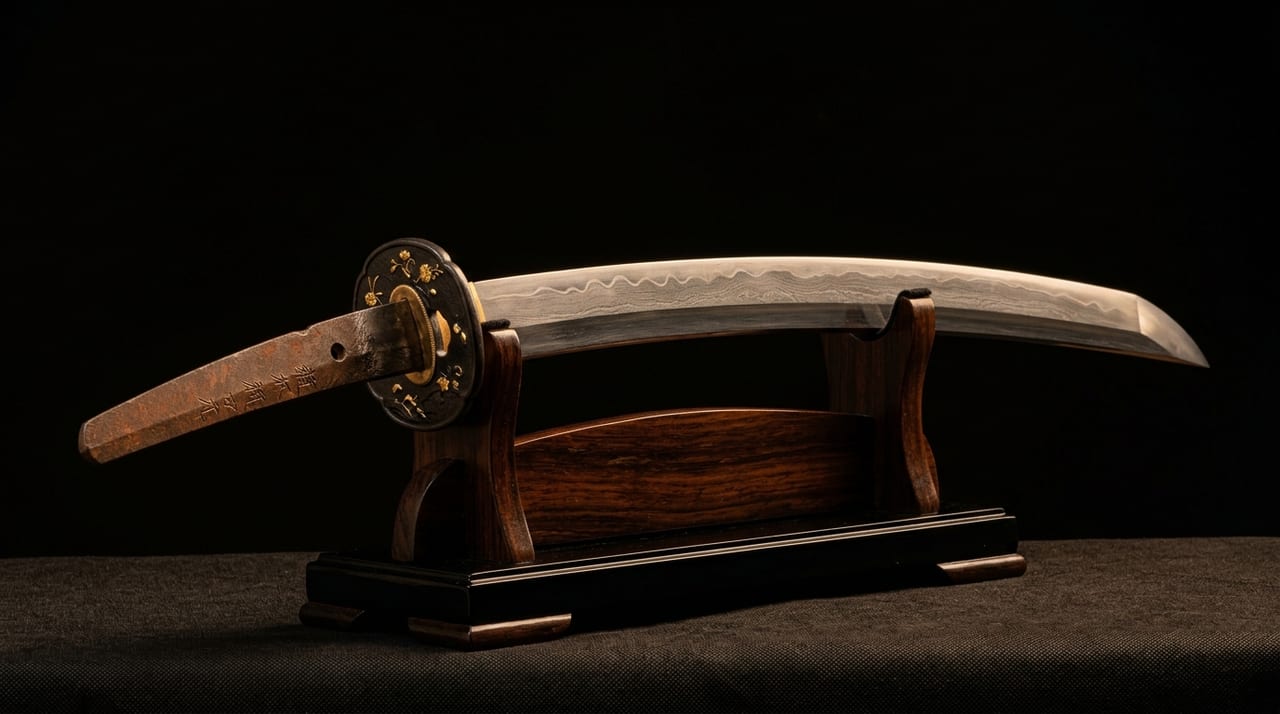
- The frequent omission of a tsuba served to minimize the bulk required for storage, demanding correspondingly greater skill in handling once the blade was drawn
The Paradox Born from Edo Legal Code—The Development of "Forbidden Weapons"
The greatest factor cultivating shikomi-zue culture was the Edo shogunate's weapons regulation policy itself. The shogunate strictly regulated "the right to wear a sword" as a symbol of samurai status, forbidding commoners from carrying blades longer than two shaku (approximately 60 centimeters). This restriction ironically promoted the idea of concealing weapons within a "staff"—a legal space existing outside the prohibition.
Notably, this regulation was not intended as complete disarmament. Short swords and wakizashi remained permissible for merchants and travelers, and a culture of carrying small blades for personal protection took root among the common people. The shikomi-zue existed as an extension of this practice, a crystallization of wisdom born in the narrow space between the practical need for self-defense and the institutional constraint of sword-carrying prohibitions.
In the world of sword techniques as well, martial arts schools developed "hidden weapon methods" distinct from the direct technique of drawing swords face-to-face. Collateral branches of the Yagyū Shinkage-ryū and certain ancient martial schools transmitted techniques that presupposed the use of concealed weapons within staff and pole forms, systematizing unique drawing techniques known as "nukizue."
The Late Edo Period as Crucible—Political Violence and the Demand for Shikomi-zue
The upheaval of the late Edo period explosively increased demand for shikomi-zue. As conflict between pro-imperial and pro-shogunate factions engulfed the entire nation, and roadside attacks and assassinations became routine instruments of political activity, the shikomi-zue—appearing outwardly as a harmless walking aid—became an ideal portable weapon for loyalists, assassins, and shogunate secret agents operating under concealed identities.
Kawakami Gensai exemplifies this period. A swordsman from the Higo Kinno Party, he earned the epithet "Hitokiri Gensai" (Gensai the Manslayer) and is said to have been involved in the assassination of several late Edo figures including Sakuma Shozan. Accounts of Gensai, whose small build made him unable to rely on brute strength, favoring short blades and concealed weapons over longer swords are repeatedly recounted in late Edo swordsman history. However, many details have been embellished by later storytelling and fiction, necessitating careful distinction between primary sources and popular legend.
More reliable historical records exist regarding the shogunate's oniwaban and intelligence-gathering organizations. The likelihood that these operatives, engaged in information gathering under concealed identities, carried weapons disguised as staffs is quite plausible from an institutional perspective. Records fragmentarily survive of loyalists and spies mixing among Kyoto townspeople and merchants during the escalating political conflicts of the Bunkyū and Keiō periods, carrying shikomi-zue as self-defense equipment.
Transformation After the Meiji Era—The Intersection of Western Canes and Concealed Weapon Cultures
The enactment of the Haitōrei (sword abolition edict) in 1876 fundamentally transformed Japan's weapons culture. As the samurai lost their official right to carry swords, Western civilization's influx brought Western-style canes into fashion among the upper classes and intellectuals. Here an intriguing fusion occurred. In the West as well, "sword canes" were widely distributed defensive implements in eighteenth and nineteenth-century European genteel society, displaying their own unique parallels to Japanese shikomi-zue culture.
In Meiji-era Japan, Westernized gentlemen sometimes carried "hybrid concealed weapons"—Western-style canes with sword blades concealed within. Among the former samurai class stripped of official sword-carrying rights by the Haitōrei, some likely sought to covertly preserve their samurai self-image through such "hidden swords." That attachment to swords persisted in the form of shikomi-zue beneath the surface gloss of civilization and enlightenment reflects a contorted aspect of the Meiji period itself.
Modern Law and Shikomi-zue as Antiques
In contemporary Japan, the shikomi-zue falls under the regulation of the Firearms and Swords Control Law.
| Blade Length | Legal Treatment |
|---|---|
| 15 centimeters or longer in the inner blade | Legally classified as a "sword" requiring registration; possession without registration is generally prohibited |
| Over 6 centimeters in blade length | Carrying in public spaces is forbidden without legitimate justification; "self-defense" alone is not recognized as legitimate cause |
Conversely, shikomi-zue manufactured during the Edo through Meiji periods are sometimes treated as antiques possessing cultural property value. After submission to and examination by the Board of Education, shikomi-zue receiving a "Firearms and Swords Registration Certificate" may legally be possessed and sold as works of art. National sword museums and art museums display such pieces in their collections, attracting researcher attention as materials demonstrating the diversity of Japanese sword culture.
Replicas and display pieces using truly non-cutting blade material are subject to relaxed restrictions, though the precision of their appearance carries the risk of misidentification, making legal confirmation essential in purchase and storage.
What Shikomi-zue Tells Us of the Deeper Layers of Japanese Sword Culture
The shikomi-zue offers us an occasion to reconsider the boundary between the "orthodox" and "heterodox" in Japanese sword culture. While the Japanese sword is frequently discussed as a symbol of fine art and spiritual culture, its history has always carried the mundane reality of self-defense, assassination, and identity deception. The shikomi-zue condensed these contradictions within a single staff, and as a resource from the periphery of sword history, it uniquely illuminates the power structures, legal systems, and class hierarchies of Japanese society.