Ōtenta Mitsuyo: The Grand Tachi of the Tenka Goken, a National Treasure Preserved by the Maeda Family
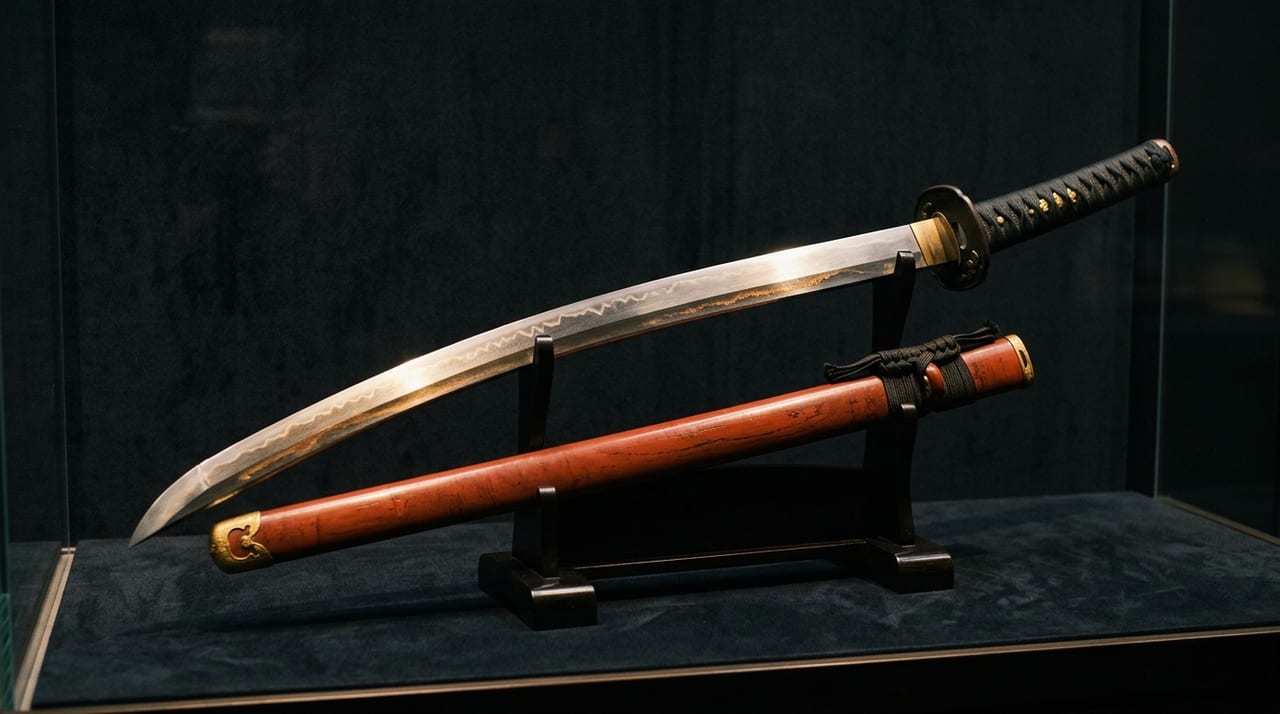 * Image is for illustrative purposes only.
Table of Contents
Ōdenta Mitsuyo is a celebrated tachi (太刀) counted among the Five Heavenly Swords (Tenka Goken). Distinguished by its thick kasane (重ね) and broad width, it is known among the five for its magnificent, commanding style of workmanship. In 1957 (Showa 32), it was designated a National Treasure, and is currently housed by the Maeda Ikutoku Foundation (前田育徳会), which maintains close ties to the former Kaga-Maeda daimyo house.
The Five Heavenly Swords
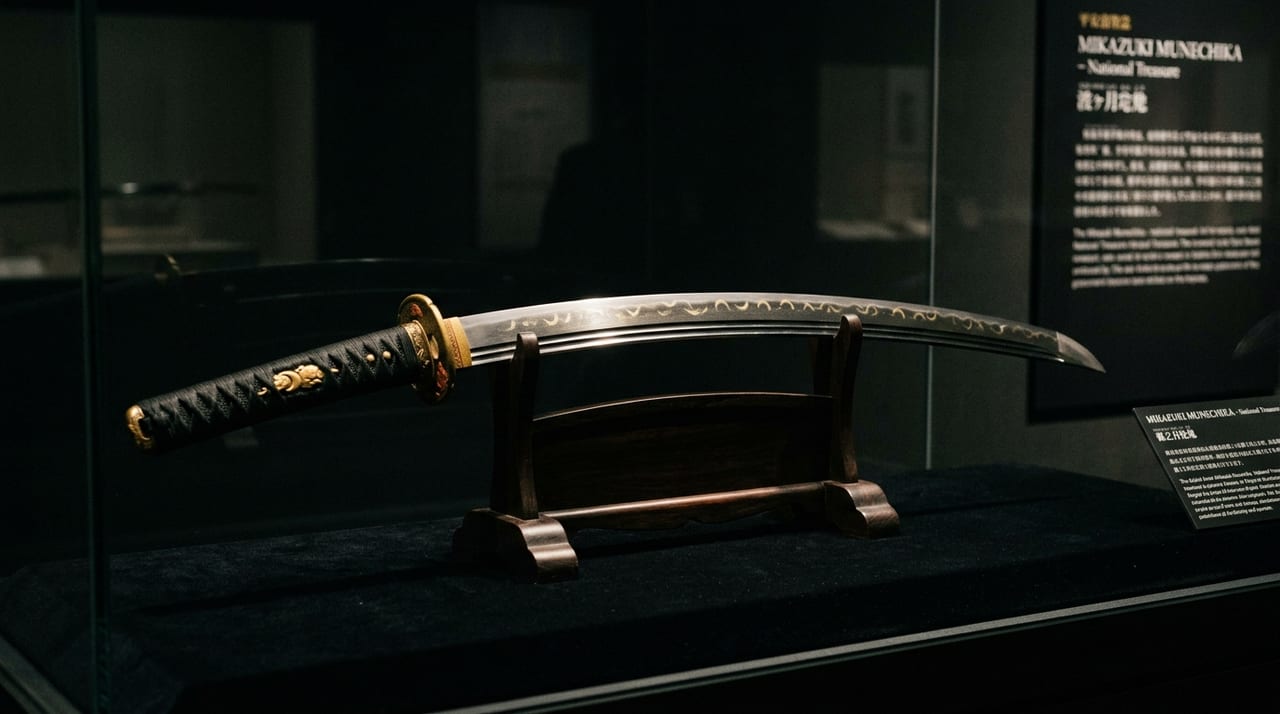
The Five Heavenly Swords refers to a collective designation for five swords particularly renowned among all Japanese blades: Dōjigiri Yasutsuna (童子切安綱), Mikazuki Munechika (三日月宗近), Onimaru Kunitsuna (鬼丸国綱), Juzumaru Tsunetsugu (数珠丸恒次), and Ōdenta Mitsuyo. Each is transmitted as the work of celebrated smiths from the Heian through Kamakura periods, yet there are no historical documents clearly indicating who selected them or when. The designation is thought to have become established and fixed in the early modern period and afterward. Nevertheless, each of the five swords possesses first-rate provenance and workmanship in its field, and continues to serve as a defining term when discussing the apex of Japanese sword-craft.
The Maker: Miike Tenta Mitsuyo
The signature reads "Mitsuyo," and the maker is identified as Miike Tenta Mitsuyo. A swordsmith active from the late Heian period onward (around Eihō 1–4, 1081–1084, late 11th century), based in Miike in Chikugo province (present-day southern Fukuoka Prefecture), he is positioned as the founder of the Miike school. He is one of the celebrated smiths representing ancient Japanese sword-craft from Kyūshū, and his works are extraordinarily rare.
The Kyōhō Meibutsuchō and Legends of a Spirit Blade
Ōdenta Mitsuyo is recorded as a celebrated piece in the Kyōhō Meibutsuchō (享保名物帳), a catalogue of celebrated swords compiled by order of the Edo bakufu. Within the Maeda household, it was cherished as a blade possessing special spiritual power, and various legends have been passed down through the generations—tales of its power to heal illness. Among these, the well-known anecdote tells that when Toyotomi Hideyoshi's daughter, Gōhime, fell ill, she borrowed this tachi, whereupon she recovered. Such anecdotes have been preserved as testament to the blade's lofty status.
Transmission from the Ashikaga to the Maeda
The transmission is recorded as follows: the blade forged by Miike Tenta Mitsuyo was presented to the Ashikaga shogunal house. During the time of Ashikaga Yoshiaki, the fifteenth Muromachi shogun, it is said to have passed into the hands of Toyotomi Hideyoshi. Hideyoshi subsequently bestowed it upon his retainer Maeda Toshiie, and it was thereafter preserved as a treasured possession of the Maeda family and carefully guarded for subsequent generations. Today, it is housed by the Maeda Ikutoku Foundation, established by descendants of the Maeda family.
The Beauty of Grandeur and the Individuality of the Five Swords
The Five Heavenly Swords each possess distinctive character—the refined elegance of Mikazuki Munechika, the commanding presence of Dōjigiri Yasutsuna. Ōdenta Mitsuyo, by contrast, is characterized by its broad blade and thick kasane, presenting an imposing and dignified form that conveys to this day the powerful aesthetic of Kyūshū smithcraft from the late Heian period. It is an indispensable blade for understanding the diverse beauty of Japanese sword-craft, which encompasses far more than mere refinement and elegance.
The Order of Appreciating a Tachi: Silhouette, Steel, and Hamon
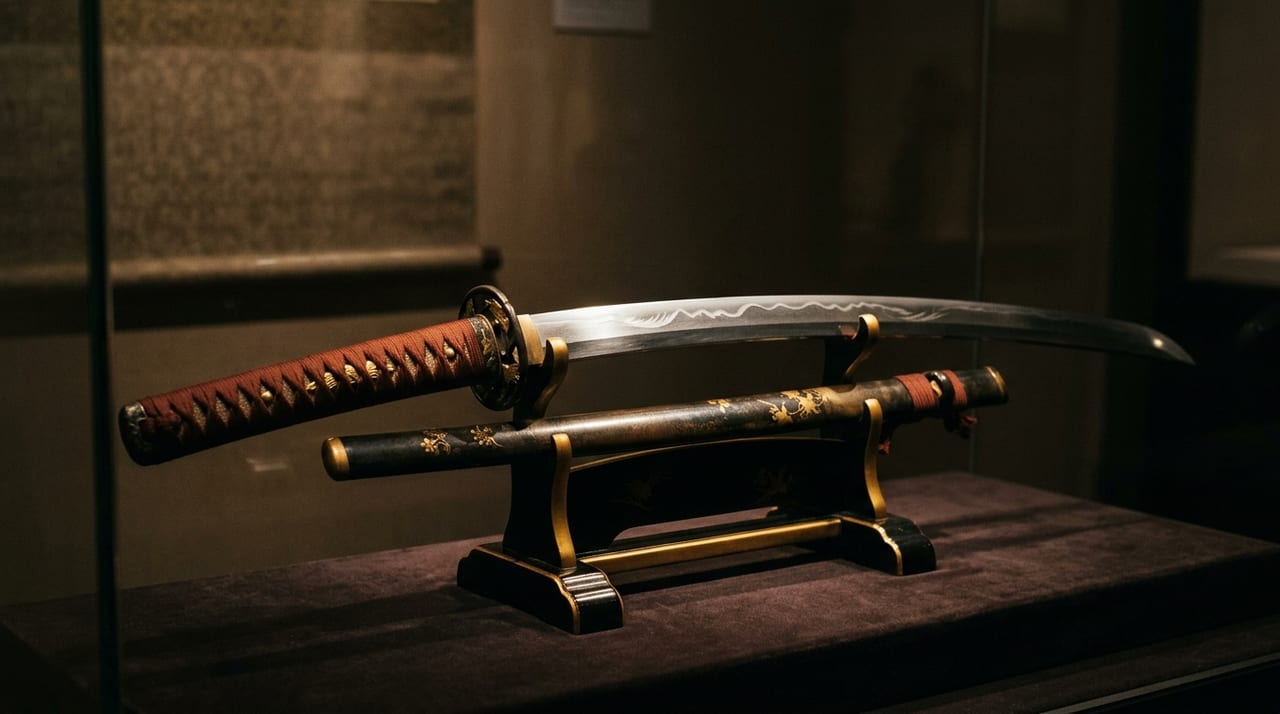
The appreciation of ancient celebrated swords like Ōdenta Mitsuyo begins, by established practice, with viewing the overall "silhouette" (sugata/姿). The blade's width, the thickness of the kasane, the depth and positioning of the curve (sori/反り), and the size of the point (kissaki/切先)—the combination of these elements reveals the age and intended use. Next, one examines the grain and flow of the steel (jigane/地鉄), and finally savors the workmanship of the hamon (刃文). Ōdenta Mitsuyo is renowned for its broad blade and thick kasane, presenting a form of substantial presence. Should you have the opportunity to encounter the actual blade at an exhibition, first step back to take in the overall silhouette, then gradually direct your eye to the details—and the magnificent grandeur of this tachi will communicate itself all the more powerfully.
The Maeda Ikutoku Foundation and the Succession of Cultural Treasures
The Maeda Ikutoku Foundation is a foundation established to preserve the classics, manuscripts, and art objects that passed down through the former daimyo house of Maeda. It is also well-known for possessing a rich collection of books known as the Sonkeikaku Library. Ōdenta Mitsuyo is managed and housed within the foundation's collection, and whenever it is exhibited, many sword enthusiasts make the journey to see it. The survival and preservation intact of daimyo house treasures through to the present day is precious, and the blade speaks to the way Japanese warrior-aristocratic culture honored and handed down swords as "the treasure of the house." This heritage continues to speak to us today.
"Utsushi" (Copies) and the Legacy of Celebrated Swords
Celebrated swords like Ōdenta Mitsuyo have long served as models for later smiths attempting to create "copies" (utsushi/写し). Utsushi refers to works forged with the aim of studying and recreating the silhouette and craftsmanship of a celebrated blade, embodying both respect for the original and the fruits of the maker's research. A celebrated sword lives not merely as a single physical object, but through copies, illustrated catalogues, and rubbings (oshigata/押形—records made by tracing the blade's silhouette and hamon)—continuing as a textbook of forging technique and sword-appreciation culture. The reason Ōdenta Mitsuyo's magnificent, commanding form remains widely spoken of to this day owes to this layered work of transmission. For a celebrated sword whose opportunities for firsthand viewing are limited, the surrounding knowledge—including its provenance and legendary tales—becomes the foundation that supports appreciation.
Mini Glossary of Terms
- Tachi (太刀): A sword worn suspended from the waist with the edge facing downward. It was the standard form during the era when mounted warfare was dominant.
- Meibutsu (名物): Swords that possess both distinguished provenance and superior craftsmanship, and have been given a particular name. Those recorded in the Kyōhō Meibutsuchō are representative examples.
- Kasane (重ね): The thickness of the blade. The thicker the kasane, the more substantial and forceful the impression.
- Koshi-zori (腰反り): A form in which the curve's center is positioned closer to the handle. It is said to be common in tachi from the Heian through Kamakura periods.