The Shape of the Nakagojiri and Kesho-yasurime — The Aesthetics of the Tōkō's Finishing Craft as Told by Kurijiri, Kengyō, and Iriyamagata
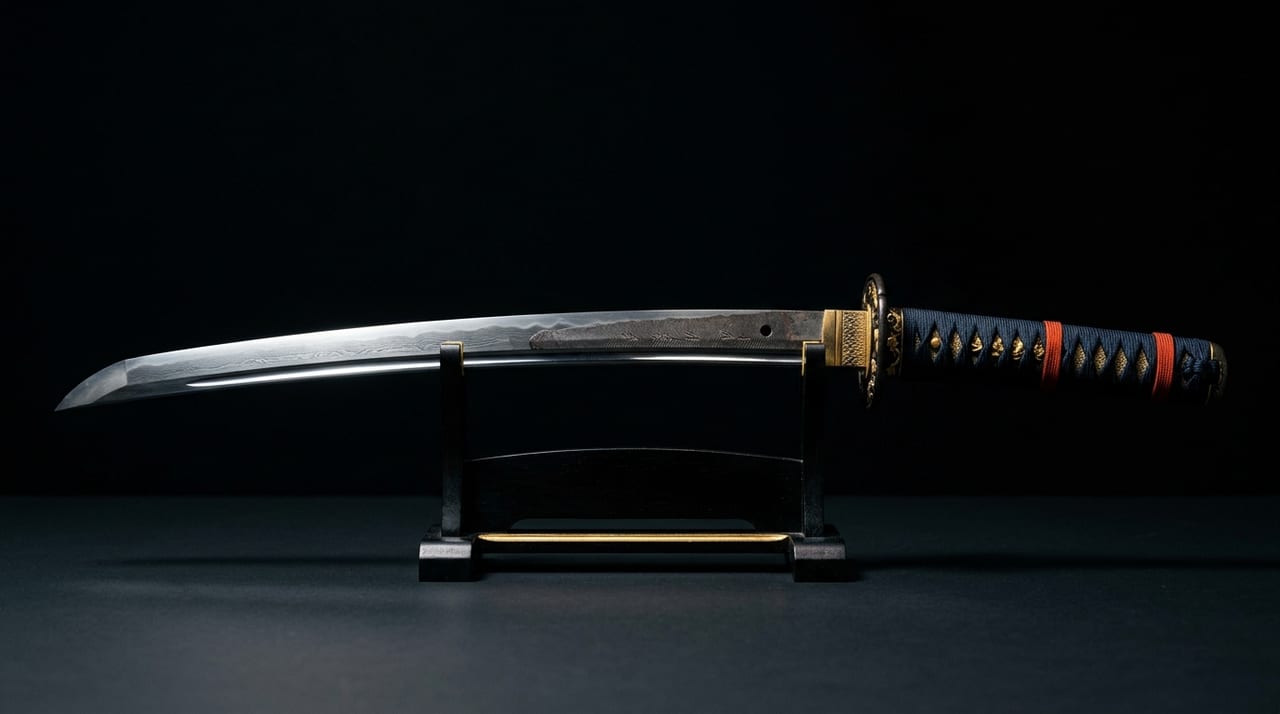 * Image is for illustrative purposes only.
Table of Contents
The Craft That Dwells in the "Terminal" of the Nakago
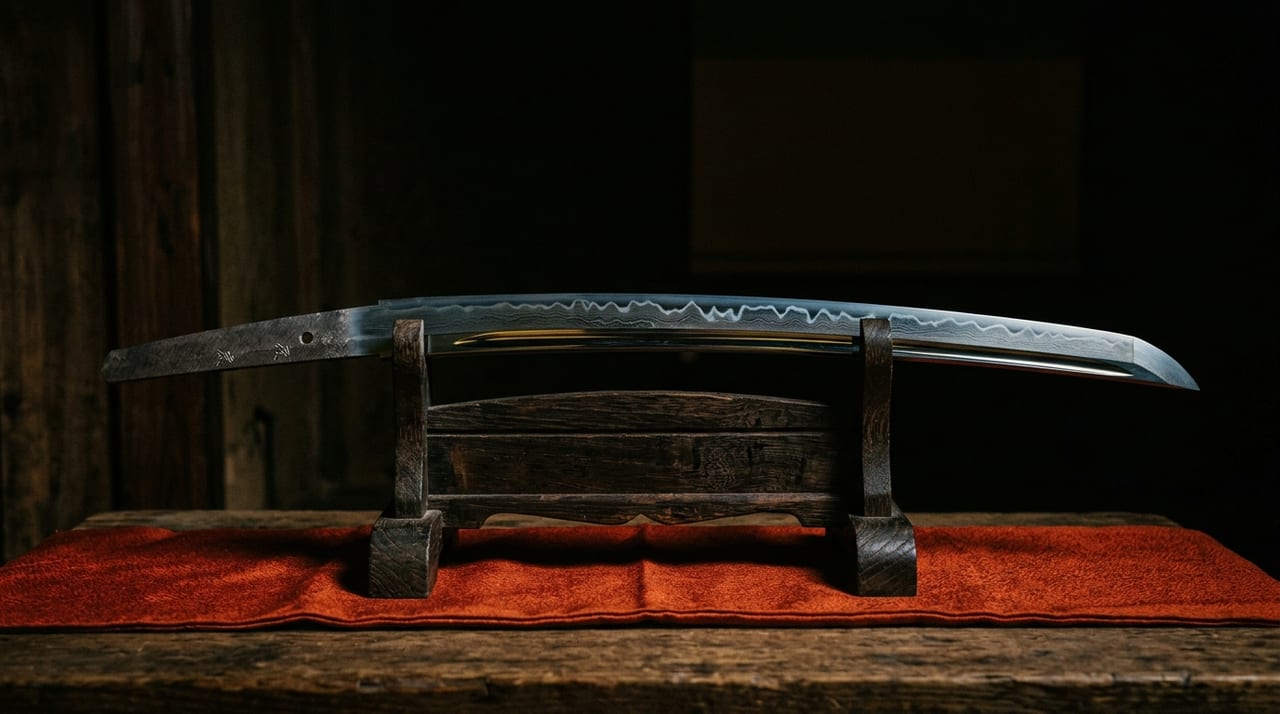
The part that fits inside the tsuka (hilt) — the nakago (tang) — is normally hidden from view, concealed within the saya (scabbard) or tsuka. In kantei (appraisal), however, the nakago is the single most important source of information for identifying the maker and period. Among its features, the terminal end of the nakago — the tip on the side opposite the blade — is called the nakagojiri, and its form reveals the tōkō's manner of working and aesthetic sensibility.
The nakagojiri, alongside the mekugi holes, mei (signature), and yasurime (file marks), is an indispensable part of any discussion of a sword.
Main Shapes of the Nakagojiri
The nakagojiri has several established forms, each with its own name. The main ones are listed below.
| Name | Characteristics |
|---|---|
| Kurijiri | A rounded form resembling a chestnut; considered the most common nakagojiri |
| Kengyō | Tapered from both sides to a point, fashioned like the kissaki (point) of a sword |
| Iriyamagata | Finished asymmetrically, with different angles on the mune (back) and blade sides so that the shape appears to recede inward like a mountain; seen frequently in certain schools |
| Ichimonji | Cut straight across |
These forms are not mere decoration; they reflect the tōkō's lineage and the tastes of the period. For example, iriyamagata is said to be common in swords of the Mino tradition, and the shape of the nakagojiri can thus provide clues as to the maker.
The Technique of Shaping the Nakagojiri
The shaping of the nakagojiri takes place during the nakago finishing process that follows yaki-ire (quenching). The tōkō uses yasuri (files) and tagane (chisels) to trim the terminal end into the established form. The slight curvature and angle imparted at this stage reveal the individual tendencies of each tōkō.
The nakago is never polished or ground as the blade is; the hammer and file marks and the jihada (grain pattern of the steel) of the forged iron remain exactly as they were. For this reason, the care and idiosyncrasy of the nakagojiri's shaping are passed down unaltered to later ages, becoming reliable evidence for identifying the maker.
Kesho-yasurime — Decorative Yasurime Applied to the Nakago
On the surface of the nakago, the tōkō engraves lines with a file known as yasurime (file marks). This serves the practical purpose of increasing friction between the nakago and the tsuka to secure the fitting, but it also carries a meaning akin to the tōkō's signature. Yasurime comes in many varieties — sujikai, katte-sagari, higaki, and others — each characteristic of a particular school.
Among these yasurime, the decorative filing applied near the nakagojiri or along the edges of the nakago is called kesho-yasurime (decorative yasurime). In addition to the regular yasurime, short decorative strokes are applied as finishing touches to the upper portion of the nakago and similar areas; they are seen particularly often on swords from the shintō period and later. Whether kesho-yasurime is present, and how it is applied, also serves as a clue for determining period and maker.
Suriage and the Nakagojiri — When the Form Is Lost
One important point to note is that the form of the nakagojiri does not always survive in its original state. When a sword is shortened in later ages through suriage (shortening), the nakago is cut back from the terminal end, and the original nakagojiri form is lost. When so much has been removed that the mei is also gone, the sword is described as ō-suriage mumei (greatly shortened and unsigned); many old tachi made to considerable length survive in this condition.
In other words, the established nakagojiri form survives only on an ubu nakago — a nakago that remains as it was at the time of manufacture. When examining a nakago, the first step is to determine whether it is ubu or has undergone suriage. Whether suriage has occurred is judged comprehensively from the number and position of the mekugi holes, the way the yasurime are interrupted, and differences in the color of the rust on the nakago.
Practical Checkpoints for Examining the Nakago
Let us organize the procedure for actually examining a nakago.
- First, the overall form. Is it ubu or suriage? How many mekugi holes are there? Multiple mekugi holes may indicate re-hafting or evidence of suriage.
- Second, the shape of the nakagojiri. Is it kurijiri, kengyō, iriyamagata, or ichimonji? Observe even the idiosyncrasies of the curvature and angle.
- Third, the yasurime. Identify the type — sujikai, katte-sagari, higaki — and note whether kesho-yasurime is present.
- Fourth, the color of the rust. The rust on the nakago is said to deepen and settle in color with age, and is used as a reference in kantei, but since judging rust color requires experience, it is safer to avoid making definitive conclusions.
- Fifth, the mei. If a mei is present, observe the script style, position, and movement of the tagane. Since a mei may always be a later forgery, it is essential to view it in relation to the overall quality of the nakago's shaping.
What Must Not Be Done — The Rust on the Nakago Is Evidence
The one thing that must absolutely be avoided when handling a nakago is removing the rust. The rust and yasurime on a nakago are primary sources bearing hundreds of years of information; if they are polished away or washed with chemicals, that information can never be recovered. In kantei as well, any trace of having altered the nakago is regarded as a serious negative. Maintenance should be confined to the blade; the nakago should be treated to no more than a light wipe with a dry, soft cloth.
A Hidden Part That Speaks Eloquently
The nakagojiri and kesho-yasurime are understated features compared with the brilliant hamon (temper line) and jigane (steel of the blade surface) of the blade. Yet precisely because they are hidden within the tsuka and rarely meet the eye, they are less likely to have been altered, and faithfully transmit the traces of the tōkō's hand as it was at the time of making. This is why appraisers place such importance on the nakago.
When you have the opportunity to handle a sword, try turning your attention to the shape of the nakagojiri and the lines of the yasurime. In the roundness of the kurijiri, the angle of the iriyamagata, the fine strokes of the kesho-yasurime — each one quietly bears the manner of working of the craftsman who fashioned the sword, and the aesthetic sensibility of the age.
Encountering the Craft of the Sword
TOUKENZA (operated by M-Assets Co., Ltd.) is a sword marketplace selling Japanese swords online. Knowing the craft of sword-forging becomes a key to appreciating each sword more deeply. Swords currently listed can be viewed in the online catalog, and purchases are also available. If there is a sword that interests you or if you have any questions, please feel free to contact us through the inquiry form.