The Role of Forge-Welding Flux — The Chemistry of Tansetsu in Which Warabai and Dorojiru Unite Steel
 * Image is for illustrative purposes only.
Table of Contents
Why Does Steel Bond to Steel?
In the tanren of a Japanese sword, tamahagane is heated, folded, and struck together repeatedly to form a single mass. This process of "joining steel to steel" is called tansetsu (forge-welding). Both orikaeshi tanren and the tsukurikomi that unifies kawagane (jacket steel) and shingane (core steel) into one piece are built upon the accumulated steps of tansetsu.
However, simply striking heated steel together does not produce a good bond, because the surface of the steel oxidizes immediately. It is warabai (straw ash) and dorojiru (clay slip), sprinkled on during tansetsu, that solve this problem.
The Enemy of Steel — Oxidation Scale
When steel is heated to a high temperature, the iron on the surface reacts with oxygen in the air and forms a layer of iron oxide called "oxidation scale (kurokawa, or black skin)." When this oxide layer covers the surface of the steel, the two pieces of steel cannot make direct metallic contact no matter how forcefully they are struck together, leaving impurities and gaps at the joint. This causes bonding defects such as kitaeware (forge-splitting).
The key to successful tansetsu is keeping the surface of the steel clean at the moment of joining and preventing oxidation. This is where the two "tansetsu-zai (flux)" — warabai and dorojiru — come into play.
How Warabai and Dorojiru Work
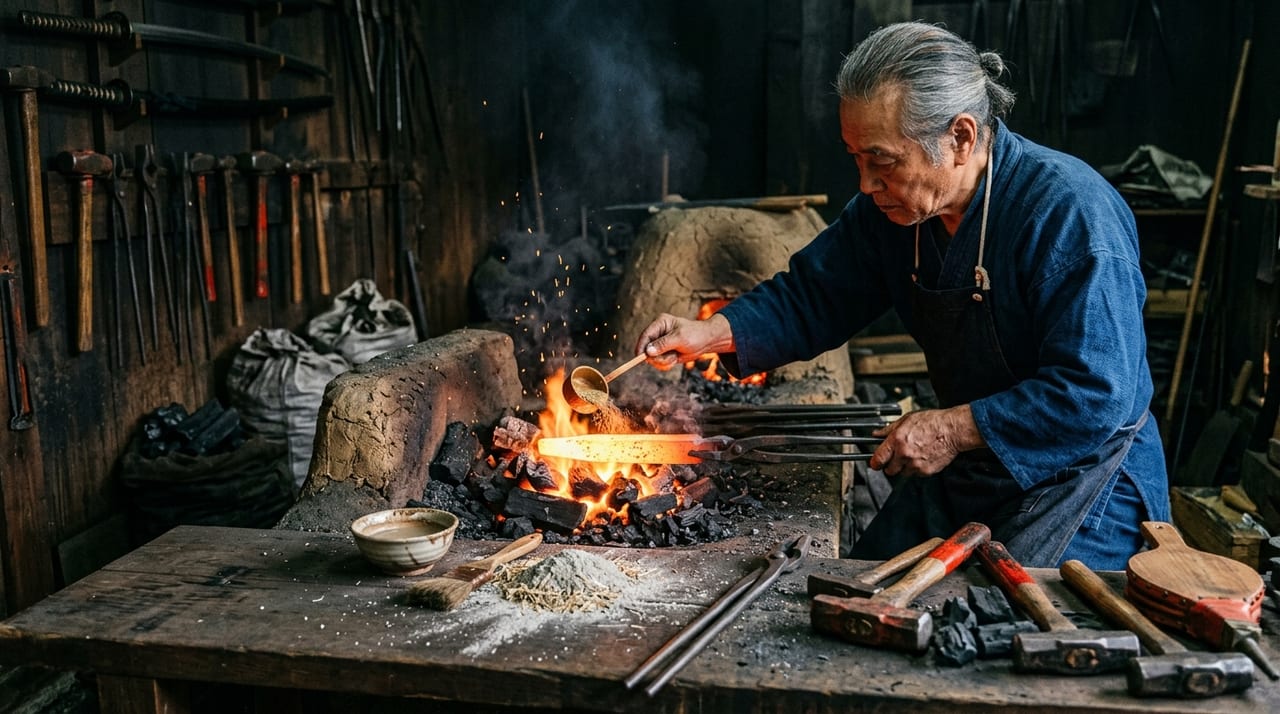
Before tansetsu, the tōkō sprinkles warabai (the ash of burned straw) and dorojiru — clay dissolved in water — onto the heated steel. These substances are believed to work as follows.
- They form a coating that prevents oxidation. By covering the surface of the steel, the ash and dorojiru block contact with air and suppress further formation of oxidation scale.
- They melt and flush out impurities. When the main components of warabai and other substances melt at high temperature, they absorb the iron oxide on the surface of the steel and become a fluid slag called noro. When struck with a hammer at the moment of tansetsu, this noro is squeezed out from the joint surface, allowing clean steel faces to come into direct contact and bond.
In other words, warabai and dorojiru serve a dual role: preventing oxidation while "washing away" unwanted oxides.
The Tōkō's Eye for Timing
Applying the tansetsu-zai and raising the steel to the temperature suitable for tansetsu is one of the steps that demands the most concentration from a tōkō. If the temperature is too low, the steel will not bond; if too high, the steel itself will melt and be damaged.
The tōkō reads the color of the steel in the furnace (hiiro, or fire color) and watches the behavior of the noro forming on the surface to judge the right moment — the wakashi (heating to the point of readiness) — for tansetsu. The instant when the warabai and dorojiru have melted just enough and the surface takes on a glistening, moist appearance is the moment to strike. This judgment is entrusted not to instruments but to the tōkō's own eyes and experience.
The Quality of Tansetsu Shows in the Jigane
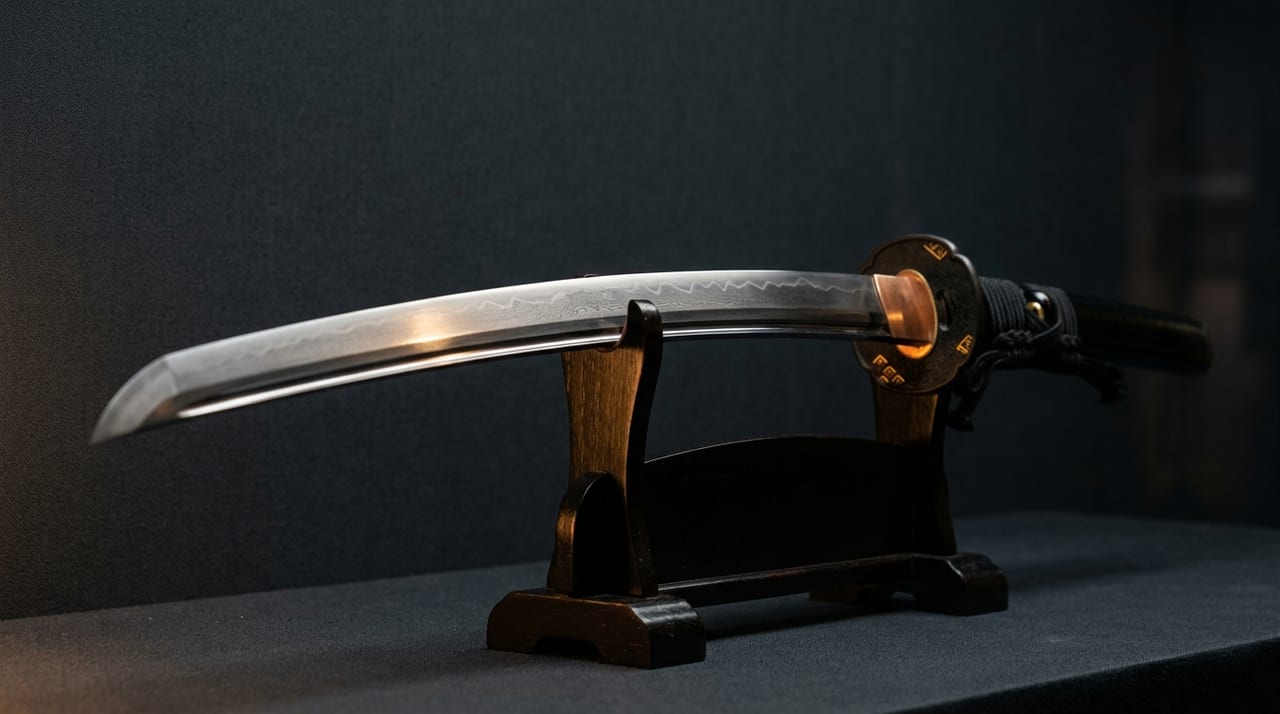
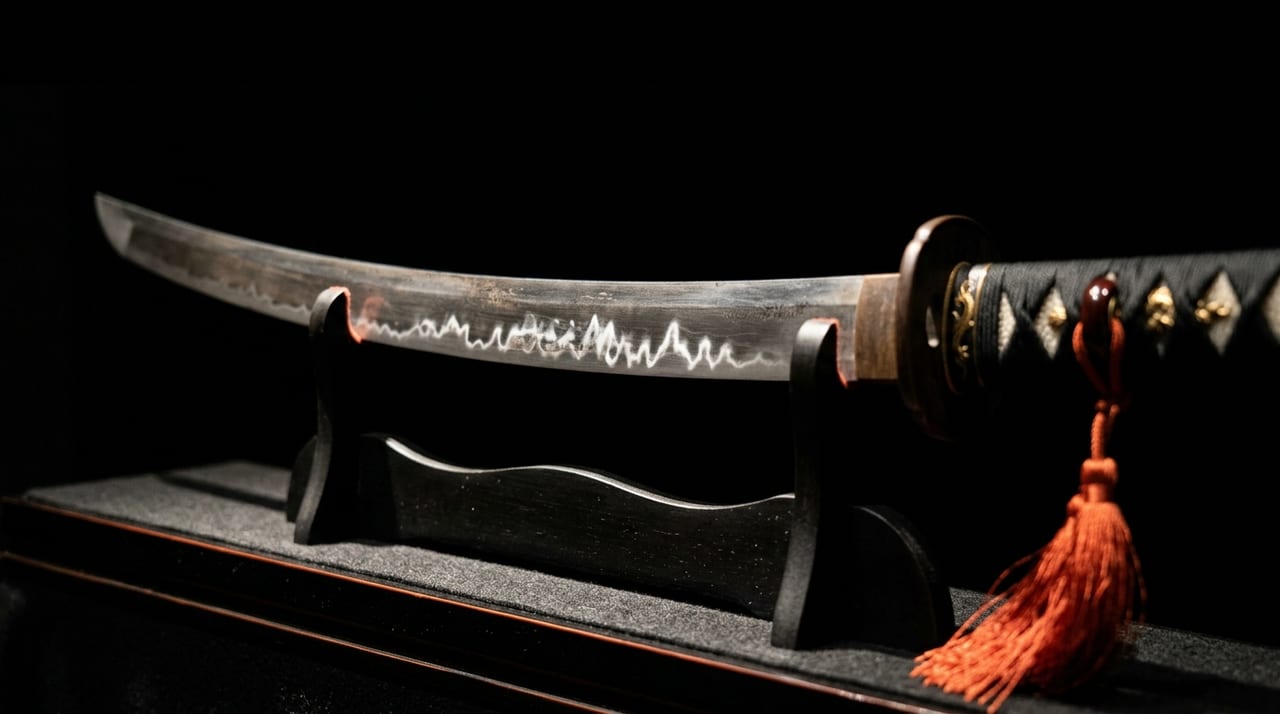
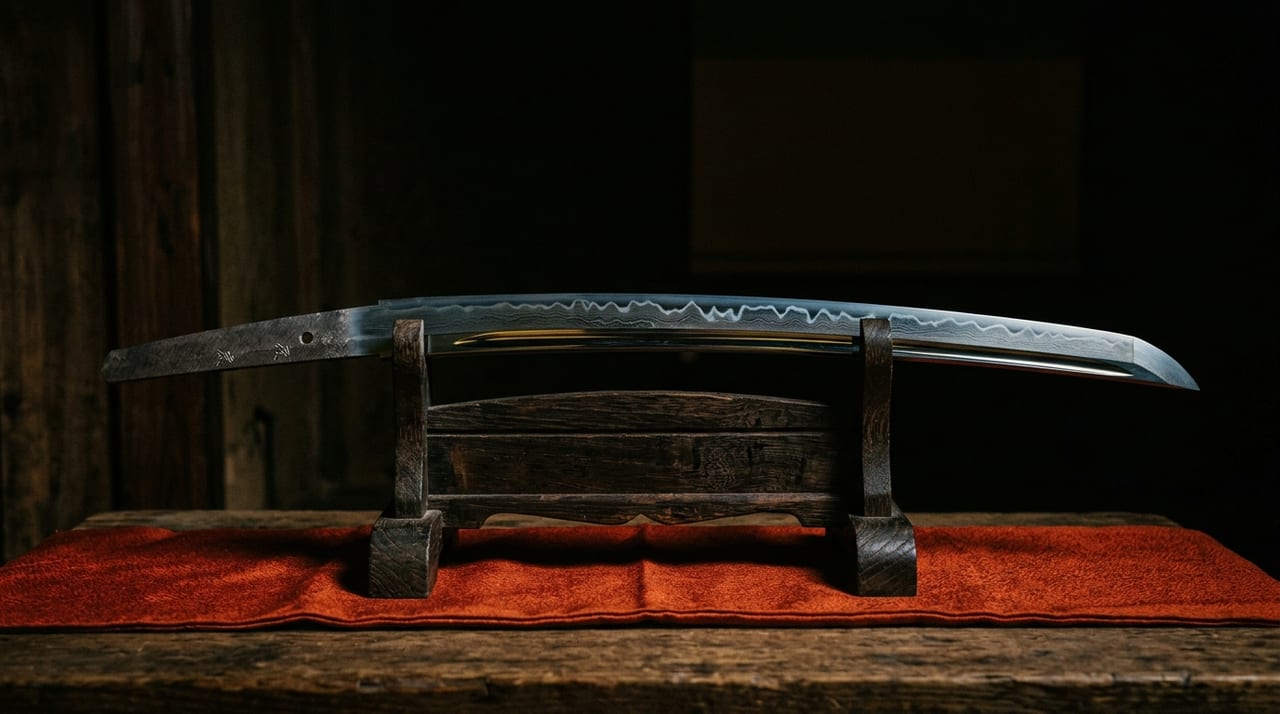
The quality of tansetsu is reflected directly in the jigane (steel of the blade surface) of the finished sword. If tanren proceeds with incomplete bonding, kizu (flaws) called "kitaeware" or "fukure (blistering)" can form at the boundaries between layers and appear on the surface as fine cracks or raised bumps. Conversely, the jigane of a sword whose tansetsu was performed ideally shows countless layers bonded without any gaps, with skin patterns such as itame and mokume appearing tightly packed and dense.
When appreciating or purchasing a sword, hold it in bright light and slowly change the angle of the blade to observe the surface of the jigane carefully. Checking whether the skin is close-grained and lustrous, and whether there are no unnatural cracks or bumps — doing this is also a way of judging with your own eyes the skill of tansetsu of a tōkō from hundreds of years ago. It should be noted that small kitaekizu (forge flaws) are not uncommon in swords of great age, and value is not determined by the presence or absence of flaws alone. It is important to evaluate them within the whole, taking into account their location and extent.
A Traditional Technique Handed Down to the Present
In modern general smithing, commercially available tansetsu-zai such as borax (hōsha) are widely used. However, in the traditional tanren of Japanese swords, the practice of using warabai and dorojiru is still carried on today. The skill of making deft use of such readily available materials as straw and clay is the accumulated wisdom of forerunners born from long experience, and the tōshō of today continue to forge swords while adhering to this fundamental practice.
The Invisible Chemistry That Sustains Masterwork Swords
Warabai and dorojiru leave no trace on the surface of the finished sword. Yet without these humble tansetsu-zai, neither orikaeshi tanren nor tsukurikomi would be possible, and the Japanese sword itself could not be made. These plain, unassuming materials are the true unsung heroes of the tansetsu process — the step by which steel is unified into one.
When you gaze at the intricate jigane of a Japanese sword, remember that every one of those layers was bonded without gaps through the aid of warabai and dorojiru. The strength and beauty of a masterwork sword are built upon the accumulation of this invisible chemistry.
Discovering the Craft of Sword-Making
TOUKENZA (operated by M-Assets Co., Ltd.) is a sword marketplace that sells Japanese swords online. Learning about the art of forging a sword becomes a key to appreciating each blade more deeply. Swords currently listed can be viewed in the online catalog and are available for purchase. If you have a sword you are interested in or any questions, please feel free to contact us via the inquiry form.