Types and Origins of Polishing Whetstones — From Ara-to to Uchigumori and Narutaki: The World of Natural Whetstones Supporting Sword Polishing
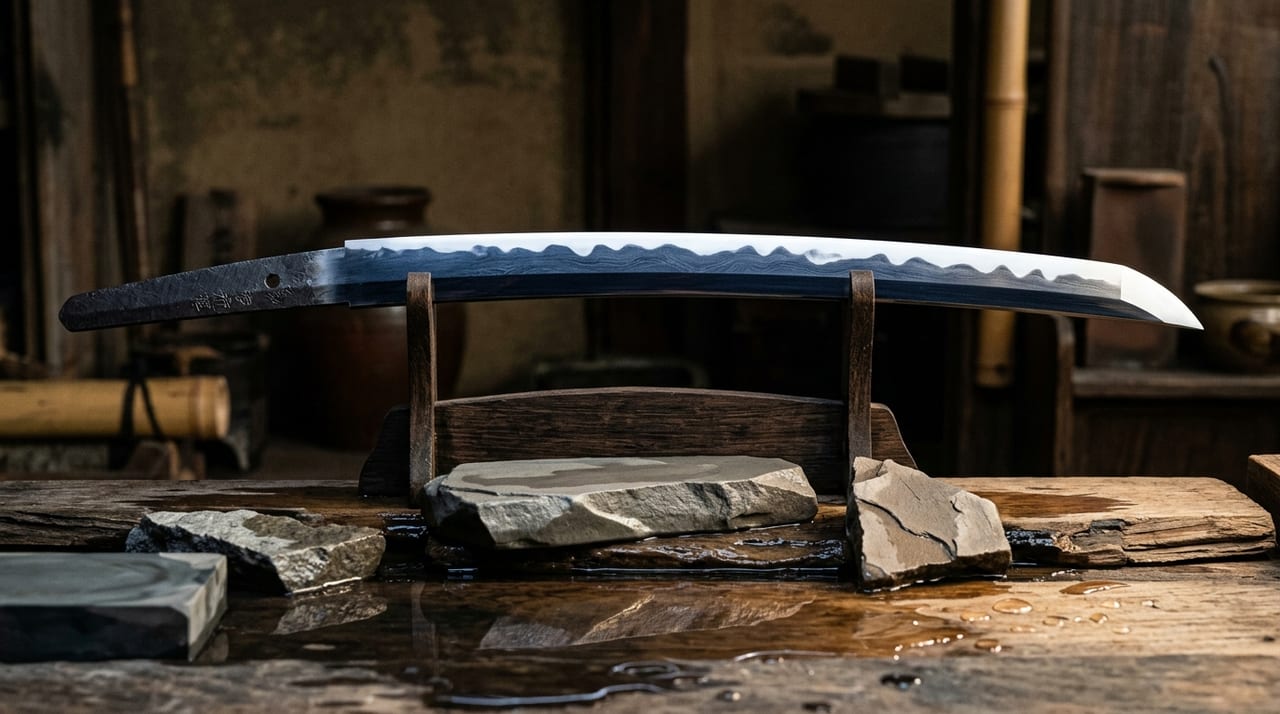 * Image is for illustrative purposes only.
Table of Contents
The Material That Supports Togi: The Whetstone
The skill of the togishi who polishes nihontō to a beautiful finish is often spoken of. Yet it is surprisingly little known that what supports that skill is the large number of whetstones (toishi) of varying coarseness. Togi is a step-by-step process of progressing in order from coarse whetstones to fine ones, and choosing the right whetstone for each stage determines the finished result.
Here we will look at the main types of whetstones used in sword polishing and the role each plays.
Whetstones for Shitaji-togi — From Ara-to to Naka-to
Togi is broadly divided into "shitaji-togi (foundation polishing)" and "shiage-togi (finishing polishing)." Shitaji-togi is the process of shaping the blade and removing scratches.
The first stone used is the coarse ara-to, which grinds away large unevenness in the blade and traces of previous togi, shaping the form (sugata) of the blade. The process then advances to somewhat finer stones such as binsui-do and kaisei-to, which erase the scratch marks left by the ara-to. Further stages with naka-nagura and ko-nagura follow, making the scratch marks finer while refining the surface.
Each stage of shitaji-togi is a succession of replacements in which the coarser scratches left by the previous stone are erased by the next. Skipping even one stage leaves the previous scratches behind, and they cannot be recovered later.
The Keystone of Shiage-togi — Uchigumori-to
Once shitaji-togi is complete, the shiage-togi begins — the stage that draws out the jigane and hamon of the blade. The stone that plays the central role here is the uchigumori-to.
The uchigumori-to is a fine-grained natural whetstone produced in the area around Kyoto and elsewhere, and it polishes the blade to a subdued, misty surface. Within uchigumori there are qualities suited for "hazuya" use and "jizuya" use, and the togishi assesses each stone and uses them accordingly. It is through the togi done with the uchigumori that the kitae-hada of the jigane and the activity of the hamon first become visible.
Hazuya and Jizuya — Polishing with Thinly Split Stones
In the final stage of finishing, the whetstone is split into thin slivers and backed with Japanese paper to create tools called "hazuya" and "jizuya." These are applied to the blade with the fingertips to polish the hamon area and the ji area separately. The hazuya brightens the hamon to a clear white, while the jizuya settles the jigane into a subdued, bluish tone.
In this way, the stones used in finishing are not worked as blocks but transform into delicate tools manipulated at the fingertips as thin flakes. The quality of the stones themselves greatly influences the final appearance of the blade.
Whetstones and Water — The Environment of the Polishing Workshop
Whetstones are always used with water. Water dissipates the heat of friction and at the same time keeps the polishing slurry (togi-shiru) between the blade and the whetstone. This slurry carries part of the abrasive work, and the togishi carefully adjusts pressure and the angle at which the blade meets the stone while gauging how the slurry forms and how the stone responds.
Also, as whetstones are used over time they hollow out in the center and lose their flat surface, so maintenance to keep the face flat is essential. If a stone with a warped face is used, the surface of the blade itself will go out of true. In the polishing workshop, everything — including the position in which the stones are set and the togishi's posture — affects the finished result. Today many togishi use synthetic whetstones of consistent quality for part of the shitaji work, but natural whetstones continue to play the central role in the finishing stages from uchigumori onward.
The Pitfall of Skipping Stages
What is most to be avoided in togi is advancing to the finishing stage while leaving scratches from shitaji behind. Because finishing stones do not have the power to remove deep scratches, if scratch marks from a previous stage are found once the uchigumori stage has been reached, there is no choice but to go far back in the process and redo it.
What must also not be forgotten is that togi is an act of removing the iron of the blade little by little. Every time it is polished, the blade loses material and can never return to what it was. It is for this reason that the judgment of "how far to polish" and "deliberately choosing not to polish" is considered an important part of the skill of working with whetstones. In preserving old swords in sound condition for future generations, the togi plan itself is directly connected to judgments of cultural property preservation.
Togi Checkpoints for Connoisseurs
When looking at a sword in hand or at sword photographs on a sales page, paying attention to the condition of the togi changes how one sees it.
- Hike: Fine hairline scratches that appear as streaks when held to the light. They are often shallow scratches acquired during maintenance or handling.
- Togi-beri (polishing wear): Whether the blade has lost mass through repeated togi over the years. Whether there is crispness in the line of the yokote and shinogi is also a clue.
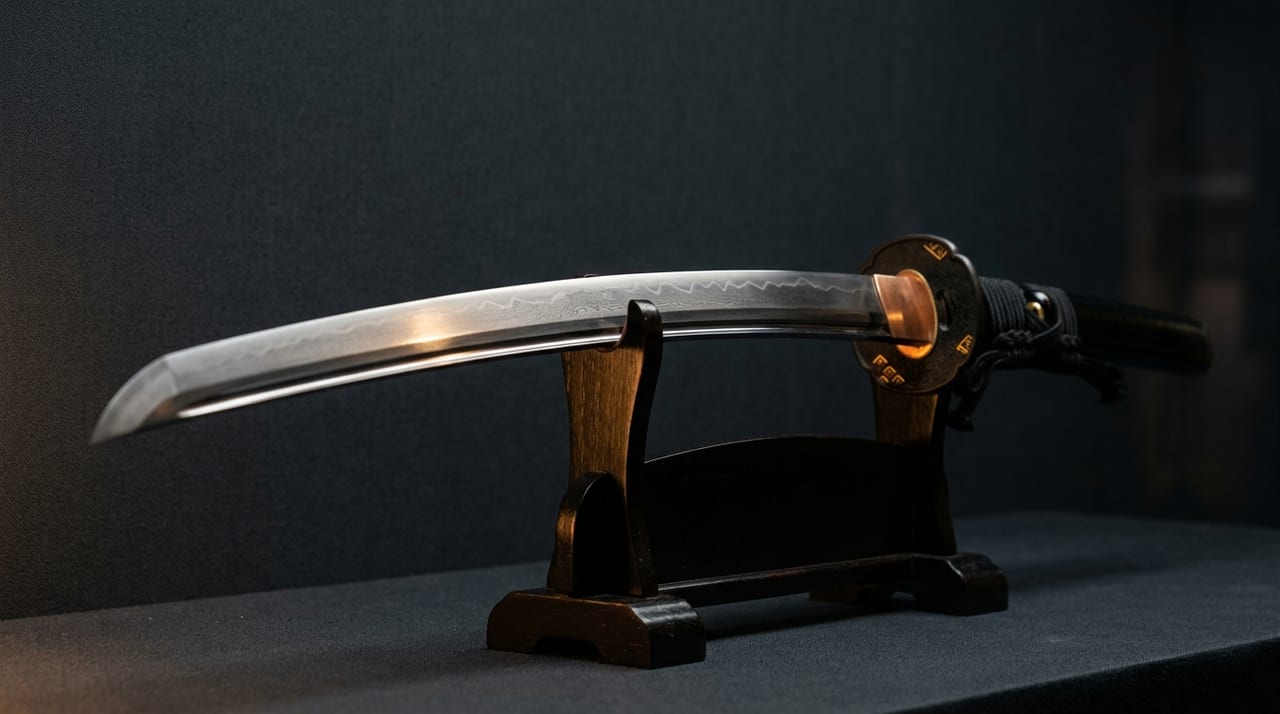
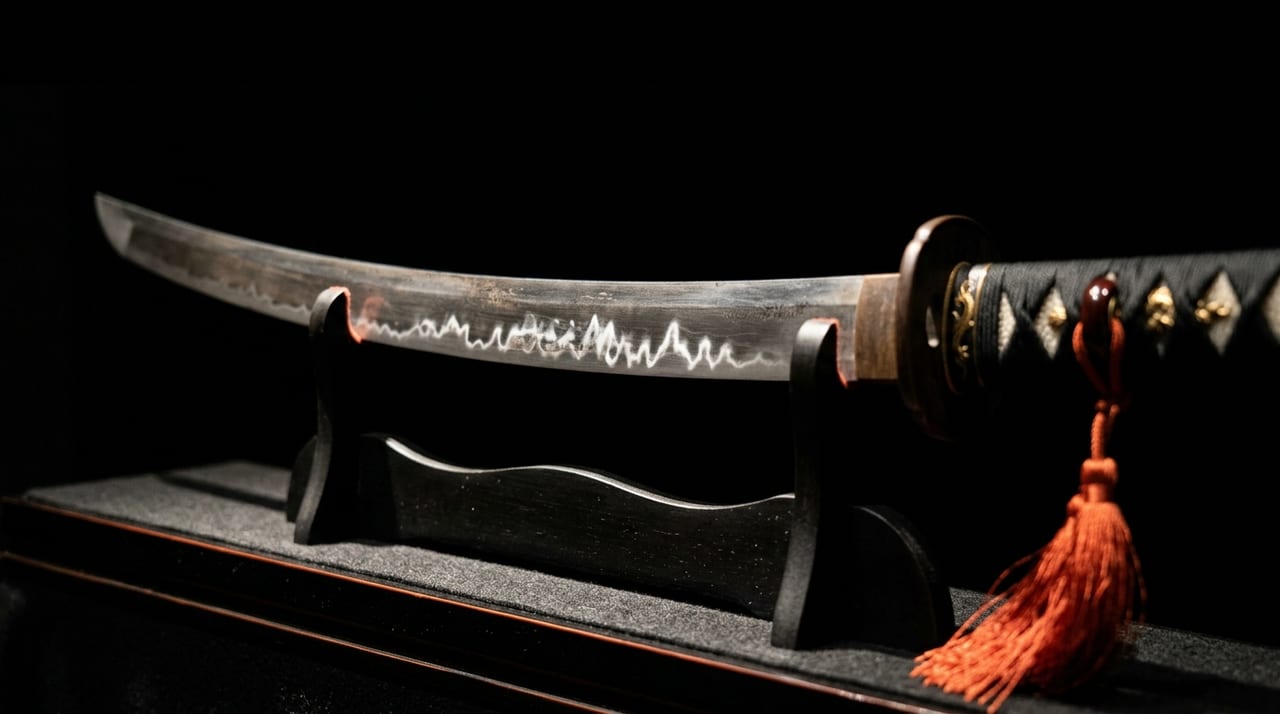
- Contrast between ji and ha: Whether the jigane settles into a subdued tone and the hamon appears clearly white. If the contrast between the two is beautifully balanced, it is evidence that the shiage-togi has been thorough.
Holding these perspectives, the work of the togishi and the whetstones should come to look different from one sword to the next.
Natural Whetstones as a Finite Resource
Natural whetstones suited to sword polishing — especially finishing stones such as uchigumori — are precious resources that can only be quarried in specific producing areas. The supply of high-quality whetstones is limited, and securing excellent stones is as important a challenge for the togishi as skill itself. In recent years the depletion of natural whetstones has also been noted, and their value has risen further still.
Viewing Togi Through the Whetstone
The skill of the togishi resides in selecting the right whetstones in the right order and wielding them with mastery. Shaping with the ara-to, building the surface with the naka-to, and drawing out the ji and ha with the uchigumori, hazuya, and jizuya — this sequence is made possible only through the combined work of whetstones of different properties.
When gazing at the clear jigane and vivid hamon of a fully polished sword, try to recall the many whetstones that worked behind that surface, and the discerning eye of the togishi who chose them.
Encountering the Craft of Swords
TOUKENZA (operated by M-Assets Co., Ltd.) is a sword marketplace that sells nihontō online. Understanding the craft of sword-making is a key to appreciating each sword more deeply. Swords currently listed can be viewed in our online catalog, where purchases can also be made. If you have a sword you are interested in or any questions, please feel free to contact us through the inquiry form.