The Technique of Hi-kaki: the Role of the Groove Carved into the Blade, and the Artisan's Craft of Cutting Bōhi and Futasuji-hi
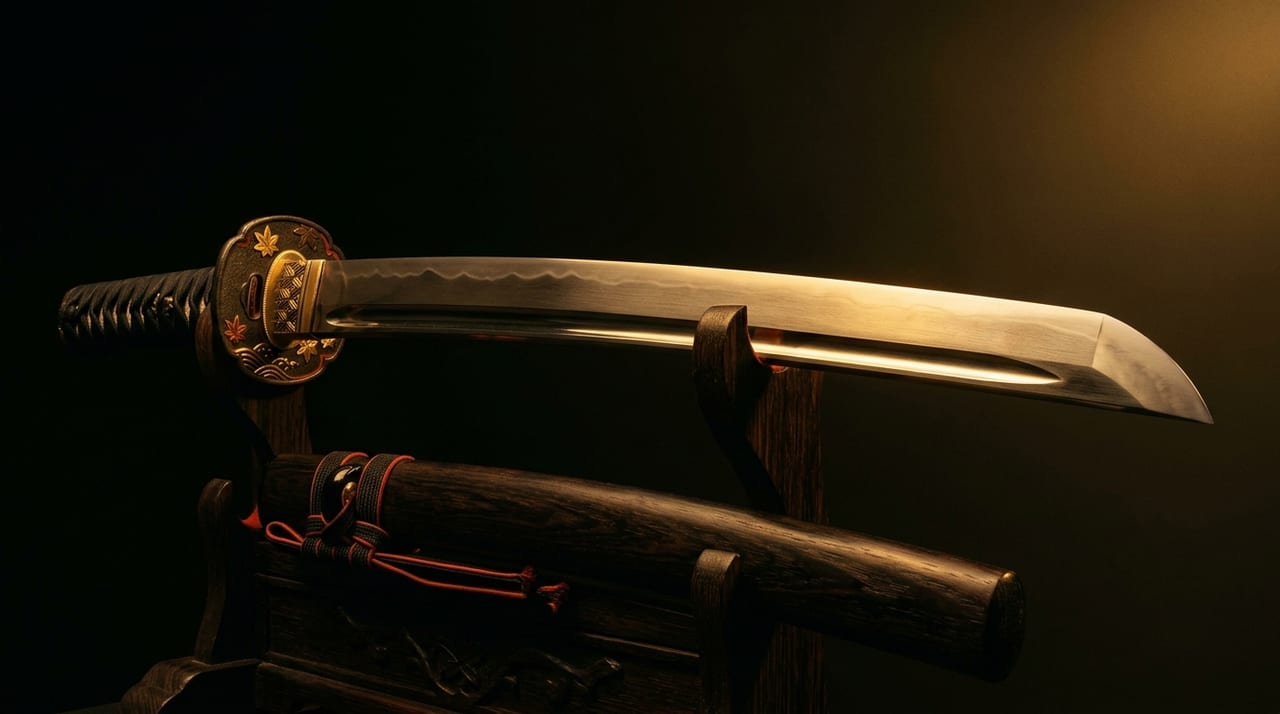 * Image is for illustrative purposes only.
Table of Contents
The Hi: a Groove Running Along the Blade
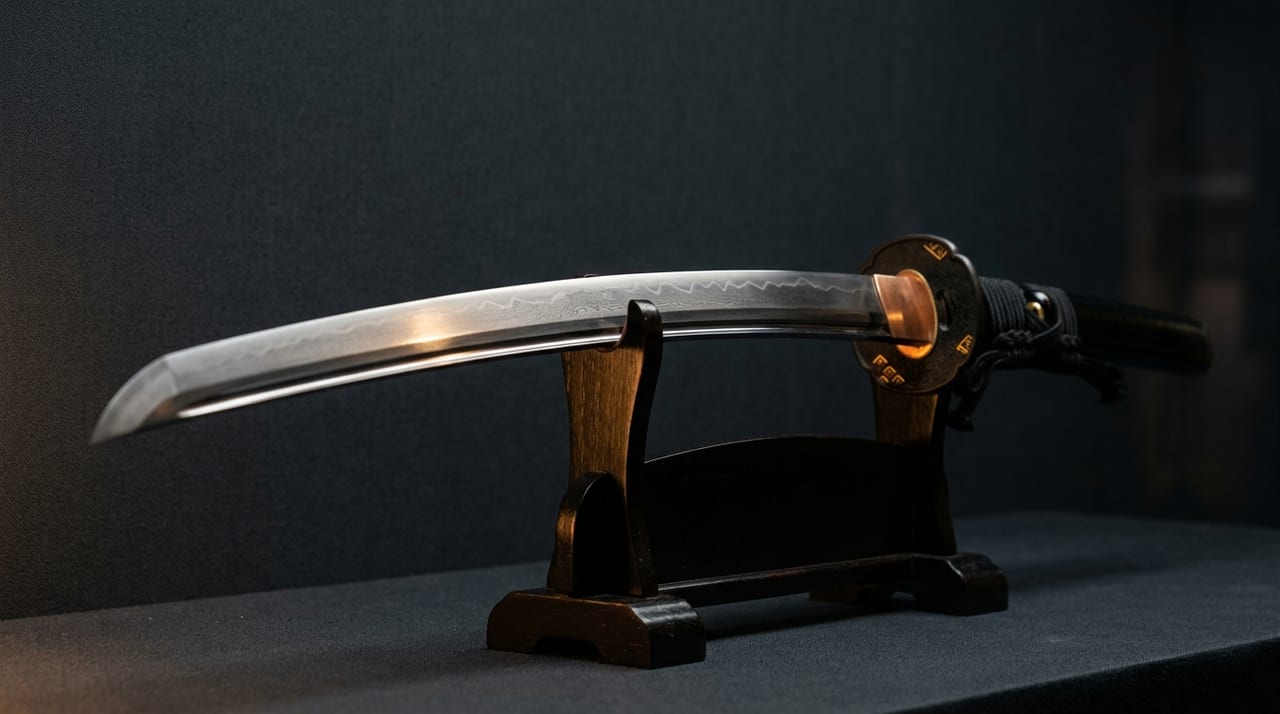
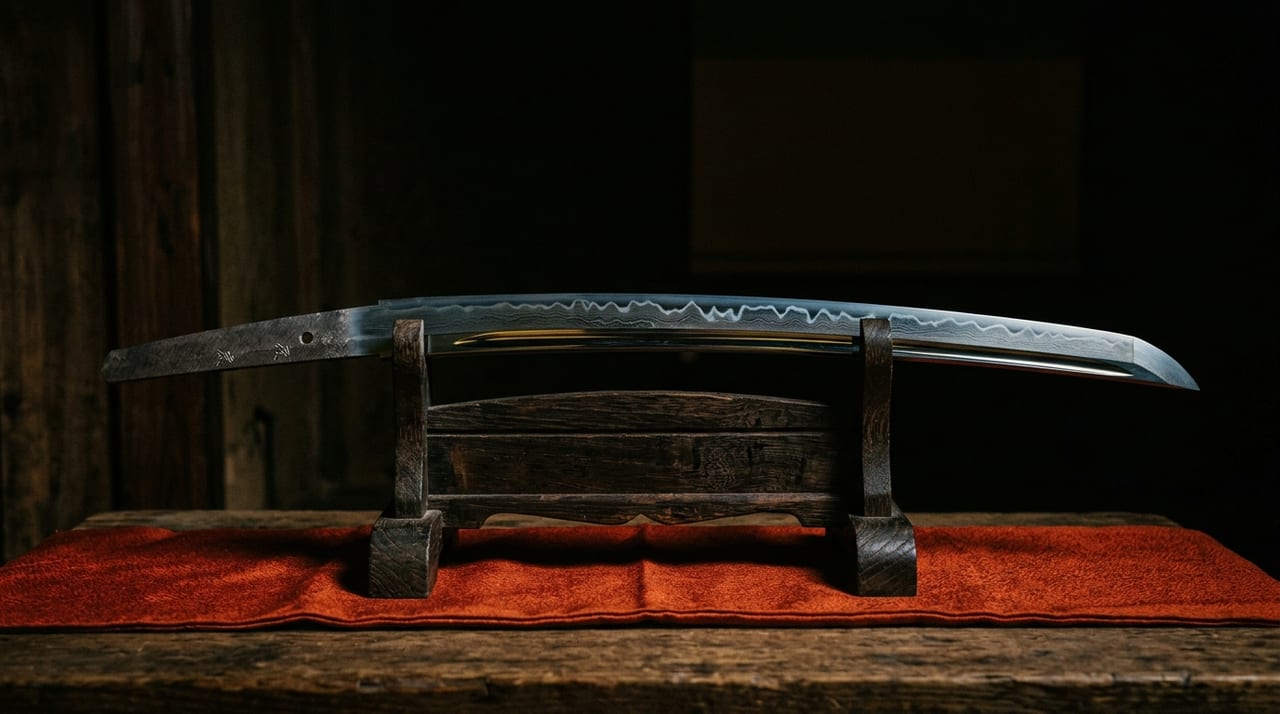
Looking at the hiraji (flat surface) or shinogi-ji (ridgeline surface) of a nihontō, one sometimes finds a long, narrow groove carved along the edge. This is called hi (groove). The character is the same as in amadoi (rain gutter), and it refers to a groove-shaped carving cut into the blade.
Hi is not mere decoration. It is a form of horimono (carving) that serves both a functional and an aesthetic purpose.
The Role of Hi: Weight Reduction and Rigidity
The primary practical purpose of carving hi is weight reduction. By removing some steel from the blade, the sword can be made lighter without significantly sacrificing sharpness or strength. The longer and larger a sword, the more weight becomes an issue, and so the weight-saving effect of hi is considerable.
Furthermore, hi is said not merely to reduce weight, but also, through the ingenuity of its cross-sectional shape, to help balance the blade's flex and rigidity. By introducing a groove, the behavior of the blade under bending toward the mune (back of the blade) changes even at the same weight. It is also said that air flowing through the hi as the sword is swung produces a sound — what is known as tachikaze.
Types of Hi
There are various types of hi, each named according to its form. The most representative are listed below.
Bōhi is the most basic, a single wide groove running straight along the blade. Futasuji-hi has two thin, parallel grooves carved side by side. Koshi-hi is a short groove carved only in the koshi (waist) area near the nakago (tang). There is also the more elaborate soe-hi, a thin supplementary groove added alongside bōhi, as well as hi into which horimono (carving) such as Kurikara are incorporated.
The combination of these types, along with the width, depth, and termination of the hi, greatly changes the overall character of the blade.
The Process and Tools of Hi-kaki
Carving hi is called hi wo kaku. Using dedicated steel cutting tools such as the tagane (chisel) and suki, the jigane (steel of the blade surface) is carefully pared away in a painstaking process.
Carving hi requires a high level of skill — the groove must remain perfectly symmetrical with respect to the blade's centerline, maintaining a consistent width and depth throughout. If the depth varies or the centerline strays at any point, the overall appearance of the blade is marred and correction is difficult. Since hi is often carved into the blade before yaki-ire (quenching), there is no margin for error; it is in many respects a one-shot undertaking.
Craftsmanship Revealed in the Treatment of the Hi-saki
The skill of the tōkō (swordsmith) or carver is also evident in the treatment of the hi-saki (the termination of the hi). There are several forms for how the hi is ended on the kissaki (point) side: maru-dome, which closes it in a rounded finish; "kakitōshi," in which it runs all the way through to the cutting edge; and forms that stop just short of the yokote, among others.
Including the termination on the nakago (tang) side — whether the hi is carried into the nakago or stopped near the ha-machi — the care with which the hi is finished is one indicator of a work's overall quality. A cleanly formed hi-saki speaks to the carver's concentration and mastery.
Hi Carved Later: the Existence of Ato-hi
Not all hi were carved when the sword was originally made. Hi added later, for the purpose of weight reduction or improved appearance, are called "ato-hi" and are distinguished from hi that were present from the outset. In general, the proportion between the hi and the blade's overall form, the relationship of the hi-saki's position to the yokote and the machi, and whether suriage (shortening) preceded or followed the carving are the main points of observation when considering whether a hi is original or added later.
The presence of ato-hi does not immediately reduce a sword's value, but it is important information when considering the sword's original appearance at the time it was made, and is frequently mentioned in descriptive texts and kanteisho (appraisal certificates). When examining hi, bringing the question "when was this carved?" to bear on the temporal dimension deepens one's observation considerably.
Care and Condition Assessment of Swords with Hi
Because hi is a groove, it is a place where oil and moisture tend to accumulate. When performing maintenance, it is important to wipe carefully along the hi with soft paper or cloth so that no old oil is left behind. If pinpoint rust appears inside the hi it is difficult to remove, and if left unattended it may spread, so when inspecting a blade one should shine light all the way to the bottom of the hi to assess its condition.
The inside of the hi is also a place where the interior of the jigane (steel of the blade surface) is exposed. Because carving the hi reveals the inner structure of the blade, flaws such as forging cracks or blisters may appear inside the hi. When considering a purchase, it is prudent to confirm the condition of the hi interior through photographs, not merely the hiraji or the hamon (temper line).
Checklist for Examining Hi
When examining a sword that has hi, it is useful to check the following points in order.
- Whether the width and depth of the hi are maintained consistently from the base to the tip
- Whether the ridgelines (edges) of the hi are crisp and upright, without sagging
- What form the hi-saki termination takes, and whether its positional relationship to the yokote and machi is well-ordered
- Whether there is any rust, flaw, or unpolished residue inside the hi
- Whether the carving and position of the hi are aligned on both the front and back faces
Simply being mindful of these points allows one to clearly perceive the differences in quality between individual swords, even among swords that are all "bōhi swords."
A Crystallization of Functional Beauty
Hi arose from the practical necessity of weight reduction, yet as a single groove running along the blade it also possesses a distinctive beauty. In satisfying both practical and decorative demands, the rationality of the nihontō as a tool and its refinement as a work of art coexist.
By observing the width and termination of the hi carved into a blade, one begins to perceive what priorities guided the making of that particular sword — lightness, beauty, or both at once. Hi is a key for reading the design philosophy of the tōkō (swordsmith).
Engaging with the Craft of Nihontō
TOUKENZA (operated by M Assets Co., Ltd.) is a nihontō marketplace that sells Japanese swords online. Learning about the craft of forging deepens one's appreciation of each individual sword. Swords currently listed can be viewed in the online catalogue, where purchases are also possible. If you have questions about a particular sword or any other enquiries, please feel free to contact us via the enquiry form.