The Honnoji Incident (1582) and Fire-Damaged Swords — Nobunaga's Lost Masterpieces and the Fate of Yakemi Blades
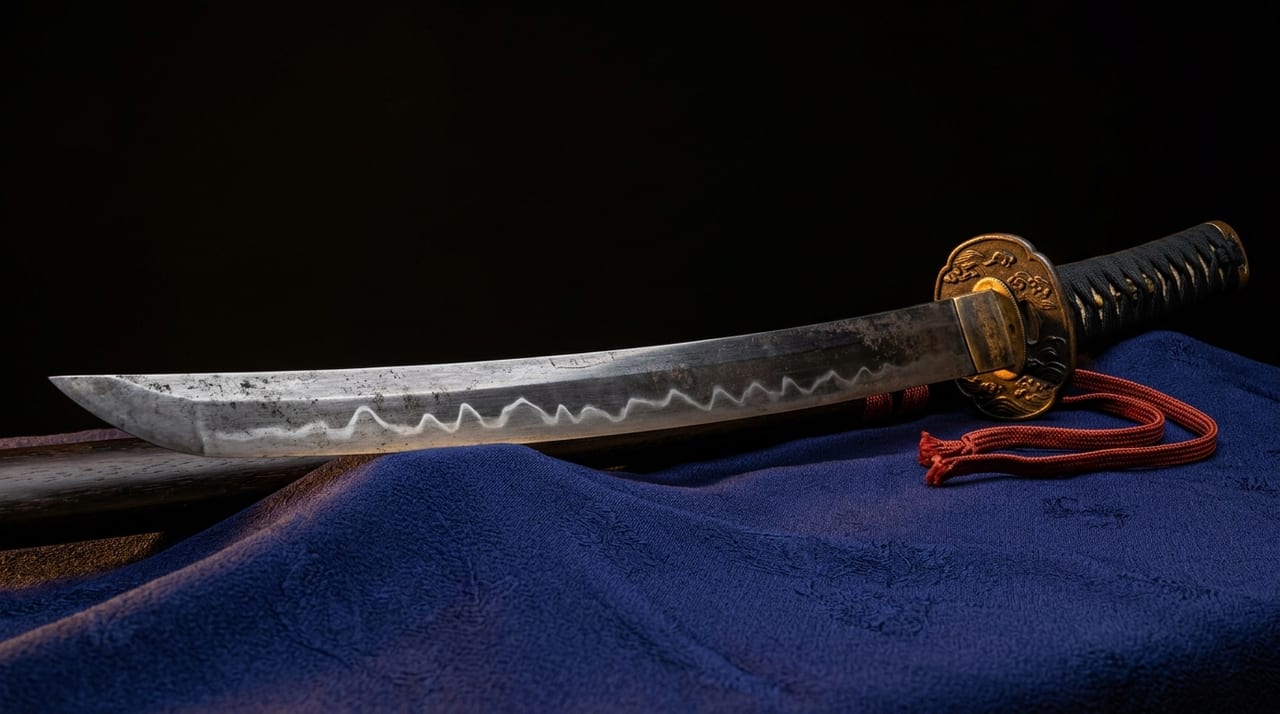 * Image is for illustrative purposes only.
Table of Contents
On the 2nd day of the 6th month, Tenshō 10 (Western calendar 1582), Oda Nobunaga, who was staying at Honnō-ji in Kyoto, came under attack due to the rebellion of his retainer Akechi Mitsuhide. According to tradition, Nobunaga set fire to the temple and took his own life. As a result of the Honnō-ji Incident, the numerous treasures and renowned swords that Nobunaga had brought with him are said to have been consumed by the flames.
The Burning of Tea Wares and Renowned Swords
It is said that Nobunaga transported numerous renowned tea wares to Honnō-ji for a tea gathering. Many of these are believed to have been destroyed in the Honnō-ji Incident, and it has long been said that renowned swords Nobunaga had treasured were also lost. While there are variations in tradition regarding which specific swords were burned, the fact that the flames of Honnō-ji consumed many treasures associated with Nobunaga has been passed down through the generations in various forms. In the case of some swords, attempts at restoration, capturing their appearance, were made in later years.
What is Yakemi (焼身)?
When a sword is exposed to high temperatures in a fire, the tempering structure that maintains the hardness of the blade is damaged, and the original hamon (刃文) and jigane (地鉄) qualities are lost. Such swords are called yakemi or yake-mi (焼け身). A sword that has become yakemi suffers significant loss of aesthetic value and cutting ability in its current state.
However, in the case of swords with established provenance, a process called saiha (再刃) was sometimes applied in later periods. This was a treatment to re-temper the blade and restore the hamon. While swords that underwent saiha are respected because of the weight of their provenance, they become a different state from the original craftsman's work, so they are handled with care in appraisal. Among saiha treatments, those for which the circumstances and timing are recorded have high documentary value, and in sword texts they are often noted as "saiha" and treated as part of the provenance.
How to Distinguish Saiha—General Points of Appraisal
While determining whether a blade is yakemi or has undergone saiha is ultimately the domain of experts, understanding the general observational points discussed in appraisal circles enhances one's ability to read provenance. What is often noted in saiha blades is that the hamon activity is weak and tends toward monotony, that the yakidashi (焼き出し)—the beginning of the hamon—does not match the style of the period, and that the color and luster of the jigane appear different from authentic period pieces. Additionally, traces of fire exposure may remain on the habaki and nakago (茎). No single observational point is decisive on its own; assessment is made holistically by comparing the blade's shape, mei (銘), and provenance records.
The important point is that saiha does not equal worthlessness. Saiha of swords with established provenance have been accorded unique respect as witnesses that preserved nearly lost history. On the other hand, market valuation of such pieces is clearly distinguished from that of intact blades, so as a buyer one must maintain both perspectives.
Warfare and Great Fires—The History of Calamities That Consumed Renowned Swords
The Honnō-ji Incident was not the only incident in which renowned swords were lost to fire. During the Sengoku period, in castle sieges and falls, armaments and treasures stored within castles were repeatedly lost in conflagrations. Even after the Edo period began, it is known that many swords, including those in daimyo house collections, were damaged in the Meireki Great Fire of Meireki 3 (1657), which burned much of Edo. With each such calamity, swords recovered from the ruins underwent saiha, or their records alone remained as their physical forms disappeared. The ancient renowned swords that have come down to the present day are, so to speak, products of an improbable miracle, having repeatedly survived waves of warfare, fire, and dispersal.
Verifying Provenance—Practical Considerations at Purchase
When considering the purchase of an old blade, the practical considerations regarding yakemi and saiha are as follows.
- Verification of Appraisal Certificate—Always confirm whether an appraisal certificate from the Nihon Bijutsu Touken Hozon Kyokai (Japan Fine Art Sword Preservation Association) or similar organization exists, and whether its contents match the physical blade. Blades determined to be saiha receive different treatment in appraisal than intact blades.
- Alignment of Hamon and Period—Does the hamon of the physical blade match the style of the claimed period and school? If there are questions, request an explanation from the seller.
- Reasonableness of Price—Saiha blades and those with questionable authenticity are not valued at the same market rate as intact contemporary works. An extraordinarily inexpensive "renowned sword" relative to the impressiveness of its provenance always has a reason.
Provenance (the record of transmission) is an important part of a sword's value, but the fundamental principle in dealing with old renowned swords is to verify it not by narrative alone, but by confirming that the physical condition and appraisal documentation are both aligned and substantiate the account.
The Fate of Renowned Swords and the Testimony of History
The Honnō-ji Incident was a major event in political history and simultaneously cast a profound shadow on the transmission history of swords. The pattern of renowned swords being lost or becoming yakemi due to fire and warfare was not unique to Honnō-ji but has been repeated throughout the long history of the Japanese sword. Tracing the provenance of extant renowned swords, one becomes aware that mere survival through such calamities has itself become part of the blade's value.
The value of a sword is not determined by the steel alone. Whom it was worn by, through which battlefields it passed, through which fires it endured—the depth of such records and transmission is what makes a single blade a unique and irreplaceable thing. A major event like the Honnō-ji Incident both inscribed the names of lost swords in history and added weight to the provenance of those that survived.