The Introduction of Firearms (1543) and Japanese Swords — Changes on the Battlefield and the Role of Swords Brought by Tanegashima
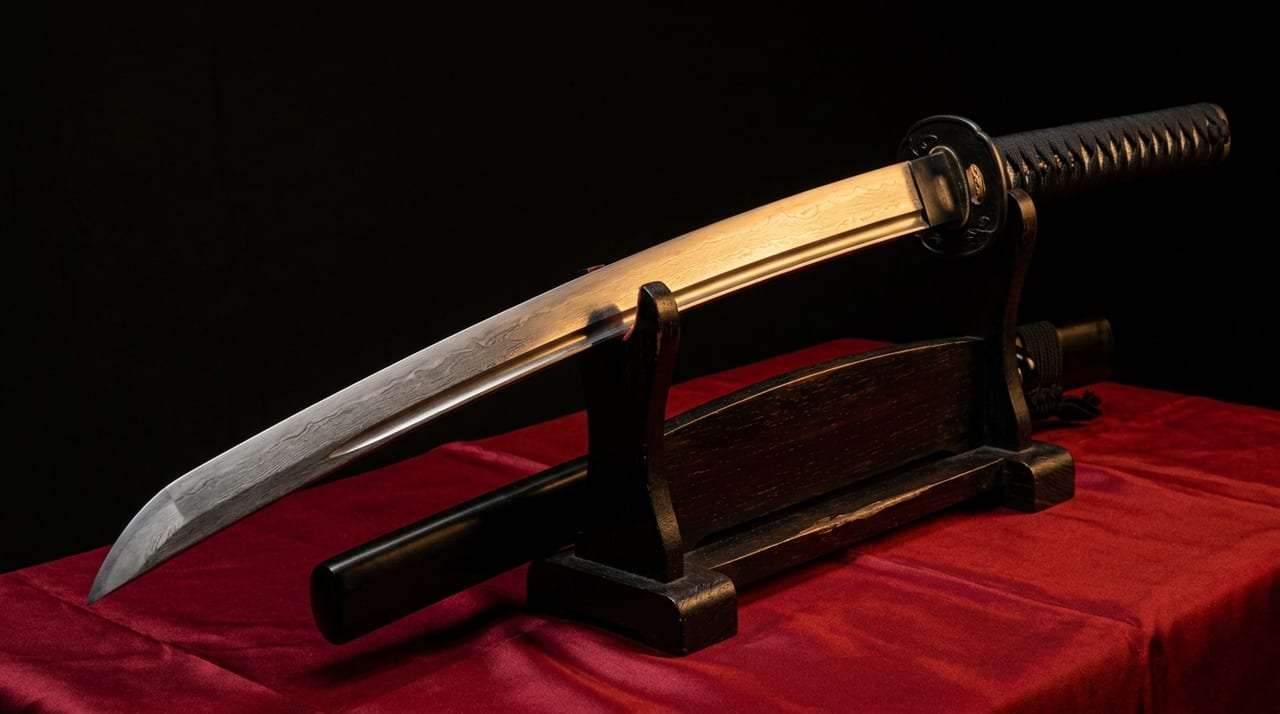 * Image is for illustrative purposes only.
Table of Contents
In Tenbun 12 (1543), it is said that firearms (matchlock guns) were introduced to Japan by Portuguese men aboard a ship that drifted ashore on Tanegashima (Kagoshima Prefecture). This is what is conventionally known as the "introduction of firearms." Although alternative theories regarding the date and route of introduction have been put forward in recent years, the understanding that places Tanegashima as the turning point has been widely accepted.
Characteristics of the Matchlock Gun as a Weapon
The firearms that were introduced were matchlock guns that ignite the priming powder using a lit match cord. While they often surpassed bows in power and range, they had limitations: reloading was time-consuming, making rapid fire difficult, and they were vulnerable to rain and moisture. Since the match cord's flame could not be allowed to go out, at night it also revealed the user's position to the enemy. Because of these characteristics, firearms were not weapons that could decide a battle on their own; they were "combined weapons" that showed their true power only when used together with spears, bows, and swords. This perspective is indispensable when considering the relationship between battles after the introduction of firearms and Japanese swords.
Domestic Production and Rapid Proliferation
It is said that the island lord Tanegashima Tokitaka purchased two firearms and ordered the kaji of his domain to make copies. Although the thread-cutting technique needed to seal the bottom of the barrel proved a difficult problem, they overcame it and succeeded in domestic production, and firearms came to be mass-produced in various places such as Sakai in Izumi and Kunitomo in Ōmi. Sengoku daimyo universally adopted firearms, bringing major changes to tactics and castle construction.
The Use of Firearms as Seen in the Battle of Nagashino
The battle that is often cited as a milestone in the large-scale deployment of firearms is the Battle of Nagashino in Tenshō 3 (1575). The allied forces of Oda Nobunaga and Tokugawa Ieyasu positioned a firearms unit in fortifications equipped with horse-fencing barriers and defeated the army of Takeda Katsuyori. The famous description of "three volleys of three thousand guns" has been identified by researchers as an exaggeration and embellishment by later military chronicles, and the details should be examined with care. Nevertheless, it is widely acknowledged that a defensive deployment combining field fortifications with firearms proved highly effective, and this had a great influence on the shape of subsequent battles and castle construction.
The Role of Swords in the Age of Firearms
Even as firearms became the primary weapon, Japanese swords did not immediately become unnecessary. Battles were not decided by long-range shooting alone; they ultimately involved phases such as close-quarter cutting charges into enemy positions, grappling, and taking heads. In such close combat, swords and wakizashi continued to play an important role.
Rather, the large-scale battles of the Sengoku period, which mobilized vast numbers of troops including ashigaru, created demand for mass-produced practical swords called kazuuchi. A complex weapons system took shape in which firearms, spears, and swords were used according to the situation. For more on the actual procurement of weapons during the Sengoku period, the article Weapon Procurement and Sword Prices in the Sengoku Period is also useful.
Kazuuchi and Chūmonuchi
An important distinction when thinking about sword production in the Sengoku period is that between kazuuchi and chūmonuchi. Kazuuchi were mass-produced goods meeting battle demand, with major production centers such as Bizen Osafune and Mino Seki turning out vast numbers of practical swords. Chūmonuchi, on the other hand, were works carefully forged to individual orders from military commanders, and fine examples remain highly regarded today. Even swords from the same era differ greatly in character depending on their production background. This distinction is a fundamental perspective when examining swords from the late Muromachi period through the Sengoku period — what are known as sue-kotō. For the relationship between ashigaru and swords, see also Ashigaru and Swords in the Mid-Muromachi Period.
The Transformation of Weapons and the Meaning of Swords
The emergence of firearms relativized swords from their position as "the primary decisive weapon," while at the same time laying the groundwork for the sword's meaning as a symbol of samurai status and decorum to become all the more prominent as Japan moved toward the peaceful Edo period. One could say that the introduction of firearms indirectly prepared the starting point for the long transformation from a battlefield tool to the soul of the warrior class.
Checkpoints When Viewing Swords of This Era
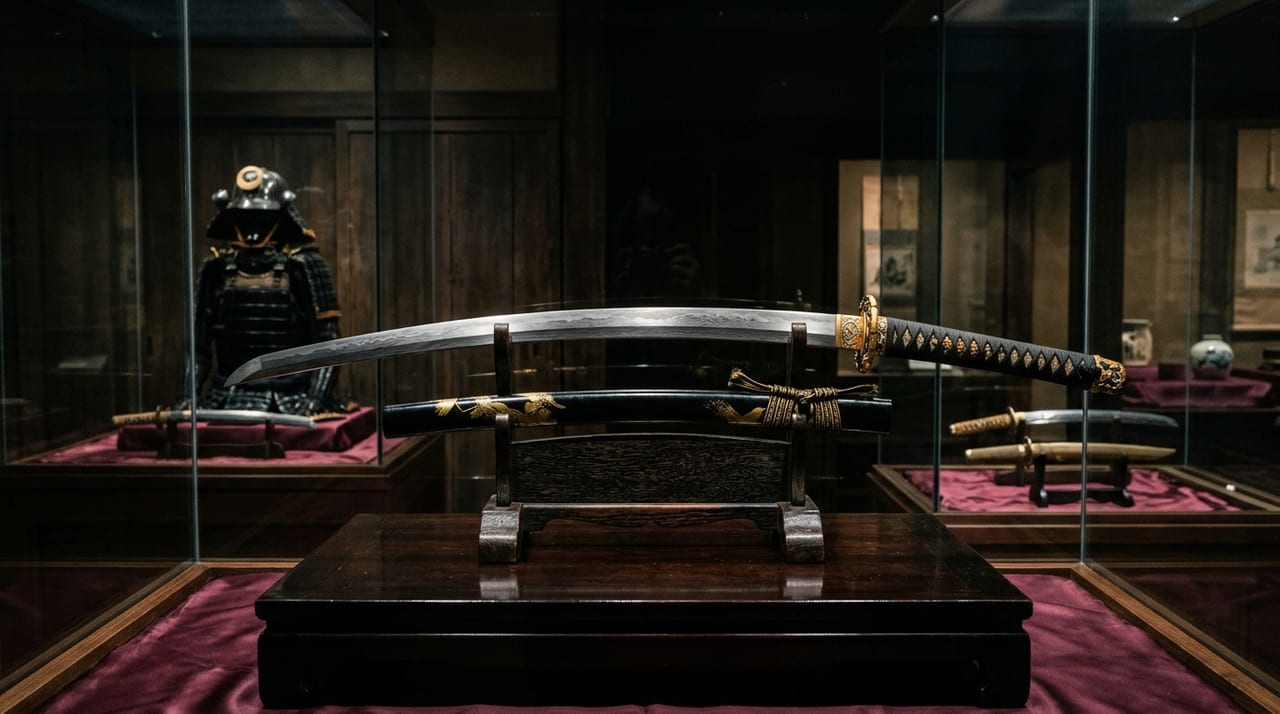
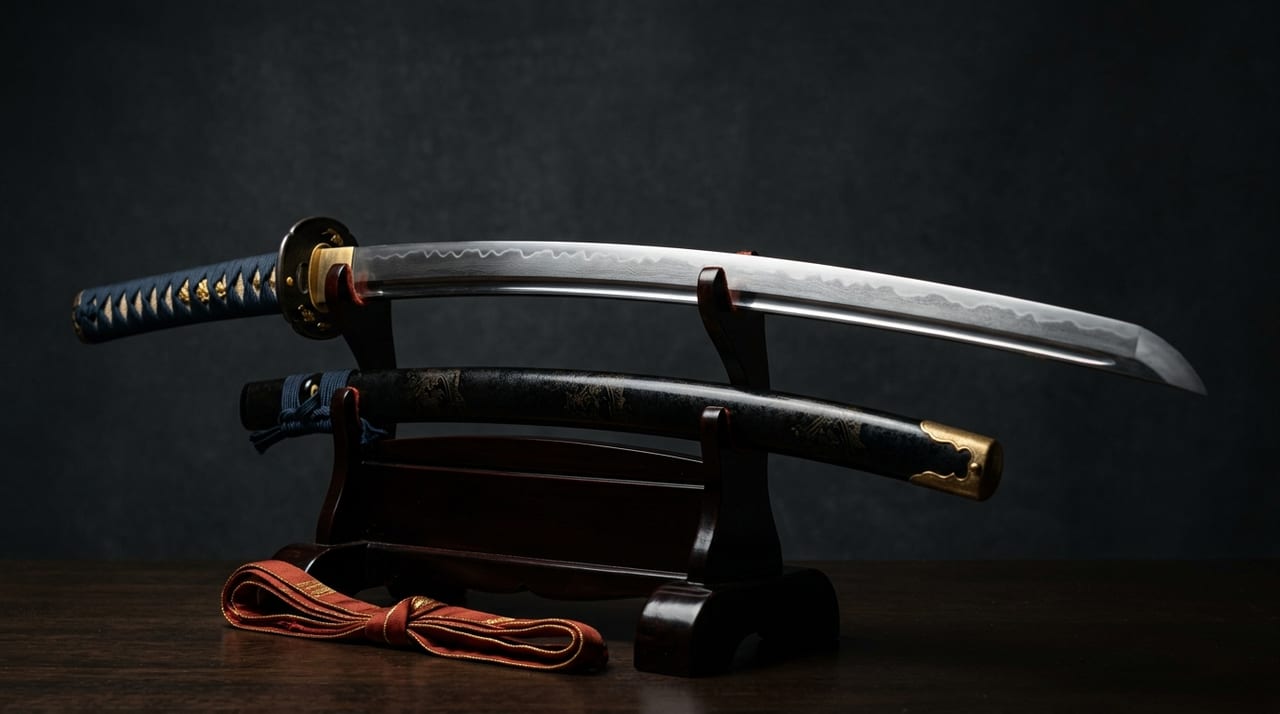
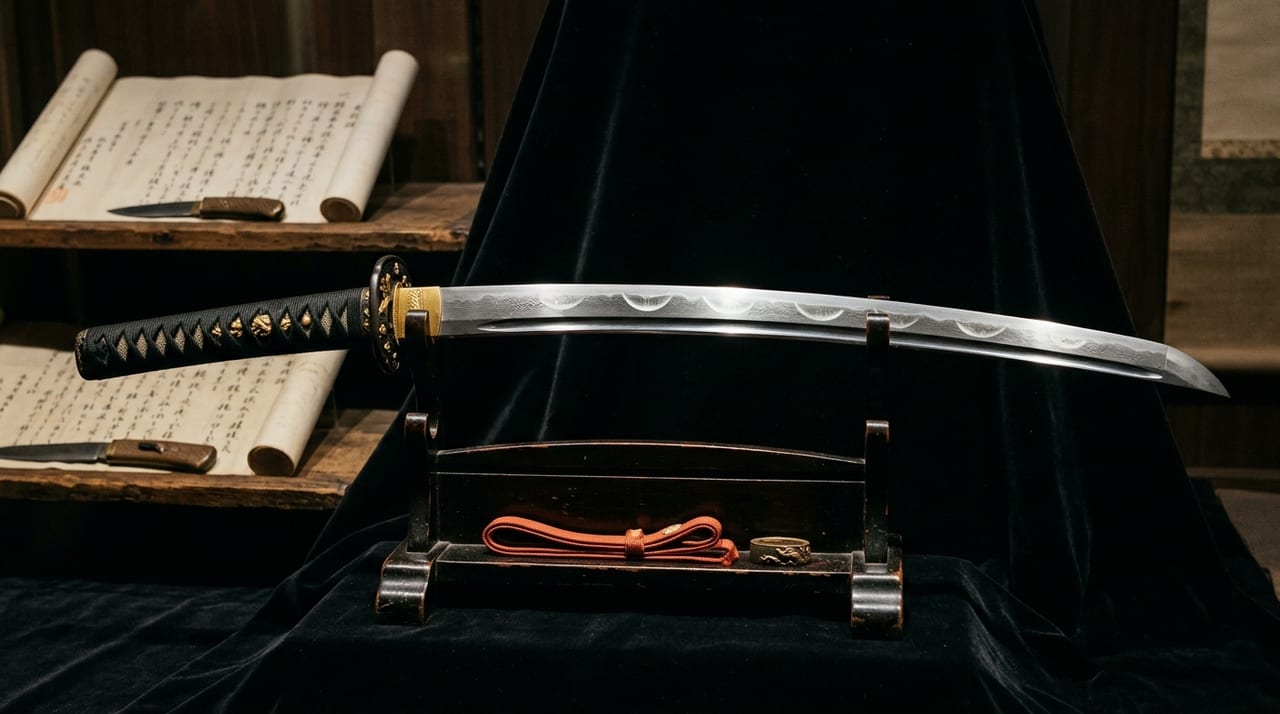
Swords from around the time of the introduction of firearms — that is, from the late Muromachi period — are said to show characteristics that reflect changes in the way battles were fought. First, the tachi, which was swung on horseback, gave way to the uchigatana as the mainstream form: worn edge-up at the waist and drawable in a swift single motion. Second, many works have a compact, agile shape that takes into account one-handed use. Third, a saki-zori profile is seen, in which the sori is stronger toward the tip of the blade. When appreciating actual swords, paying attention to the overall shape, dimensions, and position of the sori provides a clue for imagining the style of fighting of the era in which that sword lived.
Misconceptions Surrounding the "Replacement" of Swords by Firearms
The simple picture that "once firearms were introduced, swords became obsolete" does not match reality. While research is known that ascribes a large share of battle injuries to arrows, firearms, spears, and the like, swords remained an indispensable presence for self-defense, close combat, and as a marker of status. Each weapon fulfilled its own role, and new weapons did not drive out old ones overnight. This layered complexity is precisely the key to understanding the weapons culture of the Sengoku period.
Brief Glossary
- Hinawajū: An early firearm ignited by a lit match cord. In Japan it was also called by the name "Tanegashima."
- Kazuuchi: Practical swords mass-produced to meet the large-scale demand of the Sengoku period.
- Sue-kotō: A term referring to swords from the late Muromachi period through the Sengoku period — the final phase of the kotō era (roughly before the Keichō period).
- Uchigatana: A type of sword worn edge-up at the waist. It became the mainstream form from the Sengoku period onward.
Those with an interest in the sword culture and changes in weaponry of the Sengoku period are encouraged to explore the columns and sword listings on TOUKENZA to learn about the changing roles of swords across different eras.