The Battle of Nagashino (1575) and Japanese Swords — The Reality of Close-Quarter Combat in the Shadow of Firearms
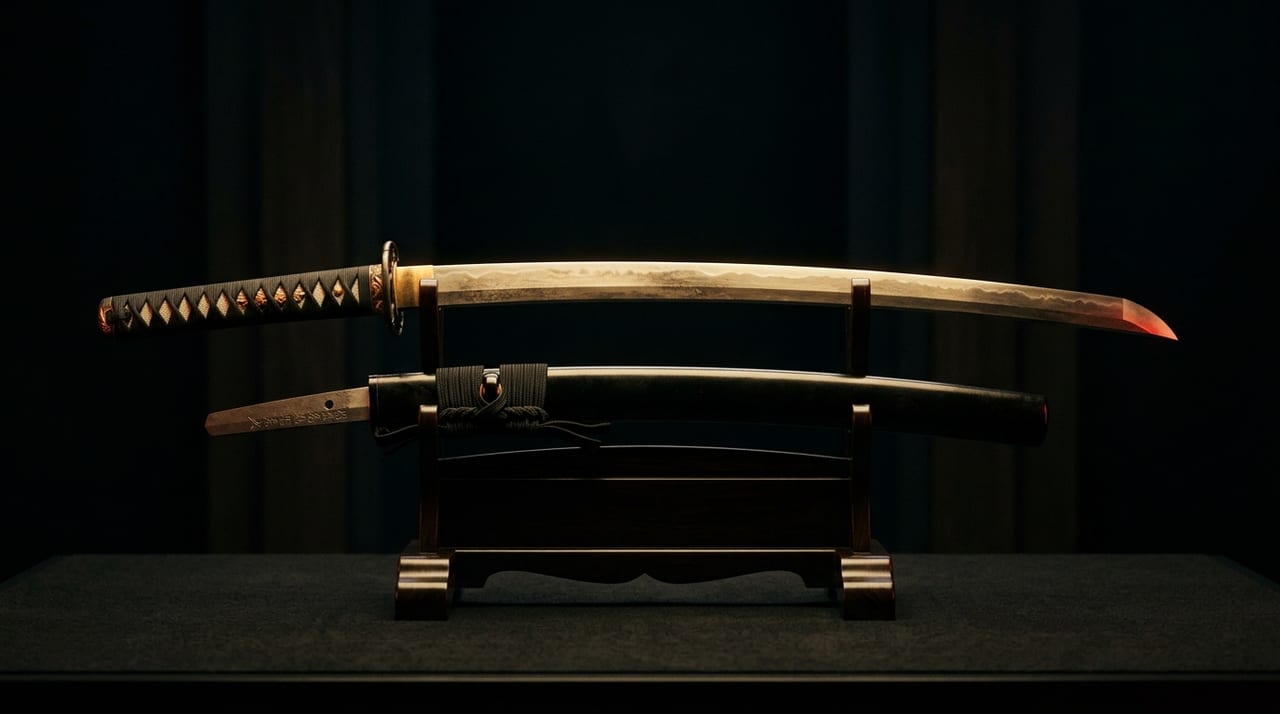 * Image is for illustrative purposes only.
Table of Contents
In the 5th month of Tenshō 3 (1575), the combined forces of Oda Nobunaga and Tokugawa Ieyasu clashed with the army of Takeda Katsuyori over Nagashino in Mikawa Province (present-day Shinshiro, Aichi Prefecture). The Battle of Nagashino is widely known as a battle that symbolizes the power of firearms in Sengoku-period warfare.
Firearms Tactics and the Horse-Barrier Stockade
Nobunaga built a horse-barrier stockade (babōsaku) at Shitaragahara and positioned his forces there, deploying large numbers of firearms to meet the Takeda army. It is said that the Takeda cavalry were stopped by the stockade and suffered heavy casualties from gunfire. As a result, the Takeda clan lost many capable retainers and reached a turning point on the path to decline.
It should be noted that suggestions have been raised that the number of firearms Nobunaga prepared, and the so-called "three-rank volley" tactic, may be exaggerations or inventions based on later records, and scholarly verification continues. That the concentrated deployment of firearms influenced the outcome of the battle is itself widely accepted.
Swords at Work in the Shadow of Firearms
The Battle of Nagashino tends to be narrated with firearms as the main subject, but the battle was not concluded by gunfire alone. In situations where combatants broke through the stockade and grappled, in pursuit engagements chasing a broken enemy, and in close-quarters combat involving wrestling opponents down and taking heads, swords and wakizashi were actually used.
In Sengoku-period battles, a rough division of roles according to engagement distance generally held as follows.
- Long range: bows and firearms
- Medium range: spears
- Melee combat (final phase): swords
At Nagashino as well, after the firearms engagement that decided the outcome, it is thought that intense close-quarters fighting unfolded as the fleeing Takeda forces were cut down. Even if swords were no longer the "primary weapon," they had not left the battlefield.
The State of Swords in the Late Sengoku Period
The Tenshō era, when the Battle of Nagashino took place, falls at the tail end of the kotō period in the classification of sword history — the era known as sue-kotō. With the long years of warfare that followed the Ōnin War, demand for weapons swelled, and in major production centers such as Bizen and Mino, alongside the careful forging to order known as chūmon-uchi, swords known as kazuuchi — produced to a standard pattern in large quantities — were made in great numbers.
Among uchigatana of this era, relatively short pieces that could be wielded with one hand are frequently seen. It is thought that the practical demands of wielding a sword at the hip alongside spears and firearms in mass combat were reflected in the form as well. Most of the swords carried by officers and soldiers at Nagashino were likely such sue-kotō forged primarily for practical use.
Furthermore, by this era the manner in which samurai wore swords had shifted from the "haku" style of suspending a tachi from the hip to the "sasu" style of thrusting an uchigatana blade-upward through the belt. The style of the uchigatana, which allowed for a faster draw, was suited to the reality of mass combat in which close-quarters fighting could begin at any moment, and by the time of Nagashino the swords on a warrior's hip were already approaching the daisho combination familiar from the later Edo period.
Wakizashi, Kumiuchi, and Head-Taking
In kumiuchi — the final phase of close combat — the more maneuverable wakizashi and tantō proved their worth over the longer sword. Actions performed at close quarters included the following.
- Targeting gaps in armor
- Delivering a finishing blow to a pinned enemy
- Taking a head
All of these were tasks performed at extremely close range, and there was a clear practical reason why samurai wore two swords.
In an age when a warrior's achievement in battle was proven by the heads taken, swords and wakizashi remained "the weapons that had the final say." Even as firearms came to decide the course of battles, the very structure of warfare — confirming victory and proving merit for reward — made it impossible to set aside the sword.
Perspectives for Appreciating Swords
Viewing a sword with a Sengoku-period battle in mind adds new dimensions to observation. For a sue-kotō uchigatana, for instance: from the dimensions and degree of sori (curvature), can one read the practical form of a piece designed with one-handed use in mind? For a tachi that has undergone suriage (shortening), does it not tell the story of an era in which weapons for mounted combat were adapted for fighting on foot? From the condition of the nakago (tang) and the presence or absence of mei (signature), one can also glimpse the production circumstances of the time — whether a piece was chūmon-uchi or kazuuchi.
The history of battles and the history of sword forms illuminate each other. Using a well-known battle such as Nagashino as a point of entry from which to verify the appearance of swords of that era is one reliable way to deepen one's appreciation of swords.
The "Hip Weapon" in the Age of Spears and Firearms
Even in an era when the main role on the battlefield had passed to spears and firearms, the sword remained a weapon that samurai always carried on their person. Spears and firearms were "unit weapons" operated in formation, and in situations within camp, on the march, or in a sudden encounter, only the daisho at the hip could be drawn and used immediately. As a martial implement, the sword was less the center of fighting power than the last personal reserve of the individual samurai, and at the same time an item that expressed status and resolve. Even in the era of large-scale firearms combat exemplified by Nagashino, swords continued to be made, and eventually continued to be worn even into the age of peace — a background rooted in this character that went beyond that of a weapon.
The Reality of Battle and the Place of the Sword
The Battle of Nagashino is remembered as a symbol of new weapons defeating old tactics. But no single weapon completes a battle on its own; swords, spears, and firearms functioned in combination according to each situation. Reconsidering the practical role of the sword in battles of the firearms era is an aid to understanding the history of the Japanese sword in a three-dimensional way.
Those interested in the relationship between Sengoku battles and swords are invited to browse the columns and sword listings on TOUKENZA to see alongside them the changes in weapons and tactics across different eras.