Mikazuki Munechika — The Elegance of the Five Swords Under Heaven: A National Treasure Tachi by Heian Master Sanjo Munechika
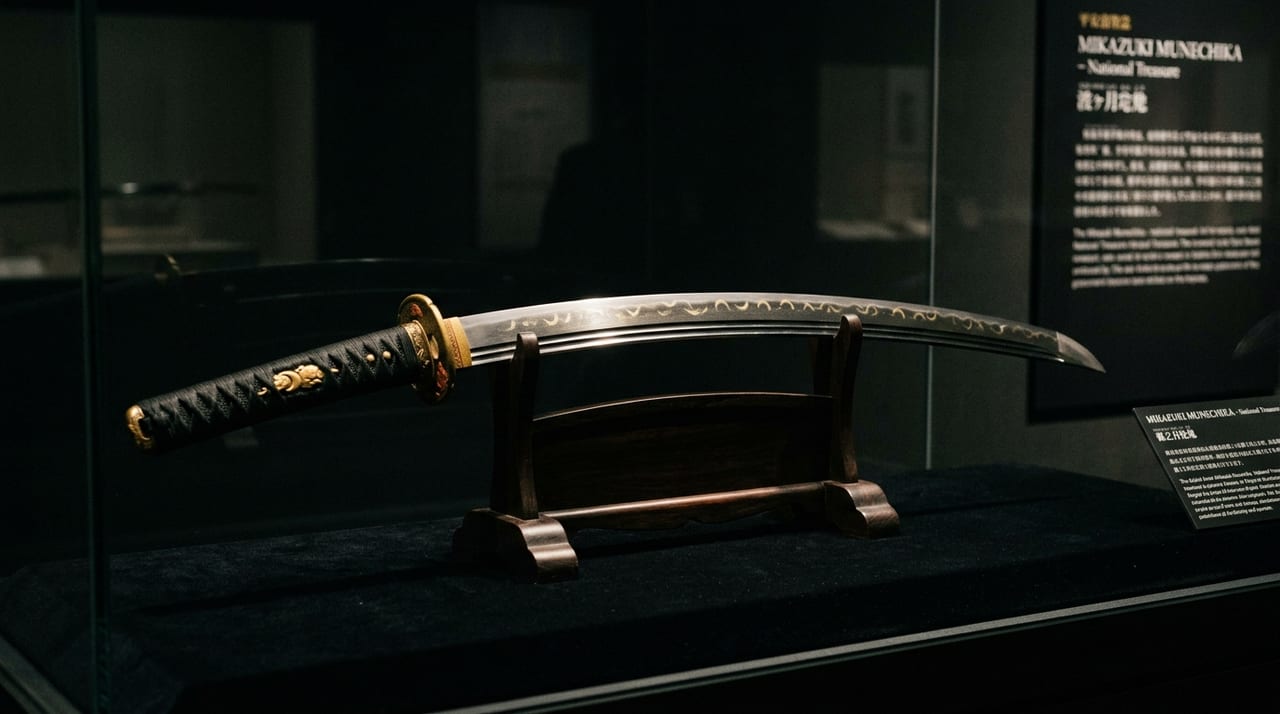 * Image is for illustrative purposes only.
Table of Contents
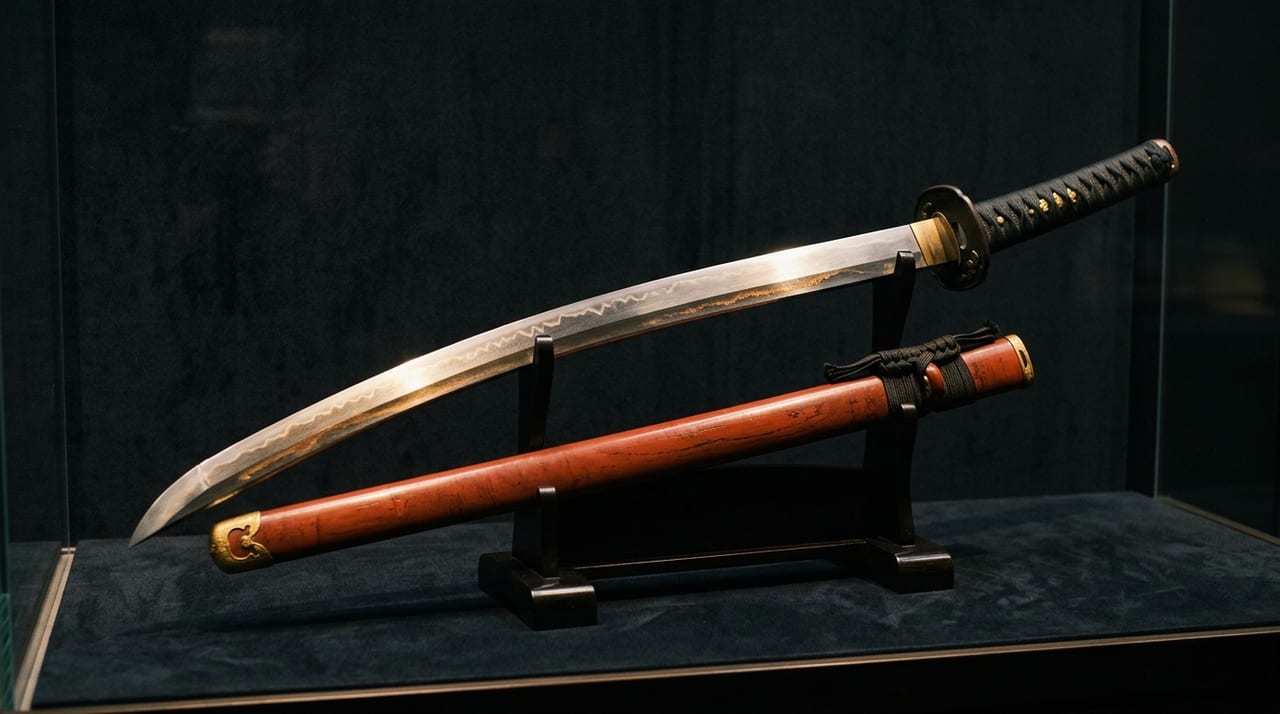
Mikazuki Munechika is counted among the Tenka Goketsu (Five Swords of the Realm). It is transmitted as a work from the Heian period and is particularly renowned among the five swords for its elegant appearance. It is currently designated as a National Treasure and is housed in the Tokyo National Museum.
The Classification of the Five Swords of the Realm
The Five Swords of the Realm refers to five particularly renowned swords among the many Japanese blades. When this classification came into being is unclear, and it is believed to have become a common designation after the early modern period, though all are without question famous swords possessing distinguished pedigrees.
| Sword Name | Designation |
|---|---|
| Mikazuki Munechika | National Treasure |
| Dōjigiri Yasutsuna | National Treasure |
| Ōdenta Mitsuyo | National Treasure |
| Juzumaru Tsunetsugu | Important Cultural Property |
| Onimaru Kunitsuna | Imperial Treasure (Imperial Lineage) |
Among these, Mikazuki Munechika is often praised as "the most beautiful" and is discussed as the foremost of the Five Swords.
The Maker: Sanjo Munechika
Sanjo Munechika, credited as the maker, was a swordsmith said to have lived in Sanjo in Kyoto and is also known by the name Sanjo Kokaiji. He is positioned as one of the master craftsmen in the early period of Japanese sword development, though his biography contains many legendary elements, and there are various theories regarding his production period—some viewing it as the late 10th to early 11th century and others placing it in a later time.
The Legend of Munechika as Seen in the Noh Play Kokaiji
The name of Sanjo Munechika is also widely known through the Noh play "Kokaiji." According to the story, Munechika, commanded by imperial decree to forge a sword, lamented that no one was available to serve as his striking partner. When he prayed to Inari Myojin, a divine spirit appeared and struck the counter-blow, resulting in the forging of the famous sword "Kogitsune-Maru." Though this is purely a story from the noh play, it is a fine example of how the swordsmith Munechika came to be legendized and revered in later ages. Both Mikazuki Munechika as an actual creation and the tales of miraculous efficacy upon the stage have together shaped the image of a Heian master craftsman.
The Origin of the Name Mikazuki
The name "Mikazuki" is said to derive from the appearance of crescent-moon-shaped patterns called uchinoke running along the hamon. Uchinoke is a feature that appears as though small arcs have been lightly added along the edge, and the way they line up has been likened to crescent moons arranged across the night sky. Its slender form, pronounced curve, and gracefully extended tachi shape embody the characteristic beauty of late Heian tachi and later became widely known as "a famous sword renowned throughout the realm." Because the appearance of these patterns changes greatly depending on how light falls upon them, when viewing the actual blade, the key to appreciation is to search for a position where the lighting aligns with the blade's angle while tracing along the edge.
From Kodai-In to the Tokugawa House
As for its provenance, it is said that this blade was once possessed by Kodai-In (Kita-no-Mandokoro), the principal wife of Toyotomi Hideyoshi, and was given as her personal bequest to Tokugawa Hidetada, passing into the possession of the Tokugawa shogunal house. It continued to be carefully preserved after the Meiji period and was designated as a National Treasure in 1951 (Showa 26). Subsequently, through the devoted efforts of its owner, it was placed in the collection of the Tokyo National Museum, where it has become one of the museum's representative sword treasures.
Points of Appreciation: The Form of Heian tachi
The form of late Heian tachi, as exemplified by Mikazuki Munechika, is easy to discern when compared with blades from later periods.
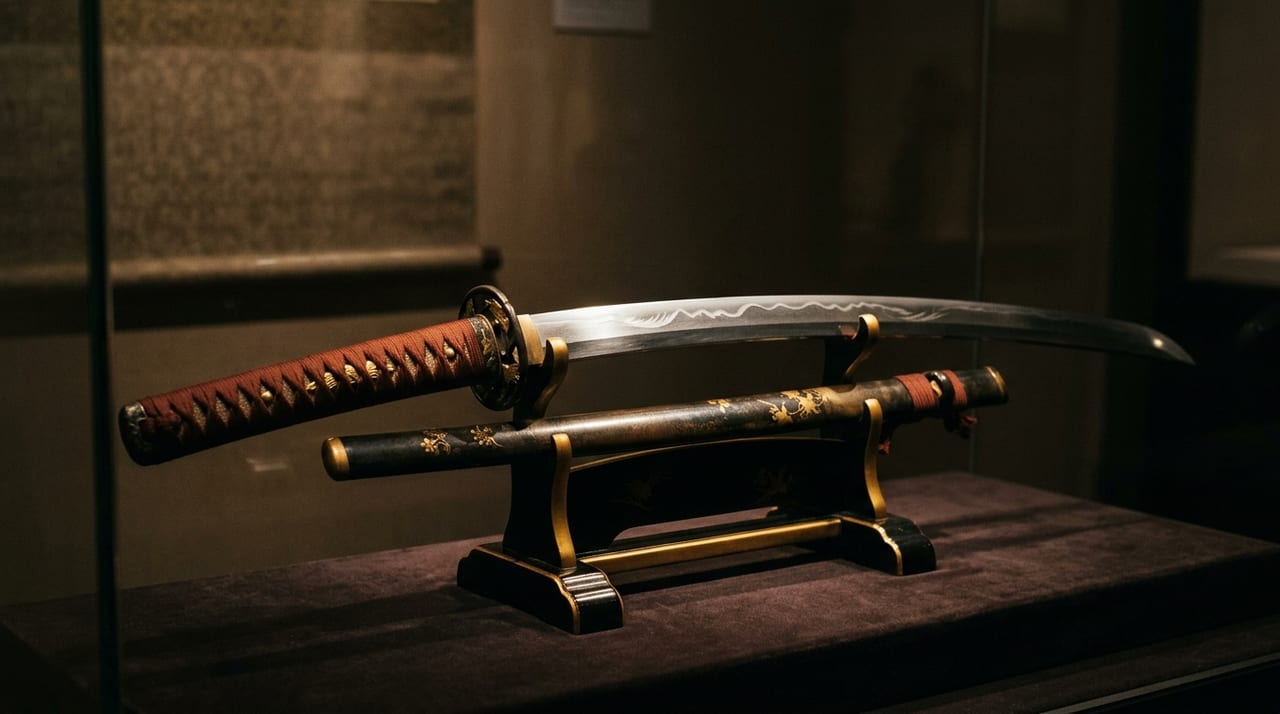
- Slender form. The width of the blade is narrow, and because the difference between the width at the base and at the point is great, it tapers smoothly toward the tip.
- Waist curve. The center of the curve is positioned toward the handle (the waist), creating an elegant, well-balanced line.
- Small kissaki. The point is small and well-defined, completing the overall delicate appearance.
When examining Heian tachi in a museum, if you first confirm these three points and then look for the fine patterns along the hamon, you should be able to understand the origin of Mikazuki Munechika's name with direct appreciation.
On Swords with Names
A sword with a distinctive name, like Mikazuki Munechika, is also evidence that it has been cherished and passed down through the ages. Such names typically derive from the appearance of the hamon, anecdotes from its provenance, or the names of its owners, and beyond the quality of the blade itself, narrative has enhanced the reputation of famous swords. In the case of Mikazuki Munechika, the name derives from features in the hamon that viewers can directly observe with their own eyes, making it particularly accessible to those new to sword appreciation. When you examine a blade while researching the origins of its name and reputation, the historical depth surrounding that single sword comes into view in three dimensions.
A Symbol of Heian Blade Aesthetics
Mikazuki Munechika embodies the aesthetic sensibility of the tachi developed and refined within the aristocratic society that preceded the full establishment of warrior government. It represents the apex of an age when elegance born from the harmony of form, hamon, and steel was valued over the harshness of actual combat. Among the Five Swords of the Realm, it is frequently called "the most beautiful" and is an indispensable name when discussing the elegance of Japanese swords.
Public Display and Exhibition
As a piece in the Tokyo National Museum's collection, Mikazuki Munechika is displayed from time to time during exhibition rotation. Since it is not always on permanent display, those wishing to see the actual blade should check the museum's exhibition information before visiting. In recent years, the popularity of works featuring swords has drawn many visitors to the exhibitions, and the renowned Heian blade has captured the interest of people across a wide range of ages.