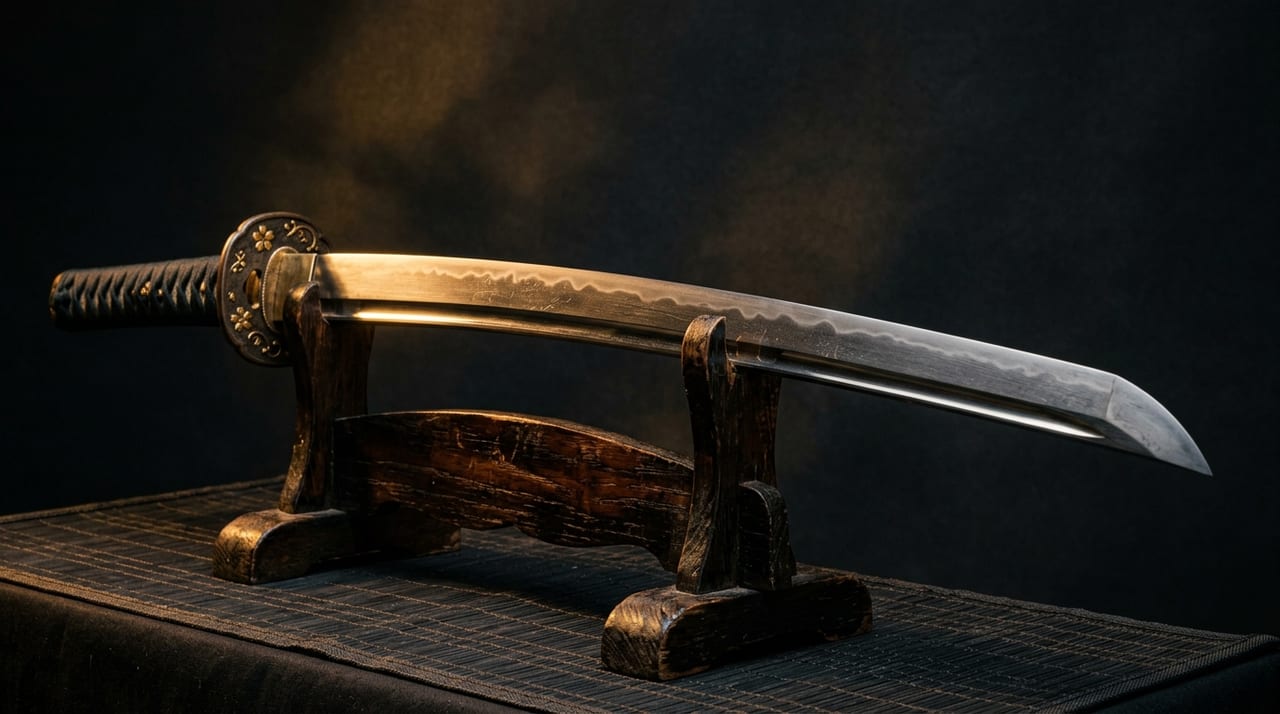
The Katana Bag (Toubukuro): Types, Materials, and the History of Sword Carrying Cloths
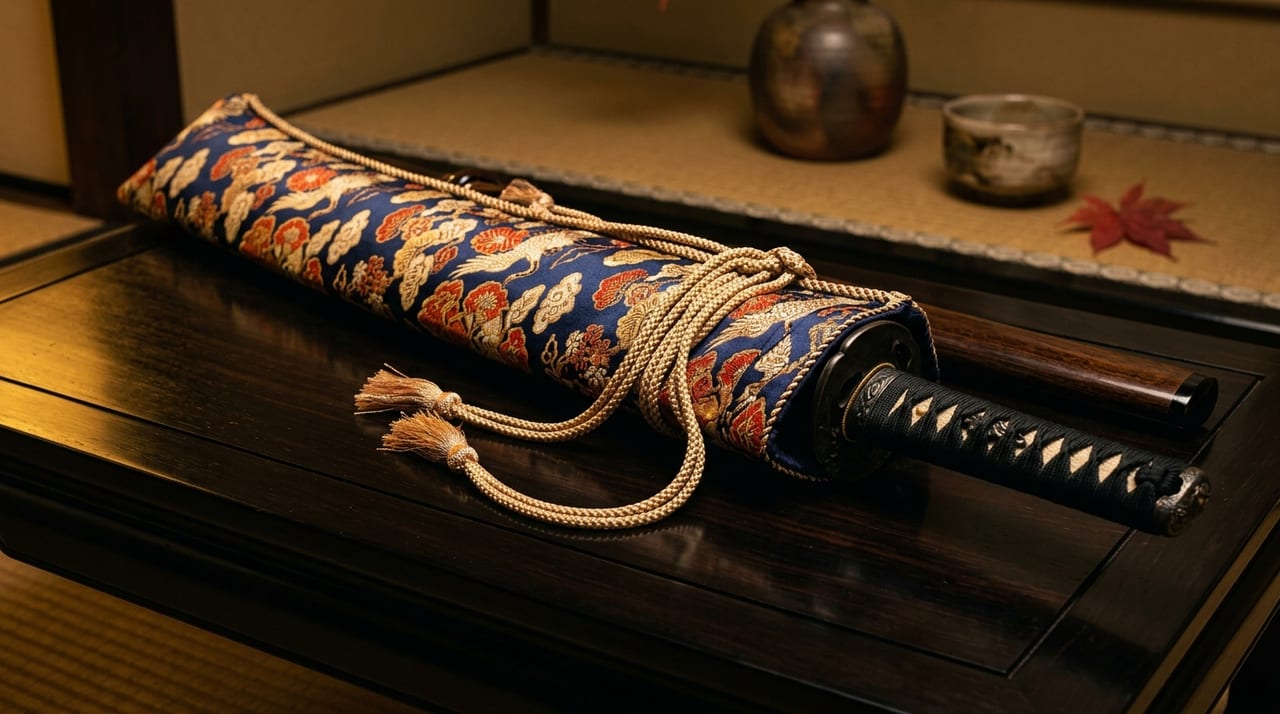 * Image is for illustrative purposes only.
Table of Contents
The katana bag (toubukuro) is a fabric bag used for transporting Japanese swords, and as a tool used since ancient times alongside the koshirae and blade as part of sword culture. While attention tends to focus on the beauty and history of the sword itself, the katana bag for protecting and transporting it also has diverse types and varying roles according to its material, construction, and purpose. Although it appears to be an unassuming tool, the katana bag is deeply connected to samurai etiquette and the everyday management of Japanese swords, and tracing its evolution provides a key to understanding the depth of Japanese sword culture. This article organizes the types and historical background of katana bags and their role in the modern era.
Positioning of the Katana Bag—A Tool Between the Sheath, Koshirae, and Storage
The katana bag is a fabric bag that wraps the entire sword in its sheath and protects it from air, dust, and impact during transport or temporary storage. Its role differs from the sheath that directly houses the blade and the koshirae, which is the complete set of sword fittings including the sheath; the katana bag is positioned as an auxiliary tool used specifically during transport and movement.
For long-term storage, paulownia wood boxes with excellent breathability are often used, and the katana bag has functioned as a tool specialized for everyday transport and short-term storage situations. Protecting the koshirae while wrapping the sword so that its contents are not visible from the outside—this combination of practicality and propriety is one reason why katana bags have been used for such a long time.
Classification by Material—Nishiki, Silk, Cotton, and Synthetic Fibers
The materials of katana bags have been used differently depending on purpose and formality.
- Silk fabrics such as nishiki and donsu: Used in formal occasions and for presentation or gift-giving. Elaborate patterns incorporating gold and colored threads are characteristic, and the katana bag itself carries meaning as an object demonstrating the giver's propriety and sincerity.
- Cotton: Durable and easy to handle, widely used for everyday handling and wrapping training swords. Because it is easy to wash and repair, it is more valued than silk fabrics when practicality is prioritized.
- Synthetic fibers and blended materials: Materials with enhanced durability and water resistance, distributed for modern training and exhibition transport purposes. Lightweight and easy to handle, with diverse specifications including nylon and synthetic velvet materials.
Because silk fabric bags are prone to wear and fading, the practice of using cotton or synthetic fiber bags for frequent access and silk fabric bags for formal gift-giving and exhibition has been practiced since ancient times.
Types by Purpose and Shape—Transport, Inner Bags, and Training
Katana bags vary in shape and construction depending on their purpose.
Transport bags (outer bags) are general katana bags that wrap the entire outfitted sword, typically featuring a drawstring pouch closure or a shape with a handle at the top. When going out or traveling, they cover the entire sheath to prevent damage and dirt, and are used to protect the sword when not worn.
Inner bags (uchibukuro) are thin bags that wrap around the blade and sheath to assist storage in paulownia wood boxes. They serve to prevent the sword from shifting and becoming damaged inside the box, and are often made of soft silk or cotton fabric. They are called either katana bags or toufu, with no unified standard for distinguishing the two terms.
Training bags are practical bags used when bringing swords to the dojo for training such as iaido or test cutting. Some have straps for carrying over the shoulder or are large enough to hold multiple blades together, with materials and shapes chosen to prioritize functionality.
Sword-Carrying Culture in Samurai Society and Katana Bag Etiquette
Behind the katana bag acquiring ceremonial significance lies the positioning of the sword in samurai society. For samurai, the sword was both a symbol of status and an everyday tool they carried, so not only the sword itself but also its handling and accompanying implements required a certain level of formality.
When presenting a sword as a tribute, the type of fabric, color patterns, and method of tying the strings of the bag were also accompanied by prescribed etiquette, and it is said there were occasions when the katana bag held ceremonial significance beyond being a mere practical item. The material and design of the bag were sometimes chosen based on the giver's status and their relationship with the recipient, and it is believed that the entirety of the implements surrounding the sword formed part of the samurai's system of etiquette and propriety.
The formality of the katana bag was also relevant when carrying swords to public occasions such as sankin-kotai processions or visits to the castle. It becomes clear that sword culture was established not only through the forging techniques of the blade but also through the system of handling, etiquette, and implements surrounding it.
Care and Storage Precautions for Katana Bags
Because katana bags are made of fabric, improper handling can adversely affect the sword itself. By paying attention to the following points, it is possible to keep the katana bag clean for a long time and more easily maintain the condition of the sword it holds.
- Dry in shade after use: If a bag that has absorbed moisture during transport is stored in a sealed state, the moisture remaining in the fabric can affect the sheath and blade. After use, remove the bag and dry it in a well-ventilated, shaded area as the basic practice.
- Pay attention to oil stains: Clove oil or rust-preventive oil used in sword maintenance can seep into the bag through the sheath. If oil accumulates in the fabric, it accelerates material deterioration, so special care is necessary when using it as an inner bag.
- Transfer to a paulownia wood box for long-term storage: When storing for extended periods, it is advisable to remove the sword from the katana bag and transfer it to a paulownia wood box. Paulownia is said to have humidity-regulating and insect-repelling properties, making it easier to maintain a stable storage environment than relying solely on a fabric bag.
- Be careful with friction on nishiki and silk fabric bags: Bags made of fine materials have delicate fibers and are prone to wear and fading with frequent access. For everyday use outside formal occasions, switching to durable cotton or synthetic fiber bags helps protect both the bag and the sword.
Significance of the Katana Bag in the Modern Era
Even in the modern era, the katana bag remains a familiar tool for those who own Japanese swords. Its practical role remains unchanged—transporting to exhibitions and training, protecting against dust during storage, and shielding during moving or shipping.
On the other hand, traditional katana bags using nishiki or donsu can have value as crafts similar to the swords themselves, and old katana bags sometimes become objects of collection. Bags using weaving techniques from before the Edo period are sometimes evaluated as artworks separated from the sword itself, revealing a glimpse of the world of craftsmanship expanding around sword culture.
Expanding the perspective beyond just the forging, polishing, and koshirae of the sword itself to include surrounding implements like the katana bag provides a key to understanding how carefully Japanese swords have been treated over many years. TOUKENZA publishes columns on various themes related to Japanese sword culture in addition to the swords themselves. For those considering purchasing Japanese swords, you can browse currently listed swords in our online catalog, and for any questions, please feel free to contact us through our inquiry form.