Swordsmiths of Harima Province: Tegarayama Ujishige and the Blacksmithing Culture of Eastern Chugoku
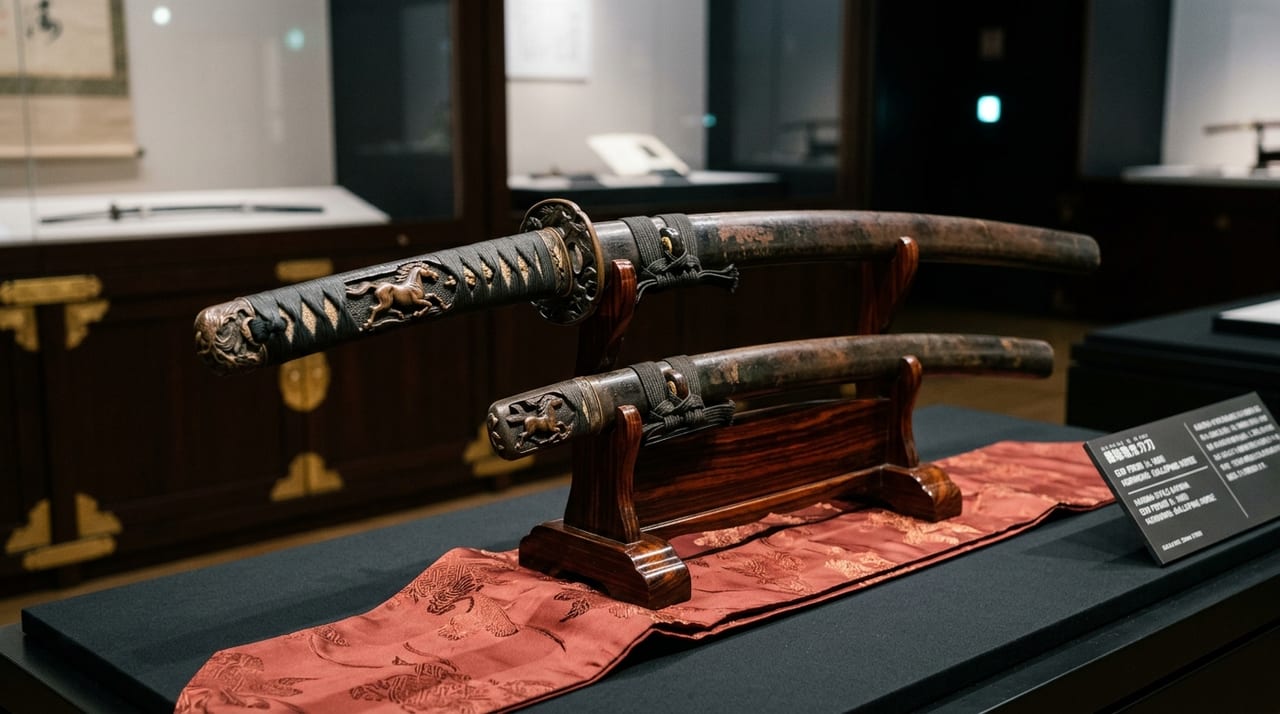 * Image is for illustrative purposes only.
Table of Contents
What is Harima Province—Geographic Background
Harima Province (Harima no kuni) was a ritsuryo state that corresponded to the area centered around Himeji City in the southwestern part of present-day Hyogo Prefecture. Facing the Seto Inland Sea and positioned along the Sanyo Road as a crucial transportation hub, it flourished since ancient times as a logistics junction connecting the Kinai region with the Sanin, Sanyo, and Shikoku areas.
In sword history, Harima is not counted among the "five major schools" (Go-ka-den) of Yamashiro, Yamato, Bizen, Soshu, and Mino. However, it is known that smiths with distinctive styles were active, taking advantage of Harima's geographic position between the five major schools. Although less well-known than the major central production centers, it is a region that provides fascinating material for exploring the individuality of provincial swordsmiths.
Harima and Swords—A Region Between the Five Major Schools
Harima was adjacent to Bizen and Yamashiro/Yamato, the two major centers of old sword production, placing it in a location easily influenced by both traditions. It is believed that smiths and techniques moved along the roads, and the works of Harima smiths sometimes show partial elements of Bizen or Yamato traditions.
On the other hand, Harima had its own unique demand. In castle towns such as Himeji, smiths established themselves to meet the demands of daimyo and samurai, and are believed to have produced practical uchigata swords as well as ceremonial and gift swords. Due to limited historical records compared to famous central smiths, the overall picture of genealogy and style is not necessarily clear, but Harima maintained a certain presence as a regional sword-making center.
Tegarayama Ujishige—A Harima Smith Remembered for His Horimono
One of the more well-known Harima smiths is Tegarayama Ujishige. He was a smith said to have been active around Harima and Himeji in the early Edo period, and is known for his skill in applying intricate horimono to the blade—going beyond mere functional sword production.
He is particularly said to have excelled at sculptures featuring horses (koma), and it is noted that he expressed dynamic designs on the blade through pierced carving and relief carving. Blade carving is not mere decoration but also a showcase for the smith's metalworking skill and aesthetic sense, and Tegarayama Ujishige's works are regarded as possessing a distinctive presence despite being from a provincial smith.
Note that due to limitations in historical sources, many details regarding his active period and lineage remain uncertain, and biographical information should be individually verified through authentication certificates and specialist literature.
Technical Characteristics of Harima Smiths
When organizing the characteristics commonly noted in swords attributed to the Harima school, the following emerge:
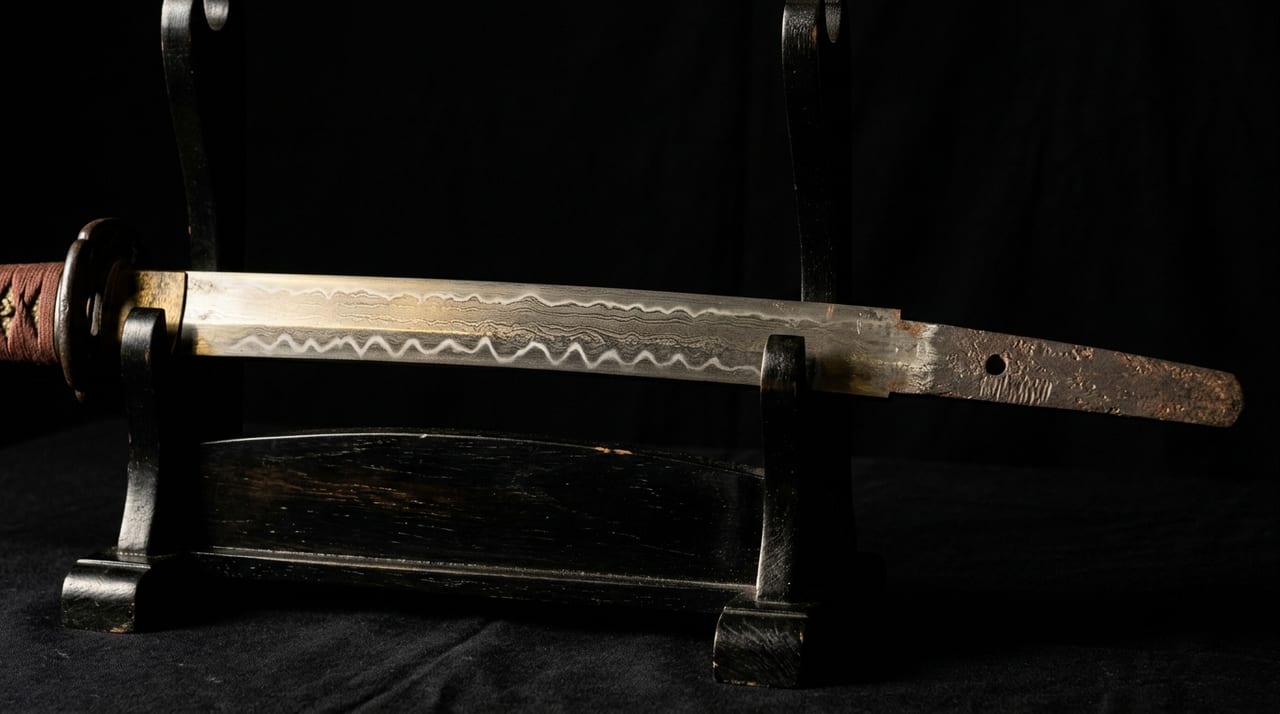
- Jihada: Grain patterns similar to Bizen tradition, primarily showing itame, are sometimes seen, though some works also mix masame-like patterns from the Yamato tradition
- Hamon: Not as uniform as renowned central schools, showing considerable variation by smith and period, including komaarare and suguha styles
- Horimono: As exemplified by Tegarayama Ujishige, the technique of carving concrete motifs such as horses into the blade is regarded as one of the highlights of the Harima school
- Sugata: Most follow the general sword shapes of the Edo period, suited to practical uchigata mountings
Unlike central schools with clear "types" such as Bizen's choiji or Soshu's nioikomi, Harima smiths are characterized by incorporating elements from multiple traditions while establishing their distinctiveness through the added value of horimono.
Perspectives on Authenticating Unsigned and Provincial Works
Beyond Harima, provincial smiths' works, even when signed, are often little-known, with few detailed records of their histories. In the case of unsigned blades, one must rely on "kiwame" (attribution) based on stylistic features such as jihada and horimono technique.
When examining such provincial works, the following points should be verified in order:
First, the presence of registration certificate and authentication documentation. In Japan, possessing or trading swords requires a registration certificate issued by the prefectural education board, and authentication documents from organizations such as the Japan Sword and Art Sword Preservation Society (NBTHK) provide valuable clues for verifying the basis of attribution.
Second, the quality of the horimono. For works attributed to the Harima school or to Tegarayama Ujishige, the sharpness of the carving cuts and the balance of the design become important factors influencing evaluation.
Third, overall condition. Blades with horimono may have softened carving outlines due to polishing reduction, so careful examination of the carving's preservation is desirable.
Extant Works of Harima Smiths and Their Significance in Collecting
Works by Harima smiths are fewer in number on the market compared to renowned central schools, and opportunities to discuss them as a cohesive group are limited. Precisely for this reason, encountering a blade attributed to the Harima school or to Tegarayama Ujishige offers a precious opportunity to directly experience and understand the individuality of provincial swordsmiths.
Engaging with the techniques of provincial smiths nurtured by roads and castle towns—something invisible within the broad framework of the five major schools—provides an important perspective for understanding the diversity of Japanese swords.
In TOUKENZA's online catalog, you can browse diverse offerings including not only masterpieces from renowned production centers but also works by provincial smiths such as those from Harima. We hope this material will serve to help you examine the direction of your own collection while comparing the individual characteristics of different production regions.