Sa Yukihide: The Bakumatsu Master of Sōshū-den Known as the "Tosa Masamune" — His Style and How to Read His Mei
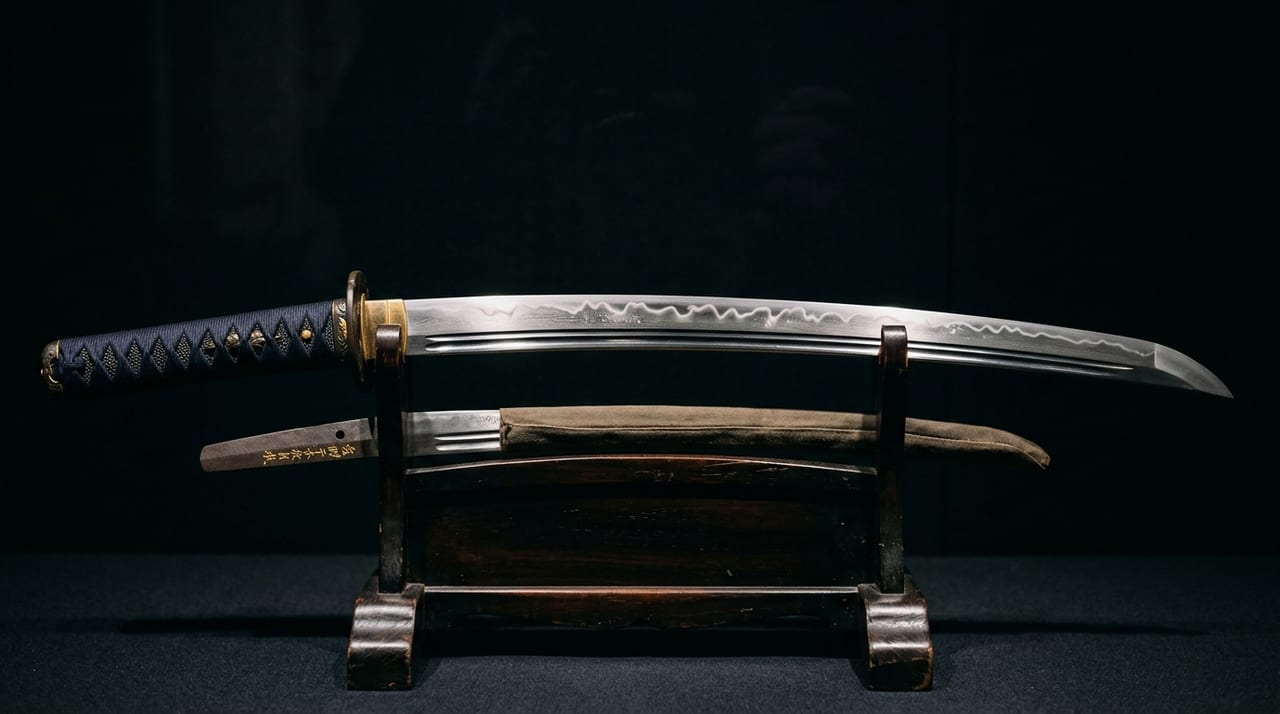 * Image is for illustrative purposes only.
Table of Contents
Sa Yukihide is a shinshintō tōkō who represents the Tosa domain in the Bakumatsu period. Having been born in Chikuzen, trained in Edo, and later moved to Tosa to become a domain smith, he has also been called the "Tosa Masamune." He is often mentioned alongside Minamoto Kiyomaro, who was active in the same era, and is an essential name for anyone studying shinshintō.
This article organizes Sa Yukihide's career, style, and how to read his mei, within the limits of what has been transmitted. Since sources differ on the details of his birth and death years and the timing of his relocations, the phrasing "is said to" has been retained throughout.
What Kind of Tōkō Was Sa Yukihide
Sa Yukihide is said to have been born around Bunka 10 (1813) in Chikuzen Province. His given name is recorded as Toyonaga Kyūbei (later Kyūzaemon), and his active period as a swordsmith is said to have run from around Tenpō 11 (1840) to around Meiji 3 (1870).
The character "Sa" derives from Samonji, the celebrated Nanbokuchō-period smith of Chikuzen. It is said that Sa Yukihide inscribed some of his blades with "thirty-ninth-generation descendant of Samonji," suggesting that he was conscious of carrying on the Chikuzen Samonji lineage.
Outline of His Career
His career is generally described in three stages.
- He was born in Chikuzen and is said to have gone to Edo around the early Tenpō era, where he studied under Shimizu Hisayoshi.
- During the Kōka era he moved to Tosa, where he is said to have studied under Sekita Katsuhiro, a tōkō of the Tosa domain.
- During the Ansei era he served as an official kaji of the Tosa domain, and is said to have later forged blades at the Tosa domain residence in Edo as well.
A defining characteristic of Sa Yukihide is that he honed his skills by moving between Chikuzen, Edo, and Tosa. In the final years of the Edo period, domains also employed smiths for Western-style firearms and artillery. Sa Yukihide is said to have served as a domain smith who doubled as a firearms smith, suggesting a scope of work that extended beyond swords alone.
In his later years he returned to Tosa and is said to have continued forging until around Meiji 3 (1870). One widely known account gives his death as Meiji 20 (1887) at the age of 75.
Characteristics of His Style
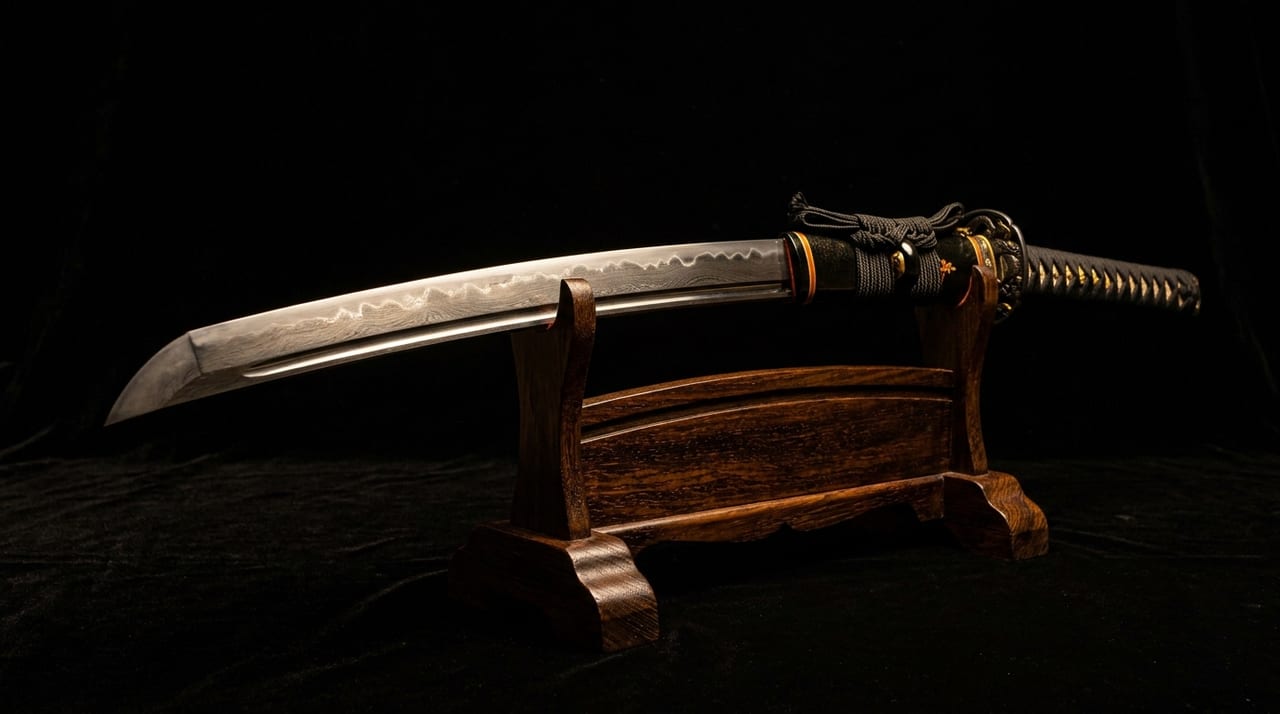
Sa Yukihide's works vary in style depending on the period. His early pieces are said to follow the tradition he absorbed while studying in Edo, but from around the Kaei era his style is described as having shifted toward Sōshū-den with deep nie and nioi.
- The hamon is based on irregular gunome, with abundant nie activity
- The form is long, with a wide mihaba and an extended kissaki, and many pieces are bold in character
- The jigane is well-forged and carries ji-nie characteristic of Sōshū-den
This style has led him to be recognized as a master of Sōshū-den, and he is sometimes introduced as having self-studied and deeply researched Inoue Shinkai. The highlights of Sōshū-den itself are also discussed in the articles on Gō Yoshihiro and the ten disciples of Masamune.
How to Read His Mei
Sa Yukihide's mei take several forms depending on the period and location. The most representative examples are given below.
- Works from his Chikuzen period carry location-based mei such as "Chikushū-jū Sa Yukihide"
- During his Tosa period, mei prefixed with "Tosa-koku-jū" or "Toshū-jū" appear
- Later works are said to bear the art name "Tōko"
- There are mei that append "thirty-ninth-generation descendant of Samonji"
However, because he is a popular tōkō, the authenticity of mei must be examined with care. The basic approach is not to judge by mei alone but to assess comprehensively — taking into account the form, jigane, and quality of the hamon — and, where possible, to obtain a kanteisho from NBTHK or a similar organization for corroboration. The article on types of sword kanteisho and their reliability is also useful for reference.
Comparison with Contemporary Tōkō
The shinshintō period of the Bakumatsu era saw multiple celebrated smiths working alongside one another. The smith most often compared to Sa Yukihide is Minamoto Kiyomaro, who was born in Shinano and was active in Edo.
- Sa Yukihide moved through Chikuzen, Edo, and Tosa, and was active as a Tosa domain smith
- Minamoto Kiyomaro was born in Shinano, was active in Edo, and produced masterworks during a short life
Kiyomaro is covered in detail in the article on Minamoto Kiyomaro. The lineage of tōkō in Shikoku, including Tosa, is summarized in the history of Shikoku swordsmiths.
Key Points for Appreciation
When examining a blade by Sa Yukihide, focusing on the following points will make it easier to grasp what sets his work apart.
- Form: whether the silhouette is bold, with a wide mihaba and an extended kissaki
- Hamon: whether the irregular gunome carries abundant nie and shows activity such as kinsuji and sunagashi
- Jigane: whether it bears ji-nie characteristic of Sōshū-den and is tightly forged
- Nakago and mei: whether the yasurime, the carving of the mei, and the type for each period are consistent and without incongruity
These points of interest differ from smith to smith, even among shinshintō works. If a particular blade catches your attention, it is important to read carefully and compare the photographs, dimensions, and condition descriptions.
Summary
Sa Yukihide was a Bakumatsu tōkō who honed his skills by moving through Chikuzen, Edo, and Tosa, and was called the "Tosa Masamune" as a master of Sōshū-den. While bearing in mind that various accounts differ on his biography and dates, approaching his style through the three elements of form, hamon, and jigane will reveal the appeal of shinshintō.
Swords currently listed for sale can be browsed online via the sword catalog.