Reading "jū" and "oite" in Mei — Place-Name Mei Indicating Residence and Forging Location, and Alternative Names for Old Province Names
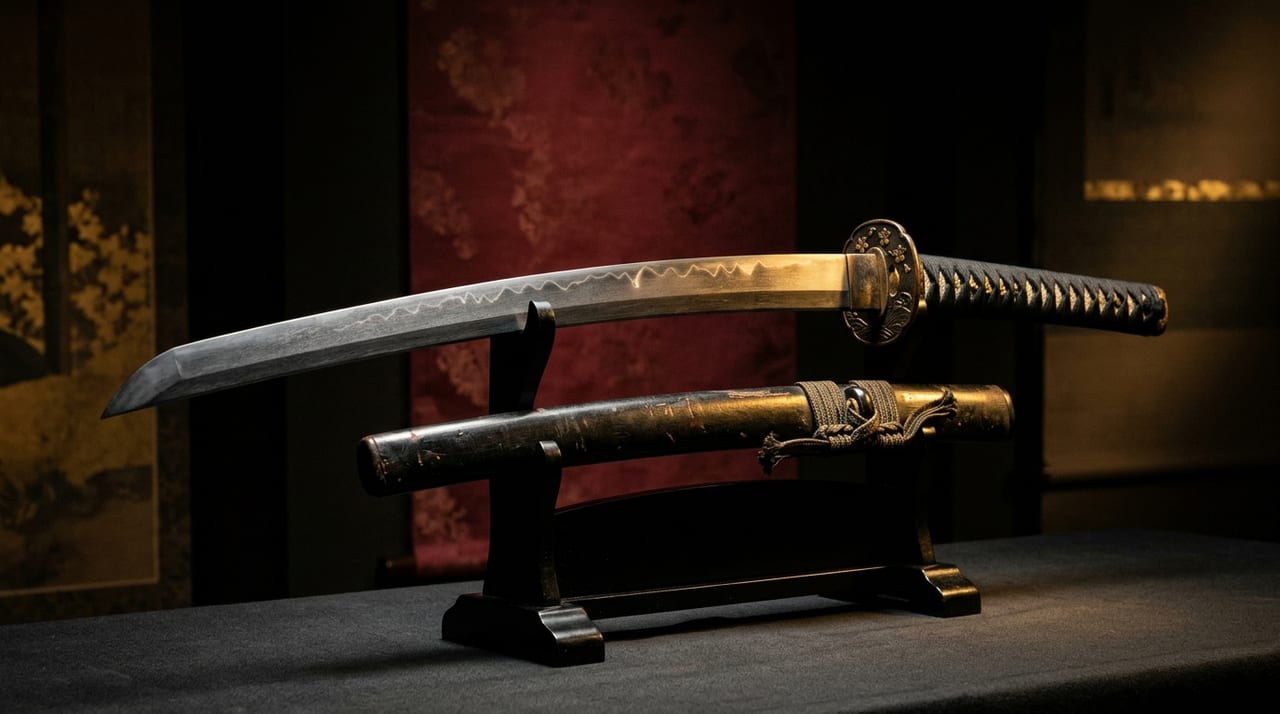
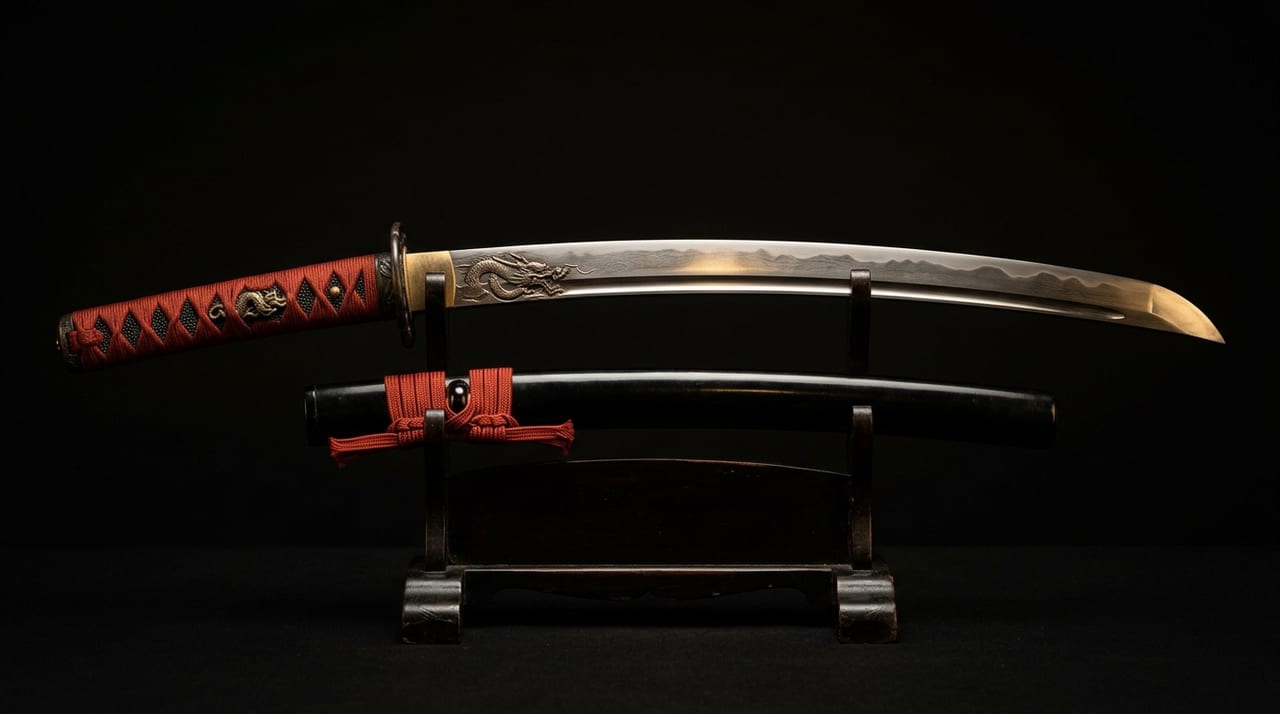
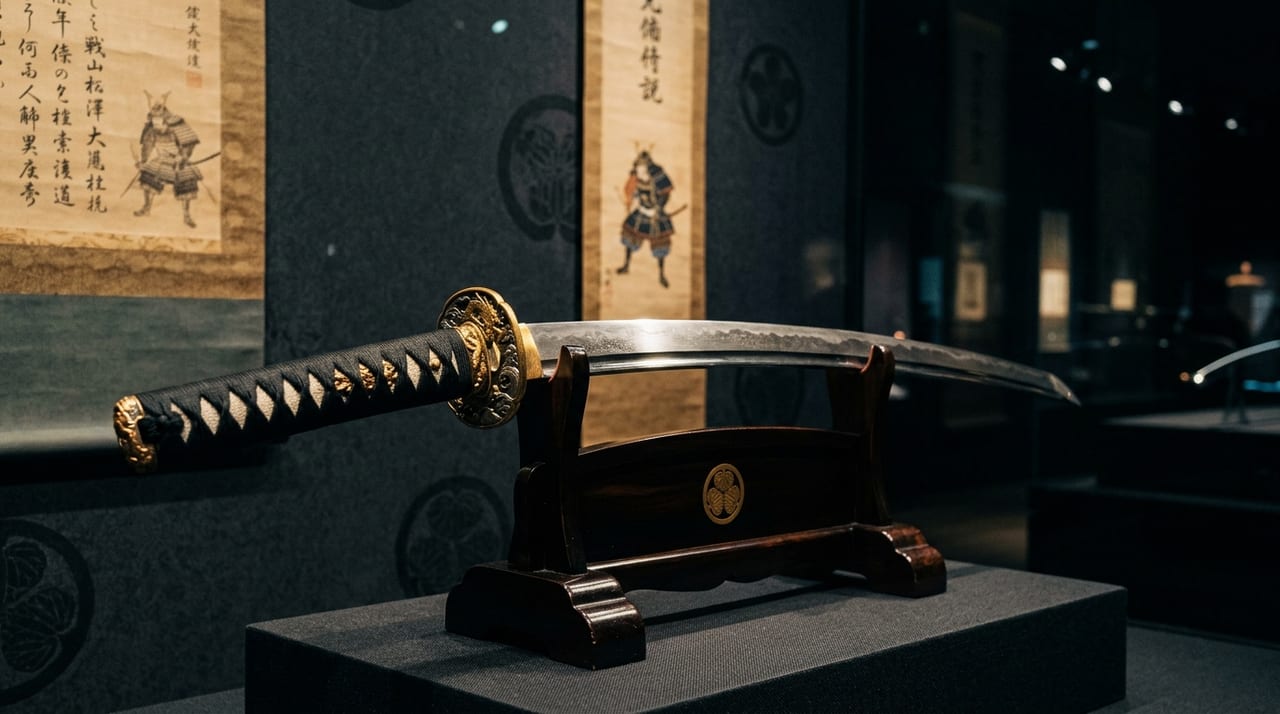 * Image is for illustrative purposes only.
Table of Contents
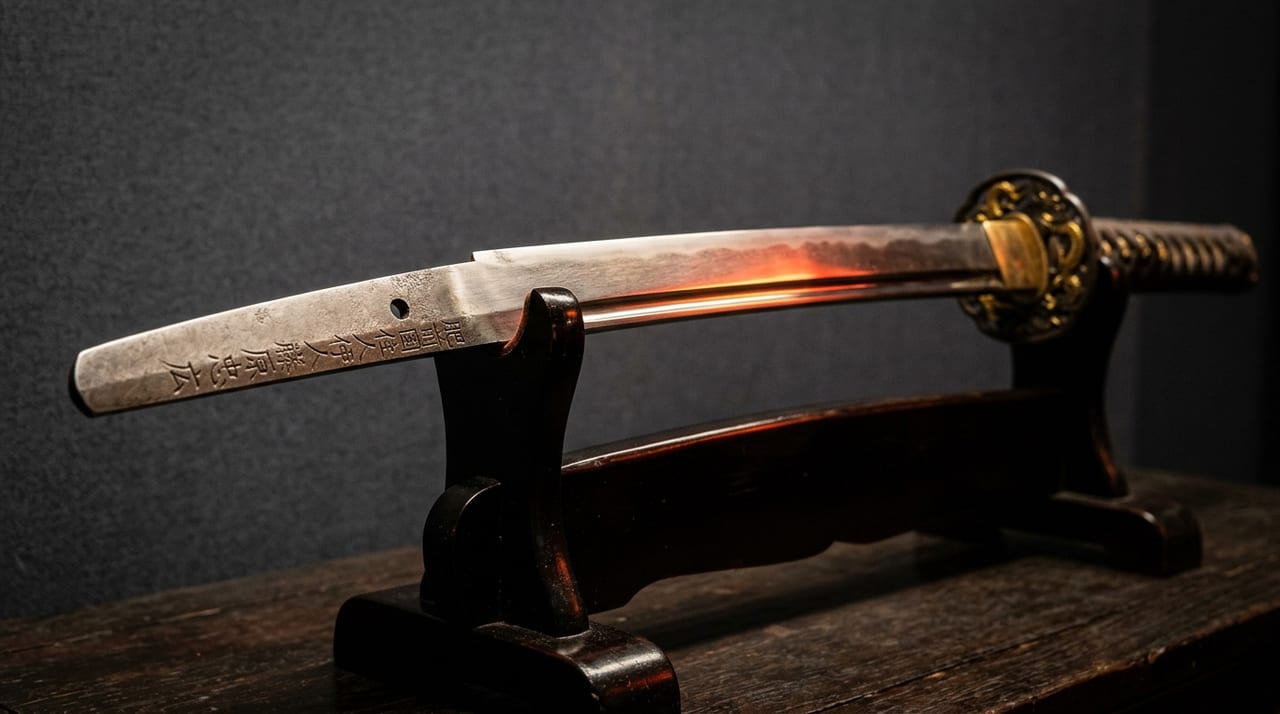
When examining the nakago of a nihontō, one sometimes finds place names preceding the tōkō's name, such as "Sōshū-jū" or "Bishū Osafune-jū." Unlike a mei that cuts only the name, these contain information indicating where the tōkō was from. There are also mei that record the place of forging, such as "Oite Bushū Edo."
This article organizes the place names cut into mei and the roles of the characters "jū" and "oite," and reviews in turn how to read alternative names for old provinces, what can be learned from examples, and points to note when reading. The technique of cutting mei itself is covered in The Craft of Cutting Mei, and where on the nakago the mei appears is covered in Two-Character Mei, Long Mei, and Mei Position.
Background on How Place Names Came to Appear in Mei
Mei from earlier periods were often simple, cutting only the tōkō's name. It is explained that as time passed, information about the tōkō such as place of residence and family name also came to be cut into the mei (Touken World).
Mei containing place names served as a marker for buyers and users, indicating which region's tōkō had made the sword. When tōkō with the same name existed in multiple locations, a place name made it easy to distinguish between them. Even when we read mei today, the place name is an important clue for narrowing down the tōkō's lineage and period.
What "Jū" Indicates
The basic reading of the form with "jū" placed after a place name is as a mei indicating that the tōkō resided in that location. Examples such as the following also appear in materials from prefectural governments and holding institutions.
- "Sōshū-jū Tsunahiro": a mei appearing in Aomori Prefecture materials (Aomori Prefecture)
- "Tsugaru-jū Yasumune": a mei also appearing in Aomori Prefecture materials (Aomori Prefecture)
- "Bushū Kume-jū Hiratsuka Shinano no Kami": a mei of a tōkō family from Kume, appearing in cultural property materials from Tokorozawa City (Tokorozawa City)
In addition, there are examples of mei using the characters "jūnin" to indicate a place of residence. As the specific difference in meaning between "jū" and "jūnin" could not be confirmed in the materials consulted for this article, both are listed here simply as notations indicating a place of residence.
What "Oite" Indicates
"Oite" carries the meaning of "at" or "in [a place]," and is read as indicating the location where the sword was forged. A clear example is the mei "Oite Bushū Edo Echizen Yasutsugu." This mei is explained as showing that Yasutsugu forged the sword in Edo (Sword Basic Explanation).
Yasutsugu was a tōkō who became a retained smith of Yūki Hideyasu in Echizen Province, and later also forged swords for the Tokugawa family in Edo. He was ordered to alternate service between Edo and Echizen, but it is believed that he actually lived in Edo for extended periods. However, the same page does not state the specific reasons for his forging in Edo.
A mei with "oite" is often explained as indicating that the sword was made in a location other than the tōkō's base — in other words, a mark of having forged while away on assignment. However, no primary source explicitly stating this as a general definition was found in the course of this research. It is safer to understand it within the scope of being readable as "recording where the sword was made," as in the case of Yasutsugu.
Knowing the Alternative Names for Old Province Names
Alternative names for old provinces are frequently used in mei containing place names. The form with "shū" appended after the province name is representative, and for those unaccustomed to reading them, it can be unclear which province is being referred to.
| Mei notation | Old province name | Approximate present-day region |
|---|---|---|
| Sōshū | Sagami Province | Most of Kanagawa Prefecture |
| Bushū | Musashi Province | Tokyo, Saitama Prefecture, and part of Kanagawa Prefecture |
| Nōshū | Mino Province | Southern Gifu Prefecture |
| Sesshū | Settsu Province | Northern Osaka Prefecture and southeastern Hyōgo Prefecture |
| Senshū | Izumi Province | Southern Osaka Prefecture |
| Banshū | Harima Province | Southwestern Hyōgo Prefecture |
| Washū | Yamato Province | Nara Prefecture |
"Bishū" for Bizen requires attention. Bishū is also a notation used as a collective name for Bizen, Bitchū, and Bingo, but in "Bishū Osafune," since Osafune is a place name in Bizen Province, it is read as a tōkō of Bizen. As in this case, when a mei contains two or more overlapping place names, the latter place name indicates the more specific place of residence.
Points to Note When Reading Place Names in Mei
Mei containing place names are a strong clue for learning about a tōkō's background, but the following points should be kept in mind when reading them.
- Place names vary in granularity, including old province names, district names, and names of castle towns.
- Even the same notation may have referred to different extents or centers depending on the period.
- "Jū" and "oite" have different roles. Do not confuse a place of residence with a place of forging.
- There are known cases of mei having characters added later. Do not judge by mei alone.
The last point is important. Cases of mei containing place names having been re-cut in later ages are known, and the principle is to judge authenticity by assessing the sugata, jigane, hamon, and condition of the nakago together. For swords of interest, the results of assessment by specialist institutions are also worth consulting. The reading of dated signatures is covered in What Is a Nenki Mei?, and the characteristics of tōkō from each region are covered in Regional Swords.
Place Names Reflect the Lives of Tōkō
When we see a mei reading "Sōshū-jū" or "Tsugaru-jū," it conveys that the tōkō worked rooted in a particular region. A mei cut with "Oite Bushū Edo" tells us even where the tōkō traveled to work.
In the small mei on the nakago, the tōkō's footsteps — places of residence and places of forging, alongside the name — are engraved. By learning how to read place names, the background embodied in a single sword becomes more concretely visible.