Tōri-ji of Tōkō: How to Read the Lineage Shown by a Single Character in Mei — "Mitsu," "Kuni," "Kane," and More
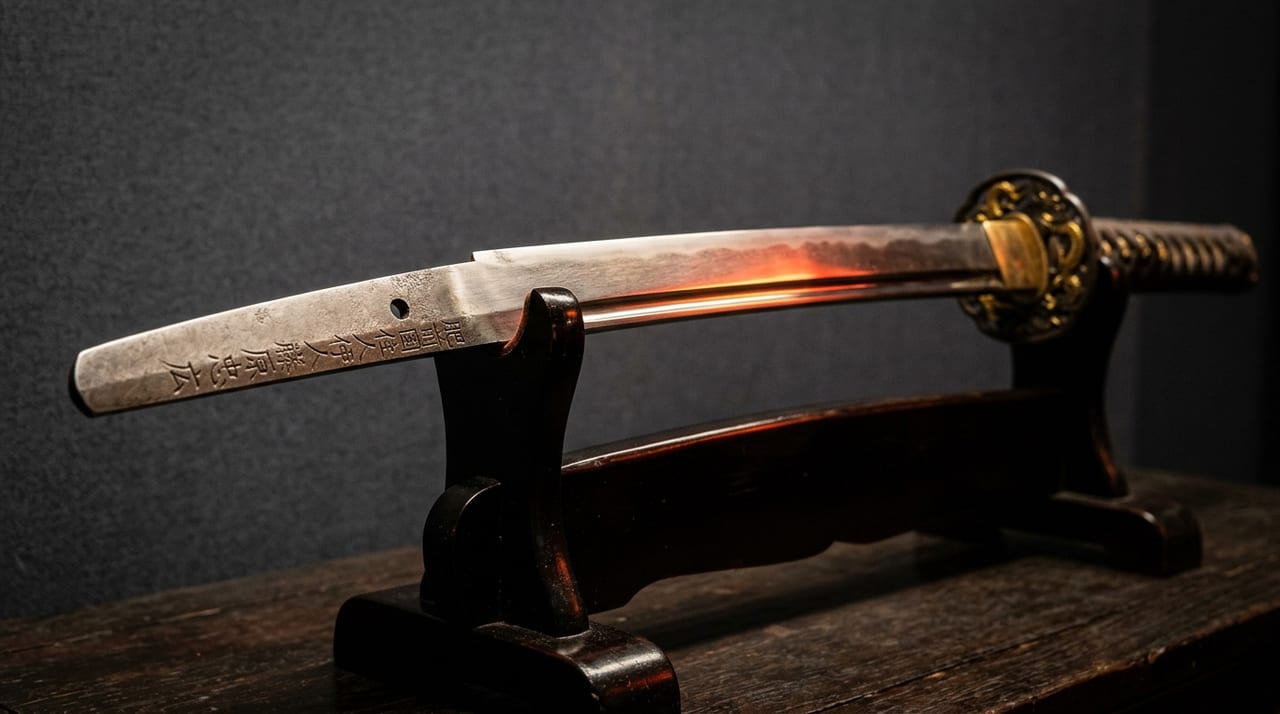 * Image is for illustrative purposes only.
Table of Contents
When you line up the mei engraved on a sword's nakago and look them over, you notice that the same single character appears repeatedly in the names of tōkō from the same school. Mitsutada, Nagamitsu, Kagemitsu, and Kanemitsu of the Osafune school all contain "Mitsu," while in the Rai School, "Kuni" stands out in names such as Kuniyuki, Kunitoshi, and Kunimitsu. This shared character is called a "tōri-ji" and serves as a clue when reading a tōkō's lineage.
What Is a Tōri-ji?
A tōri-ji is a single character in a name that is passed down among master and apprentice, parent and child, or members of the same school. It shares the sensibility of the practice in samurai society of receiving one character from a lord or master to use in one's own name (henpika), and in the world of tōkō as well, using that character in one's name indicated which line one belonged to.
This was, however, a convention rather than a rule. Not every tōkō followed this form, nor did using the same character necessarily mean they were of the same school. Mistaking this point leads one in the wrong direction right at the entrance to appraisal.
Representative Examples Found in Mei
Each school tends to favor a particular character. However, the following are "commonly observed tendencies," and exceptions exist.
- Osafune school: "Mitsu" stands out in the line running through Mitsutada, Nagamitsu, Kagemitsu, and Kanemitsu
- Rai School: the character "Kuni" stands out in names such as Kuniyuki, Kunitoshi, and Kunimitsu
- Kaji of Seki (Mino): many tōkō bear "Kane" in their names, such as Kanemoto, Kanesada, and Kanefusa
For the Osafune line, the articles on Osafune Mitsutada and Osafune Kanemitsu cover the individual tōkō's work styles in detail. For the Rai School, the article on Rai Kunimitsu is a useful reference.
The Structure of a Mei and the Position of the Tōri-ji
A tōkō's mei is fundamentally composed of a portion indicating the province or location and a portion indicating the name. In a mei such as "Bizen no Kuni Osafune Kanemitsu," for example, "Bizen no Kuni Osafune" is the place of residence and "Kanemitsu" is the name. Because the tōri-ji falls within the name portion, when reading a mei one breaks down and examines the characters of the name.
Names are often composed of two characters, and a common pattern is for one to be the tōri-ji and the other to be a character specific to that individual tōkō. In "Mitsutada," for instance, "Mitsu" can be read as the tōri-ji and "Tada" as the individual's character. That said, there are cases where commonality lies in the individual character, so the position is not necessarily fixed to either the first or second character.
The Same Character Can Also Be a Source of Confusion
The wide use of tōri-ji also gave rise to different individuals bearing the same name. In the case of Kanemitsu, it has been noted that in addition to the Osafune Kanemitsu, approximately 50 tōkō using the same name "Kanemitsu" have been confirmed in Mino, the Kinai region, the Tohoku region, Hokuriku, and elsewhere (Waraku web article). One cannot assume from the name alone that it is the Osafune Kanemitsu; it is necessary to judge by combining the style of the mei's characters, how the province and location are written, the finish of the nakago, and the work style.
There are also cases where the same name was used across multiple generations, raising the question of whether a piece should be treated as the work of a single tōkō or attributed to a different generation.
Some Tōkō Have No Tōri-ji
Not every tōkō inherited a character from their school. Some used names entirely unrelated to their master's, and as time passed, more tōkō added a zuryō-mei (a name borrowing a court title) or a gō to their mei. Deciding on a school based solely on the presence or absence of a tōri-ji will lead to oversights. It is appropriate to treat the tōri-ji as merely one element among the materials for thinking about a school or lineage.
The Relationship Between Successive Generations and the Tōri-ji
When the same name is passed down from parent to child or master to apprentice, it becomes necessary to distinguish "first generation," "second generation," and so on. When a name is succeeded, the mei itself becomes identical, meaning that even if the same characters are engraved, the work style and period will differ if the generation is different. The practice of taking a character from the master's name for one's own continued into later periods as well.
The clues at such times are the idiosyncrasies of the mei's character style, the presence or absence of a nenki (record of the year of production), and differences in the execution of the hamon and jigane. Not judging by the name alone but reading multiple elements in combination is the fundamental approach to avoiding errors in lineage.
How to Read Mei When Appreciating or Purchasing a Sword
When looking at a mei, proceeding in the following order makes things easier to organize.
- Read the upper characters (province and location) and the lower characters (name) separately
- If the name contains a tōri-ji, narrow down the candidate schools
- Check the period to see whether there are any tōkō with the same name
- Examine whether the jigane, hamon, and shape are consistent with the mei
A tōri-ji is "a map for searching for a school," not "evidence for determining the maker." Only when the mei and the work style align does certainty increase.
TOUKENZA's online catalog allows you to browse swords currently listed for sale. Reading the mei and tōkō names on the product pages through the lens of tōri-ji may reveal connections in lineage that you had previously overlooked.