Kinchō — The Meaning of the Samurai Custom of Striking Tsuba and Koiguchi to Swear an Oath
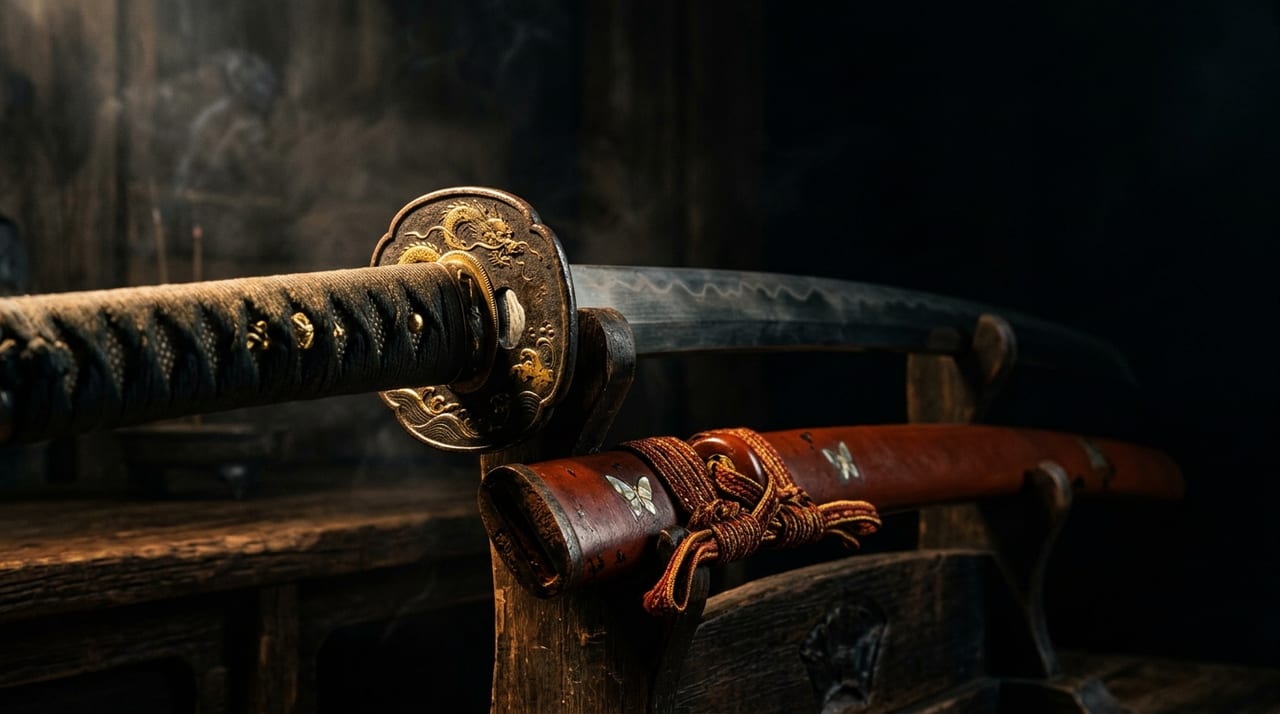 * Image is for illustrative purposes only.
Table of Contents
You may have seen scenes in period dramas where a samurai clinks the tsuba and the koiguchi together to seal a promise. This gesture is known as kinchō, and it is understood to have been performed by samurai to demonstrate the certainty of a vow or pledge. The sword was said to be the soul of the samurai, and kinchō was the "oath-taking custom" conducted using that very sword. This article organizes the meaning of kinchō, the form the custom took, the values of the samurai that underpinned it, and points to bear in mind when handling a sword today. Since the details are conveyed with some variation across historical sources, this account avoids definitive claims and stays within what is generally said.
What Is Kinchō?
Kinchō refers to the act of striking metal against metal to produce a sound as a means of swearing an oath. As the word literally means "striking metal (kane)," dictionaries explain that samurai struck the blade or tsuba of their sword against the other party's, women struck mirrors, and monks struck gongs. In period dramas it is often depicted as the gesture of striking the tsuba against the mouth of the scabbard (koiguchi) to produce a sound.
- Performed as a declaration of intent to keep a promise without fail
- Demonstrates to the other party that one is without falsehood
- Lends weight to the pledge by swearing through the sword — a symbol of one's status — rather than through words alone
Just as the saying goes "a samurai does not go back on his word," for a samurai, breaking a promise once made was an act that greatly damaged one's honor. Kinchō is thought to have been a ceremonial procedure that gave a physical grounding to that promise.
The Form of the Custom and the Parts of the Sword
The specific movement of kinchō is described as striking the tsuba and the koiguchi together from a state in which the sword has been partially drawn or the koiguchi cut. The parts involved are summarized below.
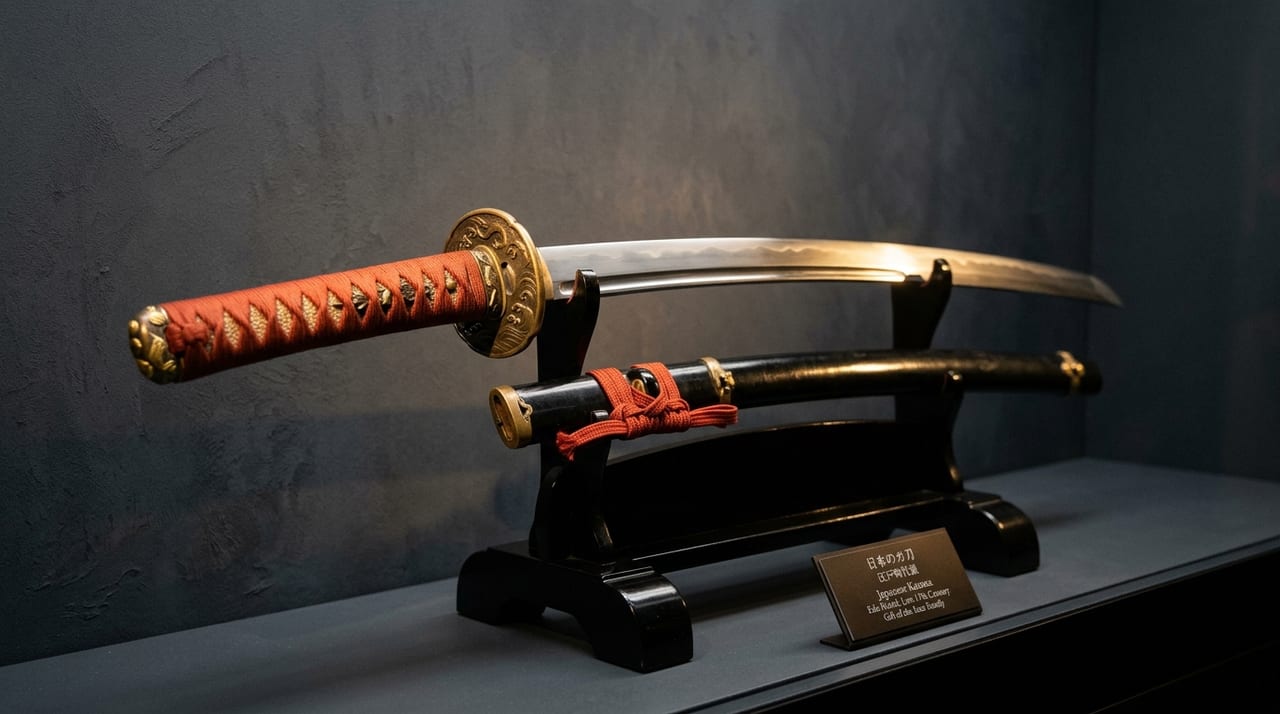
- Tsuba A metal fitting fitted between the blade and the tsuka that protects the hand
- Koiguchi The mouth of the saya, serving as the opening into which the sword is sheathed
- Seppa Thin metal fittings placed on either side of the tsuba
The tsuba is made of metal such as iron or copper, and since the koiguchi may also be fitted with metal hardware, striking them together produces a clear, ringing sound. The structure of the sword and the role of each part can be understood more concretely by reading Structural Differences Between Tachi and Uchigatana and the Sword Size Guide.
The Meaning Contained in the Sound
Why produce a sound? It is sometimes explained that the resonance of metal was thought in Japanese folk belief to have the power to ward off evil spirits, and that this sensibility became linked to the custom of swearing oaths. Given the established custom of ringing bells and metal objects during Shinto rituals to purify a space, this is an explanation easy to accept. However, there is no firm evidence that allows the origin of kinchō to be pinpointed to a single source, and in reality multiple interpretations coexist.
The connection between nihontō and Shinto is deep, with a history of swords being offered to the gods and serving as objects of faith. This cultural background is covered in detail in Shinto and Nihontō. The fact that swords were used in oath-taking customs can also be seen as an expression of the spiritual meaning that has long been entrusted to the sword.
Occasions on Which Kinchō Was Used
Kinchō is most often discussed in connection with pledges between samurai or oaths sworn to a lord or companions. It is said to have been performed when one wished to make a verbal promise binding, or to demonstrate that one's words contained no falsehood. In stories and theatrical performances it has also become established as a device for dramatizing scenes of firm resolution.
However, exactly how frequently it was practiced, by people of which social standing, and in what precise form varies in appearance depending on what historical sources survive. Care is needed not to conflate fictional depictions with actual custom, and period drama scenes should not be taken as straightforward fact.
Why You Should Not Try This with a Modern Sword
Anyone who has taken an interest in swords may feel an urge to try recreating kinchō. However, striking the tsuba and the koiguchi together on a modern nihontō or koshirae is best avoided. Not only will it scratch and dent the metal fittings, it can cause the mouth of the saya to crack, or the tsuba and seppa to come loose. Since swords are also delicate works of craft, understanding the custom through video and written descriptions is preferable, and handling the real object should be done with care and gentleness.
Kinchō is a small clue showing that the sword was not merely a weapon but a symbol of oaths and honor. Knowing the cultural meaning imbued in the sword will broaden one's perspective when appreciating them. TOUKENZA is an online nihontō marketplace, and the swords listed for sale can be browsed from the Sword Catalog.
Words and Gestures Related to Kinchō
Gestures discussed alongside kinchō include the movement of cutting the koiguchi and the bow made before drawing the sword. Cutting the koiguchi means using the thumb of the hand gripping the koiguchi to push the tsuba, preparing to draw the sword — that is, taking a stance from which the sword can be drawn at any moment. The fine details of etiquette varied by school and era, but it is a common thread that the very manner of handling a sword was a message to the other party. Kinchō stands out among such sword-related customs as an unusual example that specifically linked words with sound.
When one views a sword with this knowledge of its customs, the thickness of the tsuba and the craftsmanship of the metal fittings at the koiguchi begin to reveal the ingenuity designed with public handling in mind. If you are interested in the world of tsuba, The World of Koshirae, which covers sword mountings in general, will be useful.