The Attire of the Sword Smith and Workshop Customs — Practical Function and Devotion in the White Robe, Eboshi, and Shimenawa
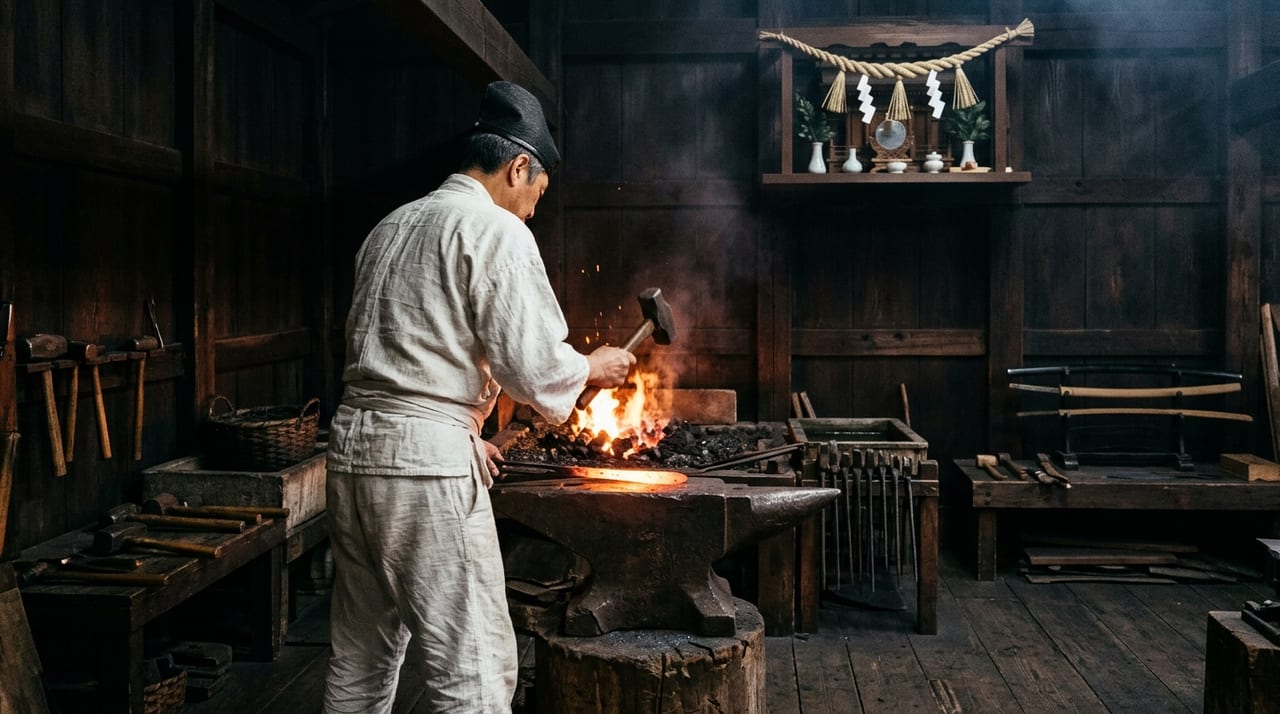 * Image is for illustrative purposes only.
Table of Contents
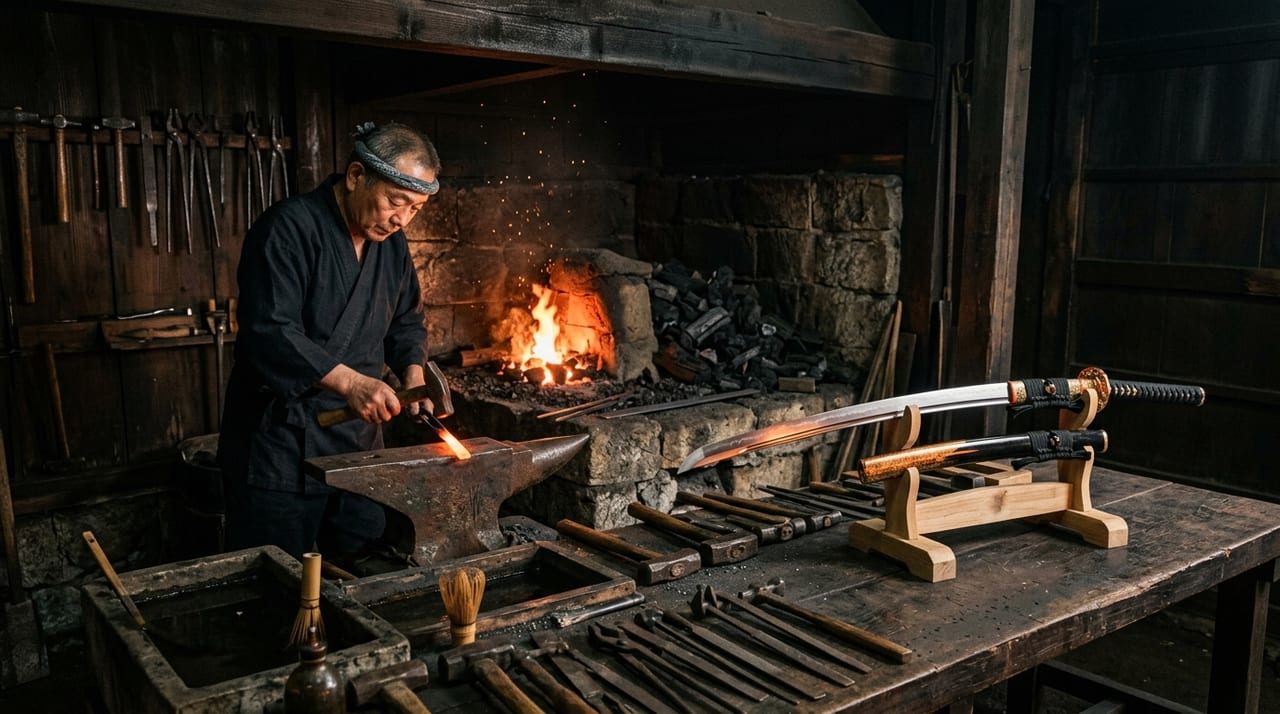
Photographs and footage introducing the workshops of sword smiths frequently feature a tōshō dressed in white robes with an eboshi on their head. Deeper in the kaji-ba there is often a kamidana with shimenawa strung across it. It may look like mere staging, but this attire and these customs reflect both the practical demands of working with fire and a long history of treating the nihontō as something sacred. This article examines the attire and customs of the sword smith, organizing them into practical and devotional aspects. Note that attire and customs vary by school, workshop, and region, so what is described here represents only general tendencies.
The Attire of White Robe and Eboshi
The typical attire worn by a tōshō during sword making consists of a white upper garment and hakama, together with an eboshi. White is the color of purity and connects with the dress worn for Shinto ritual. For the sword smith, the making of a blade has long been regarded as not only a technical skill but also an activity akin to serving the gods.
At the same time, the practical reasons must not be overlooked.
- Natural fibers such as cotton and hemp do not melt easily when sparks land on them, and they are less likely to adhere to the skin the way synthetic fibers can
- On white garments, dirt and scorch marks are conspicuous, making it easy to check the condition of the clothing at all times
- The eboshi protects the hair and head from sparks and heat, while also preventing sweat from running into the eyes
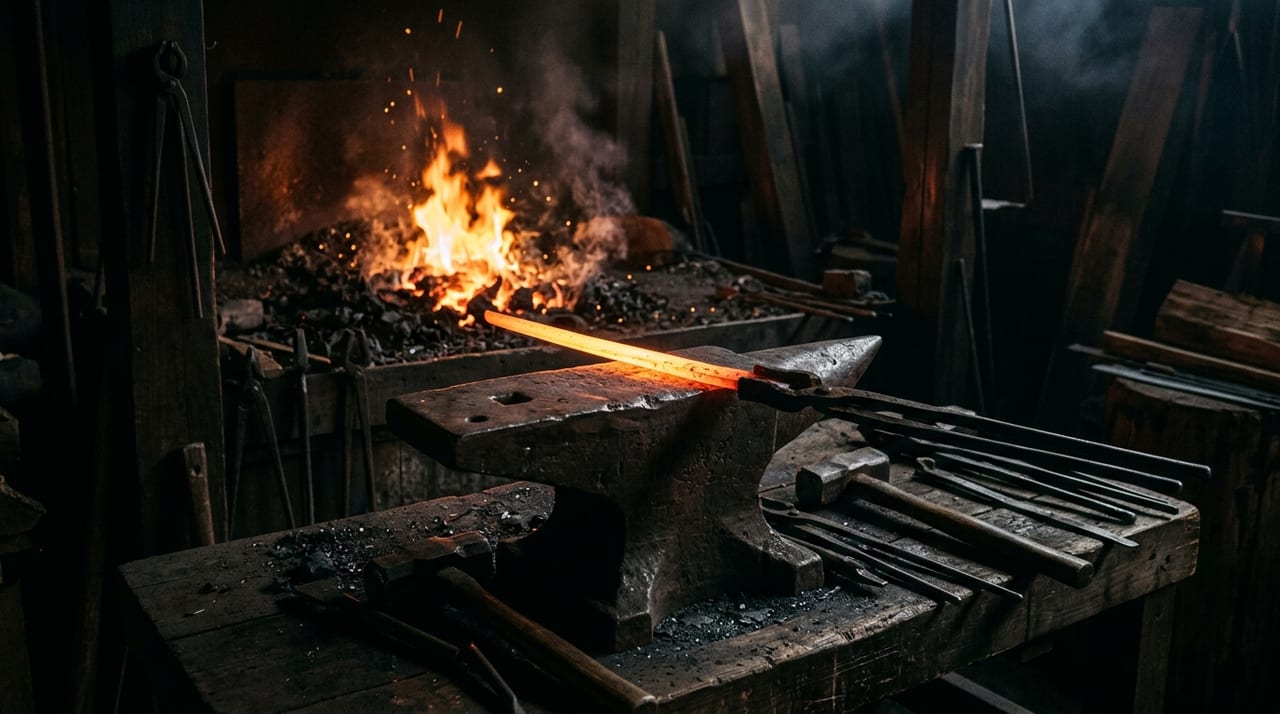
During tanren, sparks fly with every strike against the red-hot steel. Because such work continues for long periods under a shower of sparks, choosing materials that resist burning and are easy to work in is, before any question of formal appearance, a matter of safety. It is natural to see the accumulation of such practical considerations as the background against which this traditional form of attire became established.
What the Kamidana and Shimenawa Signify
The practice of installing a kamidana and stringing shimenawa in the kaji-ba is widely seen throughout the world of the sword smith. Shimenawa serve as a marker demarcating the space within as sacred, and they carry the meaning of keeping the kaji-ba itself as a pure space. It is customary to press one's hands together before the kamidana before beginning sword making, praying for safety in the work and a fine result.
Among the deities of the smith, Kanayago-jin, associated with tatara iron smelting, is well known. The relationship between this deity and kaji ritual is covered in detail in Kanayago-jin and Kaji Shinto Ritual, and reading it alongside this article will deepen understanding. For those wishing to view the connection between nihontō and Shinto from a broader perspective, Shinto and the Nihontō is also a useful reference.
Workshop Customs and Unspoken Rules
In the kaji-ba there are customs to be observed beyond attire. Many of these have never been written down and have been passed on orally from master to apprentice on the floor of the workshop.
- Do not run carelessly or throw objects around the forge or anvil
- Return tools to their designated places, and do not use another person's hammer or tongs without permission
- Follow the signals and calls during tanren, and do not disrupt the rhythm between the yokoza and sente
- Do not speak to the smith without good reason before or after yaki-ire
Yaki-ire is the most delicate stage in determining the quality of the blade. Because the tōshō reads the temperature from the color of the steel, the brightness of the workshop may be reduced at this point. If the surroundings are noisy at such a moment, it can affect the judgment being made. Keeping quiet is both a matter of courtesy and a means of protecting the quality of the work. For the collaborative rhythm during tanren, The Rhythm of Aiduchi is a useful reference.
Customs Tied to the Seasons and Calendar
The customs of the kaji-ba are also tied to the seasons and annual events. The practice of celebrating milestones according to the calendar — such as the ceremony of opening the kaji-ba for the New Year and festivals giving thanks for the bellows — has been carried on in various places. Because tanren conditions change between summer and winter, the approach to the work also involves seasonal adaptations. This is explained in Summer Forging and Winter Forging. For those wishing to know the daily routine of a tōshō, A Day in the Life of a Tōkō offers a clear and concrete account.
Knowing the Attire Changes How You See the Blade
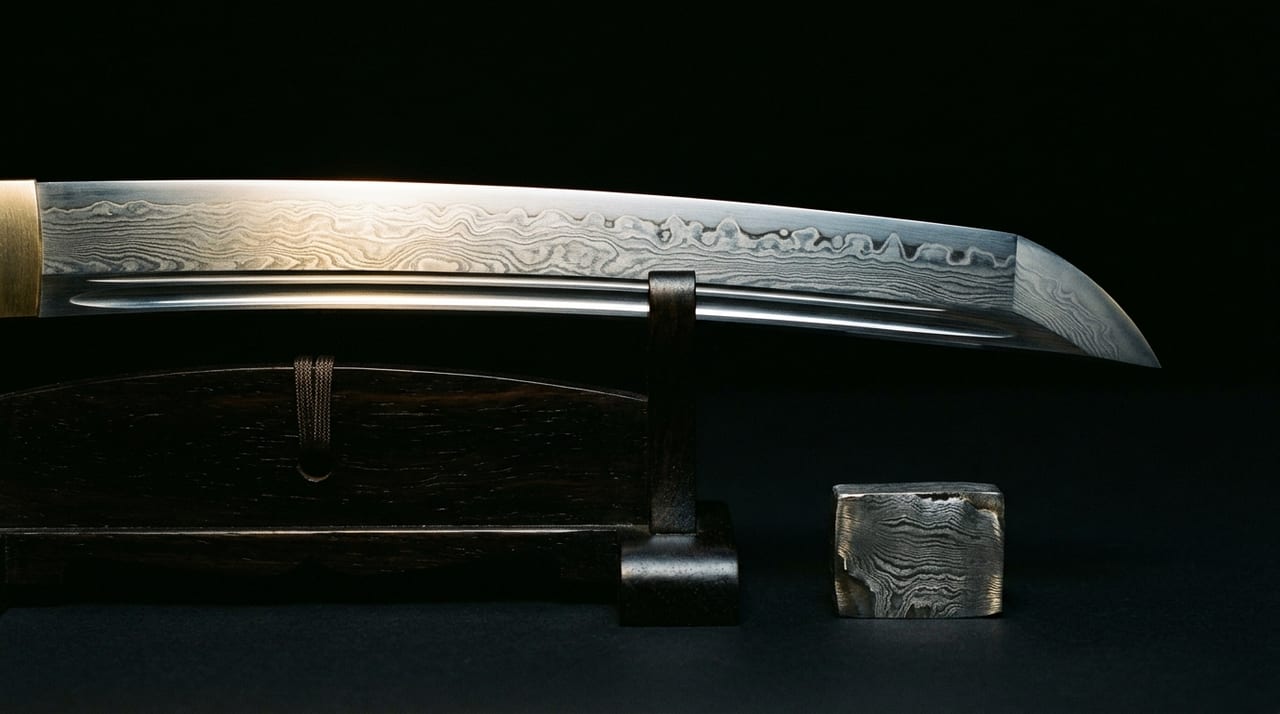
When appreciating a nihontō, we tend to focus only on the finished form. Yet a single blade exists as the result of a tōshō dressed in white robes and eboshi pressing their hands together before the kamidana and confronting fire. Once the meaning of the attire and customs is understood, one comes to feel that the maker's bearing is reflected in every aspect of the jigane and the hamon.
TOUKENZA is an online nihontō marketplace where you can browse and purchase listed blades. If you have become interested in the world of the maker, take a look at actual works in the Sword Catalog.
Points to Notice When Observing Attire in Person or on Screen
The attire of tōshō differs in detail from workshop to workshop. Even within the same white-robe tradition, differences can be seen in whether an apron is worn, the length of the sleeves, and the shape of the cloth wrapped around the head. If you have the opportunity to watch a sword-making demonstration or footage, it is worth paying attention to which elements of the attire are preparations against fire and which derive from ritual. You will likely come to see clearly how practical function and devotion converge in a single form.