The Craft of Mei: How Swordsmiths Sign Their Blades
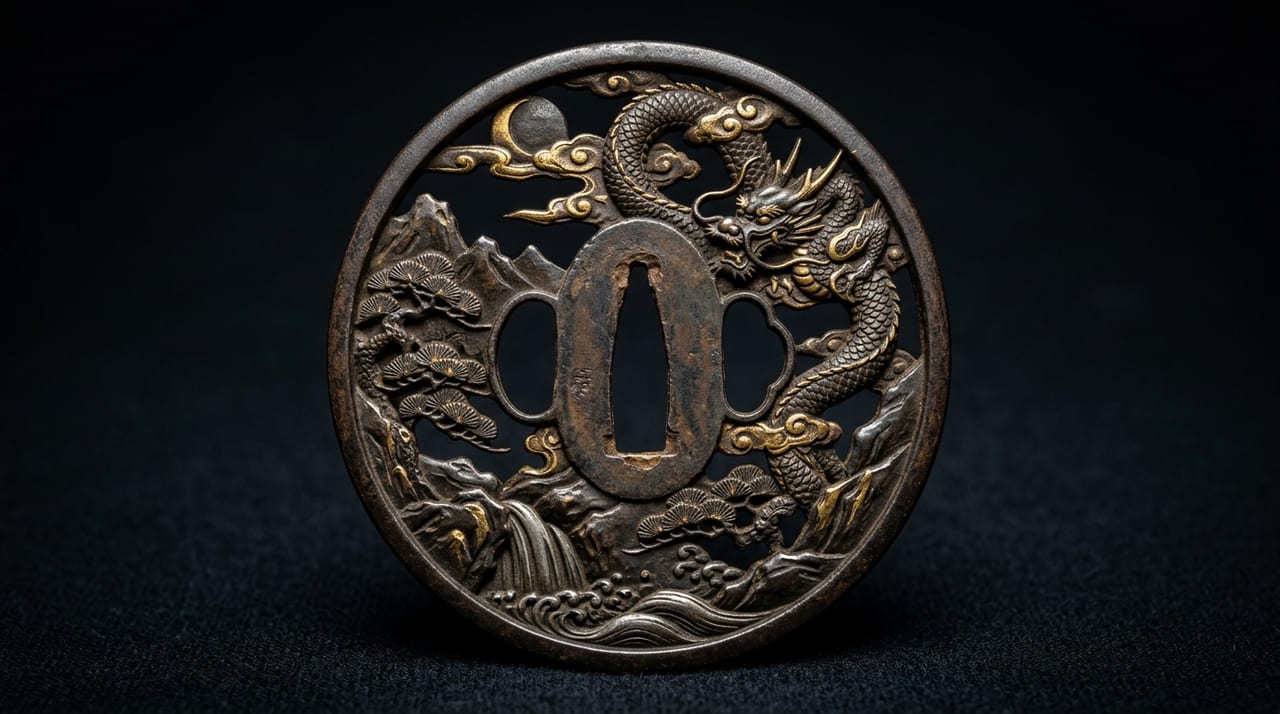 * Image is for illustrative purposes only.
Table of Contents
What is Mei? — The Sword's "Self-Proof"
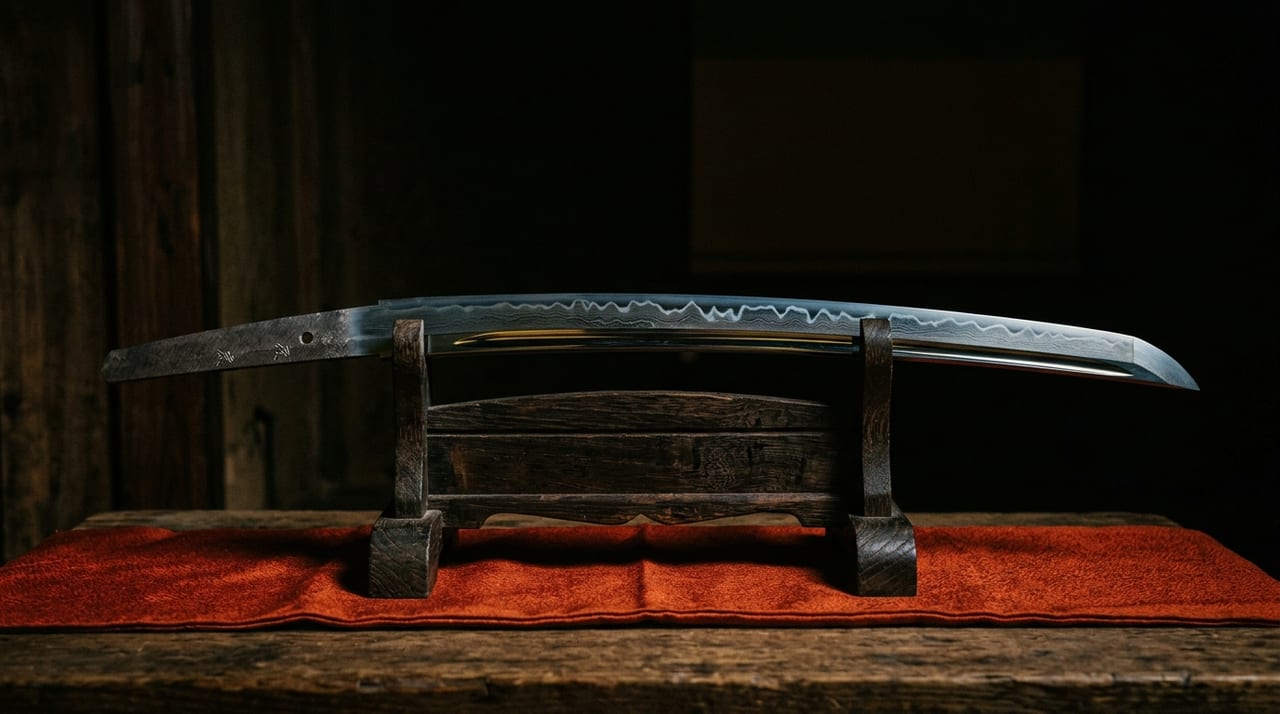
Mei is the signature of a swordsmith engraved on the tang (nakago, the root portion of the blade that fits into the handle) of a Japanese sword. While mei clearly identifies the maker, it also records when, where, and for whom the sword was made—essentially serving as the sword's "family register."
The presence or absence of mei, its type, and content directly influence the value assessment of swords. Even works by the same swordsmith show significant differences in market value between those with mei (zaimei) and those without (mumei). However, there are exceptions such as Masamune, whose pieces are authenticated as genuine even without mei, so the presence or absence of mei is not everything. Since the shape of the tang, its finish (yasuri-me), and the degree of polishing are also evaluated comprehensively, mei is ultimately positioned as just one element of composite authentication.
Types of Mei — Omote-mei, Ura-mei, Nenki-mei, and Chumon-mei
Japanese sword mei is broadly divided into "omote-mei" and "ura-mei."
Omote-mei is engraved on the front surface of the tang and records the swordsmith's name (family name, given name, or professional title). Note that for tachi, worn blade-downward from the waist, the "haki-omote" faces outward, but for uchigatana, worn blade-upward from the waist, the "sashi-omote" faces outward, so the front and back are reversed compared to tachi. The most common format is "××-koku jūnin △△ saku (kore o tsukuru)," combining the place of origin, swordsmith's name, and a phrase indicating craftsmanship. The ordering often follows the pattern of province name, residence, and swordsmith's name, as in "Bizen-koku jū Osafune Sukesada" or "Setsu-shū jū Sukehiro." The evolution of uchigatana tang mei from the Muromachi to the end of the Edo period is covered in the cultural history of uchigatana tang mei.
Ura-mei is additional information engraved on the back of the tang, which may include the date of manufacture, the name of the patron, the dimensions of the sword, and other special remarks. Formats such as "Kyoho ○ year ○ month day" and "Daiku △△ no Kami ordered this" are common, and these serve as invaluable primary sources for historical verification.
Nenki-mei is mei recording the year of manufacture and serves as important evidence when determining the production date of a sword. However, it may sometimes be "atomei," added or altered in later periods, so assessment must comprehensively examine the handwriting, tagane marks, and rust condition of the tang.
Chumon-mei records the patron's name or purpose when a sword was commissioned by a specific person, temple, shrine, or domain. Entries such as "Dedicated to ○○ Shrine" or "Official work for ○○ Domain" serve as the most reliable documentation directly proving the sword's provenance.
The Tool for Engraving Mei — The World of Tagane
The tool used to engrave mei is called a "tagane," a metal chisel for engraving. The tagane is typically made of steel with a wedge-shaped point, and characters are engraved on the metal surface of the tang by striking it with a small hammer (kozuchi) made of wood or metal.
Tagane come in various widths and shapes, and swordsmiths use different ones depending on the thickness, depth, and style of the characters. Thick tagane are used for large, bold kaisho characters, while thin tagane are used for delicate, thin sosho script. Since the depth and angle of each strike affect the final result, experienced swordsmiths maintain consistent speed, force, and direction while striking the tagane, all while maintaining awareness of the balance of the entire inscription. This work requires a skill in "character art" akin to calligraphy, distinct from swordsmithing technique itself. The specific carving techniques, tools, and stylistic differences in handwriting by school are detailed in mei-kiri technique.
While machine engraving and electric tagane exist today, mei created with traditional hand-struck tagane have a unique vitality in the tremor, force, and variation in depth of each strike, and experienced connoisseurs can discern these differences.
Script and Schools — Reading the Swordsmith from Mei
The script style of mei varies greatly by swordsmith, school, and period, and the script itself becomes an important clue in attribution.
| Script Style | Characteristics | Examples and Tendencies |
|---|---|---|
| Kaisho (kaisho-tai) | The most legible script style, commonly seen among Bizen and Yamato swordsmiths. Clear strokes reveal a sincere attitude toward carefully engraving each character. | The Sukesada school of Osafune in Bizen transmitted clear kaisho mei through generations, and the orderly power of the two characters "Sukesada" itself became proof of a master craftsman. |
| Gyosho (gyosho-tai) | A script style more loosely written than kaisho, with an elegant flow. More commonly found among swordsmiths of Yamashiro (Kyoto) and Soshu (Kamakura). | The mei of the Rai school and Awataguchi school display flowing gyosho script as if the brush were dancing. |
| Sosho (sosho-tai) | The most cursive script style, sometimes unreadable except to experts. Sosho-style mei also appear among shinshintō swordsmiths of the late Edo period. | Many sosho mei left by certain swordsmiths of the Northern and Southern Courts period are masterpieces that even contemporary calligraphers admire. |
The specific characteristics of mei by school are as follows:
- Awataguchi Yoshimitsu's mei are slender and elegant kaisho
- Soshu Sadamune employs large, expansive gyosho
- Echizen Yasutsugu frequently employs abbreviations such as "ika ryaku" in his distinctive style
When a swordsmith's lineage continues, the characteristics of the script style subtly change from generation to generation, making the ability to estimate "which generation" from the script style an important authentication technique. For information on the system of inheriting names through successive generations, please refer to the swordsmith's mei name succession system.
The Relationship Between Tang Finish and Mei — Yasuri-me and Polishing
As a prerequisite to engraving mei, the way the tang is finished greatly affects how the mei appears. The surface of the tang has fine linear marks made by a rasp, called "yasuri-me," whose direction, depth, and density vary by swordsmith.
Representative yasuri-me styles include "katte-shita yasuri," "kiri yasuri," and "kesho yasuri." Katte-shita yasuri, with diagonal lines descending to the right, is the most common style and was widely adopted by Edo-period swordsmiths. Kesho yasuri combines rasp marks in multiple directions and is decorative; late-Edo masters like Minamoto no Kiyomaro favored this style.
The degree of tang polishing also varies by period and school. During the koto period (Heian through Muromachi), tangs were left unpolished as "ubunakago" with rust allowed to develop naturally. In contrast, shinto and shinshinto pieces from the Edo period onward tend to have tangs polished smooth and then have mei engraved to enhance legibility. The preservation condition of ubunakago directly reflects the sword's history and storage environment, making it extremely valuable for authentication.
Authenticating Fake Mei — The Eye to Distinguish Genuine from False
The issue of "gimei" (fake mei) is always present in the world of Japanese swords. Gimei refers to alterations where mei of other swordsmiths (usually famous masters) were added later, or where mei were added to mumei (unsigned) blades. In particular, the names of masters like Masamune, Yoshihiro, and Yoshimitsu—among the Tenka Goken (Five Great Swords Under Heaven)—have been frequent targets of gimei, and tales of "the three masters' forgeries" have been passed down since the Edo period. The types of gimei and industry authentication practices are summarized in types of gimei and authentication.
The key points for detecting gimei are as follows:
- Consistency of rust and mei: Genuine old mei are integrated with the tang's rust, with old rust evenly distributed within the engraved lines. Gimei often show rust conditions different only around the mei itself (newer mei retain luster at the bottom of the engraved lines).
- Temporal characteristics of tagane marks: Old tagane use has period-specific qualities in "force, depth, and continuity," and even modern imitation cannot replicate the period feel. Experts can judge "whether this mei is from this period" by examining the cross-sectional shape of tagane marks and the order of strikes.
- Consistency with the blade: Verify that the period and school indicated by the mei match the jihada and hamon of the blade. Even if mei bear Masamune's name, if the jihada and hamon show characteristics of Edo shinto the suspicion of gimei strengthens.
In recent years, fluorescent X-ray metal composition analysis and electron microscope examination of tagane marks are also employed, and the precision of gimei determination continues to improve through both scientific analysis and traditional connoisseurship.
Conclusion — Mei as Words from the Swordsmith to the Future
Mei is the "voice" left by a swordsmith for future admirers. Swordsmiths were fully aware that the information they engraved—swordsmith's name, place of manufacture, date, and patron—would endure for centuries to come from the moment it was inscribed on the tang. The format, script, and use of tagane in mei embody both the aesthetic values of the school and the individual's skill, and they are objects of appreciation and study just as much as the beauty of the blade itself.
By deeply understanding the technique and artistry of mei, one can participate in the deepest aspect of Japanese sword appreciation—the dialogue between blade and swordsmith. When one picks up a single sword and traces the characters engraved on the tang with one's fingers, there lies the very breath of the swordsmith from centuries past.