What Is Umegane — A Repair That Fills Blade Kizu with Iron, and Which Kizu Can and Cannot Be Fixed
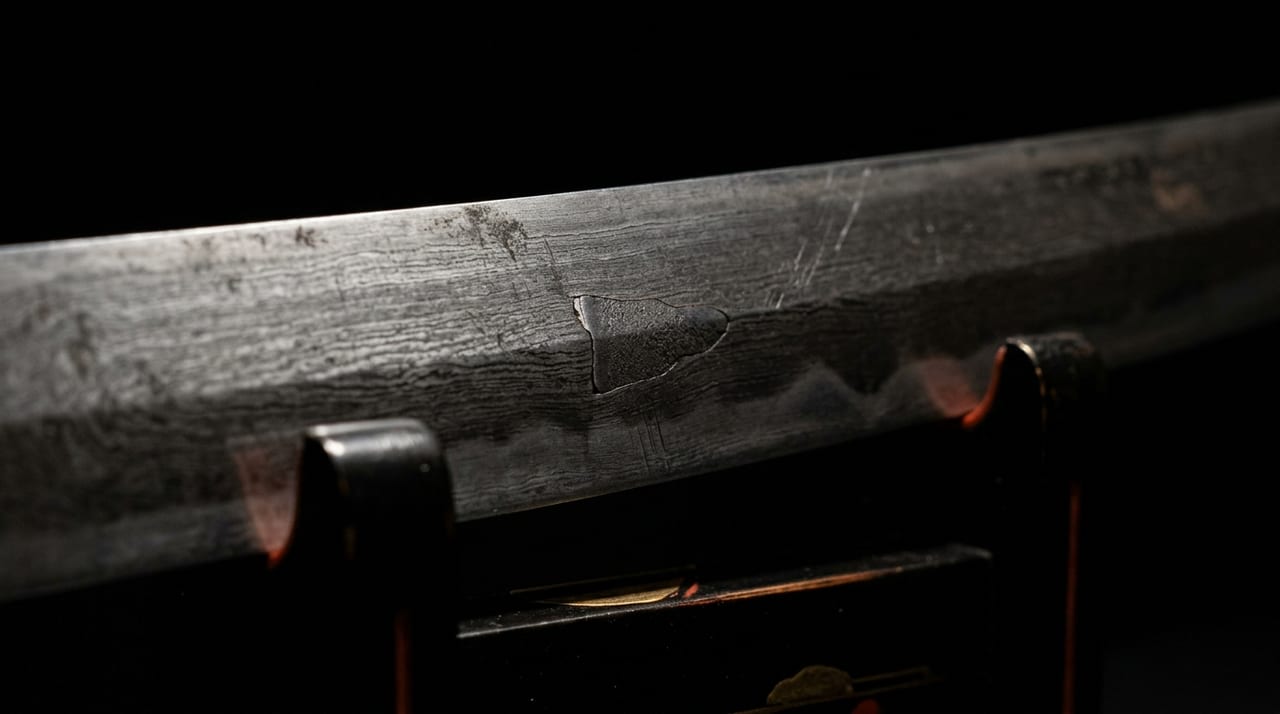 * Image is for illustrative purposes only.
Table of Contents
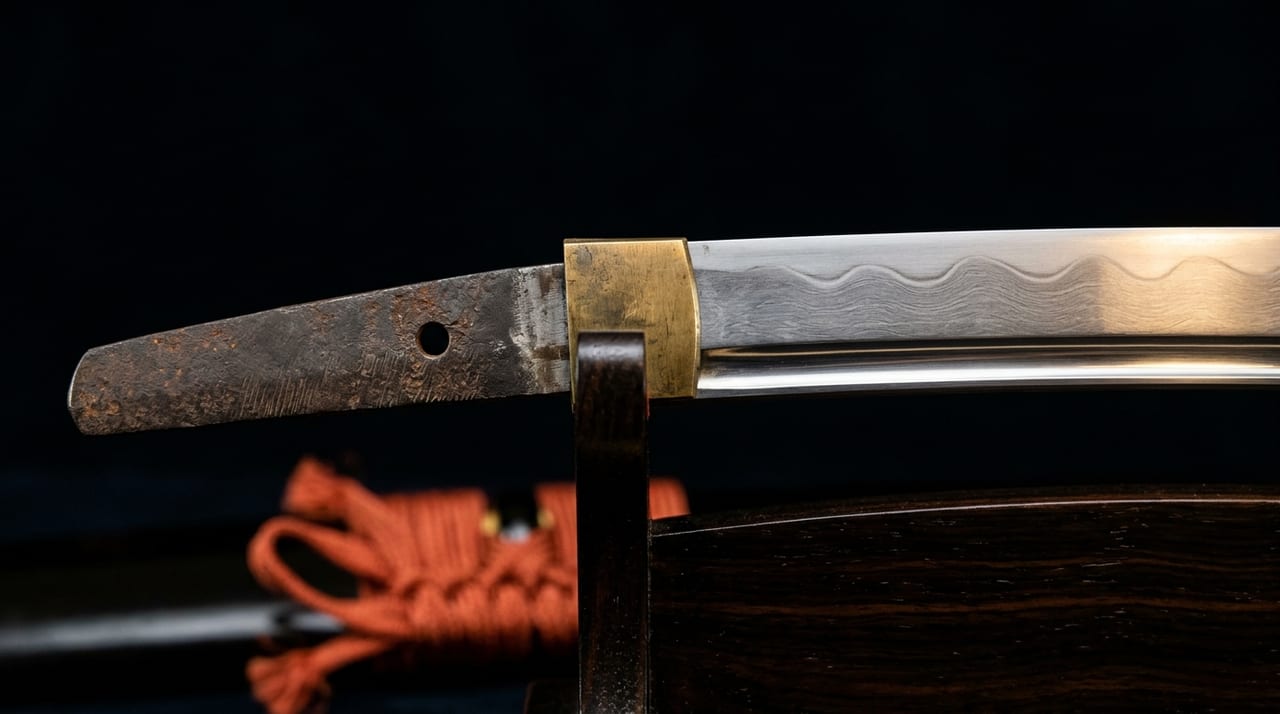
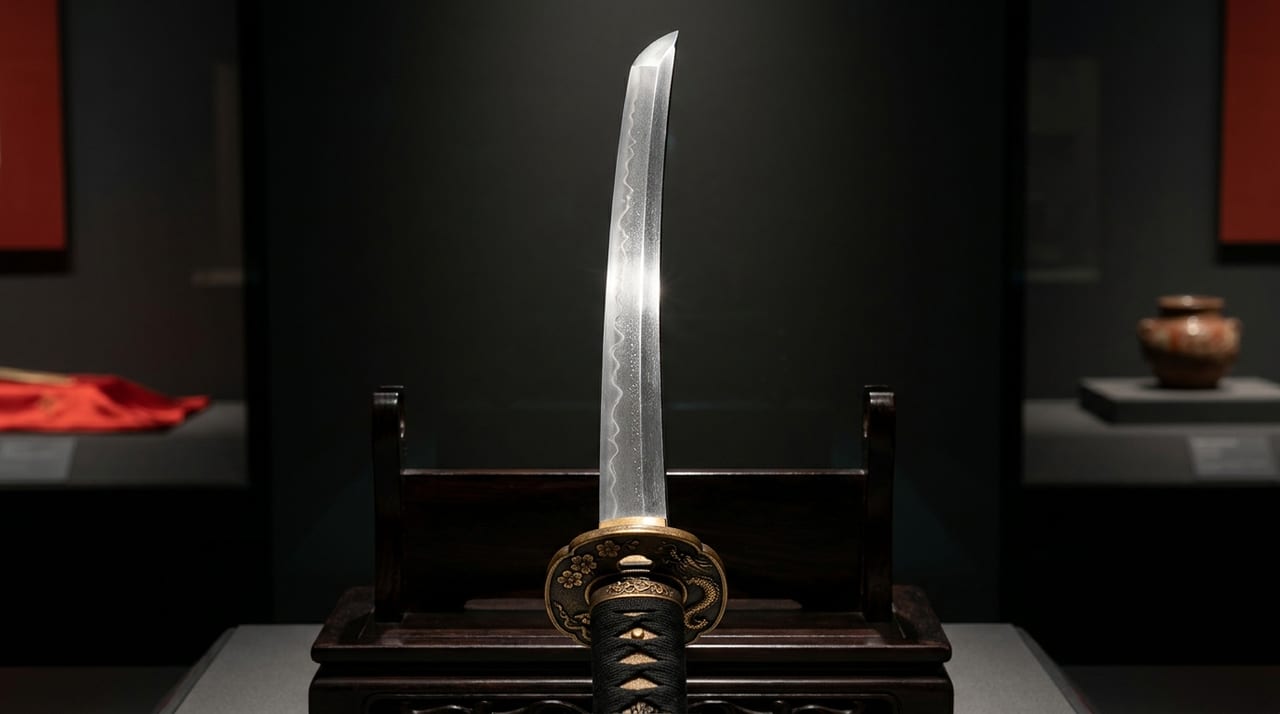
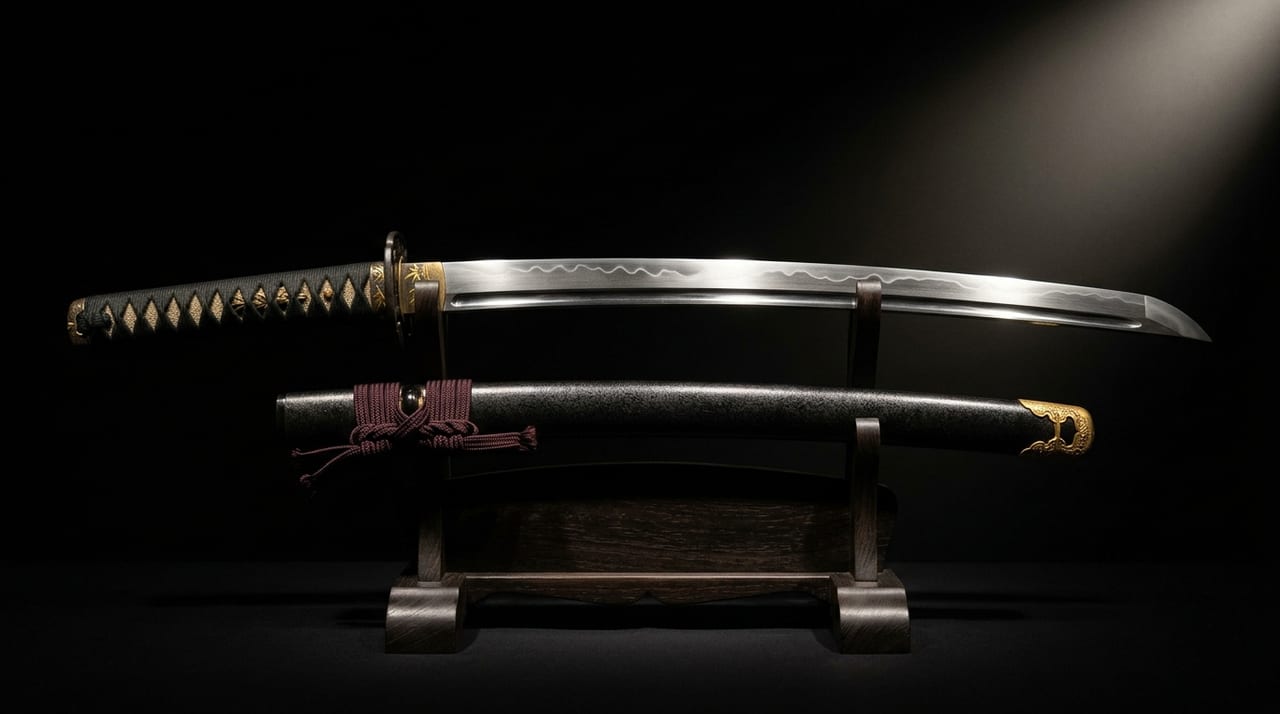
When closely examining the blade of a nihonto, one may find in the jigane a rectangular section that differs slightly in color or surface texture from its surroundings. In most cases, this is umegane. Umegane is a repair method in which a separate piece of iron is embedded in the blade to conceal a kizu (flaw), and it is also written as umekin, umegane, or umetetsu. This article organizes what technique umegane represents, what kinds of kizu it is used for, and how to regard umegane when examining a sword.
What Is Umegane — A Repair That Fills Kizu with Iron
Umegane is a repair in which iron of similar composition and color is embedded in the site of a kizu on the blade to conceal the flaw. Known methods include using iron pieces taken from another sword and selecting iron of the same period, composition, and color as that sword. It has long been used to repair forge cracks (kitaeware, also called hadaware).
In English, the term umegane is used as-is and is known as a patch of steel that appears to float like an "island" on the blade surface. A well-placed umegane is difficult to identify at first glance, but when the angle of light is changed, it may appear as a section whose surface texture or color differs slightly from the surrounding jigane.
Kizu That Umegane Can Fix, and Kizu It Cannot
There are many types of kizu on a blade; some can be made less noticeable with umegane and others cannot. The names and meanings of kizu are covered in detail in Blade Kizu Terminology Guide, so this section focuses solely on their relationship to umegane.
Kizu that may be repaired with umegane include the following.
- ishike
- kitaeware
- jiare
- sumigomori
- fukure
- yame
All of these are kizu that appear in the jigane, with the common feature that none of them are cracks that sever the blade itself.
Kizu that are considered uncorrectable with umegane include karasuguchi, shinae, tsukiwa, hashimi, and hagire. Hagire in particular is a crack that runs from the cutting edge across the hamon and is a serious flaw affecting the strength of the sword. Since embedding iron on the surface does not eliminate the crack itself, hagire is not a candidate for umegane.
For why forge cracks occur, Kitaeware: Causes and Prevention explains it from the perspective of tanren.
Who Inserts Umegane, and When
Today, umegane on a blade is most often described as the work of a togishi. It is said that when correcting fukure within the blade, the skill of the togishi greatly influences the result. However, some togi workshops explicitly state that they do not undertake umegane work, alongside partial polishing and splice togi. It is not a task performed by every workshop.
Some umegane found in old swords are thought to have been inserted before yaki-ire. The view is that if umegane exists within the yakiba and belongs to a sword predating the Edo period, it cannot have been inserted after yaki-ire because it would not blend naturally with the hamon; therefore, it was most likely inserted by the kaji before yaki-ire. In such old examples, marks have been observed indicating that rectangular iron pieces were hammered in with a chisel-like tool. However, this is an inference from observation of surviving pieces; no written records documenting the actual process survive.
The difficulty of umegane lies in selecting the right iron to use. If the color and surface texture do not match the surrounding jigane, the repaired section will stand out even more. Umegane that blends in color perfectly is thought to use the same iron as that used in making the sword itself (tomogane, or matching iron).
How Umegane Affects a Sword's Appraisal
Umegane is a repair in which the blade has been "worked on later to conceal a kizu." For this reason, it is sometimes treated as an acquired defect alongside yakinaoshi (re-quenching, also called saiba) and yakitsugi.
The effect on appraisal is not uniform. The general view is as follows.
- If the umegane is clearly visible, the value decreases to some extent.
- If the repair is so skillfully done as to be invisible, the appraisal is virtually unchanged.
- The more serious the original kizu (affecting the blade, covering a wide area), the more likely the mere presence of umegane will be a concern.
It also sometimes happens that the embedded iron falls out during polishing, emerging as an unexpected defect when the sword is re-polished. When submitting a sword with umegane for togi, this point is worth bearing in mind.
Viewed as a work of art, there is the view that any kizu detracts from a sword's beauty. On the other hand, it is unusual for a sword that has survived several centuries to have received no work at all. Rather than judging a sword solely by whether umegane is present, what matters is to observe where it is, how large it is, and how naturally it has been integrated.
What to Look for When Examining a Sword
To identify and assess umegane, the following points are worth keeping in mind.
- Use a single light source and tilt the blade gradually, looking for any section whose jigane surface texture or color differs from its surroundings.
- Confirm whether the section found is within the blade, in the ji, or in the shinogi-ji.
- Confirm the size and shape (rectangular, or a small point).
- If the item is listed for sale, read whether the product description includes any mention of kizu or repairs.
Descriptions of kizu and repairs are important information when selecting a sword. Any points that are unclear are best confirmed before purchase.
Summary
Umegane is a repair that fills kizu such as kitaeware, fukure, and ishike with iron pieces of similar composition and color to make them less noticeable. There are kizu, such as hagire, that cannot be corrected with umegane. Some old examples are thought to have been inserted before yaki-ire; today umegane is most often regarded as the togishi's craft, though some workshops will not accept the work. Well-executed umegane is said to have little effect on appraisal, while clearly visible umegane does affect value to some degree.
To compare actual swords, the works currently listed for sale can be browsed and purchased in the Online Catalog (Sword Listings). Questions about listed items can be sent via the Contact Form.