A Guide to Blade Defect (Kizu) Terminology — What Fukure, Kitaeware, and Hike Mean for a Sword's Appraisal
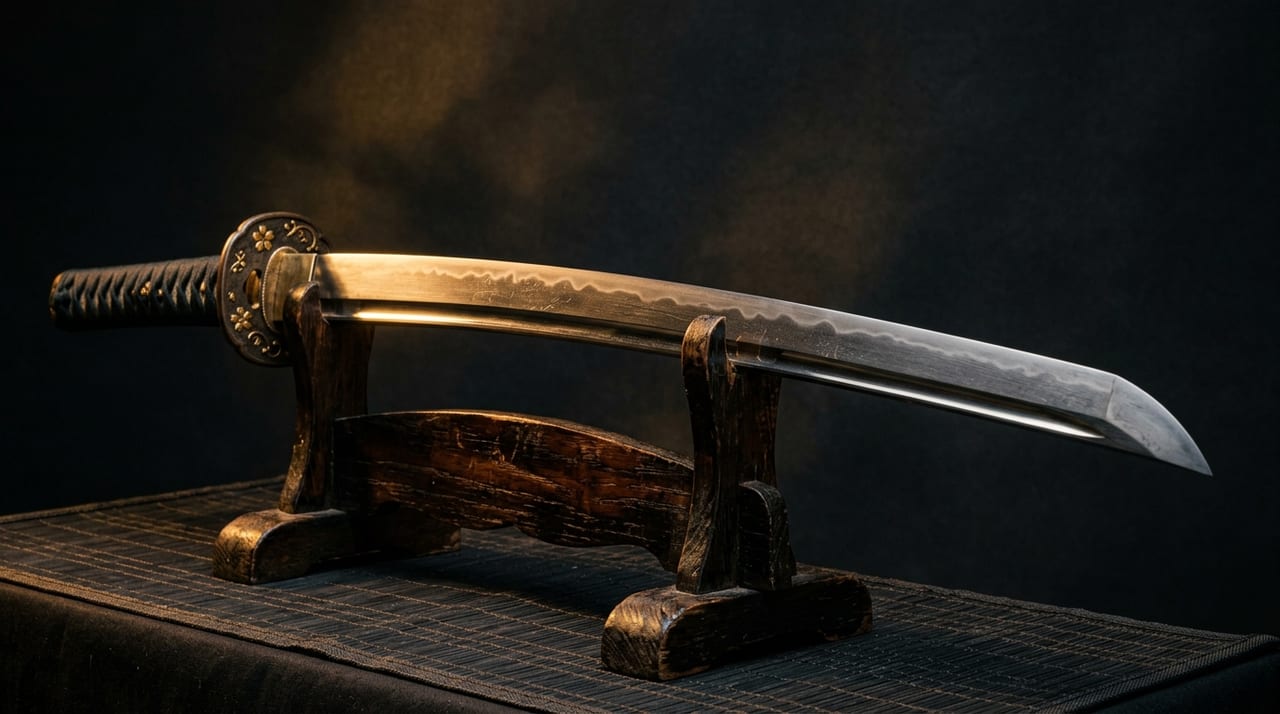 * Image is for illustrative purposes only.
Table of Contents
Why You Need to Know "Kizu" Terminology
When reading kanteisho or sales descriptions for nihontō, one often encounters unfamiliar technical terms alongside the word "kizu" (defect). Fukure, hike, yake, and kitaeware — each of these terms denotes some form of flaw that can occur in a blade, yet their meanings and the degree to which they affect appraisal differ considerably from term to term.
Not every kizu significantly diminishes a sword's value, yet there are also fatal flaws that cannot be taken lightly. Reading a description without knowing the meaning of the terms can leave one with an impression far removed from the actual appraisal. This article organizes the kizu terminology most commonly encountered when buying or appreciating nihontō.
A List of Common Kizu Terms
| Term | Reading | Meaning | Impact on Appraisal |
|---|---|---|---|
| Fukure | fukure | A flaw in which air or impurities become trapped between layers during forge-welding, causing the surface to bulge or later rupture | Moderate to large; depends on location and size |
| Kitaeware | kitaeware | Fine cracks running along the grain lines, arising during the orikaeshi tanren (folding) process | Moderate; depends on depth and number |
| Hike | hike | Fine, shallow scratches caused by polishing or handling | Small; can often be reduced by re-togi in many cases |
| Shimi | shimi | Discoloration spots formed when rust or grime becomes fixed in the steel | Small to moderate; depends on the degree of rust progression |
| Yake | yake | A condition in which the hamon or jigane has deteriorated as a result of exposure to fire or high heat | Large; in most cases results in a significant reduction in appraisal value |
| Hagire | hagire | A crack that runs across the boundary of the hamon — one of the most serious flaws | Large; affects the structural integrity of the blade itself |
| Ware | ware | A comparatively large crack in the blade | Large; potentially fatal depending on size and location |
The mechanism by which kitaeware develops is covered in detail in The Causes and Prevention of Kitaeware, and the origins of defects that appear in the hamon are discussed in Hamon Failures and Defects.
Hataraki That Can Be Mistaken for Kizu — Phenomena That Are Not Defects
What beginners most often mistake for kizu are phenomena known as "hataraki" (activity) that appear in the jigane and hamon. Phenomena such as kinsuji, sunagashi, and chikei all arise naturally during the tanren (forging) and yaki-ire (quenching) processes, and in most cases are treated as elements that actually enhance the sword's appraisal.
The single most important point in distinguishing kizu from hataraki is whether or not the feature constitutes a structural weakness in the blade. Hataraki appear as linear patterns that form part of the character of the jigane and hamon, whereas kizu are in most cases structural defects arising from faulty forge-welding or external impact. Understanding this distinction greatly improves one's ability to interpret the descriptions in a kanteisho.
How to Think About the Impact of Kizu on Appraisal
The impact of kizu on appraisal is not determined simply by whether a kizu is present or absent. In practice, the following considerations are weighed together.
- Location: Kizu that fall on the hamon tend to have a greater impact on appraisal than kizu in the jigane area.
- Size and number: The appraisal differs between a single small kizu and kizu that extend across multiple areas.
- Potential for progression: Treatment differs depending on whether a kizu is fixed in its current state or may expand in the future.
- Balance with rarity: For highly rare swords, such as zaimei (signed) works by celebrated tōkō, the overall appraisal may not fall sharply even when some kizu are present.
As discussed in Nihontō Price Appraisal Standards, a final appraisal is arrived at by combining multiple factors — mei (signature), period, and condition among others — and it is not possible to discuss value by isolating the presence or absence of kizu alone.
Checkpoints When Examining the Real Sword
It is often impossible to fully grasp the nature of kizu from photographs or written descriptions alone. When there is an opportunity to examine the actual sword, checking from the following perspectives will deepen one's understanding.
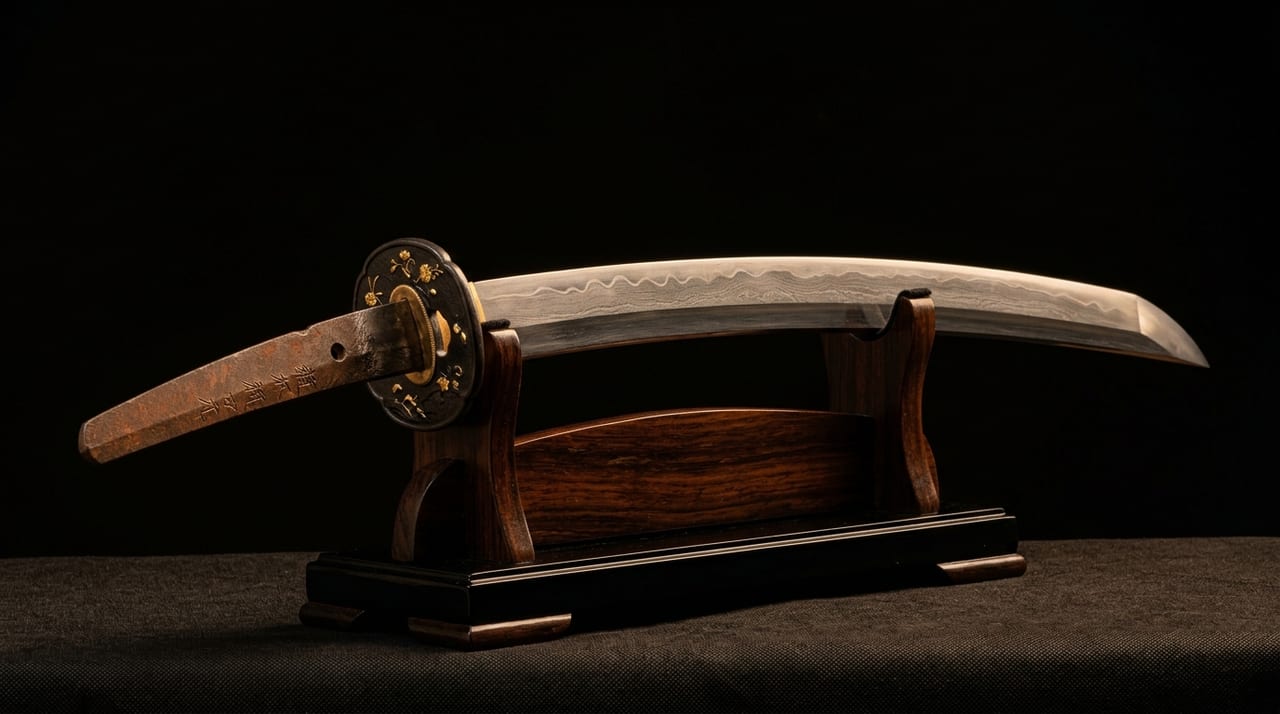
- Follow the hamon while changing the angle of light: Fukure and hagire may only be noticed by shining light at an oblique angle and tracing the continuity of the hamon.
- View the jigane as a whole surface: Shimi and yake often appear not just at a single point but as uneven tone across the entire jigane.
- Check the boundary between the nakago (tang) and the blade: Kitaeware tend to occur near the hamachi and munemachi areas, so observe this boundary closely.
When a suspicious area is found, rather than reaching a conclusion through one's own judgment, the advisable approach is to cross-reference the content of the kanteisho and the seller's explanation, and to request additional clarification if necessary.
Summary — Knowing the Terminology Is the First Step to Reading a Kanteisho
By understanding each kizu term one by one, one becomes able to read the information written in a kanteisho or sales description not as a mere list of technical terms but as information that concretely describes the condition of the sword. Building on the premise that not all kizu carry the same weight, making a habit of confirming details with the seller when a description gives cause for concern is the path to finding a sword that truly satisfies.