What Is the Shinsakumeitōten — The Structure of a Sword Contest That Shapes the Careers of Modern Tōshō
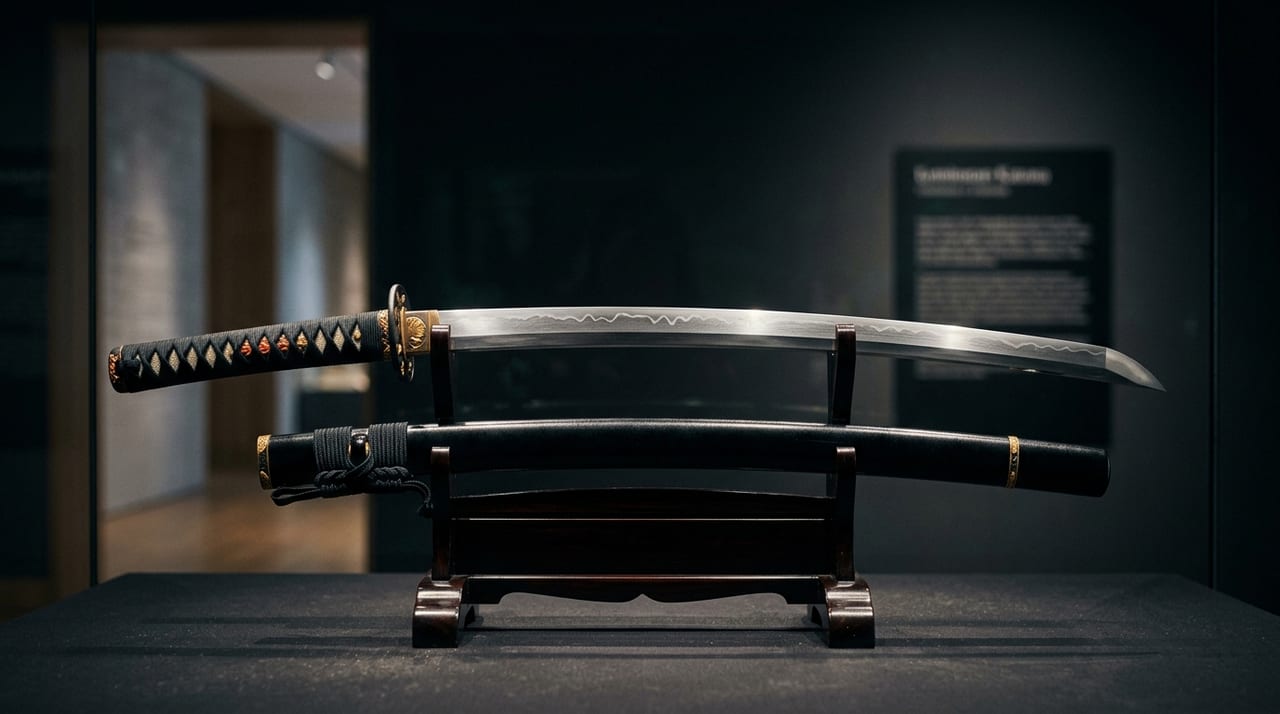 * Image is for illustrative purposes only.
Table of Contents
What Is the Shinsakumeitōten — The Arena Where Modern Tōshō Compete
The Shinsakumeitōten is an exhibition and contest organized by NBTHK (Society for the Preservation of Japanese Art Swords), in which modern tōshō submit newly forged swords made during the preceding year for judging. After the Pacific War, the production of Japanese swords was temporarily banned entirely, and even after that, swordsmiths were required to obtain approval for each sword they made (Act for Controlling the Possession of Firearms or Swords and Other Such Weapons (Jūtōhō) (e-Gov Law Search), Article 18-2); yet modern tōshō have continued to refine their skills under this framework. The Shinsakumeitōten has come to be regarded as the foremost stage for demonstrating the technical level of these modern tōshō to the outside world and for encouraging them to sharpen their skills against one another.
The Judging Structure — Categories and Evaluation Criteria
In the Shinsakumeitōten, submitted swords are divided into categories by sword type — tachi, katana, wakizashi, and tantō — and further categories are established according to the number of years of experience a tōshō has. Judges evaluate three elements comprehensively according to traditional Japanese sword appraisal criteria: sugata, jigane, and hamon.
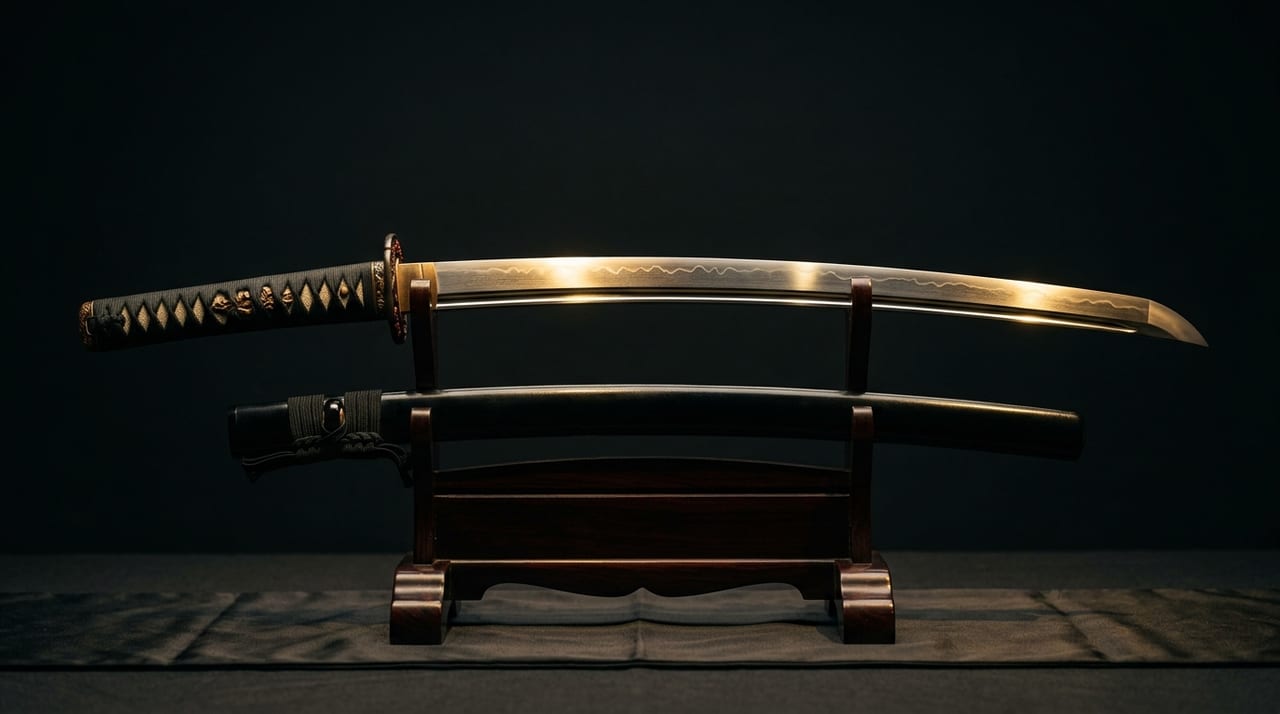
- sugata: whether the balance of nagasa (blade length), sori (curvature), and mihaba (blade width) achieves a proportion appropriate to the period style and sword type
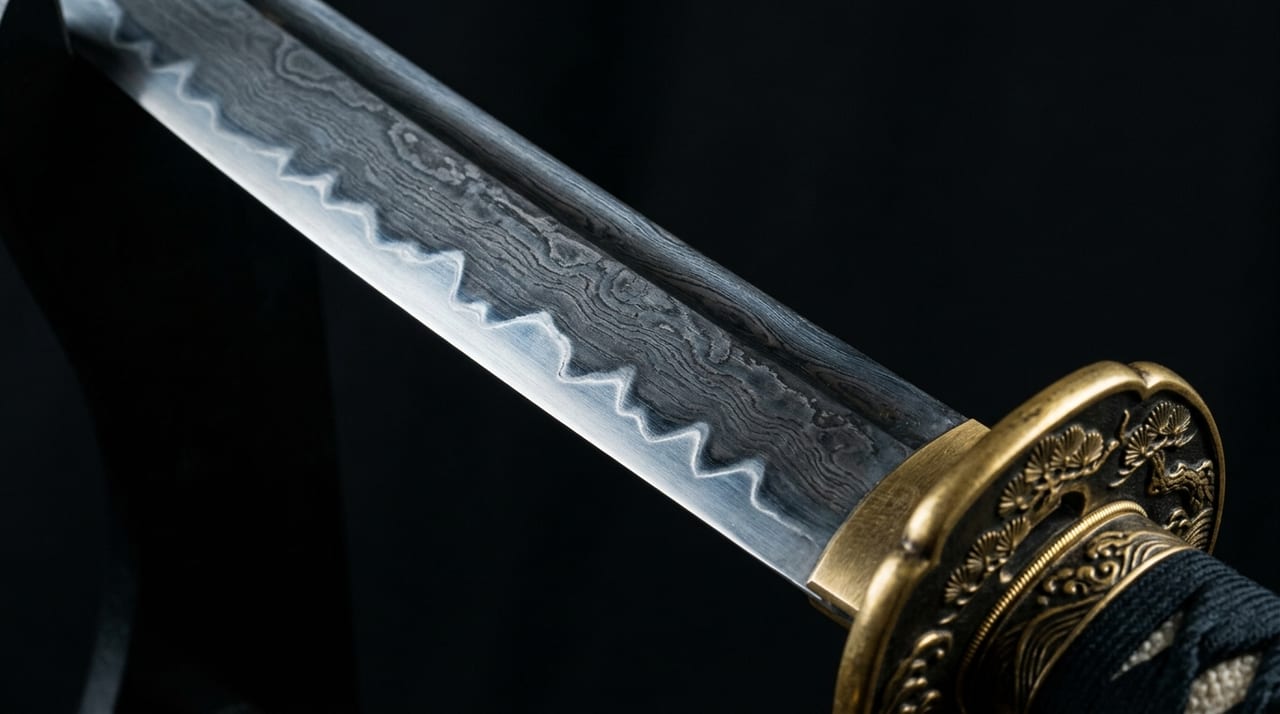
- jigane: whether the grain produced by orikaeshi tanren (folding) is finished beautifully without impurities
- hamon: whether the hamon produced by yaki-ire (quenching) achieves the intended design without any breakdown
The highest honor is a prize known as the Masamune Prize, and winning this award is regarded as one of the most prestigious achievements a modern tōshō can attain.
The Impact of Entry on a Tōshō's Career
A record of awards at the Shinsakumeitōten is directly linked to a tōshō's market valuation. In the custom-order market for Japanese swords, tōshō with award records tend to attract commissioned orders and to command higher prices.
Furthermore, many tōshō who have been designated as Holders of Important Intangible Cultural Properties (commonly known as Living National Treasures) under the Intangible Cultural Property system have a history of accumulating awards at the Shinsakumeitōten from their early careers. Of course, winning awards does not directly lead to designation as a Living National Treasure, but there is no doubt that such a record has been valued within the industry as objective evidence of technical ability.
Constraints on Entry — A Single Sword That Cannot Be Mass-Produced
Swords entered in the Shinsakumeitōten must have been newly forged in that same year. Although the Regulations for Approval of Manufacture of Art Swords set no annual limit on the number of swords (Regulations for Approval of Manufacture of Art Swords (e-Gov Law Search)), prefectural appraisal standards stipulate a minimum number of tanren days per sword (15 or more days for tachi, katana, and naginata; 10 or more days for wakizashi, tantō, and similar types), which in practice limits the number that can be made (Aomori Prefecture "Approval for Manufacture of Art Swords" Appraisal Standards), and combined with the challenges of raw material procurement that modern tōshō face, the labor and time invested in a single new sword are immense. An entry is, so to speak, the tōshō's whole-hearted single sword — forged as the culmination of that year's skill and time.
Its Meaning for the Industry — A Forum That Makes the Transmission of Traditional Techniques Visible
The Shinsakumeitōten serves a function beyond that of a mere contest: it demonstrates to society how the traditional forging techniques of Japanese swords are being passed down in the present day.
- For young tōshō, it is an opportunity to confirm their own level of skill through objective judging
- For veteran tōshō, it serves as motivation to keep raising their own level of achievement
- For the industry as a whole, it stands as proof that traditional techniques are being transmitted as a living, ongoing practice rather than as a relic of the past
How General Enthusiasts Can Experience the Shinsakumeitōten
The Shinsakumeitōten is held annually by NBTHK, and outstanding works that pass the judging can also be viewed at exhibitions open to the general public. Unlike the swords from earlier periods one might see at sword dealers or antique markets, the works displayed at the Shinsakumeitōten are a living body of work demonstrating "what tōshō of this age, right now, can achieve."
For enthusiasts encountering Japanese swords for the first time, the venue of the Shinsakumeitōten becomes a valuable opportunity for learning. Whereas older swords from the Edo period and before often show changes in jigane and togi wear over the years, newly forged swords allow one to observe sugata, jigane, and hamon in their freshly forged state, exactly as they are, in the most ideal condition. By comparing works by modern tōshō who seek to reproduce the styles of each of the Gokaden (five traditions), one gains a key to understanding the lineage of Japanese sword aesthetics across the ages in a more systematic way.
Conclusion — A Year's Worth of Skill Poured Into One Sword
The Shinsakumeitōten is the arena in which modern tōshō put before the world a sword they have spent a year forging, and its results underpin both the career of each individual tōshō and the technical credibility of the Japanese sword industry as a whole. When one encounters a work sold as a gendaitō at a sword dealer, turning one's attention to what achievements the tōshō has accumulated should reveal that modern Japanese sword-making is by no means mere imitation of the past, but a living skill.