Raw Material Procurement Challenges Facing Modern Swordsmiths: Tamahagane Supply Constraints, Depletion of Natural Whetstone Deposits, and Adapting to Increasingly Scarce Traditional Materials
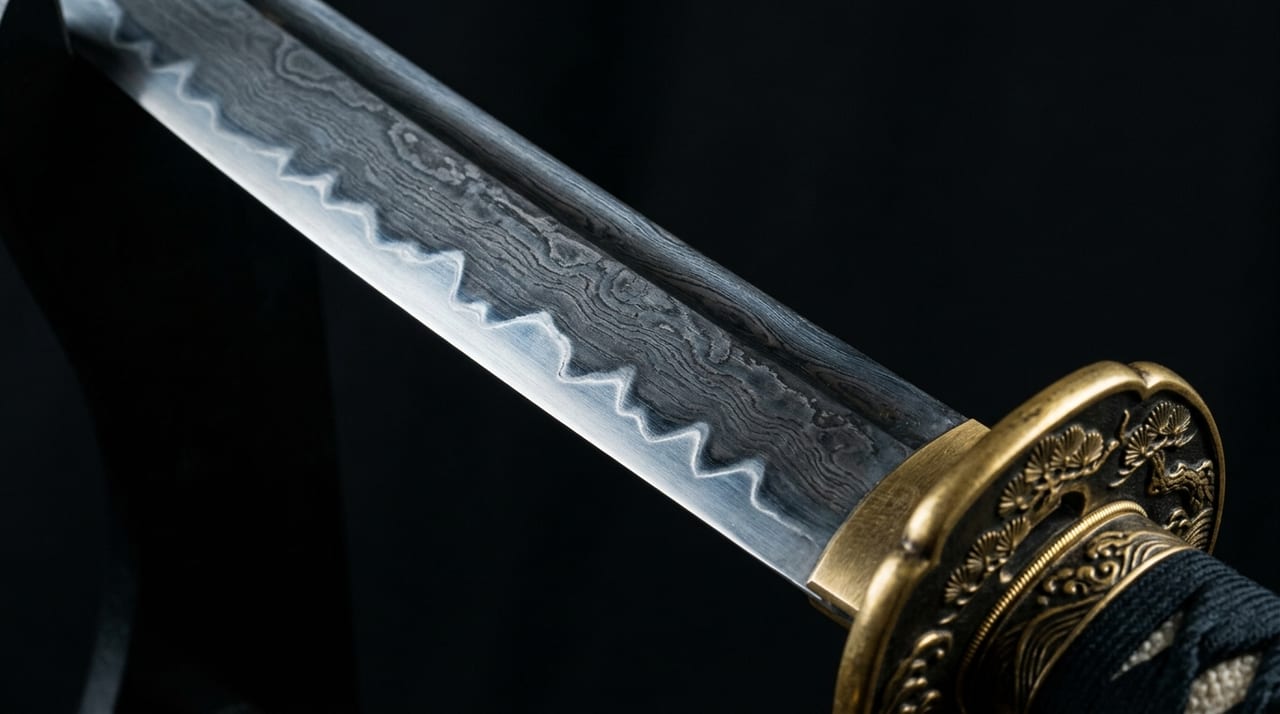 * Image is for illustrative purposes only.
Table of Contents
The Material Foundations Underpinning Traditional Technique Are Wavering
Japanese sword-forging techniques have developed over centuries upon the foundation of specific raw materials: "tamahagane from tatara iron-smelting," "natural whetstones from remote mountain regions," and "white charcoal and hardwood charcoal." Contemporary swordsmiths continue to use these materials, but all of them now face challenges with supply sustainability. If the quality and quantity of materials change, constraints emerge in the technical expression of the craft—this problem is shared as a quiet concern throughout the industry.
Tamahagane Supply Constraints
Tamahagane, the raw steel for Japanese swords, today has essentially only one production site: the Nittoho Tatara in Shimane Prefecture. Operations run annually only during the cold winter months, and production volume is limited. The allocation of tamahagane available to swordsmiths is managed through the NBTHK (Japan Art Sword Preservation Association), and it is not distributed equally to all swordsmiths.
Some voices note that allocation is prioritized to "senior swordsmiths" who forge swords in higher grading categories, and there is a reality that young sword-makers must build up their reputation to obtain high-quality tamahagane consistently. Furthermore, the quality of tamahagane varies subtly with each operational run, and the distribution of carbon content and impurities affects both the difficulty of forging and the final appearance of the hamon. Securing high-quality tamahagane has become a strategic challenge equivalent to the technical skill itself.
In recent years, international demand for tamahagane has emerged—from foreign swordsmiths who make Japanese swords—raising concerns about further pressure on domestic supply.
Natural Whetstone Quarry Depletion
Polishing a Japanese sword involves multiple stages, from rough whetstones through finishing stones such as natural uchigrumi and narutaki whetstones. These whetstones have been quarried from mountain regions in Kyoto, Nara, Shiga, Fukushima, and elsewhere, but many quarries are approaching their extraction limits.
High-quality natural whetstones such as "uchigrumi-to" and "narutaki-to" used for final finishing have become increasingly difficult to obtain, and both polishers and swordsmiths keenly feel the scarcity of stock. While the amount of whetstone used for polishing a single blade is not large, continuous work throughout the year requires a corresponding quantity, and prices show an upward trend.
In response to this situation, development of synthetic whetstones is advancing. Synthetic whetstones that replicate the particle distribution, softness, and polishing characteristics of natural whetstones are already commercially available and have reached a practical stage. However, many polishers insist that "blade surface depth that only natural whetstones can produce" is crucial, and consensus within the industry is necessary for widespread adoption of technical alternatives.
Difficulties in Procuring Blacksmith Charcoal
The forging process requires large quantities of charcoal, and particularly "white charcoal" (shiro-zumi)—hard charcoal fired at high temperatures—is ideal. Bincho-tan is a prime example, but stable supply of high-quality blacksmith charcoal has become difficult due to the aging of charcoal-makers, shortages of successors, and issues with resource management of ubamegashi, the tree used for wood.
Some swordsmiths have secured multiple supply routes for charcoal and devised methods to adapt to variations in quality. Additionally, some swordsmiths have begun improving furnaces and revising work processes to increase charcoal consumption efficiency. Since charcoal quality is directly connected to temperature control during forging, it is an important procurement challenge not only in terms of material costs but also in technical terms.
Issues with Peripheral Materials such as Lacquer, Wisteria, and Sharkskin
Sword-making does not end with the blade alone; multiple craftspeople are involved, including scabbard-makers, handle-wrappers, and lacquer workers. The materials these craftspeople use—natural lacquer (hon-urushi), wisteria vine, and sharkskin (samekawa)—have also become difficult to supply sustainably within Japan.
Domestic production of natural lacquer accounts for only a few percent, with the majority depending on Chinese imports. Stable supply of wisteria vine is difficult without well-maintained semi-natural forest environments where it can be harvested. For sharkskin (actually ray skin), most domestic demand relies on imports. Many of the materials that support swords as comprehensive works of craft bear vulnerabilities in their supply chains.
Contemporary Swordsmiths' Response Strategies
Responses to material constraints differ among individual swordsmiths, but several directions are emerging.
- Building Direct Relationships with Producers and Sources: An increasing number of swordsmiths are establishing long-term business relationships with charcoal-makers, lacquer farmers, and whetstone quarriers to secure stable supply.
- Material Inventory Management and Advance Procurement: When high-quality materials become available, they are purchased in bulk and stored long-term within the workshop. Particularly for whetstones, securing several years' worth of inventory is becoming standard practice.
- Testing Alternative Materials and Technical Adaptation: Experimental adoption of synthetic whetstones to replace natural ones, use of imported charcoal, and other approaches require flexibility in adapting technique to material changes.
The issue of raw materials is a question that concerns the sustainability of Japanese sword-making tradition itself. To protect Japanese swords as a culture, social support for the supply side—tatara iron-smelting, natural whetstone industry, and charcoal-making—as well as the establishment of a market environment where swordsmiths can procure materials at appropriate prices are required in the long term.
Summary: Material Crisis is Cultural Crisis
The situation in which three raw materials—tamahagane, natural whetstones, and blacksmith charcoal—all face simultaneous procurement difficulties is exerting quiet pressure on the maintenance of Japanese sword-making as a traditional craft. If the industries producing these materials decline, the very venue for swordsmiths to exercise their skills will be lost. Preservation of traditional technique cannot be completed by merely "training swordsmiths"; everyone involved in sword culture must recognize that it is inseparable from the survival of the craftspeople and industries that produce and supply materials. As the culture of purchasing and appreciating Japanese swords online spreads, understanding the chain of material supply behind each blade becomes an entrance to deeper understanding of sword culture.