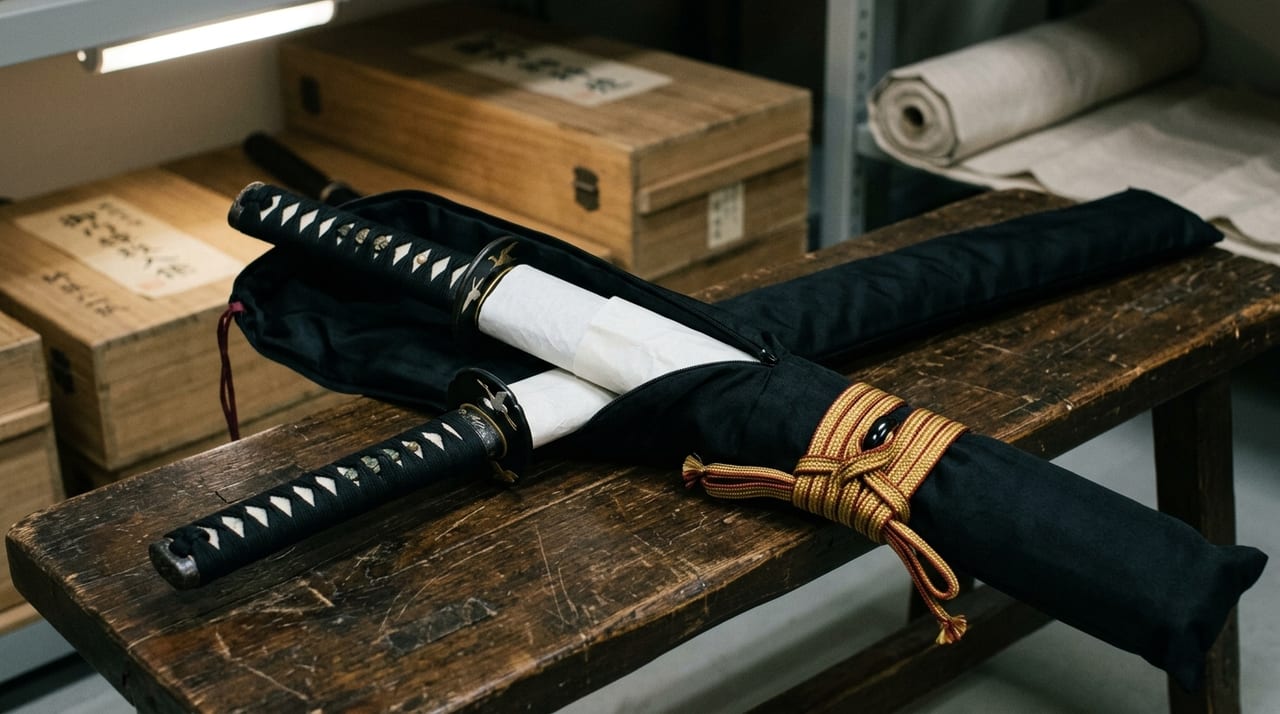
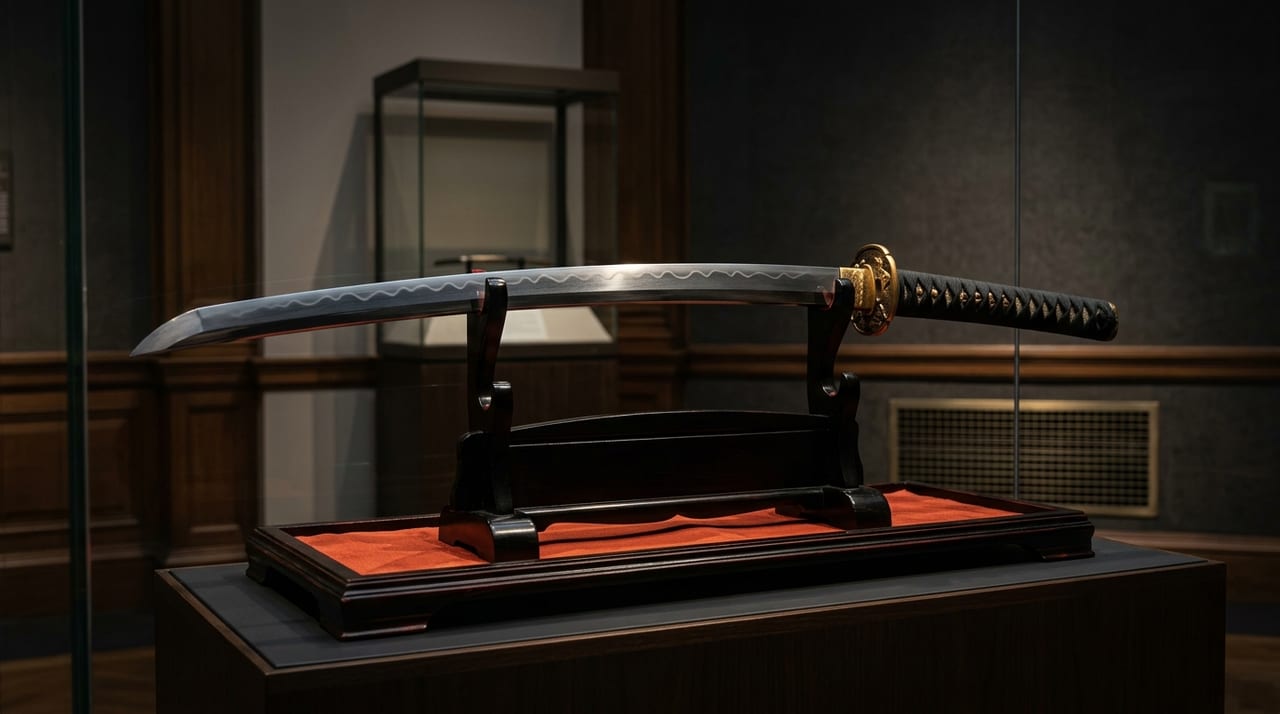
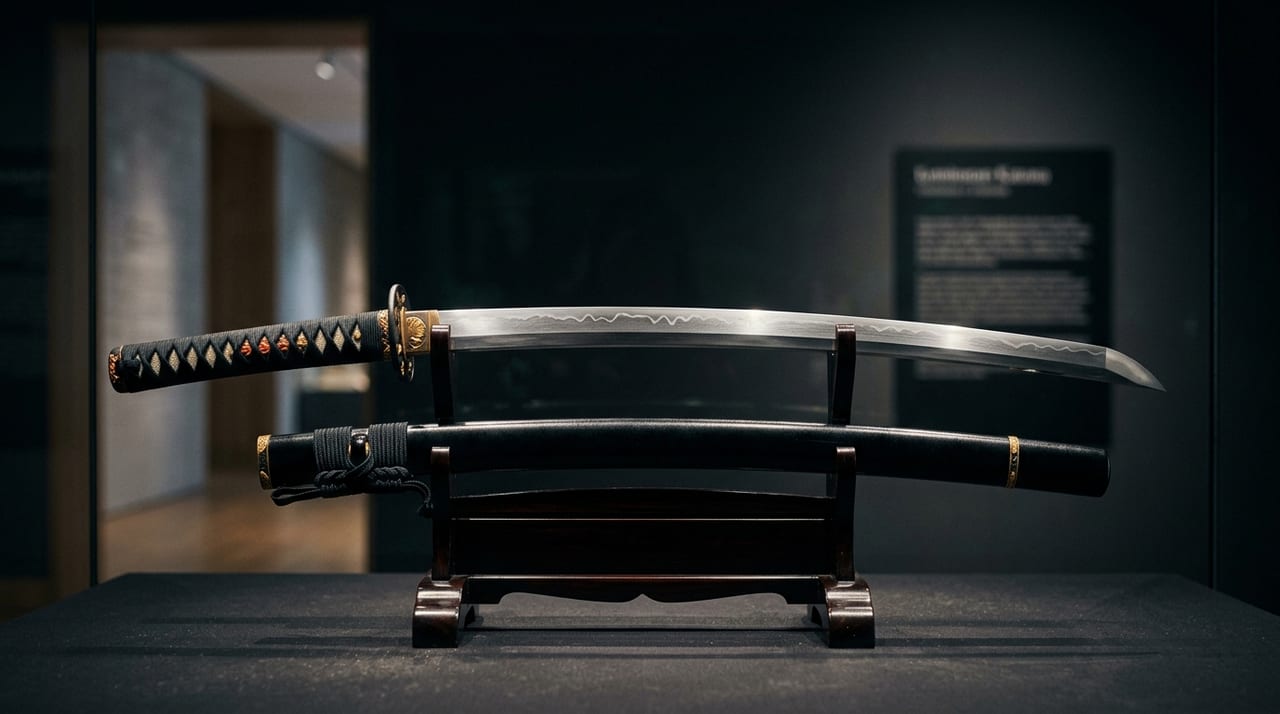
The Made-to-Order Market for Japanese Swords — The Reality of Custom Commissions from Modern Tōshō: Costs, Lead Times, Specifications, and Completed Orders
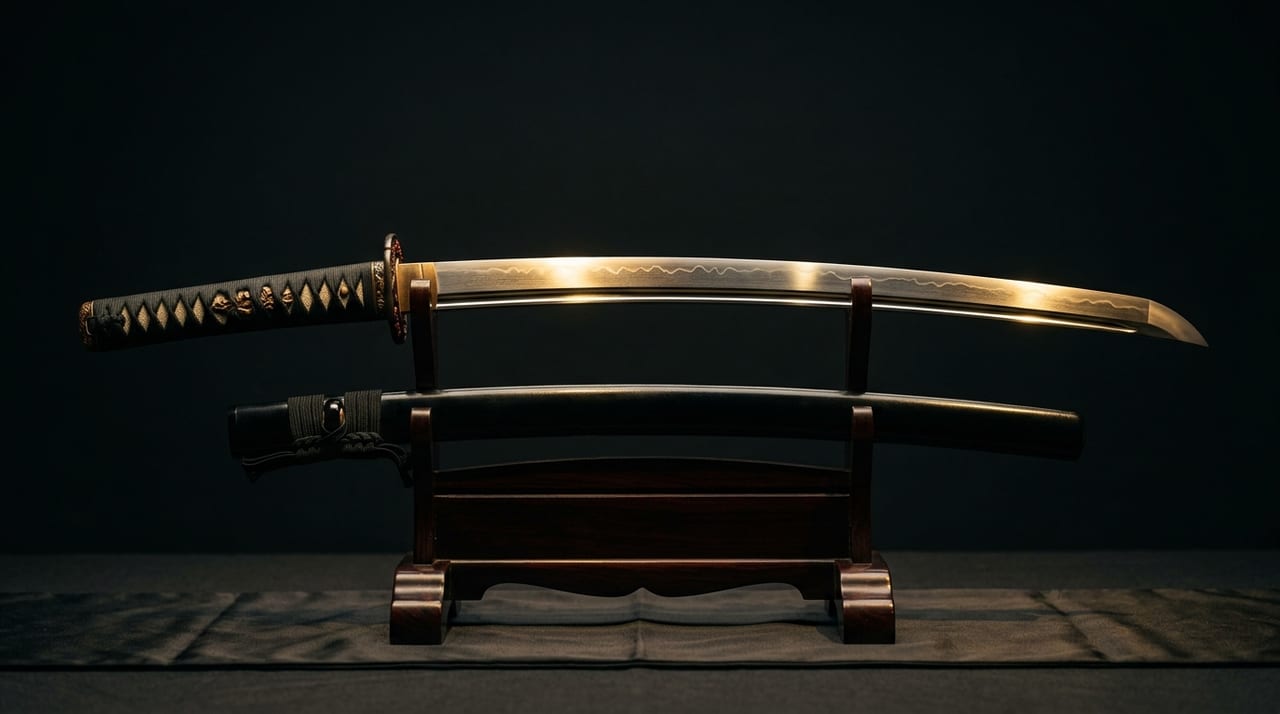 * Image is for illustrative purposes only.
Table of Contents
Overview of the Made-to-Order Market for Japanese Swords
The made-to-order market for Japanese swords (known as chūmon-uchi, or custom commissions) has grown into an important market segment within the sword industry in recent years. While the existing sword market is dominated by secondary distribution (antique and used sales), the custom-commission market is a primary market in which active tōshō connect directly with customers, making it a direct source of income that sustains tōshō livelihoods.
No precise statistics exist for the total number of orders placed domestically and internationally each year. The Rules on Approval of the Production of Art Swords set no upper limit on the number of swords per year (Rules on Approval of the Production of Art Swords (e-Gov Law Search)). However, prefectural review standards set the number of forging days per sword (15 days or more for tachi, katana, and naginata; 10 days or more for wakizashi, tantō, and the like), so the number of swords that can be produced is limited in practice (Aomori Prefecture, review standards for "Approval of the Production of Art Swords").
A distinctive feature of the custom-order market is the mix of domestic collectors and overseas buyers. In recent years, driven by the weak yen and growing international interest in Japanese culture, inquiries from the United States, Europe, and Southeast Asia have increased, and in some cases overseas customers account for more than 30% of a tōshō's orders.
Actual Costs and Price Ranges
Prices for commissioned swords vary widely depending on the tōshō's rank, the type of sword, and whether koshirae is included. The base price range for shirasaya only (blade + shirasaya) is as follows.
| Tōshō Class | Price Range (shirasaya complete) | Notes |
|---|---|---|
| Mukansa tōshō / holders of the title of Important Intangible Cultural Property | 1,500,000 yen – 5,000,000 yen or more (center: 2,000,000–3,000,000 yen range) | Those of Living National Treasure class often do not accept private commissions at all; when they do, the price typically exceeds 5,000,000 yen |
| Tōshō with a record at open competitions (Shinsaku Meitō-ten selected-entry / special-prize class) | Approximately 600,000–1,500,000 yen | Range varies greatly depending on competition awards and the school represented |
| Young and mid-career tōshō (fewer than 10 years since first receiving approval of production) | Approximately 350,000–800,000 yen | Quality varies, so prior portfolio review and inquiry through the master's circle are recommended |
The figures above are for the sword with shirasaya; adding hon-koshirae (saya, tsuka, tsuba, and menuki as a set) incurs additional costs of 300,000 to 2,000,000 yen or more. The saya craftsmen, metalwork craftsmen, and tsuka-maki craftsmen who handle the koshirae are separate artisans from the tōshō, and costs accumulate from each of them.
Lead Times and the Reality of Production Schedules
The standard lead time from order to completion is often one to three years. However, for popular tōshō and those with award histories, wait times exceeding five years are not uncommon.
Standard Production Process (through shirasaya completion)
| Stage | Duration | Details |
|---|---|---|
| Consultation and specification finalization | 1–3 months | Nagasa, sori, shape, hamon pattern, and mei content are confirmed in writing. Consultations take place in person, by email, or by phone, though in recent years a growing number of tōshō have introduced online meetings |
| Material preparation and tanren | 2–6 months | The process of securing tamahagane and completing orikaeshi tanren, subject to the tōshō's schedule and tamahagane supply conditions |
| Yaki-ire and shaping | 1–2 months | Hamon formation and post-quenching shaping |
| Kanteisho application (optional) | Approximately 6 months | Application for NBTHK gendaitō review; the review process may take approximately 6 months |
One reason for long wait times is that tōshō manage their order queues while handling multiple commissions simultaneously under the standard for forging days per sword. Cases in which more than two years pass between order acceptance and the start of production are not uncommon, and some tōshō maintain a cancellation waiting list.
The Specification Process and Completed Order Examples
Key Items in the Specification Process
The specifications that a commissioner decides during consultation fall broadly into the following categories.
- Nagasa and nakago length
- Sori and shape
- Type of hamon
- Jigane finish
- Content of the mei
Nagasa is set based on legal requirements (uchigatana must be 2 shaku or more, wakizashi 1 shaku or more but less than 2 shaku, etc.) and adjusted for intended use and the customer's build. The hamon is determined by matching the tōshō's specialty patterns with the customer's preferences, choosing from suguha, chōji, gunome, midareba, and others. Jigane is often selected with reference to period-specific characteristics, including mokume, itame, masame, and ayasugi-hada.
Representative Completed Order Examples
| Customer Type | Budget | Characteristics |
|---|---|---|
| Domestic collector | 1,000,000–2,000,000 yen range | Male collectors in their 40s–60s who commission a sword as a kanreki commemorative piece or family heirloom are common. Commissioning a well-known local tōkō is typical. Many leave the hamon and shape entirely to the tōshō; orders beginning simply with "Please forge something fine" are not unusual |
| Iai and martial arts practitioners | Approximately 500,000–1,000,000 yen | Emphasis on practical blade balance; specifying the uchigatana style with a nagasa of around 72 cm and a sori of 1.5–2 cm is common. There is a tendency to choose practical hamon such as suguha or a gentle gunome |
| Overseas customers | From approximately 150,000 yen (dedicated collectors: 5,000,000 yen or more) | A tendency to prioritize the character of the hamon and the beauty of utsuri, with many in this segment preferring complex hamon such as chōji-midare and hitatsura. Due to the language barrier, completed orders through English-speaking tōshō or intermediary agents are increasing |
Order Channels and the Rise of Intermediary Business
Traditionally, custom commissions were placed primarily through direct requests to tōshō via face-to-face connections made through sword dealers or antique markets. In recent years, however, digital channels have expanded.
Direct inquiries (via tōshō's SNS and websites): An increasing number of tōshō are disseminating content on Instagram and YouTube, and direct inquiries from domestic and international customers who find them through SNS are increasingly leading to completed orders. While tōshō with English-language pages targeting overseas customers remain a minority, the level of interest is high.
Intermediary through sword dealers: An intermediary model in which sword dealers step in between customers and tōshō — handling everything from specification adjustment to transport and registration — has become established. Dealers who charge fees for domestic and international customers have also appeared.
Crowdfunding and furusato nōzei tie-ins: Some local governments and tōshō have begun offering commissioned swords as furusato nōzei return gifts. Acceptance is typically limited to a set number of swords, with the effect of lowering the barrier to access.
Market Growth Potential and Structural Challenges
The made-to-order market for Japanese swords is trending toward expansion, buoyed by inbound demand and the tailwind of the weak yen. For younger tōshō in particular, commissions from overseas customers are becoming increasingly important as a stable source of income.
At the same time, there are many challenges. These include the practical ceiling on market size, as the standard for forging days per sword limits the number of swords that can be produced, supply constraints arising from the aging of tōshō and the shortage of successors, the complexity of export procedures (the Agency for Cultural Affairs' Certificate of Export Inspection for Antique Art Objects, the return of the registration certificate, and compliance with regulations in the importing country; Tokyo Metropolitan Board of Education, "When Exporting Firearms and Swords"), and the insufficiency of quality assurance mechanisms.
In response to these challenges, the industry is working to strengthen the intermediary network centered on sword dealers, improve the efficiency of information flow through digitalization, and develop English-language content. The made-to-order market will undoubtedly continue to attract attention as one of the few growth areas in the Japanese sword industry.