Kabutogane: The Role and Form of the Metal Fitting That Covers the Tip of the Tachi Koshirae Tsuka
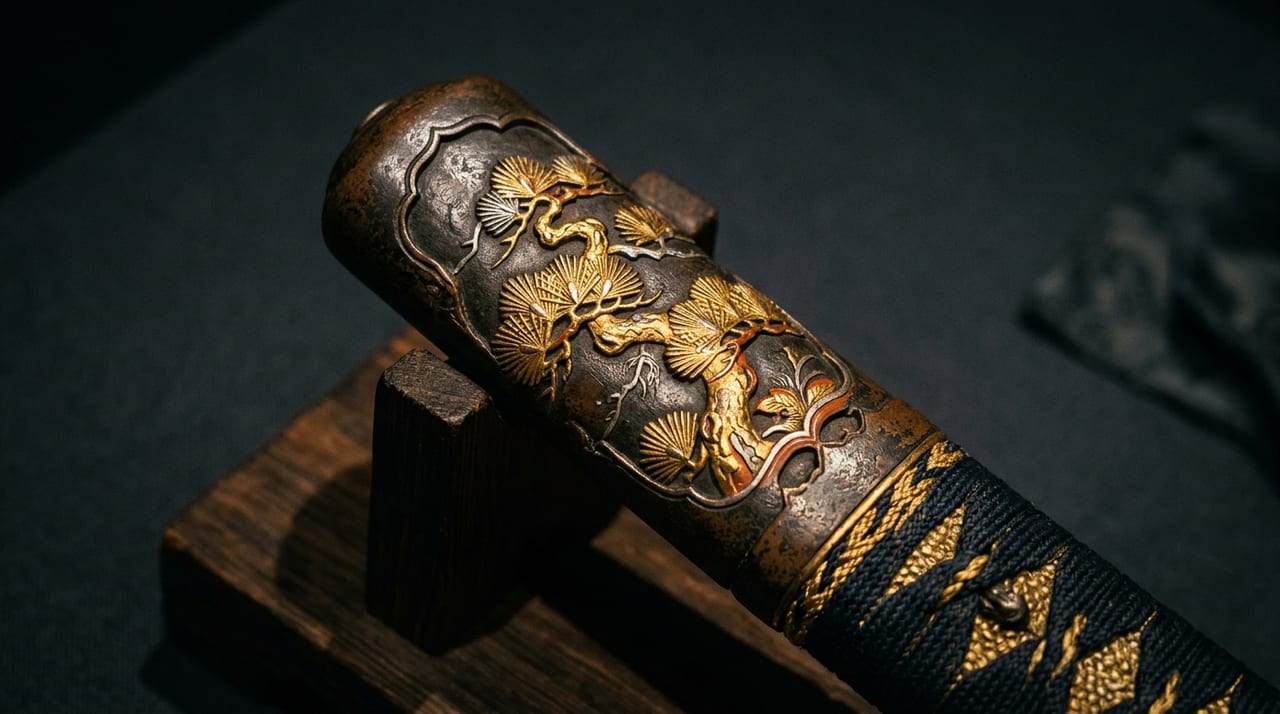 * Image is for illustrative purposes only.
Table of Contents
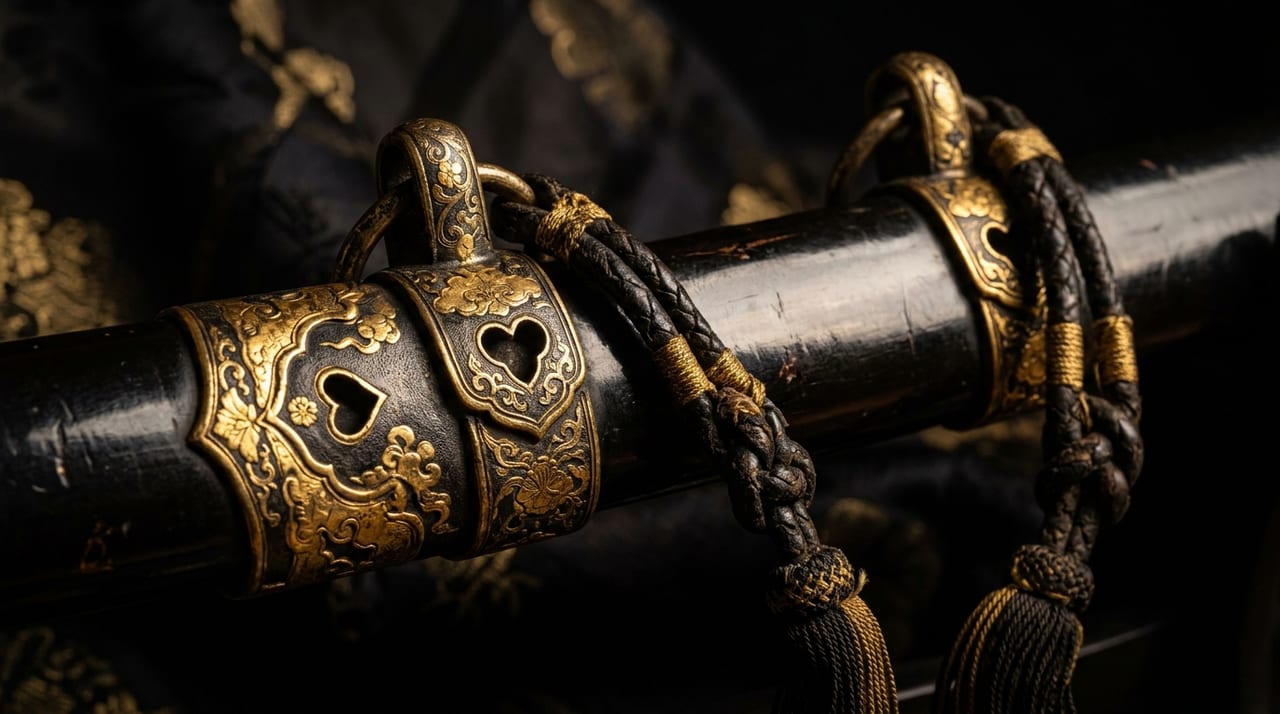
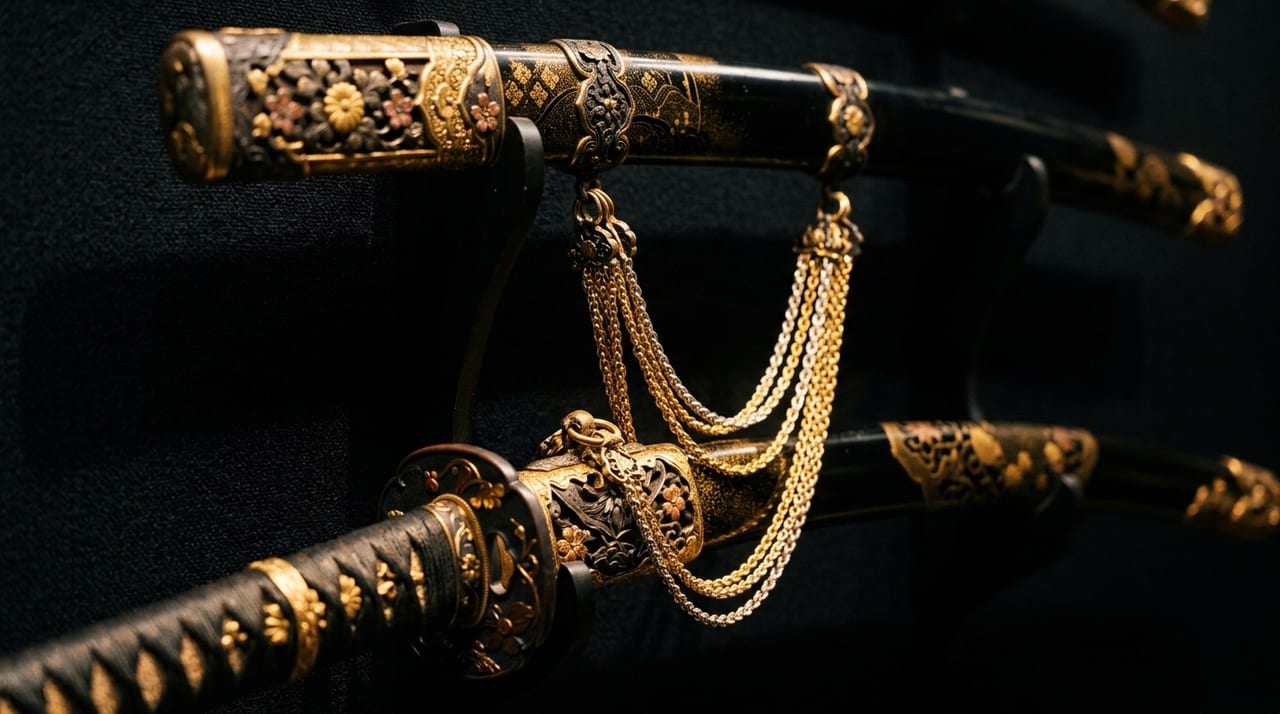
Kabutogane is the metal fitting that covers the tip of the tsuka (hilt) on a tachi koshirae (mounting). It is fitted at the end of the tsuka, serving to protect the tsuka's end and to give a finished appearance to the tip. This article organizes the name and notation of kabutogane, its position among the fittings of a tachi koshirae, and the materials and patterns visible in surviving examples, within the range that can be confirmed from commentary published by holding institutions.
Name and Notation
Kabutogane may also be written using an alternate character. In the names of specific works, the tachi koshirae held by the Tokyo National Museum uses the more common written form, while the tachi fittings held by the Yamato Bunkakan use the alternate form. Both refer to the same part at the tip of the tachi tsuka.
This article uses the more widely used written form throughout. When citing work names, it is best to follow the notation used by the holding institution.
Position Among the Fittings of a Tachi Koshirae
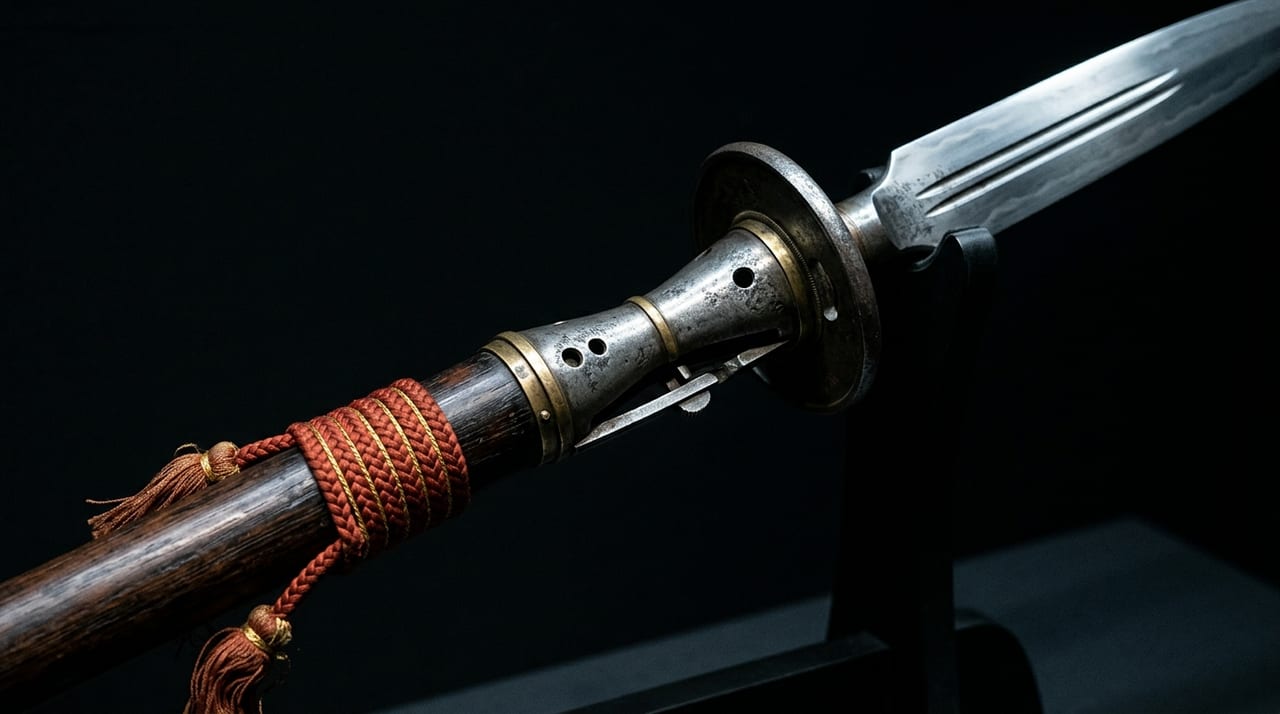
A tachi koshirae is a koshirae assembled by arranging metal fittings around the tsuka (hilt) and saya (scabbard). The tsuka is fitted over the nakago (tang) of the blade and secured with a mekugi. Because the kabutogane covers the tip of the tsuka, it is a component that directly affects the appearance of the tsuka's end.
The jūyō bunkazai (Important Cultural Property) "Matsufujimon Hyōgokusari Tachi Koshirae" (Kamakura period, Tokyo National Museum, designated February 8, 1958) is fitted with a kabutogane, fuchi-kanamono, kuchi-kanamono, ashi-kanamono, semegane, and ishizuki, all of gilt bronze with wakamatsu-mon in takabori. In this koshirae, the kabutogane is made as one component whose material and design match the other fittings. (Bunka Isan Online)
There are other fittings on a tachi koshirae as well. The ashi-kanamono is a fitting for suspending the tachi, and its role is covered in Ashi-kanamono and Obitori. The kurigata and semegane are fittings that support the way an uchigatana is worn, covered in Kurigata and Semegane. When looking at the fittings of a tachi as a whole, it is helpful to think of the kabutogane as the component located at the tip of the tsuka.
On uchigatana koshirae, it is standard to fit fuchi-kashira at both ends of the tsuka. Both the kabutogane and the fuchi-kashira are fittings that cover the ends of the tsuka, but the names and forms of the fittings differ between tachi koshirae and uchigatana koshirae. Fuchi-kashira is covered in Fuchi-kashira: Appreciating the Craft.
Materials and Patterns in Surviving Examples
What can be confirmed in surviving examples are the material of the kabutogane, its pattern, and whether the fitting survives. In the kokuhō (National Treasure) "Gindō Hirumaki Tachi Koshirae" (Heian period, Tokyo National Museum), the kabutogane is of gilt bronze with kikkōmon in takabori. The tsuka and saya are wrapped in gindō hirumaki, and all metal fittings are also of gilt bronze. (Bunka Isan Online)
The jūyō bunkazai (Important Cultural Property) "Tōka Shika-zu Tachi Kanamono" (Yamato Bunkakan) is an example in which the kabutogane is missing. The fittings combine takabori with yōbori, and are decorated with silver plating and gin zōgan (silver inlay). (Bunka Isan Online)
Kokuhō (National Treasure) and jūyō bunkazai (Important Cultural Property) are distinct designations under the Act on Protection of Cultural Properties. When introducing examples, it is important to write the designation name exactly as the holding institution's commentary states, and care should be taken not to extend the designation of one example to another.
Points of Appreciation
When examining a kabutogane, first look at it as the fitting at the tip of the tsuka and observe whether its material and pattern match the other fittings. Differences among gilt bronze, gindō, silver plating, and so forth are reflected in the sense of unity within the same koshirae. Patterns vary by example, including wakamatsu (young pine), kikkō (tortoiseshell), and floral sukashibori (openwork carving).
The points of appreciation are easier to organize when divided into the following three categories.
- Material: differences in the metals and finishes used for the fittings, such as gilt bronze, gindō, and silver plating
- Pattern: designs rendered in takabori or sukashibori, such as wakamatsu-mon, kikkōmon, and floral openwork
- State of preservation: whether the kabutogane is missing, and whether it survives together with other fittings such as the ishizuki and fuchi-kanamono
Among surviving examples, there are some in which the kabutogane is missing. The extent to which the existing fittings preserve their original appearance must be verified for each example. Since the fittings of a koshirae may have been replaced in later periods, the name and designation of each example should be confirmed from the holding institution's commentary.
As a procedure for researching examples, first confirm the name and designation from the holding institution's commentary, then read the material and pattern of the fittings, and finally check whether any parts are missing. Following this order makes it easier to compare the fittings of one tachi koshirae against those of another example.
Swords Listed for Sale and How to View Them Online
TOUKENZA is an online Japanese sword marketplace. Swords currently listed for sale can be viewed online from the catalog. To check the condition of the koshirae or its fittings, read the description on the listing page; for any questions, contact via the inquiry form.