Double-edged Japanese Swords (Nihontō): A Complete History of Morohazukuri from Jōkotō to Modern Works
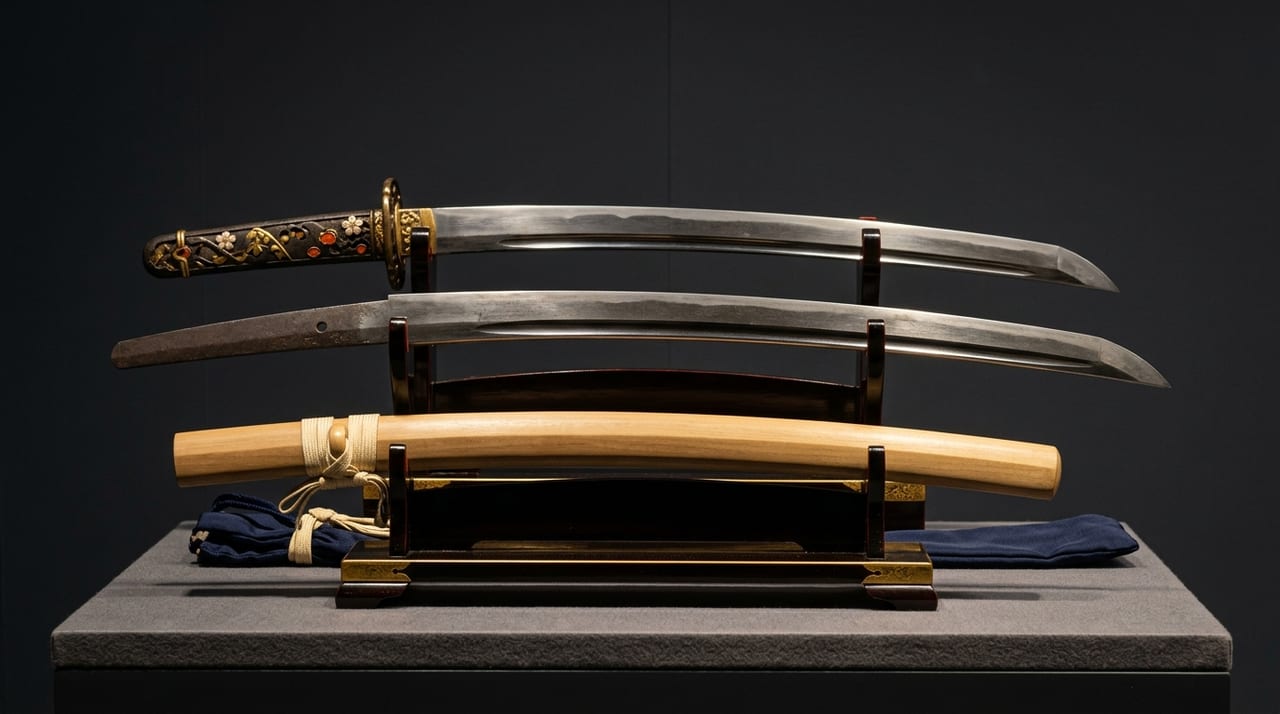 * Image is for illustrative purposes only.
Table of Contents
What Is Morohazukuri — "A Sword with Edges on Both Sides"
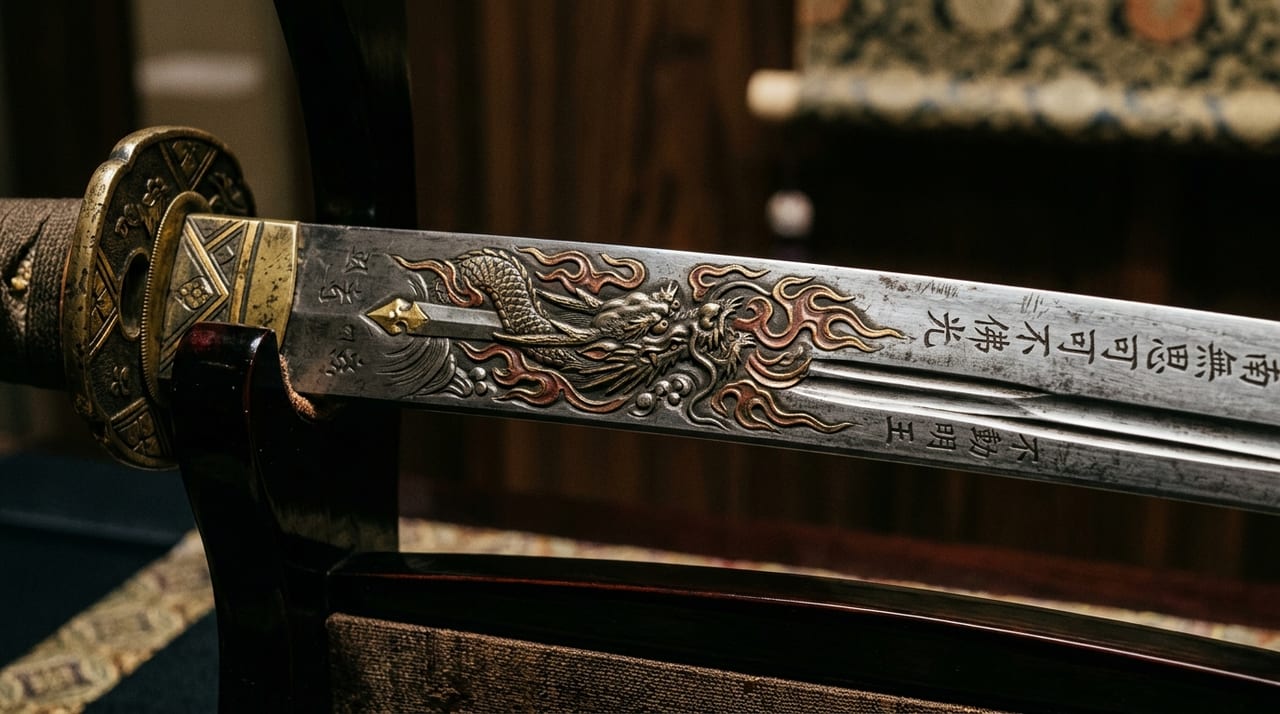
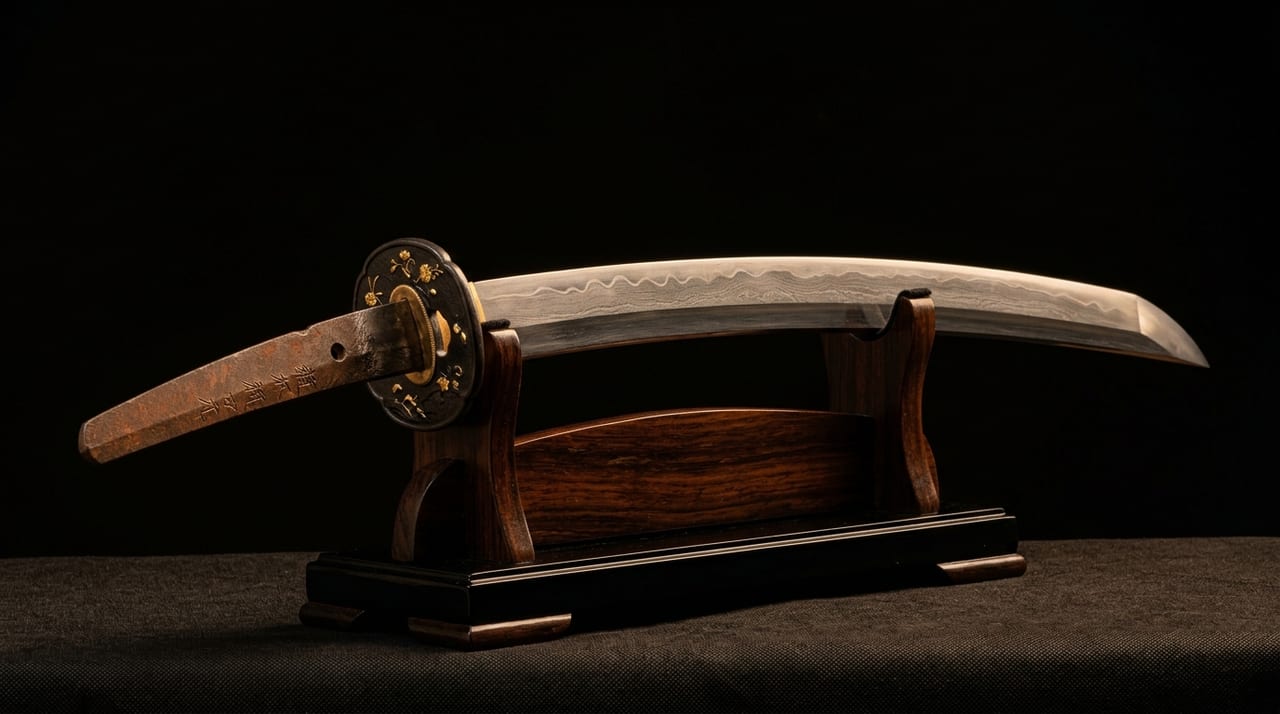
Morohazukuri is a type of blade construction (cross-sectional form) in which a sword has an edge on both faces (front and back) of the blade. It is also known as moroha or ryōbazukuri.
Whereas the typical Japanese sword (uchigatana, tachi, wakizashi) is single-edged (with an edge on one face only), morohazukuri has sharp edges rising from the center line toward both sides. The cross-section forms a bilaterally symmetrical diamond or a shape close to it.
Today, morohazukuri is widely known through the set phrase moroha no tsurugi ("a sword that cuts both ways," meaning something that has both benefits and drawbacks), yet few people have detailed knowledge of it as an actual sword form.
The History of Morohazukuri — From Jōkotō to the Kamakura Period
The Yayoi to Kofun Period (The Age of Straight Swords)
During the Yayoi and Kofun periods, when metal implements became widespread across the Japanese archipelago, swords existed mainly as imports from or imitations of those from the Chinese mainland and the Korean Peninsula. Most swords of this era were chokutō (straight swords without curvature), and both double-edged and single-edged forms coexisted.
Many ancient Chinese swords (bronze swords and iron swords) were double-edged, and this form was transmitted to Japan as well.
The Nara to Heian Period (Jōkotō)
During the Nara period through the early Heian period, when Japan's own forging techniques developed, swords of the period known as jōkotō were produced. Both single-edged and double-edged forms existed in this era as well.
The haranuki is considered one of the double-edged tantō forms said to have been carried by warriors of the Heian period. It is also said to have been made double-edged in order to reduce friction when withdrawing the blade after thrusting it in.
Decline from the Kamakura Period Onward
As the tachi form was established in the Kamakura period and the standard of the Japanese sword as a "curved, single-edged blade" became widespread, morohazukuri swords ceased to be made except for certain specialized purposes (primarily tantō and ceremonial swords).
The following reasons are cited for this change.
- Single-edged blades concentrate cutting performance more easily and are more practical
- It is difficult to produce morohazukuri while maintaining equal sharpness on both edges
- Japan's own kaji techniques were optimized for single-edged blades
Representative Sword Types in Morohazukuri
Double-edged Tantō
During the Kamakura through Nanbokuchō periods, some specialized tantō that functioned as yoroidōshi (armor-piercing daggers) employed morohazukuri. For the purpose of thrusting into gaps in armor, there are situations where a double-edged blade has advantages over a single-edged one when withdrawing.
Gomabashi and Kōgai
Some kōgai, which functioned as everyday accessories (for dressing hair, ear cleaning, etc.), have a double-edged or sword-shaped (tsuruginari) form. These have a stronger character as "decorative objects that double as weapons" than as "practical cutting tools."
Ceremonial and Sacred Swords
Among the jintō (sacred swords) dedicated as divine treasures to shrines and the reitō (ceremonial swords) used in court rituals, there are straight-bladed morohazukuri swords that carry on the form of the ancient period. The Kusanagi-no-Tsurugi, regarded as one of the Three Sacred Treasures, is sometimes described in legend as "a sharp double-edged sword," and some researchers interpret it as a straight-bladed morohazukuri sword.
Technical Characteristics of Morohazukuri
Difficulty of Production
Morohazukuri is more difficult to produce than single-edged swords. The reasons are as follows.
- It is necessary to create edges of equal sharpness on both faces
- Because yaki-ire (quenching) is applied symmetrically to both faces, managing the sori of the blade becomes more complex
- Precision is also required to shape the blade while maintaining uniform thickness on both sides
The Distinctive Nature of the Hamon
Unlike single-edged swords, morohazukuri swords display a hamon on both faces. The beauty of this symmetrical hamon possesses a distinctive aesthetic that single-edged swords cannot offer.
Modern Morohazukuri — Revival and Artistic Expression
Among modern tōkō, there are works that have taken on morohazukuri as a jōkotō form. There are cases in which tōkō of Living National Treasure caliber have presented straight-bladed morohazukuri that research and reconstruct the ancient form, and these are valued as works that combine "technical research into kotō" and "exploration of the possibilities of the Japanese sword."
Even today, straight-bladed morohazukuri swords are sometimes produced as votive swords dedicated to shrines. The ancient form is carried on as custom-made pieces created for court ceremonies and the grand festivals of shrines.
Notes on Appreciation — Evaluating "Rarity"
When appreciating morohazukuri swords, care is needed in how one understands their "rarity." Morohazukuri is a minority form among Japanese swords and carries added value as a "rare form" in a collection. However, rarity alone does not raise the price; the fact that quality of workmanship, period, and tōkō determine the price in the usual way is no different from single-edged swords.
Conclusion — What Morohazukuri Tells Us About the Origins of the Japanese Sword
Morohazukuri Japanese swords tell the story of origins from before the Japanese sword was established as a "curved, single-edged blade." They represent the "pre-stage" of the process by which the jōkotō form, shaped by continental cultural influence, changed form alongside the development of Japan's own kaji techniques and ultimately evolved into the single-edged tachi and uchigatana.
Morohazukuri swords that survive to the present day are few, but their existence serves as a key to understanding the full picture of the long history of the Japanese sword. For collectors who wish to add the dimension of "origins" to their Japanese sword collection, morohazukuri will be a choice with special meaning.