Guide to Choosing Wooden Swords, Live-Blade Practice, and Replica Swords: A Complete Comparison by Purpose and School
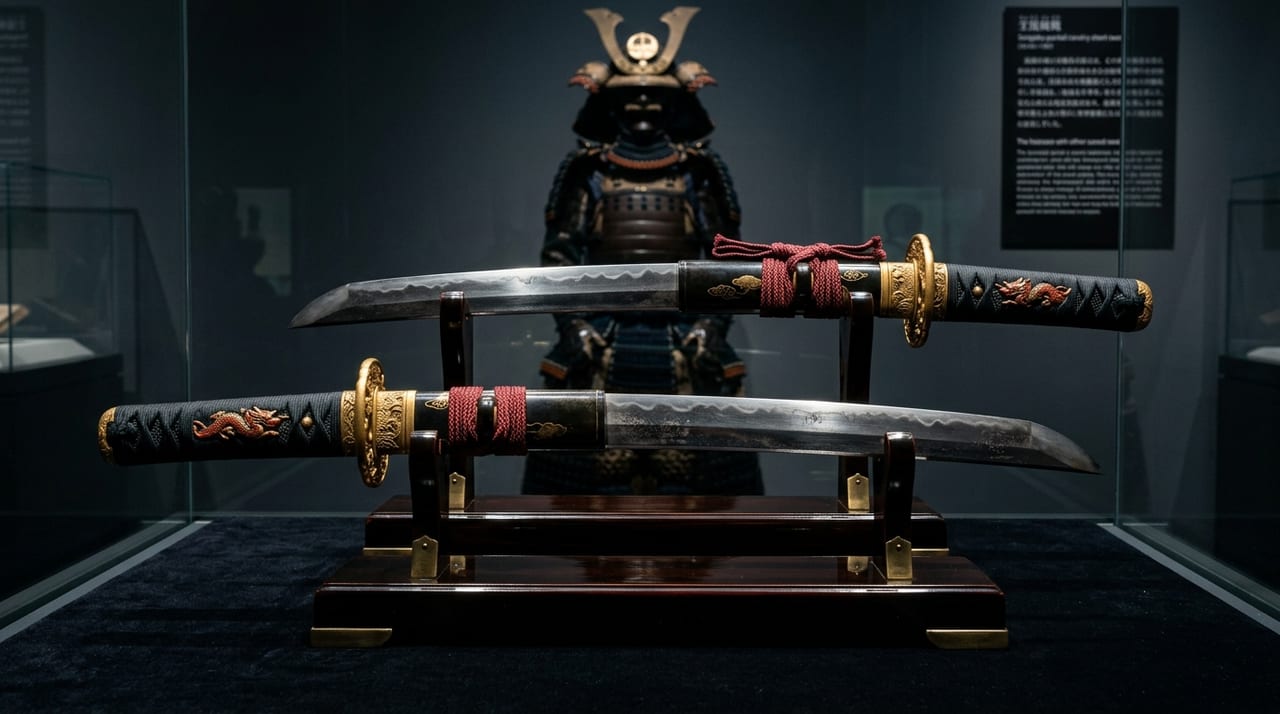 * Image is for illustrative purposes only.
Table of Contents
Types of Training Swords — From Bokken to Shinken
The training swords used in martial arts and martial disciplines such as kendō, iaidō, battōjutsu, and various koryū kenjutsu can be broadly divided into four categories:
- Bokken (wooden sword): A wooden training tool shaped like a sword
- Replica sword (replica tō): A metal product that resembles a sword but has no cutting edge
- Iai sword (iaitō): A metal sword manufactured for iai training, with no blade or an incomplete blade
- Shinken: A genuine nihontō. For use by ranked practitioners and advanced students only
Each type of training sword has its appropriate use and level. Choosing the right type for your stage of training and your school's requirements is fundamental to improving. This guide explains which type to choose based on purpose, school, and rank.
Types of Bokken
Ebony bokken (kokutan bokken): The highest-quality bokken. Hard and heavy. Highly durable and usable for long periods. For advanced practitioners. Price is approximately 30,000 to 100,000 yen.
Oak bokken (kashi bokken): The standard material for ordinary bokken. Available in white oak and red oak. Most commonly used in kendō and kenjutsu training and offers excellent value. Price is 3,000 to 20,000 yen.
Cherry wood bokken (sakura bokken): Made from cherry wood. Soft and flexible. Better suited to kata practice than sparring, and easy to handle for beginners.
Polypropylene (plastic sword): A modern material. Used for outdoor training and for children. Resistant to water and highly weather-resistant.
School-Specific Bokken Standards
The standards for bokken differ between kendō, iaidō, and koryū kenjutsu:
- All Japan Kendo Federation standard: Overall length of 101 cm (long sword) and 91 cm (short sword) is the norm
- All Japan Kendo Federation iai standard: Around 101 cm in overall length, total weight approximately 400 to 450 g
- Koryū (individual schools): Overall length and weight vary by school. Confirmation with the instructor is required
Because bokken standards are directly tied to a school's kata practice, following the instructor's guidance is the top priority.
Replica Swords — For Display and Demonstration
A replica sword is a metal product that resembles a nihontō in appearance but has no practical cutting edge. The blade is made of metal such as stainless steel, but either has no edge applied or has a significantly dull edge.
Main Uses for Replica Swords
- Cosplay, demonstrations, and photographic props
- Display as a collection item (room decoration)
- Stage and film production use
Legal Notes
Carrying a metal replica sword (replica sword type) that closely resembles a sword-type weapon without business or other legitimate reason is prohibited under Article 22-4 of the Firearms and Swords Control Act (Jūtōhō) and violation is subject to a fine of up to 200,000 yen (Article 35, Act for Controlling the Possession of Firearms or Swords and Other Such Weapons (Jūtōhō) (e-Gov Law Search)). Purchasing and possessing one is not a problem, but as a rule, avoid carrying one outside. When using one in a demonstration, confirm in advance with the organizer and venue.
Price Range
- Mass-market products (Chinese-made, etc.): 3,000 to 10,000 yen
- Japanese high-quality products: 20,000 to 100,000 yen
- Art swords and famous sword replicas: 50,000 to 500,000+ yen
Iai Sword (Iai Practice Sword) — The Primary Tool for Iai Training
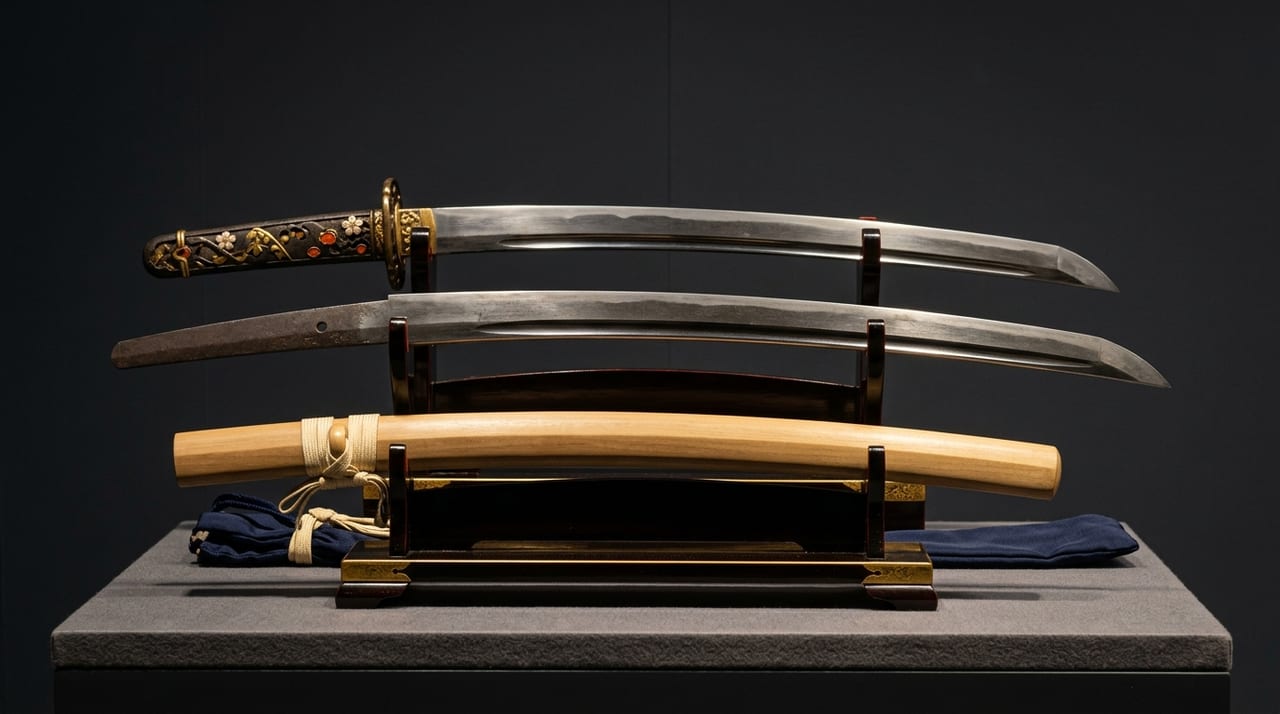
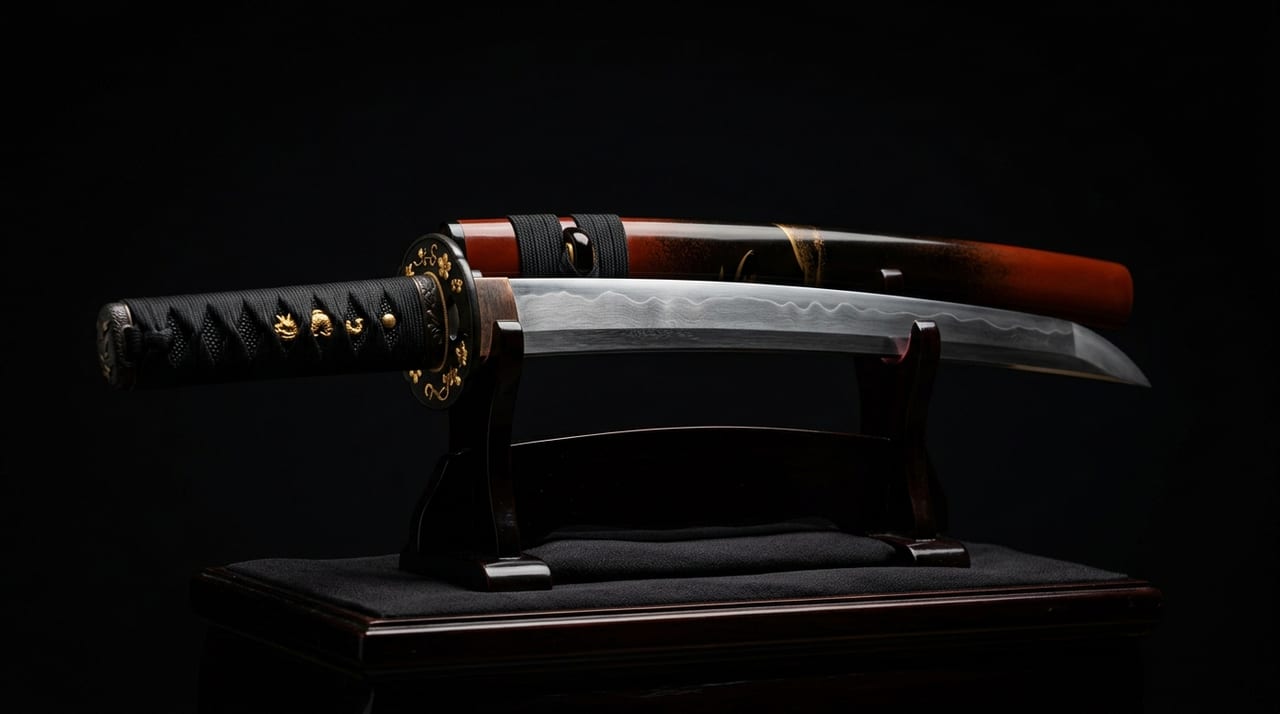
The iaitō is a metal sword manufactured specifically for iaidō and battōjutsu training. It has an appearance and weight similar to a nihontō, but is deliberately designed to suppress a practical cutting edge.
Types of Iaitō
Art iaitō (non-cutting specification): Completely without an edge, for training use only. High safety. Suitable for beginners to intermediate practitioners and appropriate as the first sword an entry-level student picks up.
Semi-sharp iaitō: Has a light edge. Capable of tameshigiri practice with makiwara and the like. For intermediate practitioners.
Tameshigiri-compatible iaitō: Has a full edge; capable of cutting makiwara, tatami omote, and similar materials. For ranked practitioners, providing an experience close to the cutting performance of a nihontō.
Iaitō Materials and Prices
| Material | Characteristics | Price Range |
|---|---|---|
| Zinc alloy (die-cast) | Light, lower durability | 10,000–30,000 yen |
| Stainless steel | High rust resistance, standard weight | 30,000–80,000 yen |
| 1045 carbon steel | Authentic weight, edge can be applied | 50,000–150,000 yen |
| 1060/1095 carbon steel | High quality, tameshigiri-compatible | 80,000–300,000 yen |
Choosing by School
All Japan Iaidō Federation standard: Nagasa approximately 73 to 76 cm. A weight of approximately 800 to 1,000 g is the norm.
Koryū iai (Shintō Munen-ryū, Musō Jikiden Eishin-ryū, etc.): Confirm with the instructor of each school. Overall length, weight, and sori standards may differ by school. Following the instructor's guidance is the most direct path to correct training.
Shinken — The Stage for Advanced Practitioners
Shinken (genuine nihontō) are in principle used only by ranked practitioners and licensed holders. The path to holding a genuine sword in one's hands is long, but training with shinken carries a particular significance precisely for that reason.
Cases Where Shinken Use Is Recognized
- Practitioners who have reached a certain rank (varies by school)
- Special occasions such as hōnō enbu (dedicatory demonstrations)
- Individual practice (kata practice in a safe environment)
Notes on Purchasing and Using Shinken
- Instructor's permission: Using shinken on one's own judgment is dangerous. Always follow the instructor's decision
- Confirming the registration certificate: Possession of shinken (genuine nihontō) requires a registration certificate
- Safe training environment: Sufficient space, flooring, and safety measures are required to use shinken
- Insurance: Accidents involving shinken may not be covered by ordinary personal accident insurance
Choosing Your First Shinken
Advice for advanced practitioners purchasing shinken for the first time:
- Unsigned shinshintō (late Edo period): In the 500,000 to 1,000,000+ yen range. In good condition, they can withstand use in training
- Gendaitō (new works from the Shōwa era to the present): 400,000 to 2,000,000 yen. New condition means durability and condition are clear
- With kanteisho: For peace of mind, choose one that comes with at least a Hozon Tōken kanteisho or higher
A Roadmap for Beginners
Recommended progression of training swords by stage:
| Stage | Recommended Sword | Approximate Period |
|---|---|---|
| Beginner | Oak bokken (school standard) | 1–2 years |
| Entry level | Iaitō (zinc alloy) | 1–2 years |
| Intermediate | Iaitō (1045 carbon steel) | 2–3 years |
| Advanced | Iaitō (tameshigiri-compatible 1060/1095) | Ongoing |
| Licensed | Shinken (after instructor's permission) | Lifelong |
Conclusion — The Choice of Training Sword Determines the Quality of Training
The saying "tools shape the person" applies to kendō and iaidō as well. Choosing training equipment suited to your rank, goals, and school's requirements improves both the quality and the safety of your training.
Beginners should always consult their instructor and choose equipment that conforms to the standards set by their school — this is the first step toward correct training. Start with a bokken, proceed through iaitō, and work steadily toward the day when you will one day hold shinken in your hands.