Nagasone Kotetsu — The Famous Blade "Kotetsu" Beloved by Kondō Isami, and the Life and Swordmaking of the Greatest Tōkō of Edo Shintō
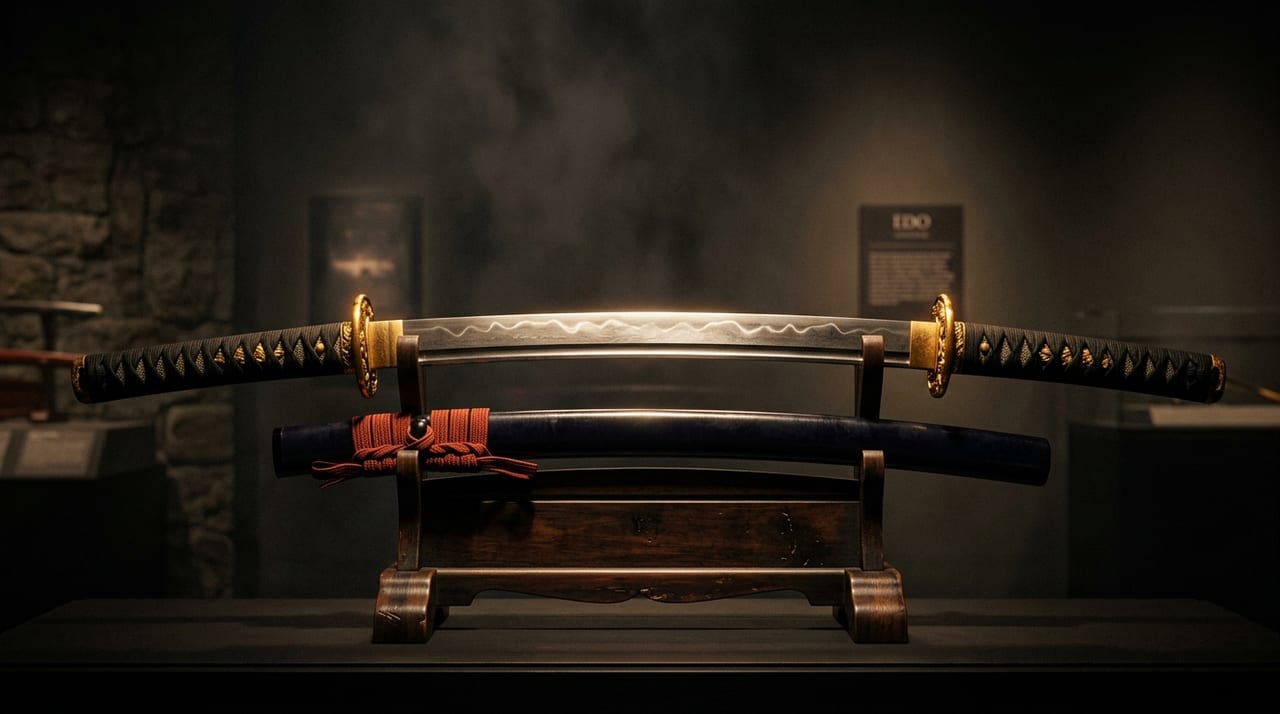 * Image is for illustrative purposes only.
Table of Contents
What Kind of Tōkō Was Nagasone Kotetsu?
Nagasone Kotetsu (c. 1605–c. 1678) was a tōkō active in the early Edo period who left his name to posterity as the pinnacle of Edo Shintō. His given name was Okisato, and "Kotetsu" was his art name (gō). Multiple forms of his mei survive, including "Nagasone Kotetsu" and "Nagasone Okisato Nyūdō Kotetsu."
The prevailing theory holds that Kotetsu was from Ōmi Province (Hikone), and he initially honed his craft as an armor craftsman (katchūshi, a craftsman who made armor and helmets). His transition to swordsmithing is said to have occurred around the age of fifty, when he moved to Edo in Meireki 2 (1656) and changed trades; his period of activity as a tōkō was relatively short. Yet the high quality of the works he produced during that brief time brought him the posthumous evaluation of "the finest swords in Edo."
It has long been discussed among sword researchers that among zaimei works attributed to Kotetsu, those identified as works of the "first generation" are intermixed with works said to be of the "second generation," who continued under his son or followers after his death. The style of mei and the quality of jigane and hamon are said to vary considerably, and the fact that works under the single name "Kotetsu" are by no means uniform is a premise worth bearing in mind when appraising or appreciating these blades.
From Armor Craftsman to Swordsmith — An Unusual Career Change
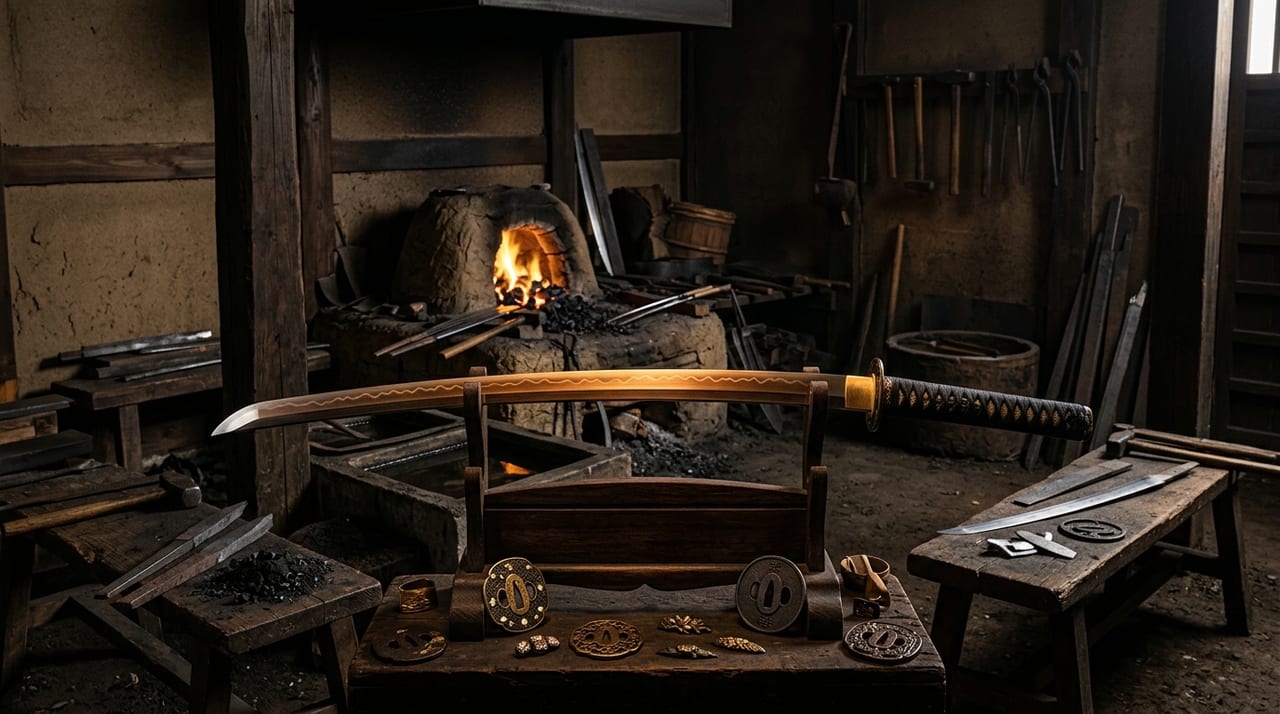
Behind Kotetsu's transition from armor craftsman to swordsmith lies the changing arms industry of early Edo. After the Genna no Enbu (a peace declaration of 1615 issued following the conclusion of the Summer Siege of Osaka), real demand for armor declined sharply as warfare came to an end. Kotetsu is said to have chosen swordsmithing as a new arena for craft expression.
His metalworking skills as an armor craftsman — a deep understanding of the properties of iron and skill in shaping complex forms — proved highly valuable after his transition to swordsmithing. It is thought that a katchūshi-like sense of precise metal control came into play in the tanren of jigane. Whereas most contemporary tōkō were born into swordsmithing families and trained from within that tradition, Kotetsu started from a completely different technical foundation yet reached a high level of mastery in a short time — a fact that makes his posthumous reputation all the more remarkable.
Kotetsu's Swordmaking Style — Vigorous Nie and Heavy Jigane
The technical elements for which Kotetsu's blades are highly valued are as follows.
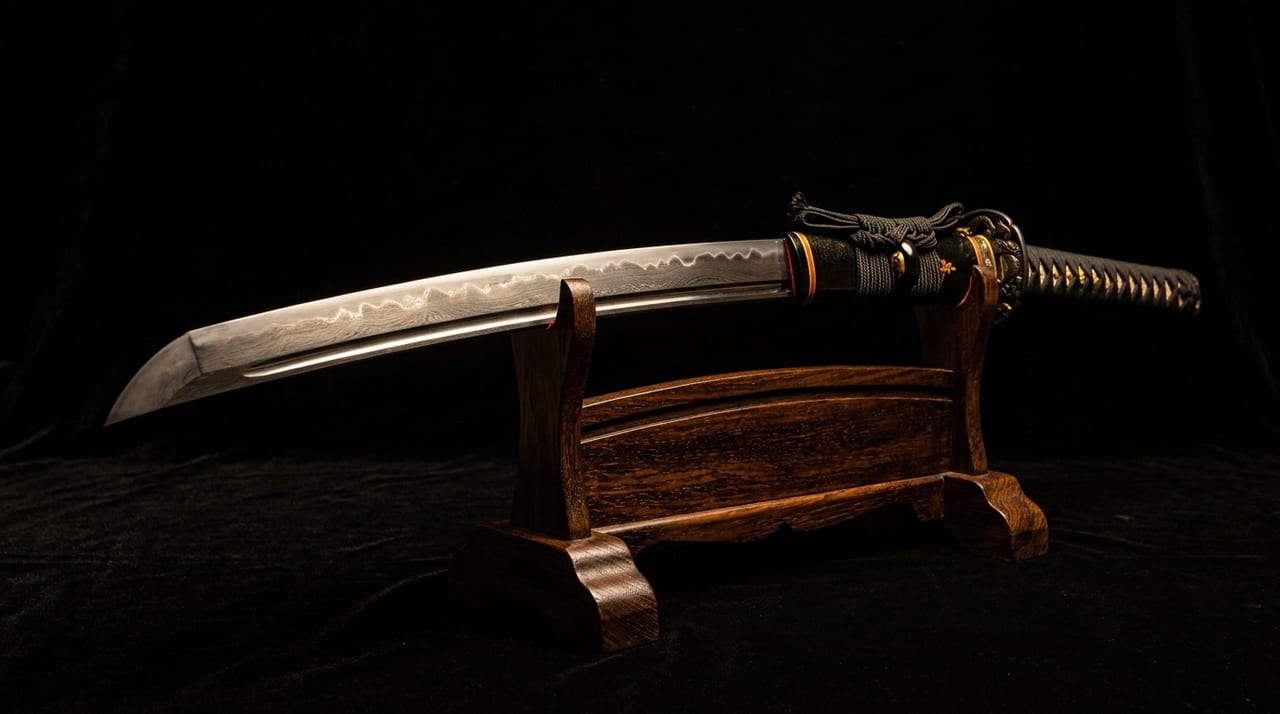
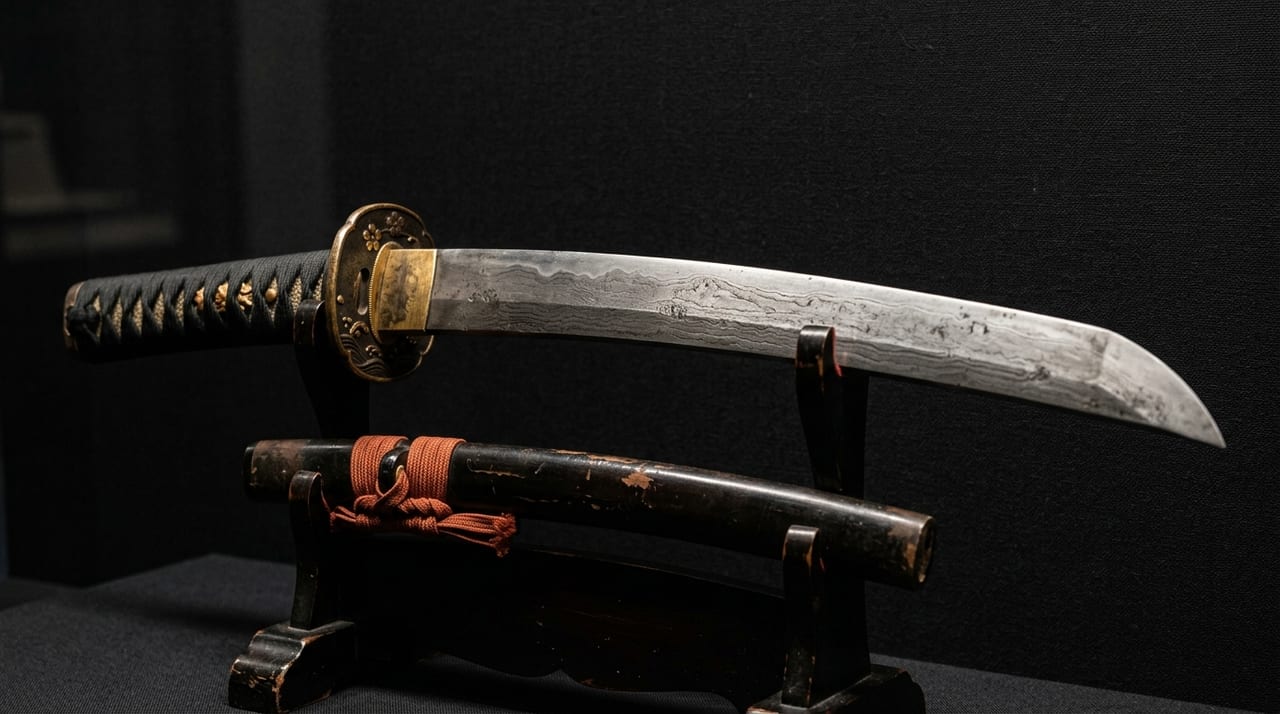
Vigorous nie-deki hamon: Kotetsu's hamon are characterized by nie-deki strongly influenced by Sōshū-den. Coarse nie flies vigorously throughout the notare-based hamon, producing the powerful expression known as ara-nie. Tobiyaki and nijūha (double hamon) may also appear in the hamon, giving them a dynamic and varied beauty. The fact that some works show a hamon that narrows like a gourd near the moto (the section closest to the nakago) is another characteristic frequently cited as part of Kotetsu's individual style.
Heavy jigane: Itame that is well-forged and uniformly tight, with a deep, dark, and heavy jigane, is the hallmark of Kotetsu's surface steel. Ji-nie spreads across the surface in minute nie, giving the blade as a whole a powerful presence. While retaining the tightly grained steel quality close to Yamato work, it combines the rich nie of Sōshū-den to form a unique realm entirely Kotetsu's own.
Form (sugata): The uchigatana was the predominant sword form of the Edo period, and Kotetsu produced many uchigatana. Most of his works embody the "well-proportioned beauty of Edo," with a somewhat wide mihaba and moderate kasane. The kissaki is approximately of medium size, a form that balances practical and aesthetic considerations.
Connection with Kondō Isami — "Kotetsu" Races Through the Bakumatsu
The greatest factor in spreading the name of Nagasone Kotetsu throughout the country was its being recorded and handed down in tradition as the beloved sword of Kondō Isami, commander of the Shinsengumi.
Kondō Isami is said to have carried a blade bearing the Kotetsu mei, and the image of "the commander's sword is a Kotetsu" spread widely from the Bakumatsu through the Meiji era. Whether the blade Kondō carried was a genuine work or a false mei — this question continues to be debated among sword historians today. Since genuine Kotetsu works were expensive and rare, it was not unusual for swordsmen of the Bakumatsu to carry blades with a false Kotetsu mei. The very fact that such anecdotes have been so widely transmitted is itself testament to the way the name Kotetsu has been deeply inscribed in the Japanese view of swords since the Bakumatsu.
The Problem of False Kotetsu Mei — A Fate Born of the Rarity of Genuine Works
The great fame of Kotetsu simultaneously produced a circulation of vast numbers of blades with false mei. From the late Edo period through the Meiji era, forgeries bearing the mei "Nagasone Kotetsu" are said to have been produced in enormous quantities. The problem of false mei was so serious that the saying "one-third of all Kotetsu in the world are fakes" has been handed down.
For identifying genuine works:
- Quality of nie in the hamon (genuine works have large, uniform nie with a sense of dynamism)
- Kitae-hada of the jigane (the distinctive tightness of Kotetsu's itame)
- Script of the mei (how the "Ko" character is written, its depth and angle)
- Kanteisho (official recognition such as Jūyō Tōken designation, or reliable old origami)
are important criteria for judgment. Even today, re-appraisal and discovery of genuine works occur on a regular basis, and research into Kotetsu mei continues to be an important subject in Japanese sword appraisal. Behind the prevalence of false mei lies the high market value of the Kotetsu name itself — and paradoxically, this tells us that a great many people have continued to find the Kotetsu style compelling.
Practical Points for Appreciating and Collecting Kotetsu Blades
Not only for Kotetsu, but when appreciating or collecting works by notable tōkō in general, keeping the following points in mind deepens one's understanding.
Checking the kanteisho: As noted above, Kotetsu is a tōkō whose works carry many false mei, so the presence and content of a kanteisho issued by an official appraisal body is a point that deserves particular attention. A kanteisho records the period, tōkō, and characteristics of the blade, making it an important criterion for purchase and evaluation. Since the grade and content of kanteisho vary by institution, it is essential to verify which institution issued the certificate and by what standards.
Assessing condition: When appreciating jigane and hamon, the quality of the polishing has a major impact. Since togi wear, rust, or damage can obscure the blade's true quality, it is advisable to examine the actual piece carefully in good light whenever possible. The presence and condition of any accompanying koshirae or shirasaya are also elements worth checking separately from the evaluation of the blade itself.
Basic storage: Since Japanese swords are made of iron, the formation of red rust from moisture is their greatest enemy. The basic principle of storage is to keep them away from direct sunlight and sudden temperature changes, in an environment with low humidity. It is important to the long-term preservation of condition to draw the blade from the saya periodically to check its state, and as needed to remove old oil with uchiko and apply a thin coat of fresh sword oil. For those unfamiliar with handling, it is advisable not to disassemble or polish on one's own judgment, but to consult a specialist togishi or a trusted sword dealer.
Kotetsu's Reputation in the Modern Era
Blades by Nagasone Kotetsu are currently held in the Japanese Sword Museum, the Tokyo National Museum, and collections of former domain-lord families across the country. Several works have been designated as national jūyō bunkazai or jūyō bijutsuhin, and research and exhibition of these representative works of Edo Shintō continue to this day.
The evaluation of "the finest swords in Edo" is a recognition not merely of cutting performance as a weapon, but of embodying a truly unique personality in the aesthetic expression of swords — that of vigorous nie-deki — that no other can match. With the added connection to the dramatic figure of Kondō Isami, the name Kotetsu continues to be spoken of today as a word that symbolizes the Japanese sword.