Types and Meanings of Blade Engravings (horimono) — Appreciation and Techniques of Kurikara, Bōnji, Hi, and Ken-maki Ryū
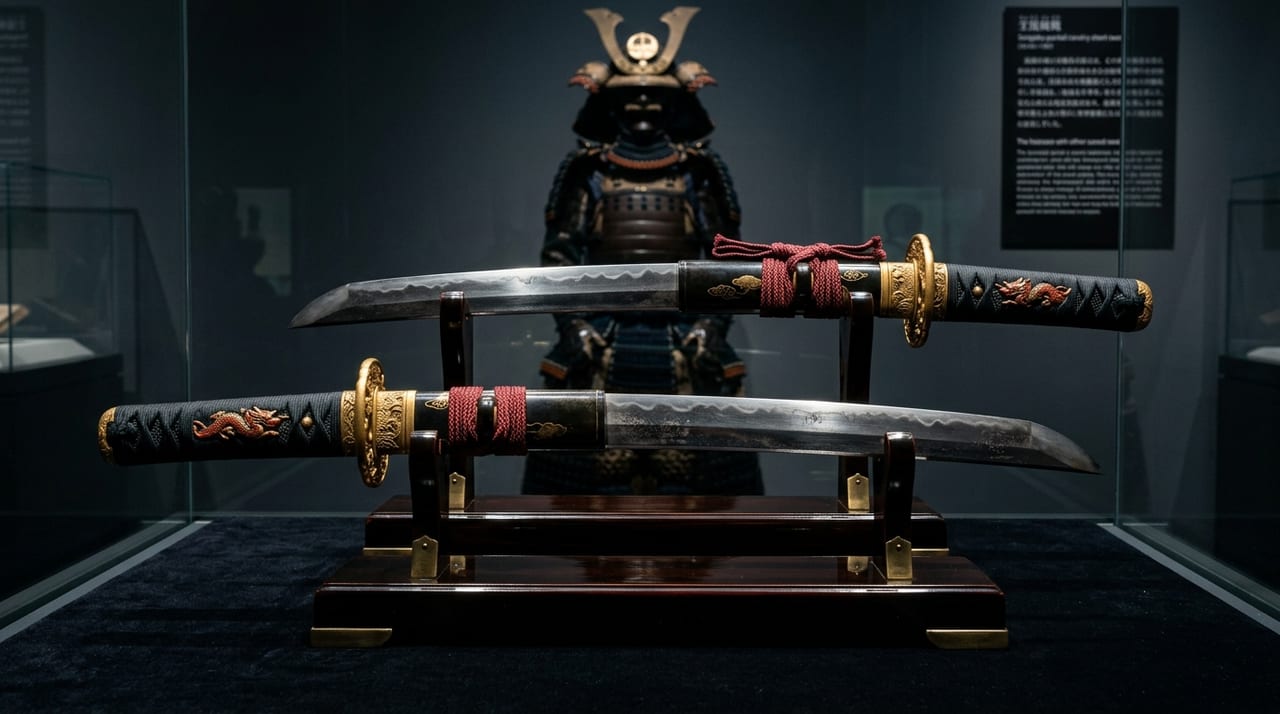 * Image is for illustrative purposes only.
Table of Contents
What Is Horimono? — Faith and Craft Inscribed on the Blade
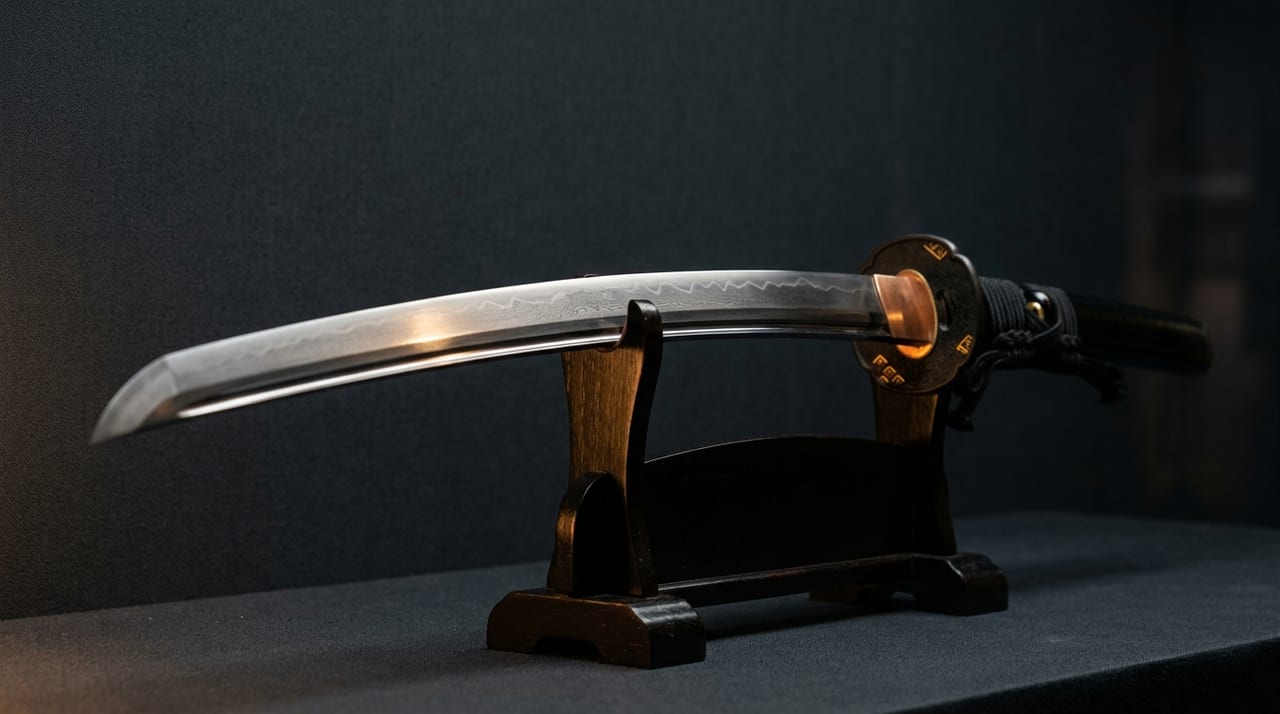
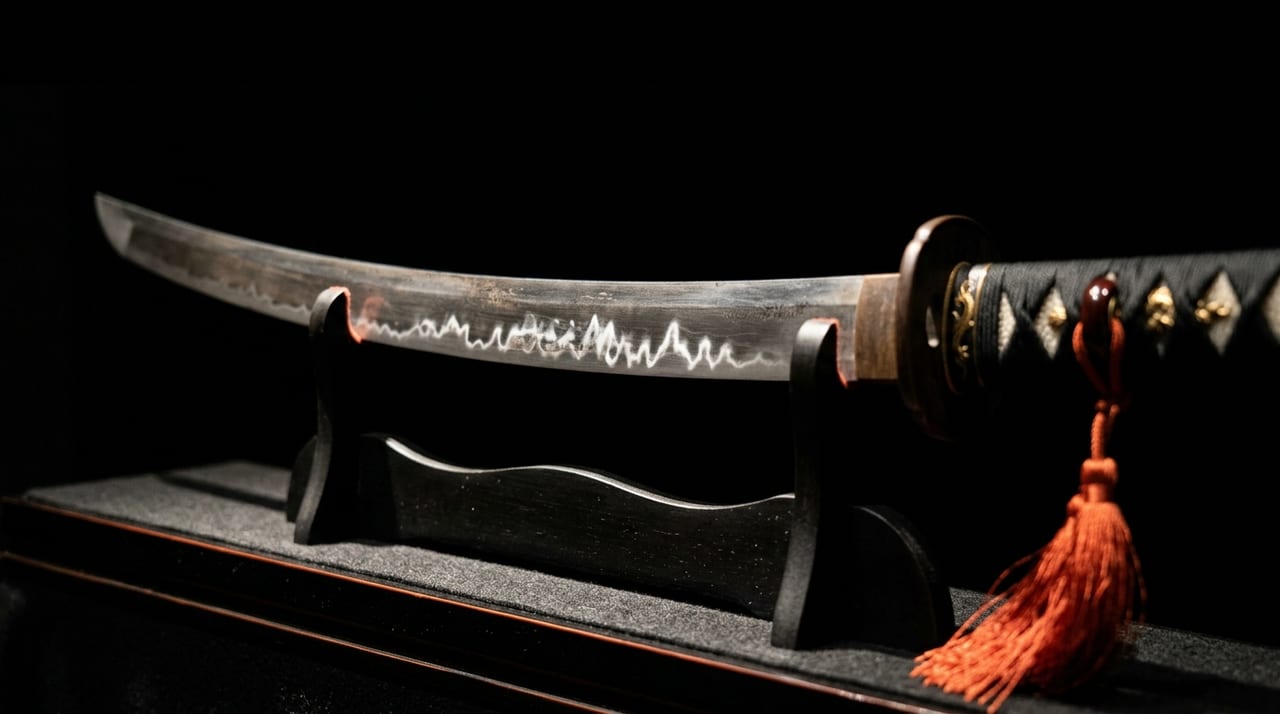
The engravings applied to the surface of a Japanese sword blade are collectively called "horimono." While modern viewers often perceive them as decorative elements, their true nature carries deep religious and talismanic meaning. They are a complex form of expression combining the faith of the tōkō and the patron (commissioner), the warrior's desire for protection, and the technical pride of the tōkō.
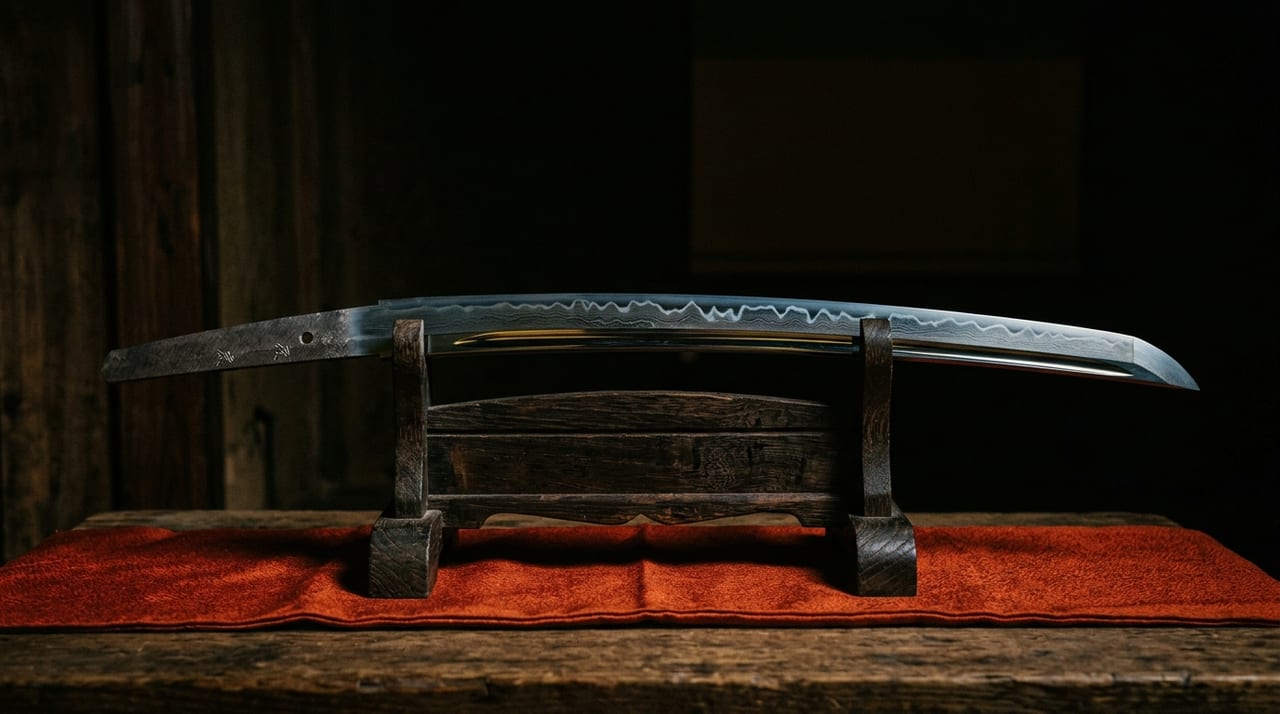
Horimono are applied, as a rule, to the portion of the blade above the nakago (tang), running from the hamachi (blade notch) to the area near the bōshi (temper line in the point), and engraved into both faces or one face of the blade in the area of the shinogi (ridge line). Whether a blade has horimono is an important factor in evaluating a Japanese sword, but at the same time, problems such as "the engraving has become shallow" or "it is a nochi-bori (later engraving)" can become negative factors in appraisal.
Major Types of Horimono and Their Significance
Kurikara Dragon
One of the most representative horimono is the "Kurikara dragon." This depicts a dragon coiled around the sankoken (three-pronged sword) of Fudō Myōō, and "Kurikara" derives from Sanskrit and is also the name of the black dragon that is the incarnation of Fudō Myōō.
In Kurikara dragon horimono, the typical composition shows the dragon coiling from the tip of the sword (ken) toward the tsuka (hilt) direction, with flames rising on the sword. This composition symbolizes "the immovable power that cuts through evil," and was a subject favored by warriors seeking protection on the battlefield.
Because Kurikara dragon engravings require a high level of skill, they were often entrusted to specialist craftsmen called "horishi." While tōkō sometimes carved them themselves, a division of labor was the norm, and particularly from the Edo period onward, horishi became established as an independent profession.
Bōnji (Sanskrit Characters)
Bōnji are Sanskrit characters representing Buddhist deities, and in Japan they have been used as protective charms since the Heian period. Engraving bōnji on a blade carries the meaning of enshrining the protective deity or principal object of worship of the blade's bearer within the blade itself.
Representative bōnji and their corresponding Buddhist deities:
- The character "A (Ah)": seed syllable of Dainichi Nyorai
- "Kān (Kanman)": seed syllable of Fudō Myōō
- The character "Bān": Dainichi Nyorai (Womb Realm)
- The character "Kiriku": Amida Nyorai
- The character "Un": Bishamonten
Bōnji are often engraved on the flat surface of the shinogiji or along the shinogisuji (shinogi line), and may be engraved alone or in combination with the Kurikara dragon.
Among the bōnji, "Kān (Fudō Myōō)" occupies a special position. In esoteric Buddhist ritual practice, gomaki (votive sticks) offered to Fudō Myōō are cast into fire to incinerate worldly passions, and the idea of "treating the blade itself as a gomaki" underpinned the engraving of bōnji on swords. That is to say, it is a concept of spiritual equivalence that overlays the act of a sword cutting down enemies on the battlefield with the purification by fire of worldly passions and demonic obstacles through Fudō's flames.
Hi — The Most Common Horimono
The foremost horimono combining practicality and decorative quality is the "hi (groove)." Hi are grooves carved lengthwise into the hiraji (flat surface) of the blade, and are classified as follows by shape.
Bōhi: A single straight groove. The simplest and most widely seen. Many run from near the munemachi (back notch) of the nakago (tang) to just short of the bōshi (temper line in the point).
Futasuji-hi: Two parallel grooves. Often takes the form of "bōhi with soehi (supplementary groove)" in combination with a bōhi.
Koshi-hi: A short groove carved only in the lower half (hip area) of the blade.
Kakitōshi: A style in which the hi is extended into the center of the nakago (tang). This has the advantage that the hi is less likely to disappear through polishing.
Various theories exist regarding the function of hi, but the following effects are mainly cited: reduction of blade weight (a difference of approximately 1–3 g occurs), adjustment of blade rigidity (flex), and reduction of air resistance during drawing and sheathing. However, in modern research, the prevailing view is that aesthetics and religious meaning were primary, more than function.
Hi have been popularly known in common parlance as "chimimizo (blood grooves)," based on the folk belief that "when stabbing, blood flows out making the sword easier to withdraw," but this has been almost entirely refuted by modern experimental research. On the other hand, a folk belief interpretation of "a groove that dispels evil blood and impurity" also spread during the Edo period, and there are examples of swords with hi being favored in a talismanic context. Furthermore, in Zen, within the metaphor of "cutting cleanly in two," a blade with a running hi was sometimes spoken of as "a pure vessel that cuts through delusion," and the three layers of practicality, aesthetics, and faith overlap in this simple groove called the hi.
Ken-maki Ryū (Sword-Entwining Dragon)
Apart from the Kurikara dragon, cases also exist where a "ken (sword)" alone is engraved, or where a "ryū (dragon)" is engraved without coiling around a sword. Ken-maki ryū has the composition of a dragon coiled around a sword, and is sometimes used almost synonymously with Kurikara, but strictly speaking the direction of the dragon and the expression of the flames differ.
Fudō Myōō Figures and Gohō Dōji
Standing figures of deities and Buddhas carved in the round are called "marubori" or "takabori." Standing figures of Fudō Myōō are the most common, and there are also examples in the triad form accompanied by gohō dōji (Kongara and Seitaka). These require a high level of skill, and works by renowned horishi of the Edo period — such as Nara Masanao and Yanagawa Naomasa — are known as masterpieces.
Alongside Fudō Myōō figures and gohō dōji, a subject that tends to be overlooked is "the dove of Hachiman Daibosatsu." The custom of engraving a dove — considered the messenger of Hachiman — on a blade is particularly closely associated with naval commanders, and records remain of commanders who fought at sea seeking to enshrine the protection of Hachiman Daibosatsu within their blades. Single dove engravings are rare, but examples combined with tomoe crests and wave patterns applied to the lower rear area of the blade have been confirmed among surviving pieces.
Classification of Engraving Techniques — From Katakiribori to Marubori
The major engraving techniques used in Japanese sword horimono can be broadly divided into the following five types.
Kebori: A technique that expresses patterns with fine outline lines. Three-dimensionality is achieved through minute variations in the width and depth of the lines. It requires the most precise skill and excels in fine detail expression.
Katakiribori: A technique of carving asymmetrical-section grooves using only one side of a chisel. By cutting deeper on the ha (shinogi) side and shallower on the mune (back) side, shadow and light effects are created depending on how light strikes the surface. Used extensively in the expression of bōnji.
Yagenibori: A carving technique in which the cross-section becomes V-shaped. The name comes from the shape of the "yagen" (pill crusher) used to grind medicines. Equal cuts on both sides express sharp contours.
Ukibori: A technique in which the background is carved away to make the pattern stand out in relief. Excels in three-dimensional expression.
Marubori: Three-dimensional carving in which the pattern protrudes greatly from the blade surface. Requires the most advanced skill and time.
Points of Focus in the Appraisal of Horimono
In appraising horimono, it is important to observe the following points.
Nochi-bori or contemporaneous engraving: Determining whether something was engraved at the time of manufacture (contemporaneous engraving) or engraved in later ages (nochi-bori, later engraving). In the case of nochi-bori, the hadatachi (surface texture) of the jigane (steel of the blade surface) around the horimono may differ from its surroundings. Unnatural appearance at the sabigiwa (rust line) of the blade may also be seen.
Depth of engraving and age-related changes: When engraving has become shallow due to polishing, the degree allows inference as to the number of times the blade has been polished. Caution is warranted if the corners of bōnji characters have become overly smoothed.
Identification of the horishi: For works by renowned horishi of the Edo period onward, the school lineage can sometimes be inferred from characteristics of the engraving mouth and the terminal treatment of the mune-hi.
Period consistency: Checking whether horimono inconsistent with the period have been applied to a kotō-period blade. In the Kamakura through Nanbokuchō periods, Kurikara dragons and bōnji are common, while in the Edo period there is a tendency for patterns such as dragons, waves, and kikusui to increase.
Changes in Horimono by Period
The fashion for horimono changed greatly by period.
Kamakura through Nanbokuchō period: Kurikara dragons and bōnji were mainstream. The talismanic character was strong. Bōhi was common.
Muromachi period: Diversification of horimono began. Futasuji-hi and koshi-hi appeared. Wave and dragon patterns increased.
Momoyama through early Edo period: Elaborate decorative engravings became fashionable. Reflecting the cultural atmosphere of the Toyotomi and Tokugawa regimes, refinement of Kurikara dragon detail and improvement in takabori technique were seen.
Mid to late Edo period: Horishi became established as independent craftsmen. Works by renowned horishi were prized, and horimono came to be valued as artworks independent of the sword. Decorative patterns such as kikusui, waves, and dragons were widely used.
Meiji onward: After the Sword Abolishment Edict (Haitōrei), demand for horimono temporarily declined, but the value of horimono was reassessed within the sword art movement. Gendaitō smiths also produce horimono with talismanic meaning, but individual expression is valued over precise reproduction.
In the modern era, horishi (engraving specialists) are extremely few in number nationwide, and craftsmen who handle sword blade engraving as a full-time occupation can be counted on one hand. Since horimono are, as a rule, applied to a polished blade, it is work accompanied by the tension that a single mistake can damage the value of the entire blade. The majority of cases today still involve tōkō outsourcing the work, and it is not uncommon for requests to renowned horishi to result in a wait of several years.
Horimono are a unique cultural product positioned at the intersection of the beauty and faith of the Japanese sword. They are not mere decoration — reading into the religious intent they embody, the prayers at the time of creation, and the technical pride of the tōkō and horishi is the path to true appreciation.