Ishidō School — The Swordsmith Group That Revived Bizen Chōji in the Shintō Period, Recreating the Brilliant Utsuri and Chōji Hamon
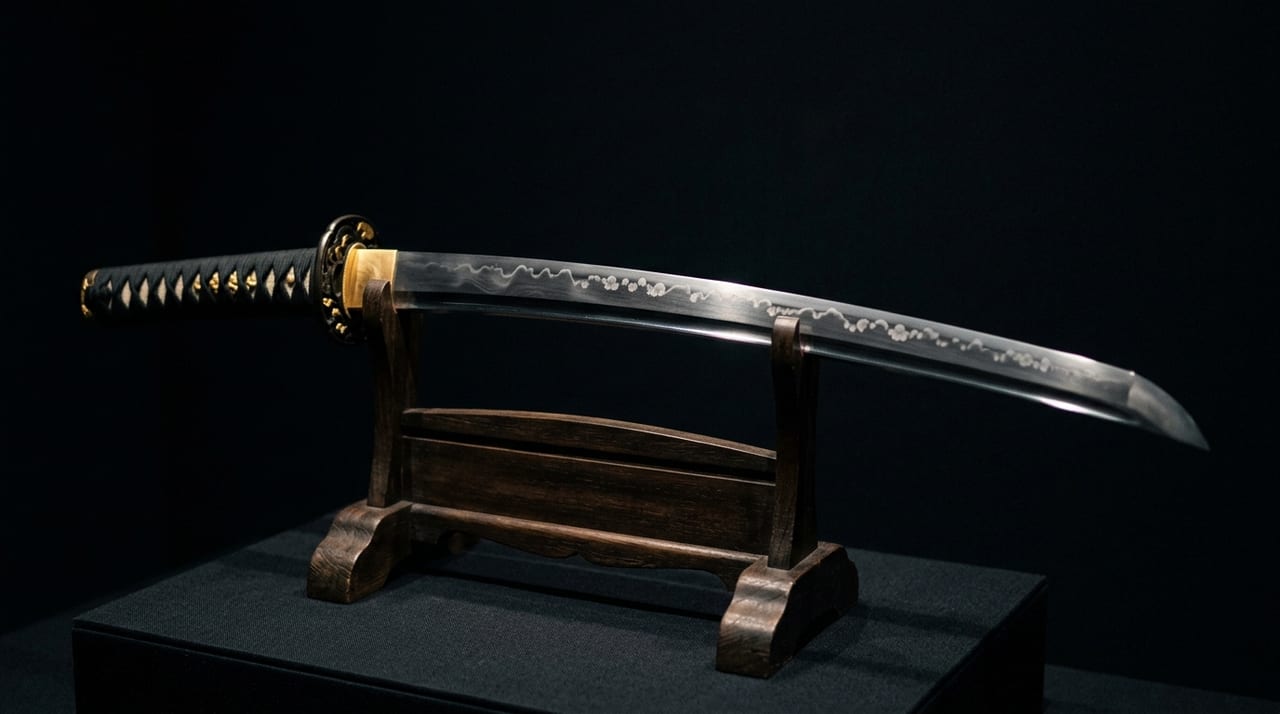 * Image is for illustrative purposes only.
Table of Contents
A School That Copied Bizen Chōji in the Shintō Period
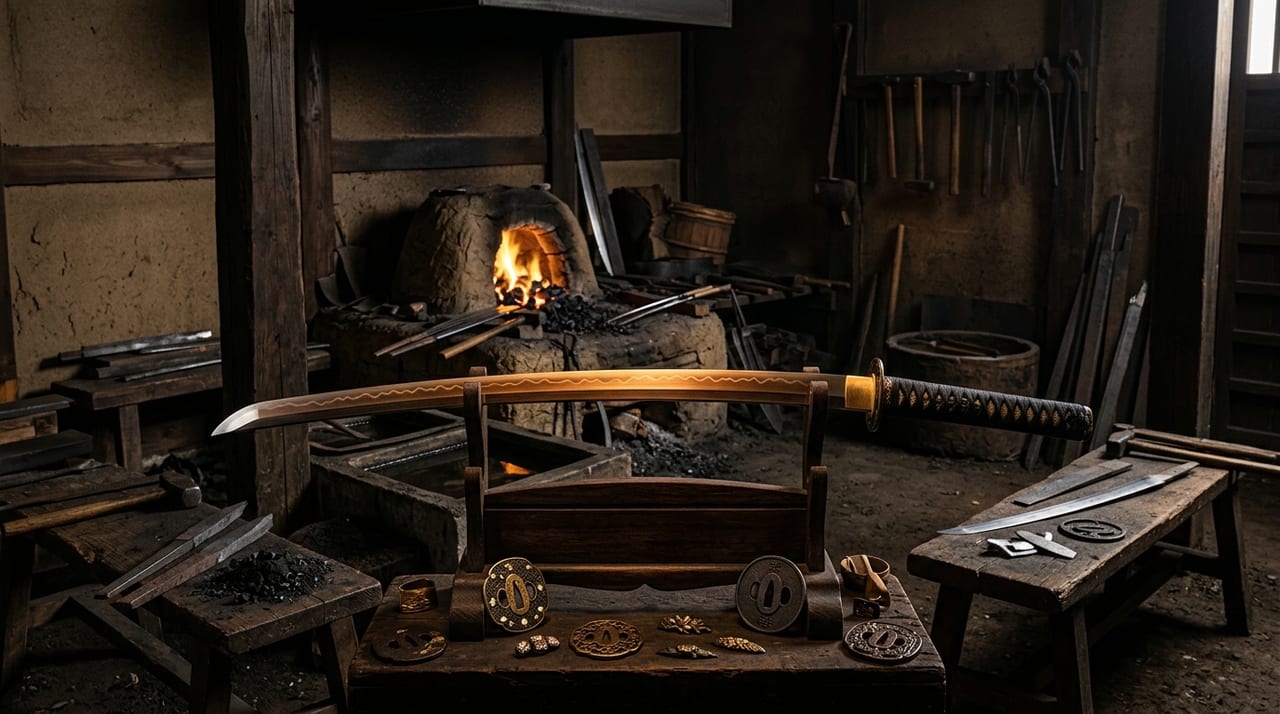
The Ishidō School (Ishidōha) was a group of tōkō active during the shintō period of the Edo era, known for its style of copying the brilliant chōji hamon of Kamakura-period Bizen swords, and in particular those of the Ichimonji School. A defining characteristic of the Ishidō School lies in its ambition to revive the beauty of masterworks of the kotō era in the age of shintō.
In the shintō period, a movement emerged across the country to study the styles of kotō and reproduce them. Among these efforts, the Ishidō School is distinguished as a lineage that aimed specifically to recreate the brilliant chōji and utsuri of Bizen-den.
In the Edo era, once the wars had subsided, swords increasingly came to serve not only as weapons of actual combat but also as expressions of a warrior's rank and aesthetic sensibility. Given the longstanding reverence for Kamakura-period Bizen swords as meibutsu, demand for their brilliant style remained strong even in the shintō period, and the Ishidō School's Bizen utsushi answered this call of the age.
Recreating the Chōji Hamon and Utsuri
Indispensable to any discussion of the Ishidō School's style are its brilliant chōji hamon and the utsuri that appears in the jigane. Chōji hamon is a hamon in which the temper line is formed in a series of shapes resembling cloves, and it is a representative hamon of Kamakura-period Bizen swords such as those of the Ichimonji School. Utsuri refers to a shadow-like effect that appears whitish against the jigane.
The Ishidō School strove to reproduce these characteristics of Ko-Bizen and Ichimonji on the jigane of shintō blades, achieving a brilliant and bright style. The highlight of Ishidō School works is the way the tightly grained jigane characteristic of shintō is overlaid with chōji and utsuri that evoke the kotō tradition.
Even within chōji hamon, the range of expressions is wide. The overall appearance varies greatly depending on how the quenching is carried out: there are brilliant examples where the heads overlap and bloom like flowers, those with open bases, and those with long ashi that reach deep into the blade. How closely the varied chōji seen in original Ichimonji School works could be approached using the materials and techniques of the shintō period — therein lies the ingenuity and skill of the Ishidō School.
A School That Spread Across the Country
The Ishidō School flourished in various regions including Edo, Osaka, and Kishū, transmitting the Bizen utsushi style in each locality. By establishing branches in different regions, the Ishidō School came to be widely recognized as the preeminent lineage of Bizen utsushi in the shintō period.
In the world of shintō, as a school that aspired to the beauty of kotō, the Ishidō School occupies a distinctive position in the history of Japanese swords.
Glossary of Terms
- Chōji: a unit of the hamon that resembles the shape of the clove, a spice. It refers to a brilliant hamon in which rounded, irregular heads form a continuous pattern.
- Utsuri: an effect that rises whitish in the ji, separate from the hamon. A major attraction of Bizen works, it is classified into varieties such as midare-utsuri and bō-utsuri.
- Nioiguchi (edge of the temper line): the appearance of the boundary of the hamon. Where it looks soft like mist it is called nioi-deki, and where the steel particles shine it is called nie-deki. Chōji hamon are largely known to be based on nioi-deki.
Checkpoints for Comparing the Original and the Copy
To fully appreciate Ishidō School works, the most direct approach is to compare them consciously with Kamakura-period Bizen swords (the originals). Representative examples of Kamakura-period Bizen swords are introduced in detail in the complete history of the Ichimonji School.
- Form: whereas Kamakura-period tachi display an elegant shape with pronounced koshi-zori and a sturdy stance, shintō-period swords tend toward a more restrained and regular sori. Begin by taking in the overall form to sense the spirit of each era.
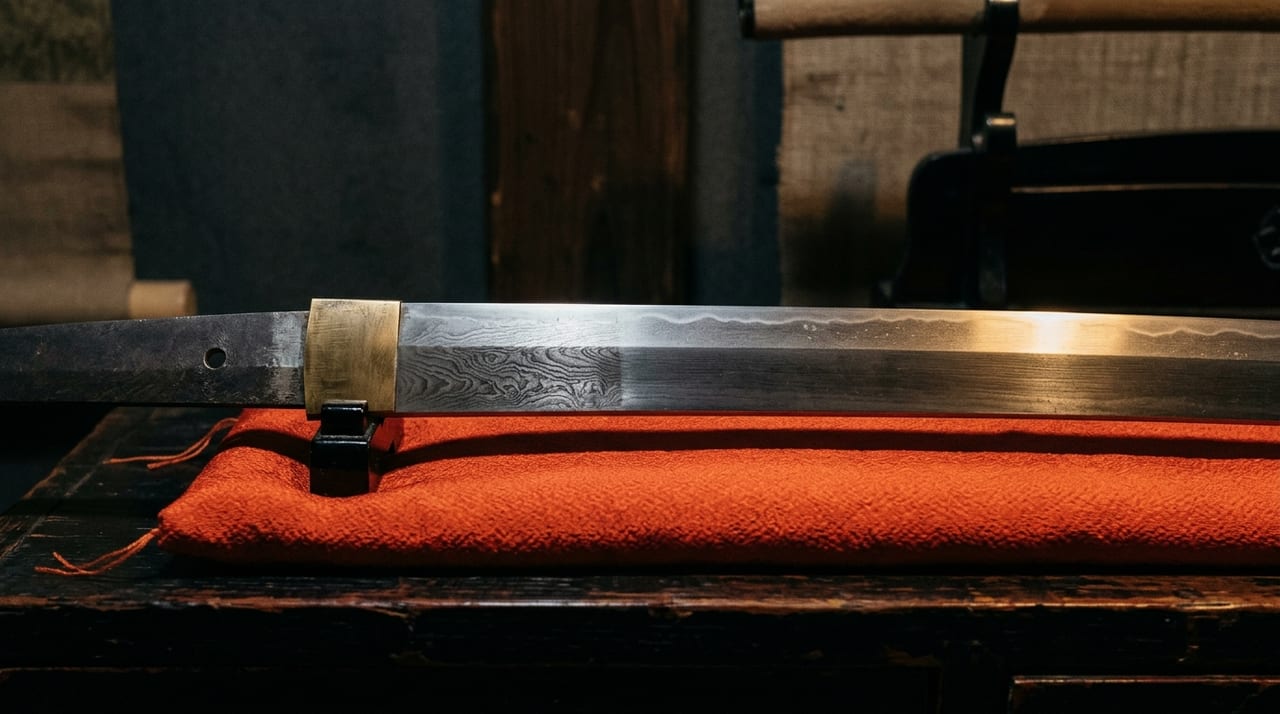
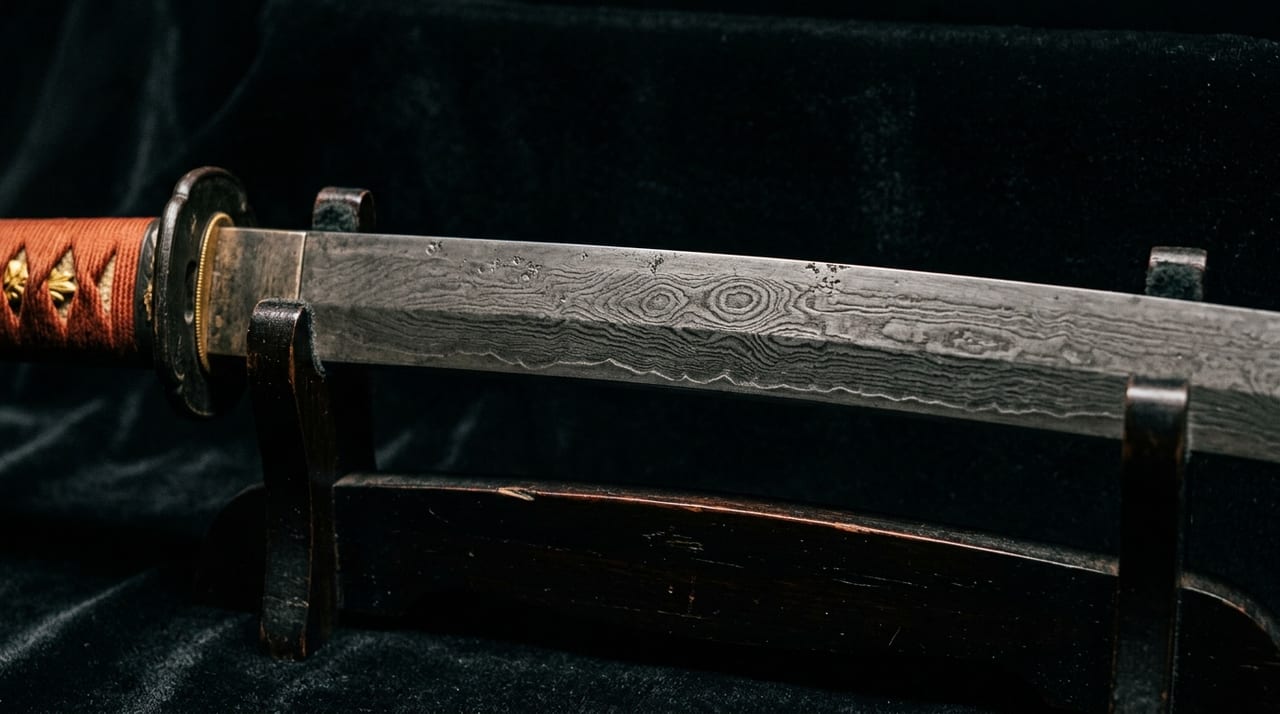
- Jigane: whereas kotō Bizen works show a moist and soft skin texture, shintō jigane tends to be tightly grained, bright, and clear. Differences also appear in the way the utsuri rises and in its intensity.
- Hamon: paying attention to the regularity of the chōji heads, the way ashi and yō appear, and the depth of the nioiguchi reveals the individual character of both the original and the copy.
- Nakago (tang): the position of the mei, the yasurime (file marks), and the color of the rust are also important clues that speak to the age of a sword.
Appreciation Points
When appreciating Ishidō School works, it is worth focusing on the brilliant chōji hamon and the utsuri that appears in the jigane. By comparing them with Kamakura-period Bizen swords, one can see how the Ishidō School sought to capture the beauty of kotō in the shintō age. The pleasure of appreciating the Ishidō School lies in savoring the old and new styles layered together.
The word utsushi may sound like mere imitation, but the practice of deeply studying the beauty of ancient masterworks and reconstructing it with the techniques of one's own era is the very tradition of the Japanese sword. In a single Ishidō School blade, admiration for Ko-Bizen and the pride of a shintō tōkō coexist.
Also Pay Attention to Accompanying Information That Records Provenance
When considering utsushi works, your understanding will deepen by attending not only to the blade itself but also to accompanying information such as the shirasaya (plain storage scabbard), any inscriptions on the saya, the presence or absence of koshirae (mounting), and the condition of preservation. When examining photographs, it is ideal to check both an image that conveys the overall tone of the hamon and a close-up that shows the texture of the jigane and the appearance of the utsuri. Confirming any points of concern before purchase, and bringing a sword into your collection only after being fully satisfied, leads to an encounter with a piece that can be treasured for years to come.
Those with an interest in the Ishidō School and the Bizen utsushi style are welcome to browse and purchase listed works online. Please feel free to submit any questions via the inquiry form.