The Mihara School — A Yamato-Style Swordsmith Group Rooted in Bingo, Tracing the Understated Aesthetic of the Chūgoku Region
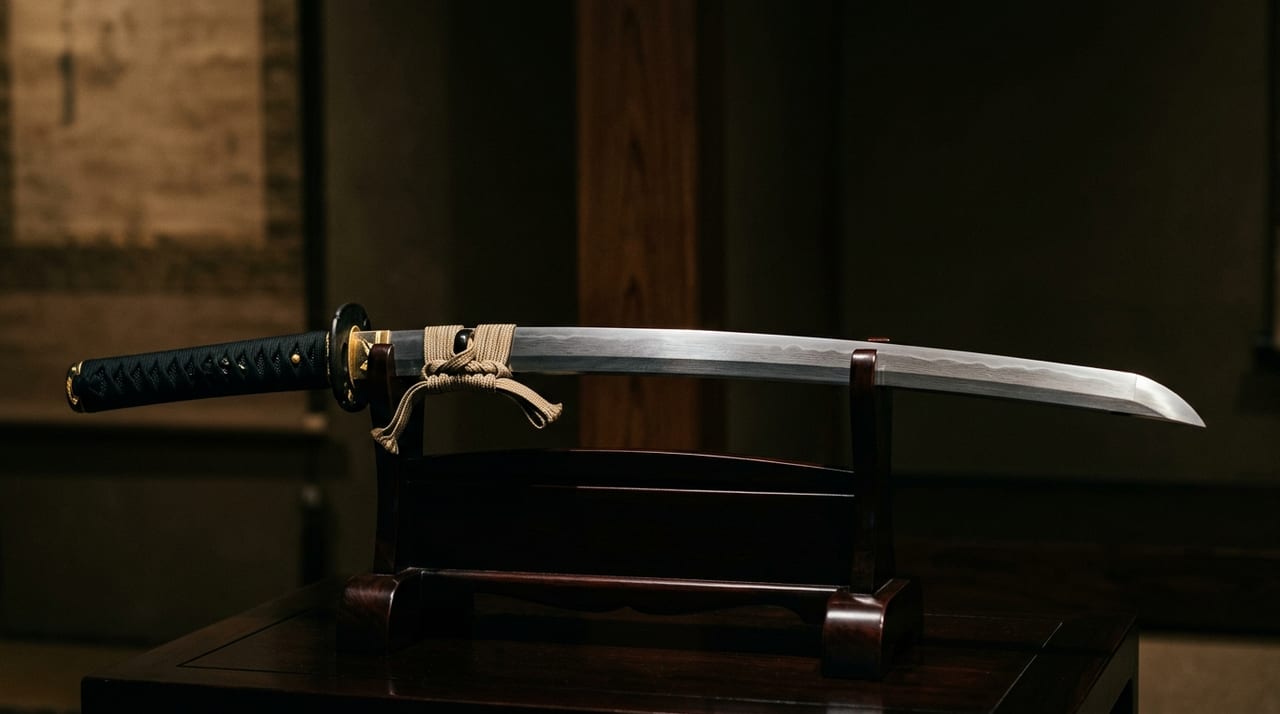 * Image is for illustrative purposes only.
Table of Contents
A Swordsmith Group Based in Bingo, Mihara
The Mihara school (Mihara-ha) was a group of swordsmiths who flourished in Mihara, in Bingo Province (present-day eastern Hiroshima Prefecture). It is said to have prospered from the end of the Kamakura period (early 14th century) through the Muromachi period, and is counted among the representative swordsmith groups of the Chūgoku region.
Despite being situated close to Bizen, the great center of sword production, the Mihara school is distinctive in showing a style strongly influenced by the Yamato tradition rather than the Bizen tradition.
The Yamato Tradition — Its Place within the Gokaden
The styles of Japanese swords are traditionally classified into five lineages known as the Gokaden (five traditions): Yamashiro-den, Yamato-den, Bizen-den, Sōshū-den, and Mino-den, each with its own characteristics in the forging of the jigane and the tendencies of the hamon.
Among these, the Yamato tradition is considered one of the oldest lineages, known for its masame-forged jigane, hamon based on suguha, and a high shinogi. Its refined, straightforward style, free of ostentation, is said to have been nurtured in the cultural environment of Yamato Province (present-day Nara Prefecture), with its deep ties to temples and shrines. To understand the style of the Mihara school, it is helpful first to grasp these characteristics of the Yamato tradition.
A Style Influenced by the Yamato Tradition
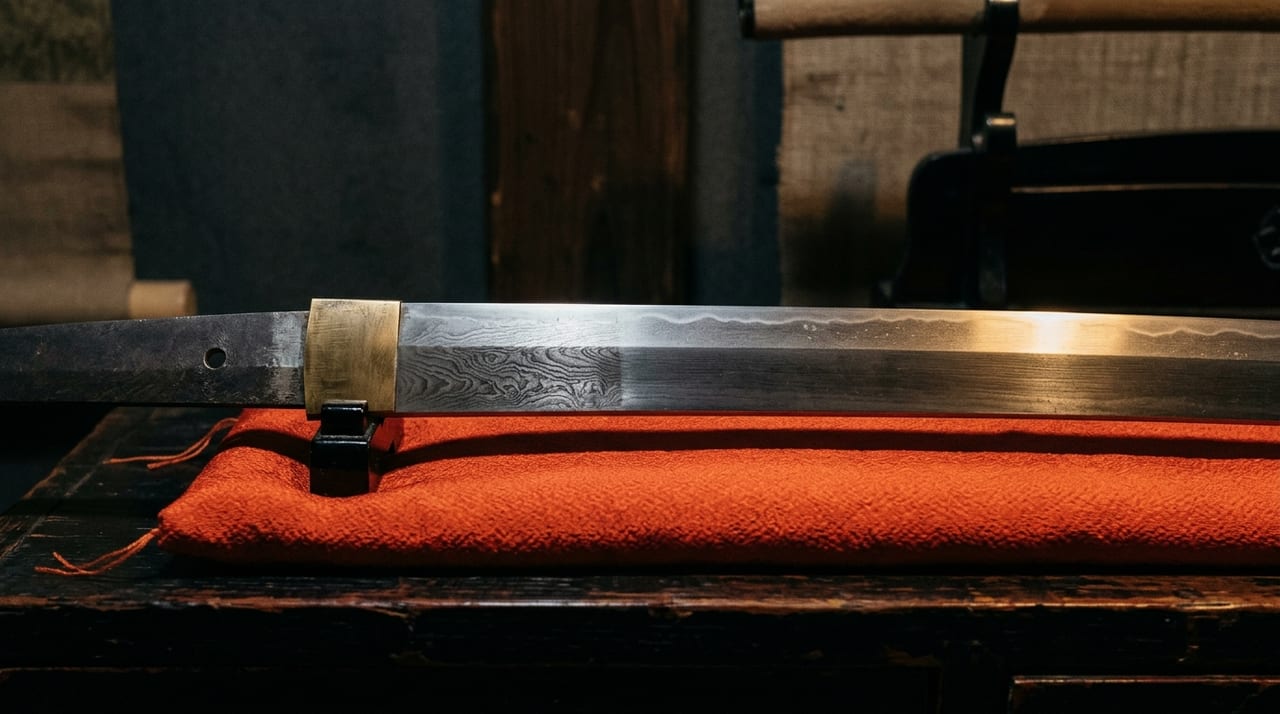
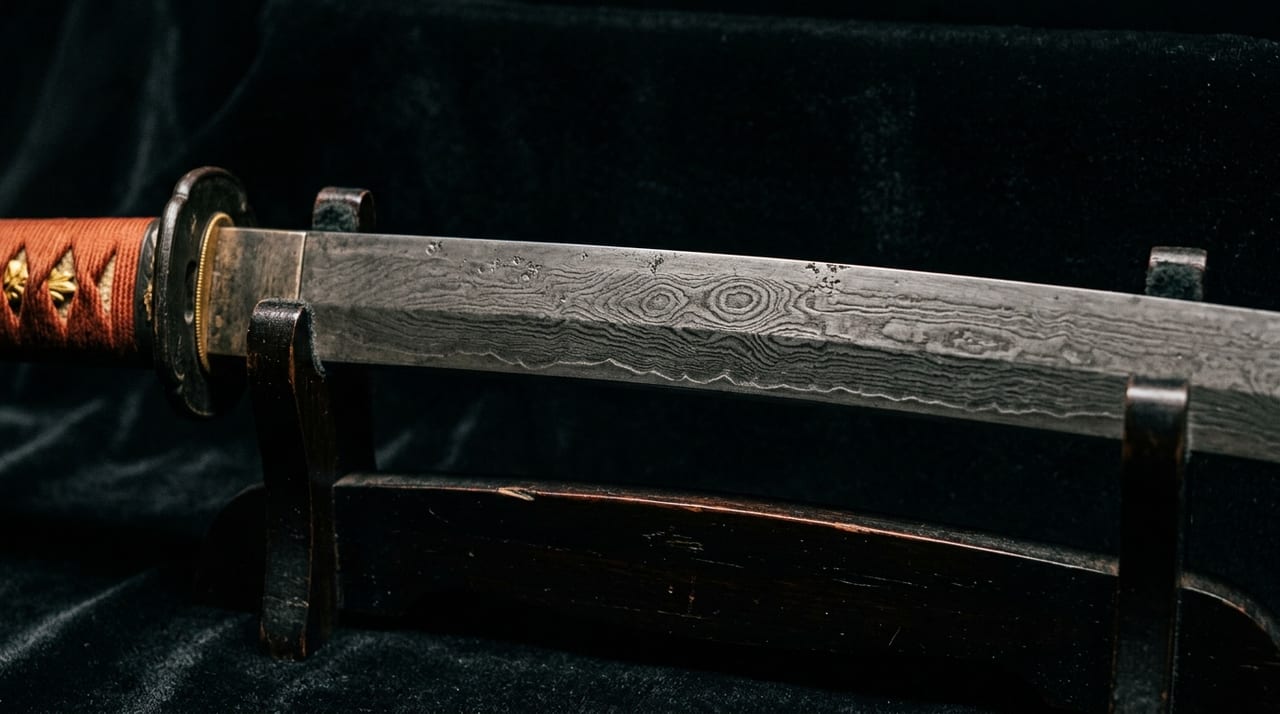
The style of the Mihara school is said to be characterized by jigane with a masame tendency, in keeping with the Yamato tradition, and by a hamon based on suguha. In contrast to the swords of neighboring Bizen, famous for their showy chōji, Mihara school works are largely quiet and understated with a suguha-based hamon, and the jigane often shows masame mixed into an itame ground.
The hamon is known to display delicate activity reminiscent of Yamato works, with small irregular undulations and fraying mixed into the suguha. It may be said that the appeal of the Mihara school lies in prizing a sober, unpretentious beauty over flamboyance.
Why Did the Yamato Style Take Root in Bingo?
Why did a Yamato-style aesthetic take root in Bingo, not far from Bizen, rather than the Bizen tradition? Definitive records are scarce, so no firm conclusion can be drawn, but the view that it began with Yamato-school smiths moving to Bingo has long been held. In the medieval period, temples and shrines held estates across the country, and people and techniques moved freely along highways and through the maritime trade routes of the Seto Inland Sea. Understanding how Yamato sword-forging techniques were transmitted to Bingo through such movement makes it easy to see how the Mihara school's style came to be.
In any case, the fact that geographic proximity to a production center does not necessarily correspond to stylistic lineage is a fine example of the depth of the world of Japanese swords.
Ko-Mihara and Sue-Mihara
Works of the Mihara school are sometimes distinguished by period and nomenclature: earlier works are called "Ko-Mihara," while works from the Muromachi period onward are called "Sue-Mihara." It is thought that as time passed, production increasingly shifted toward meeting demand for practical swords.
When considering the spread of sword production across the Chūgoku region, the Mihara school stands out as an important production center outside of Bizen.
What Comparison with Bizen Swords Reveals
To appreciate the individuality of the Mihara school, it is effective to compare its swords side by side with those of neighboring Bizen. The contrasts worth noting are as follows.
- Jigane: Where Bizen works commonly show an itame-hada, Mihara school works are distinguished by a hada with masame mixed in
- Hamon: Where Bizen works excelled in showy chōji-midare, Mihara school works display a quiet hamon based on suguha
- Overall impression: Where Bizen is bright and flamboyant, Mihara's hallmark is a composed, understated quality
The fact that styles so different in character existed side by side within the same Chūgoku region speaks to the breadth of sword demand at the time.
Points for Appreciation
When appreciating works of the Mihara school, it is good to focus on the jigane with its masame tendency and the composed, suguha-based hamon. Suguha may appear monotonous at first glance, but close observation reveals expression in the fraying and small activity along the edge, and the harmony with the kitae-hada of the jigane is a highlight. Comparing the work alongside the showy Bizen swords of the neighboring province brings the individuality of the Mihara school — with its Yamato tradition influence — into sharper relief. The true pleasure of appreciation lies in savoring the understated charm unique to regional swords.
Enjoying Regional Swords — Checkpoints When Acquiring
Works by regional swordsmith schools such as the Mihara school are often found at more modest price points than famous works from the centers of the Gokaden traditions, making them an attractive choice for collectors who prefer an understated aesthetic. When considering a purchase, confirm the following points.
- Basis for attribution: When a mumei work is attributed to Mihara, by which institution and on what basis was the kanteisho issued
- Condition: Degree of rust and fatigue, state of togi. Whether the masame of the jigane and the activity of the hamon can be observed in good health
- Documentation: The content of the registration certificate, the presence and type of any kanteisho
It is precisely in works of suguha — often dismissed as plain — that the viewer's eye is tested by the quality of the jigane and the fine activity within the hamon. Please enjoy the process of taking time to make your selection.
Those with an interest in the Mihara school and swordsmiths of the Chūgoku region may browse and purchase listed works online. For any inquiries, please use the contact form.