Miyoshi Nagamichi — The Master Swordsmith of Mutsu Called "Aizu Kotetsu," the Foremost Tōkō of the Shintō Period in Aizu
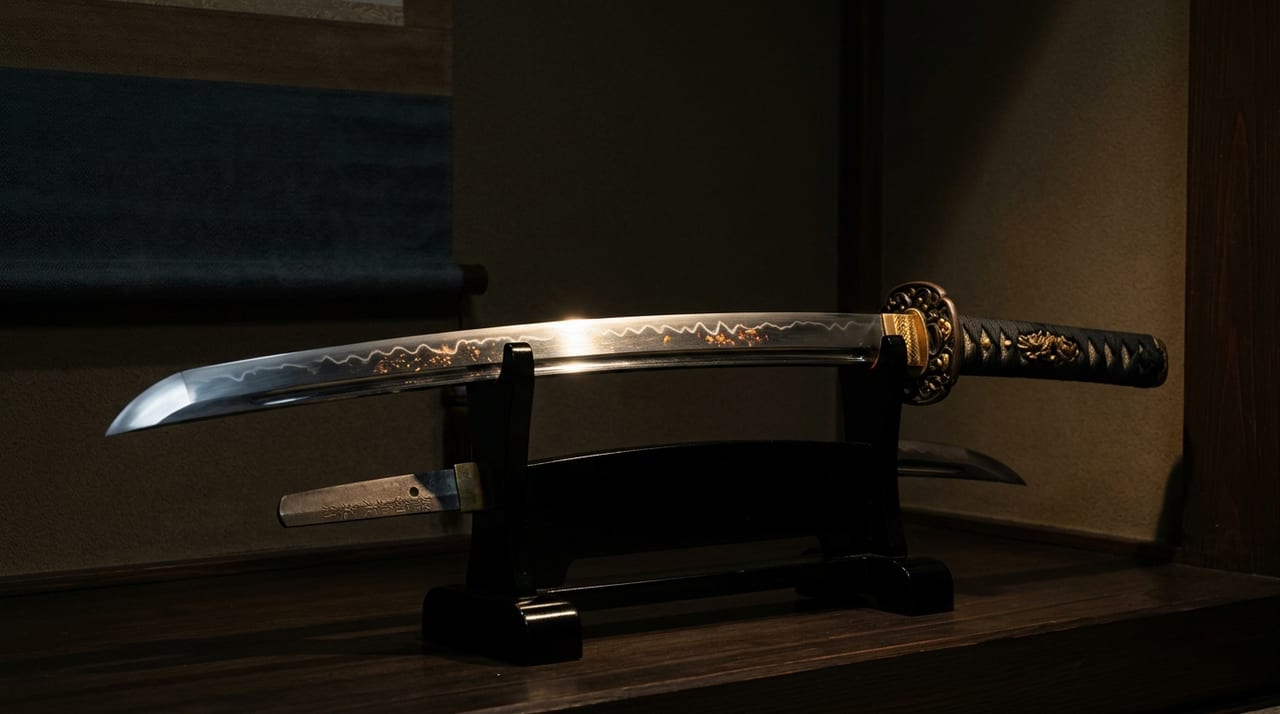 * Image is for illustrative purposes only.
Table of Contents
A Master of Shintō Who Flourished in Aizu
Miyoshi Nagamichi was a tōkō active during the early Edo period's shintō era in Mutsu Province, Aizu (present-day Aizu region of Fukushima Prefecture). Known as a swordsmith who flourished under the Aizu domain, his work is counted among the most representative examples of shintō from the Tōhoku region.
During the shintō period, each domain maintained its own tōkō, and distinctive regional styles developed across the country. Miyoshi Nagamichi stands as a prime example of this within Aizu.
The Soil of Aizu in the Shintō Period
The shintō period refers broadly to the era of sword production from the Keichō years (1596–1615) onward. As warfare drew toward a close, tōkō gathered in castle towns throughout the country and turned their craft toward meeting the demands of domains and warrior families. With the distribution of iron and charcoal becoming more organized, and steel sourced from various regions becoming available for forging, the distinctive shintō style — featuring bright, densely packed jigane — is said to have emerged.
Aizu, too, was one such place that maintained tōkō within its castle town. Swordsmiths working under a domain were in a position of directly meeting the practical demands of warriors for blades worn at the hip, and cutting ability and toughness were judged stringently, not just visual elegance. The high regard for Miyoshi Nagamichi is considered to have been forged in precisely this utilitarian environment.
The Cutting Ability That Earned Him the Name "Aizu Kotetsu"
What elevates the name of Miyoshi Nagamichi is his epithet, "Aizu Kotetsu." This name is said to have been given in likeness to the keen cutting ability of Nagasone Kotetsu, the renowned Edo tōkō, and speaks to how highly Nagamichi's blades were valued as practical swords.
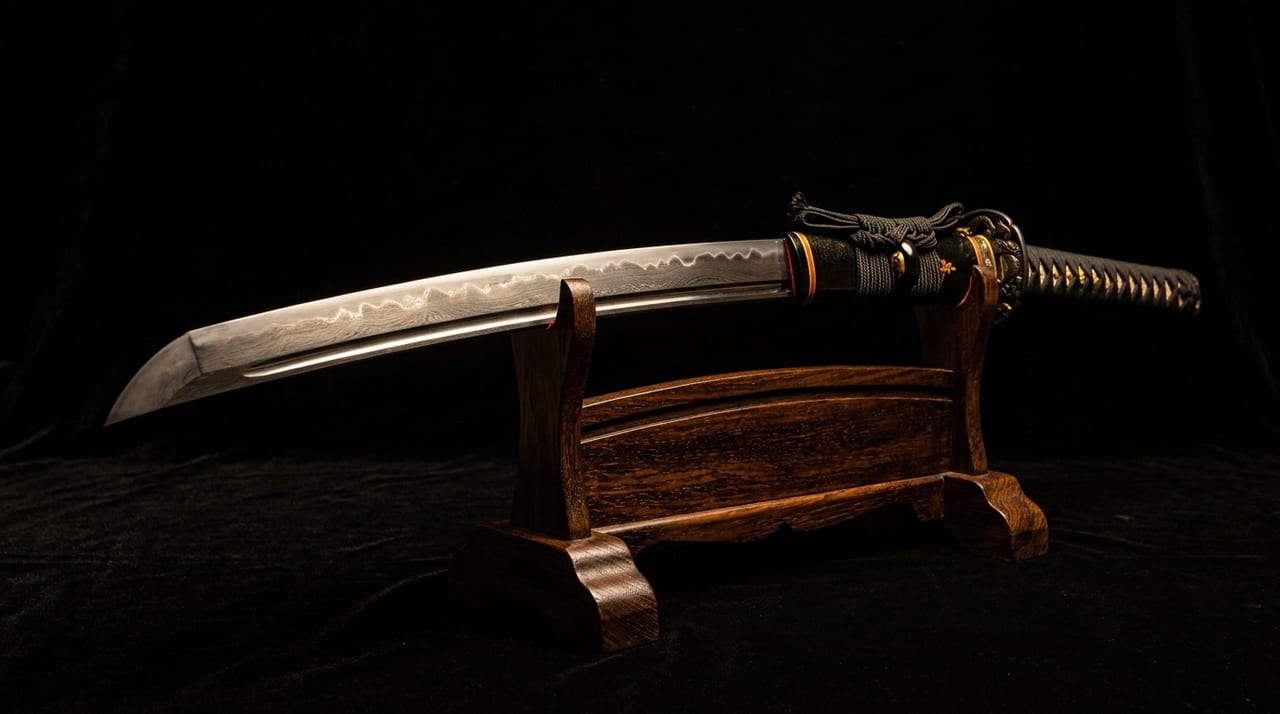
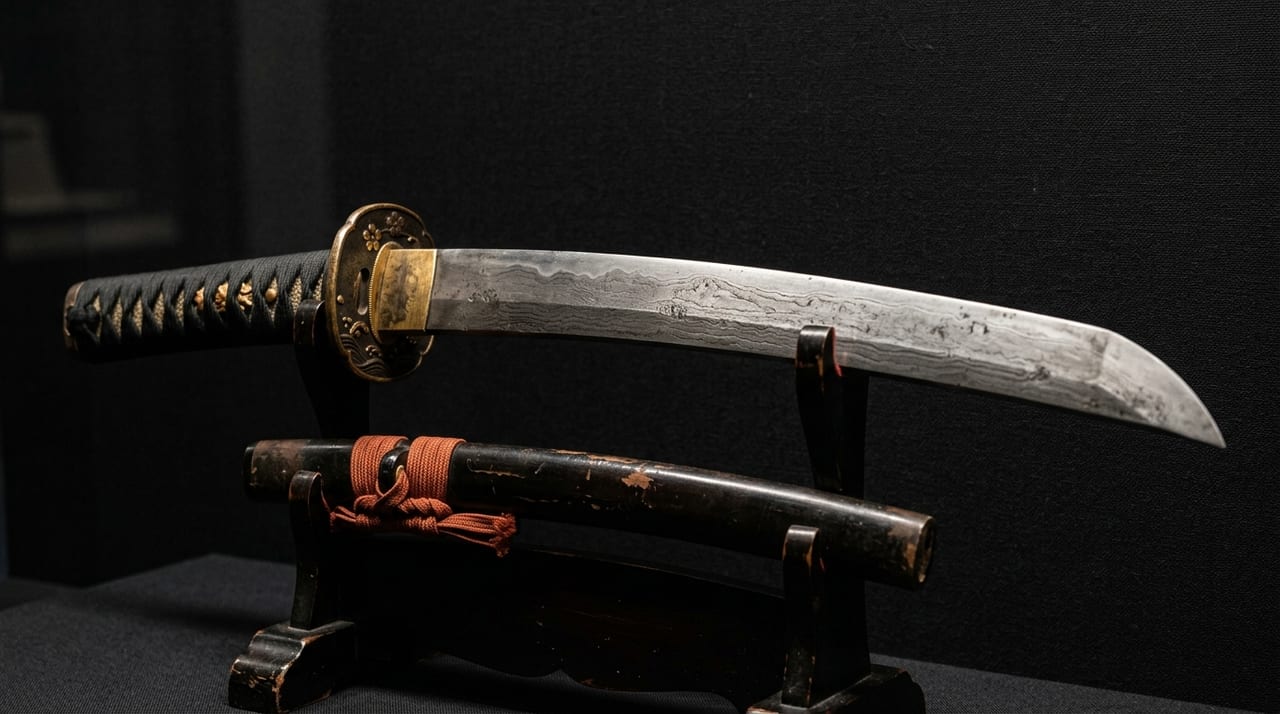
His style is characterized by a hamon rich in nie and powerful jigane, and he is known for work featuring a gunome midare hamon interspersed with ara-nie. The appeal lies in the densely packed jigane characteristic of shintō combined with the rugged power befitting a Tōhoku swordsmith.
The esteem for his cutting ability can also be glimpsed from accounts that he was counted among the highest rank of "saijō ōwazamono" in a document from the late Edo period that graded the cutting performance of swords — a rank held by only a very small number of tōkō, demonstrating that the epithet "Aizu Kotetsu" was no mere honorific. However, such period rankings are Edo-era assessments and do not guarantee the quality of any individual blade. When appreciating or purchasing a sword, the condition and soundness of each individual piece remains the fundamental standard.
Continuation of the School
The school of Miyoshi Nagamichi continued through successive generations in Aizu, sustaining the tradition of Aizu swords. The name title "Nagamichi" was passed down, leaving its mark in the history of shintō as a lineage symbolizing the sword culture of the Aizu domain.
Miyoshi Nagamichi and his school are indispensable figures when considering the shintō of the Tōhoku region, and stand as a fine example of the vitality of shintō production in the provinces.
Points for Appreciation
When appreciating work by Miyoshi Nagamichi, it is worth focusing on the nie-rich hamon and the powerful jigane. Nie refers to those martensite crystals that appear along the boundary of the hamon in a granular form large enough for the individual particles to be distinguished by the naked eye. By contrast, those that appear as a fine, misty continuum like haze are called nioi. A blade rich in nie carries a distinctive force, with the particles sparkling when held up to the light.
Gunome is a hamon in which rounded peaks repeat in succession; the sight of fierce nie interweaving through it is a powerful landscape unique to shintō of the Tōhoku region. Bearing in mind the origins of the epithet "Aizu Kotetsu," and savoring together the power of a practical sword and the brilliance of shintō jigane, allows this tōkō's individuality to be felt more deeply.
Reading the Mei and Understanding "Generations"
For a tōkō like Nagamichi, whose name title was passed down through generations, the manner of cutting and the style of writing the mei are said to differ from generation to generation, and specialists use these as clues for attribution by generation. Even so, distinguishing the mei is no simple matter, and it has long been known that swords by highly regarded tōkō can carry false mei. For this very reason, it is important not to rely on the mei alone, but to take a comprehensive view of whether the style — the composition of the hamon, the manner of nie, the forging of the jigane — is consistent with the mei. A reliable kanteisho holds its value precisely as the result of this comprehensive judgment carried out by a specialist institution. When examining a sword online as well, whether one can confirm the condition of the mei from images of the nakago is a significant factor in one's assessment.
Checklist When Considering Acquisition
Because Miyoshi Nagamichi is a name title that continued through multiple generations, the following points are worth confirming when considering acquisition.
- Confirming the generation: First confirm which generation's work it is attributed to. The first generation is generally considered to be the most highly regarded, but each generation has its own points of interest.
- Kanteisho: Verify the presence and content of a reliable kanteisho. For a signed piece, whether the kanteisho affirms that mei is an important basis for judgment.
- Soundness of the blade: Whether there are any critical flaws such as edge cracks.
- Condition of the togi: One of the factors that influences assessment and price.
- Accompanying items: Whether a shirasaya or koshirae is included.
- Points to confirm when purchasing online: Multiple images allowing confirmation of the hamon and jigane, and clear notation of dimensions and registration certificate information.
Those with an interest in Miyoshi Nagamichi and the sword culture of Aizu are welcome to browse and purchase listed works online. For any questions, please submit an inquiry via the contact form.