Ko-Tachi and Short Tachi: How Sword Length Reflected Japan's Changing Warfare
 * Image is for illustrative purposes only.
Table of Contents
The Usage of the Terms "Kotachi" and "Shotachi"
In the study of Japanese swords, "kotachi" (ancient tachi) and "shotachi" (small tachi) are sometimes used with different meanings depending on the context. To avoid confusion, this article uses the following definitions.
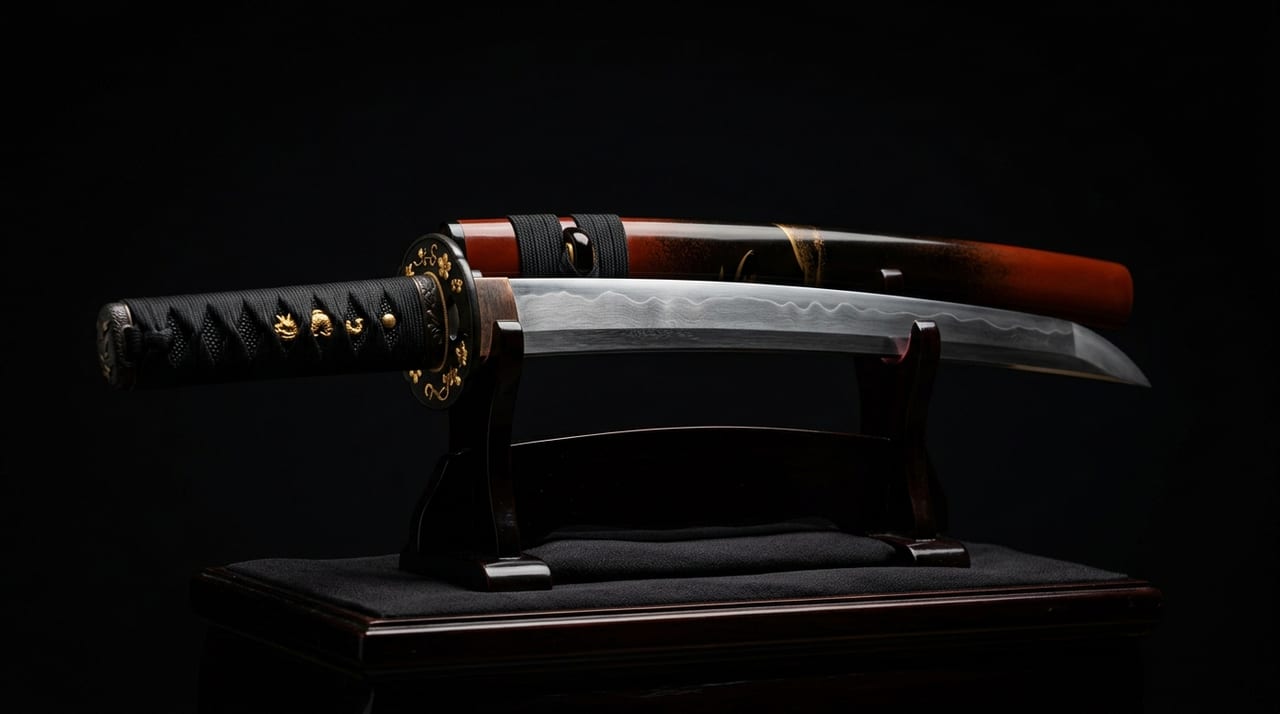
Kotachi: A term referring to ancient tachi from the Heian to early Kamakura period (early koto period). Most are about 60-70 cm in blade length and, compared to tachi from later periods, have a generally slender and smaller appearance overall.
Shotachi: Refers to shorter tachi-form swords with blade lengths around two shaku (approximately 60.6 cm), roughly ranging from 1 shaku 7 sun to 2 shaku. While maintaining the tachi style—meaning worn at the waist with the blade edge facing downward—these are shorter than typical tachi.
These two terms are often used in a different context from modern classifications such as "uchidashi," "wakizashi," and "tanto," and become essential concepts especially when discussing swords from the Heian and Kamakura periods. Additionally, since the term "shotachi" is also used as the name of martial arts schools (shotachi-jutsu), it is necessary to understand it while distinguishing it from its meaning as a sword classification.
The Length of Tachi in the Heian Period—The Birth of Curvature and the Modest Early Form
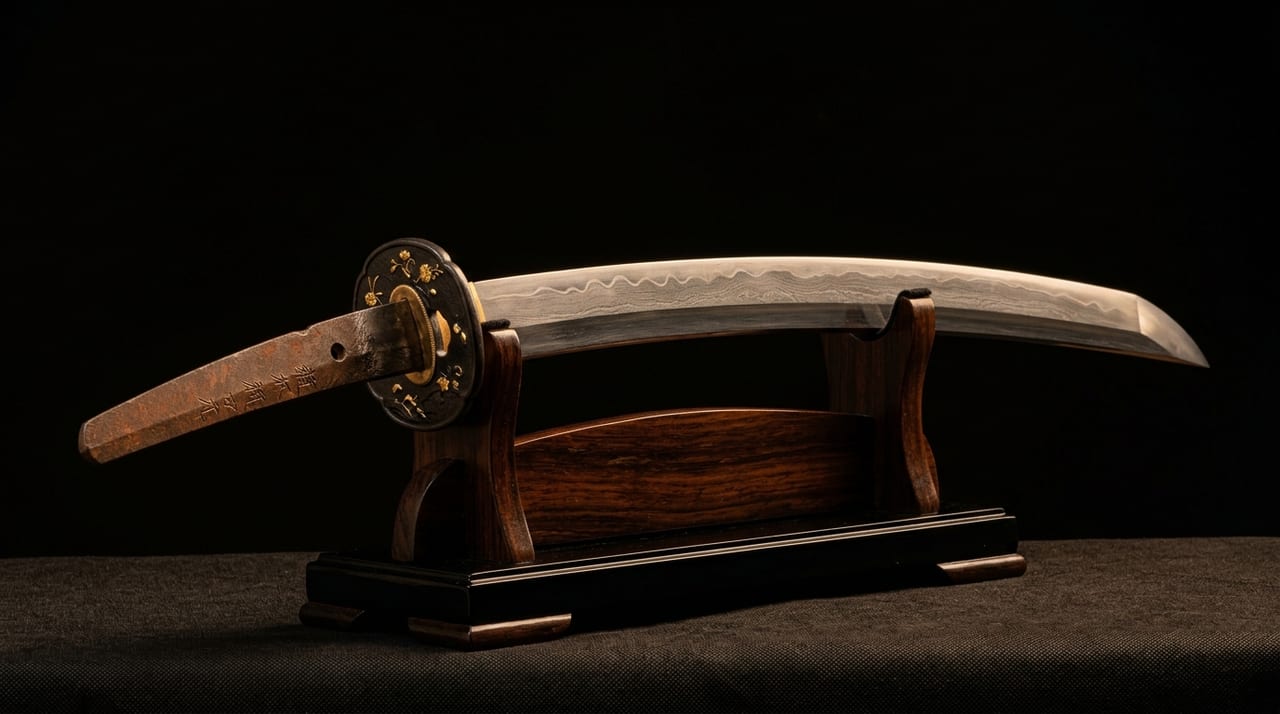
In the middle Heian period (9th-10th centuries), when tachi began to change from straight swords to curved forms, the earliest wan-to (curved swords) were far shorter than modern people might imagine. Looking at extant Heian-period tachi, blade lengths of around 50-70 cm were standard, and compared to Kamakura-period tachi (70-80+ cm), they are considerably more modest in size.
This shortness had multiple practical reasons. First, warriors of the mid-to-late Heian period engaged primarily in mounted combat, and a shorter overall length allowed for better handling when drawing and wielding the sword from its scabbard while on horseback. Second, battles in the Heian period centered on single combat or small-scale clashes rather than large-scale group warfare, prioritizing individual mobility. Furthermore, iron-working and forging techniques were still in development, making it technically difficult to maintain sufficient length while preserving high strength.
The shape of the curvature also varies by period, and Heian-period kotachi frequently exhibit "koshi-zori" (waist curvature)—a form where the apex of the curve is located near the base of the blade. This design was adapted to the action of drawing the sword while mounted on horseback and, along with length, becomes an important indicator for determining the period.
Tachi of the Kamakura Period—Establishing Form in the Golden Age
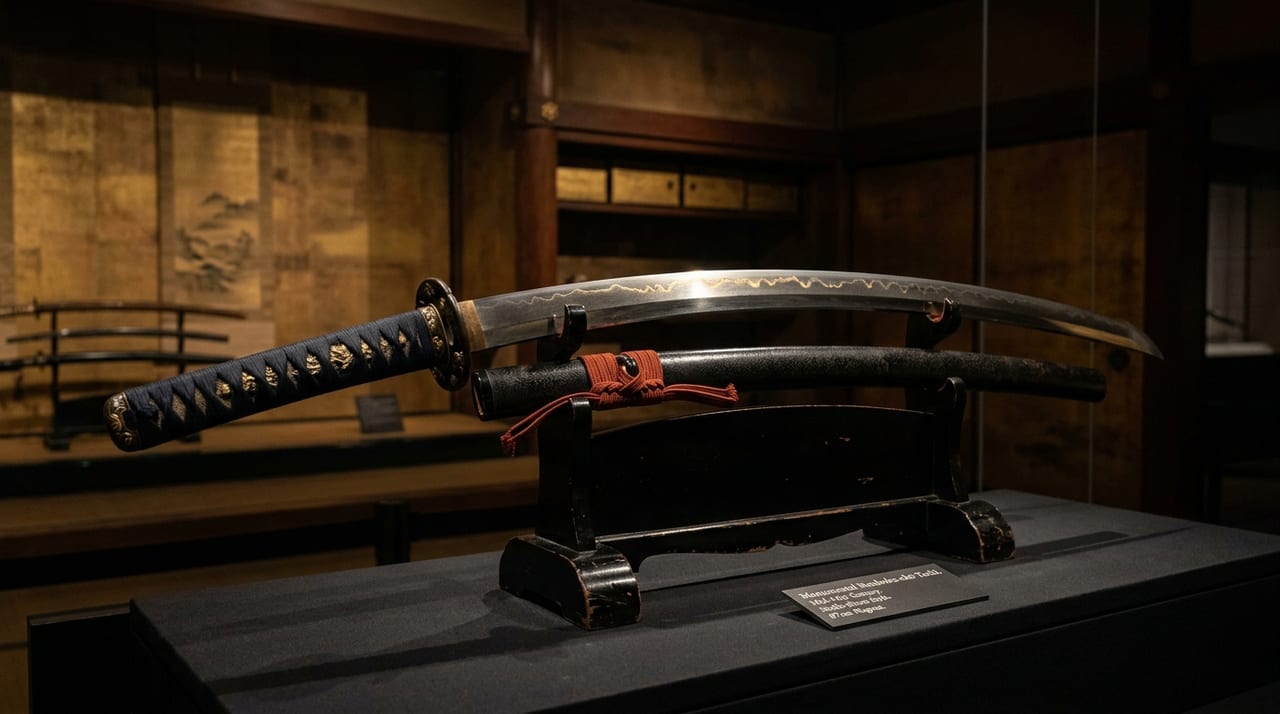
The Kamakura period (1185-1333) is called the "golden age" of Japanese swords. It was a time when the Five Great Schools—Bizen, Yamashiro, Yamato, Soshu, and Mino—competed with one another, and the form of tachi became highly standardized and refined. The typical appearance of tachi established during this period is characterized by blade lengths of approximately 70-80 cm, deep waist curvature, and an elegant form that gently tapers from the base width to the point width.
Shotachi were produced in certain quantities even during the Kamakura period. It can be confirmed from both records and physical evidence that shorter shotachi were made for women's self-defense, the formal dress of nobility, and as offerings to shrines. Shotachi dedicated to shrines in particular are also called "shinto" (shrine swords) and are sometimes distinguished as possessing ritual and spiritual value rather than practical utility. Among the shrine swords transmitted to major shrines such as Tsurugaoka Hachimangu and Kasuga Taisha, Kamakura-period shotachi are included, serving as valuable artifacts demonstrating the fusion of religion and martial culture in samurai society.
The Enlargement of the Nanboku-chō Period—and the Paradoxical Spread of Shotachi
The Nanboku-chō period (1336-1392) is known as an era when swords underwent dramatic enlargement. Many "odachi" (great tachi) exceeding 90 cm in blade length and "notachi" (field tachi)—even designed to be dragged along the ground—were forged. This was due to an increase in large-scale infantry warfare during prolonged civil unrest, where reach and destructive power became paramount.
However, paradoxically, shotachi were also reevaluated during this period of enlargement. Odachi were expensive to manufacture and could not be possessed by all samurai or armed peasants. Therefore, it is believed that the relatively more accessible smaller tachi form—the so-called shotachi—became widely used among lower- and middle-ranking samurai, local samurai, and armed peasants for practical self-defense and combat purposes. Additionally, in close-quarters combat in rugged mountainous terrain or within castle interiors, shotachi with their superior maneuverability proved advantageous in many situations compared to longer tachi.
It is said that against this social backdrop, shotachi-jutsu (shotachi technique) began to be systematized as martial arts from the Nanboku-chō through the Muromachi period, forming the foundation for its later transmission as "shotachi techniques" within sword-style schools.
Reading the Length of Tachi—as a Key to Historical Context
Measuring the blade length of extant tachi and kotachi provides important clues for estimating the period, purpose, and production location of a sword.
- Blade length under 60 cm: Shotachi (likely for ritual, offering, or self-defense purposes)
- Blade length approximately 60-70 cm: Kotachi from the late Heian to early Kamakura period, or for offerings and formal wear
- Blade length approximately 70-80 cm: Mainstream form of the Kamakura period
- Blade length 85-90 cm or more: Shows the enlargement trend from the Nanboku-chō to early Muromachi period
- Blade length exceeding 90 cm: The realm of odachi and notachi
However, these are merely guidelines, and there are also matters of shortening due to suriage (refinishing) and issues of signed versus unsigned blades. Accurate identification of period, production location, and purpose requires authentication by the Japan Fine Sword Preservation Society (NBTHK) and analysis by specialist researchers.
The Forms of Kotachi and Shotachi as Seen in Extant Masterpieces
The sword invariably cited as the representative example of kotachi is "Mikazuki Munechika," one of the Five Swords Under Heaven. Attributed to the sword-maker Munechika of the Sanjo school of Yamashiro, it is a graceful tachi with a blade length of approximately 80 cm. It is named after the numerous workings called "uchinoke" (punch marks) in the form of a crescent moon that appear on the blade surface. Housed in the Tokyo National Museum and designated as a National Treasure, it is highly regarded as the pinnacle of tachi beauty from the late Heian period.
Likewise, "Doji-kiri Yasutsuna," another of the Five Swords Under Heaven, is a masterpiece of kotachi with a blade length of approximately 80 cm, attributed to the sword-maker Yasutsuna of Hoki Province. It carries the legendary tale of Minamoto no Raikou slaying the sake-drinking demon of Mount Ooe and is housed in the Tokyo National Museum (National Treasure).
As a famous masterpiece of shotachi, "Oni-kiri Maru" transmitted to Kitano Tenmangu in Kyoto is well known. It is known from the legend that Watanabe no Tsuna, a retainer of Minamoto no Raikou, severed a demon's arm at the Ichijo Modori Bridge. Although the actual blade length has been shortened through suriage in later periods, it is traditionally considered to have originally been a sword of kotachi to shotachi specifications, making it an indispensable presence in the history of Japanese swords from both legendary and evidential perspectives.
Summary—Length Speaks to the Era
The blade length of tachi is not merely a measurement but rather compressed information reflecting the combat style, social structure, aesthetic sense, and beliefs of the era in which the sword was born. The shortness of kotachi speaks to the Heian warrior's emphasis on mobility, the proportionality of Kamakura tachi reflects the maturation of samurai culture, the enlargement of the Nanboku-chō period demonstrates practical realism in chaotic times, and the continued existence of shotachi tells of the diverse roles of swords in Japanese society—as weapons, ritual implements, and sacred objects.
By interpreting the changes across periods around the concepts of kotachi and shotachi, it should become increasingly clear how the craft of the Japanese sword evolved in response to the times and society.