Momoyama-Period Tsuba: The Umetada School and the Dawn of Lavish Sword Fitting Decoration
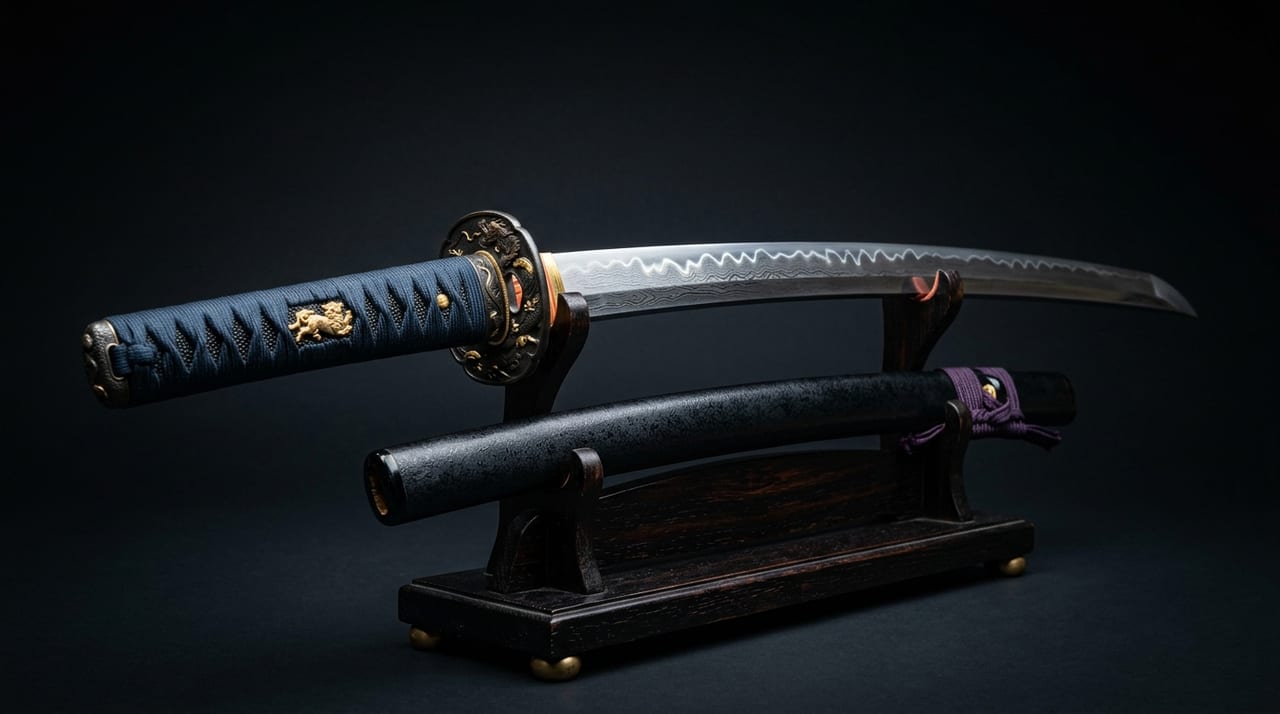 * Image is for illustrative purposes only.
Table of Contents
The Aesthetic of Unifiers—The Lavish Culture of the Azuchi-Momoyama Period
The Azuchi-Momoyama period (circa 1568–1615) was a tumultuous age in which three unifiers of the realm—Oda Nobunaga, Toyotomi Hideyoshi, and Tokugawa Ieyasu—vied for supremacy. The cultural hallmark of this era was "grandeur, lavishness, and the assertion of self-expression." Throughout Azuchi Castle and Osaka Castle, gold leaf was applied in profusion; on magnificent folding screens depicting scenes of Kyoto and in the ornate campaign robes and intricately patterned kosode garments—the daimyo and generals spared no expense in adorning all manner of art and craftsmanship as symbols of power and wealth.
This aesthetic rapidly swept into the world of sword fittings. During the Muromachi period, tsuba were typically sturdy iron plates of considerable thickness, adorned with simple openwork designs with practical combat in mind. However, as warfare subsided and the sword transformed in meaning from "weapon" to "symbol of samurai status," aesthetic demands on sword fittings rose sharply. Decorative tsuba wrought from precious metals and alloys—gold, silver, shakudo, and shibuichi—came to the fore, and the tsuba began to establish itself as an independent art and craft object. At the forefront of this transformation stood the Umetada family, based in Kyoto.
The Establishment of the Umetada School—The Two Disciplines of Sword-Smith and Metal-Worker
The Umetada family was an artisan clan that mastered both the technical foundation of sword-smithing and the metalworking of sword fittings—practitioners, as it were, of the "two disciplines" of sword-smith and metal-worker. The founding Umetada Jukei (active in the latter half of the 16th century) established the family tradition as metal-workers, and his successor who brought the craft to full maturity was the second-generation Umetada Myōju (1558–1631).
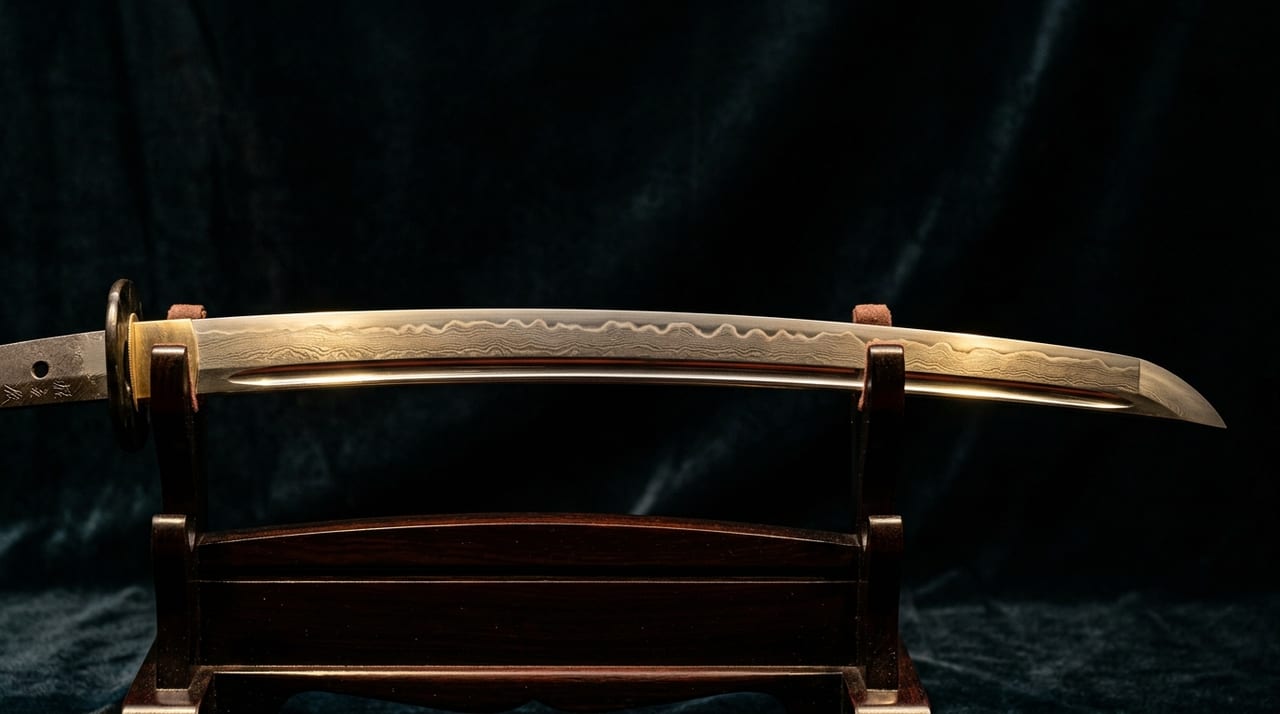
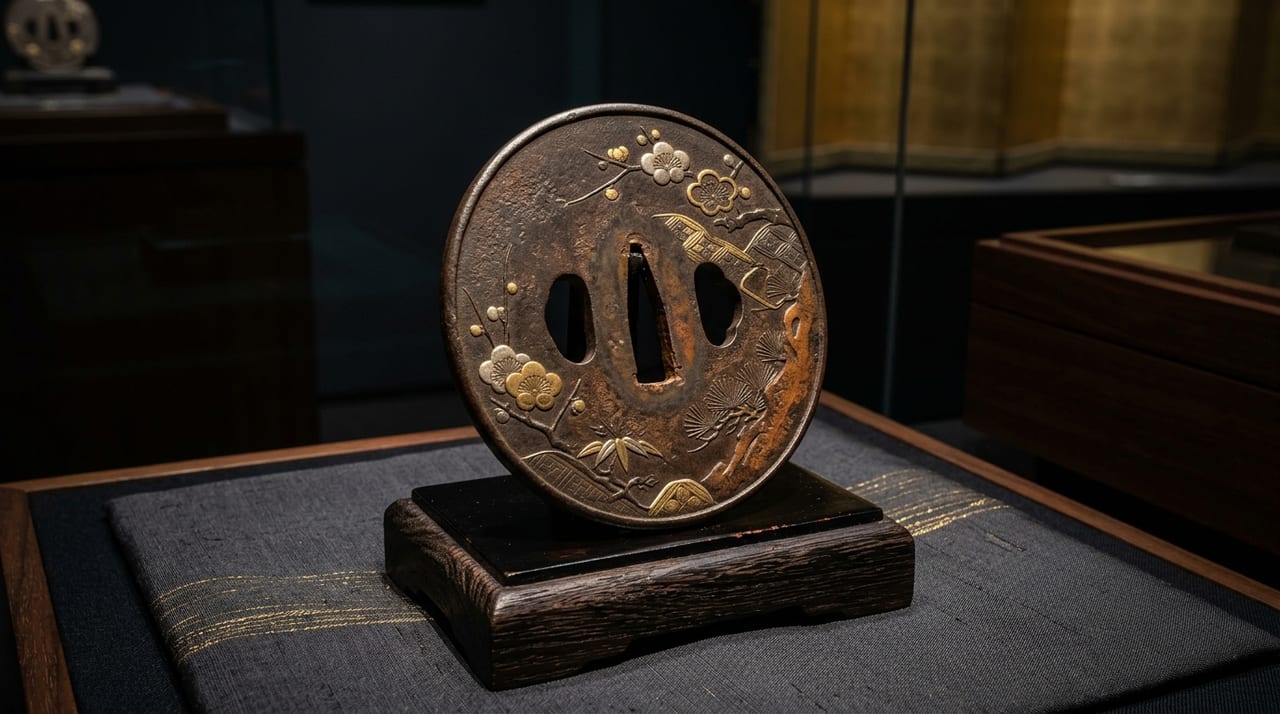
Myōju was also outstanding as a sword-smith, and his blades, which incorporate the hamon pattern known as gunome-midare, are highly valued as fine swords even today. As a metal-worker, Myōju's tsuba are characterized by pictorial expression through iro-e hirazogan—carefully composed arrangements of colored metals including shakudo, brass, and shibuichi. His works embody the highest technical standards of the Momoyama period. In later appraisals, tsuba bearing the signature "made by Umetada Myōju" are frequently ranked in the top tier, and several of his works are designated as Important Art Objects or Important Cultural Properties.
The technical innovations of the Umetada school can be summarized in three principal points.
- Diversification of Materials and Creation of Color: Beyond iron alone as the base metal, they actively employed shakudo, shibuichi, silver, and gold. Shakudo is an alloy formed by adding approximately 3–5% gold to copper; through boiling acid treatment (using plum vinegar and copper sulfate solution), it achieves a deep, lustrous black. Shibuichi is an alloy with copper and silver in roughly a 3-to-1 ratio, its distinctive ash-gray tone creating a cool, refined beauty. By adding gold and silver inlays to these two colors, they created a rich chromatic world within a single tsuba.
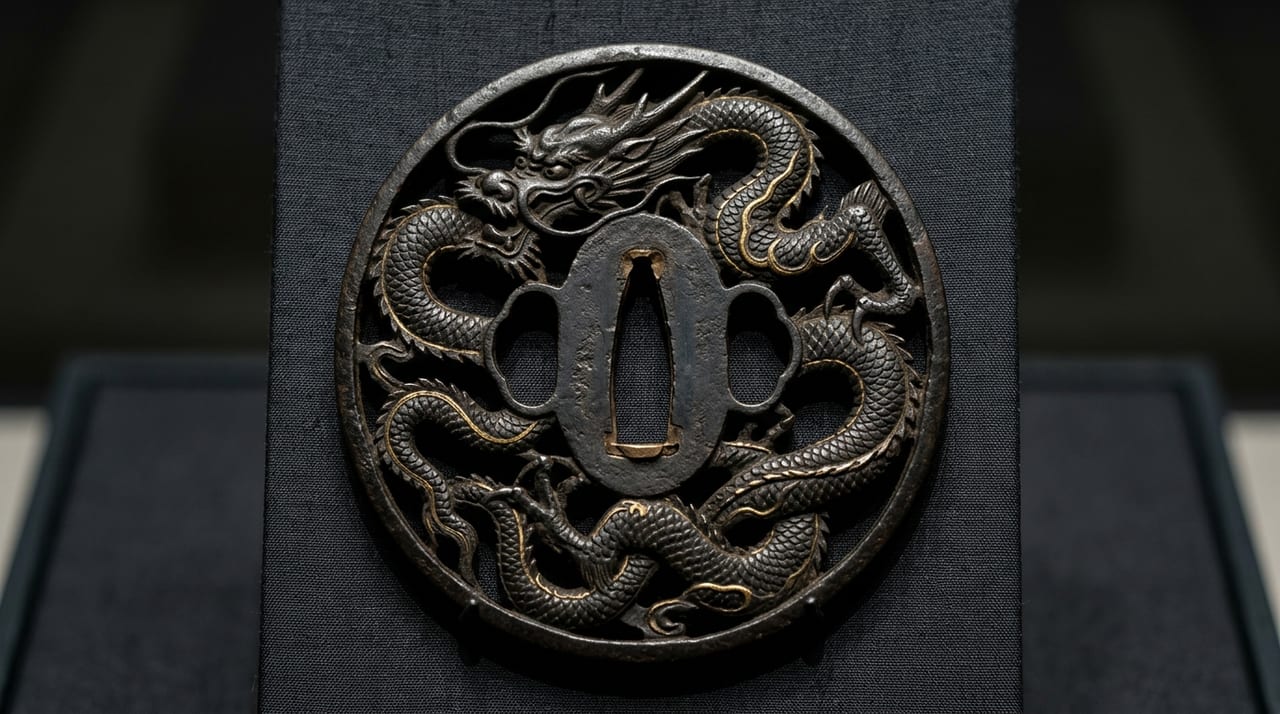
- Establishment of High Relief: They refined the technique of takaniku-bori, in which the base metal is carved to leave the design projecting in high relief. Motifs such as figures, dragons, phoenixes, and flowering plants emerge three-dimensionally from the surface of the tsuba, a sculptural sensibility fundamentally different from the flat openwork carving of earlier periods.
- Advancement of Multi-Color Inlay: They elaborated the zogan technique, in which fine lines or small pieces of contrasting metals are driven into cuts in the base metal and secured. Through delicate gold and silver line-work depicting drapery and flowing water, or through gold surface inlays representing full moons and rocky surfaces, they brought pictorial refinement to the art of tsuba-making.
Namban Tsuba—The Rise of Exotic Taste
Another distinctive phenomenon of the Azuchi-Momoyama period was the emergence of namban tsuba. In the latter half of the 16th century, through trade with Portugal and Spain, Western weapons and craftsmanship flowed into port towns such as Nagasaki, Sakai, and Hirado, their designs and materials exerting influence on the world of sword fittings.
Namban tsuba encompass several lineages.
- A group termed "Western tsuba" (yo-mono tsuba), made from imported iron in which the characteristic wood-grain and mesh-like surface texture of Western iron can be observed.
- The lineage of "Christian tsuba" (Kirishitan tsuba), incorporating crosses, galleons, armored knights, and Christian motifs into their designs.
- There also exist "Western-style design tsuba" that assimilate arabesques and acanthus patterns introduced through namban trade into Japanese aesthetics, exemplifying cultural syncretism.
These are material evidence that the daimyo and generals of the time actively appreciated exotic taste, consistent with historical records of Nobunaga's fondness for Western artifacts. The existence of namban tsuba testifies that Momoyama metalworking was not merely a continuation of traditional technique, but rather a creative endeavor open to exchange with foreign cultures.
The Social and Economic Context Supporting Momoyama Metalworking
The rise of the Umetada school was driven not solely by technical innovation but also by significant economic and social conditions. In the realm unified by Toyotomi Hideyoshi, daimyo and generals competed to collect and commission fine swords and sword fittings. Vast revenues from the Taiko's domain properties concentrated in Osaka and Kyoto, flowing back as abundant commissions to master craftsmen.
Additionally, the separation of military and agricultural classes advanced by Hideyoshi's sword-hunt policy of 1588, paradoxically, further promoted the transformation of sword fittings into art objects. Under the social order in which only samurai were permitted to wear swords, the blade became formalized as a mark of status, and demand for decorative refinement increased. The fact that Umetada Myōju served as a commissioned metalworker for both Hideyoshi and Tokugawa Ieyasu demonstrates that sword-fitting craftsmen of the era occupied a status akin to that of court artisans.
Tsuba Culture in the Early Toyotomi and Tokugawa Periods and Its Transmission to Later Generations
The 1590s under Toyotomi rule was an age in which daimyo and generals competed to lavish enormous sums on refined sword fittings. Metalworkers from throughout the realm gathered in the castle town of Osaka, vying to display their mastery of technique. The vocabulary of takaniku-bori and multi-color zogan established during the Momoyama period was inherited by metalworking schools in Kyoto, Edo, Nagoya, and elsewhere in the early Edo period, becoming the foundation for later celebrated lineages such as the Ishiguro and Shoami schools.
After the establishment of Tokugawa rule in 1603, as the peaceful era continued and deepened, the artistic character of sword fittings grew ever stronger. Yet the foundational techniques and aesthetic standards were unquestionably established by the Umetada school of the Momoyama period. The fact that the grandchildren and great-grandchildren of Myōju were active in the early Edo period confirms that the Umetada family's technical legacy was transmitted across multiple generations.
Conclusion—A Decisive Turning Point in the Aestheticization of Weaponry
The Azuchi-Momoyama period was a decisive turning point at which Japanese sword fittings transformed from "accessories to weapons" into "independent art and craft objects." Amid the convergence of economic prosperity brought by political unification, cultural stimulus through namban trade, and the intense desire for self-expression of the realm's unifiers, Momoyama metalworkers, beginning with Umetada Myōju, achieved innovation across three dimensions: materials, technique, and design.
The chromatic world of shakudo and shibuichi they opened up, the three-dimensional sculptural forms of takaniku-bori, and the pictorial refinement of multi-color zogan became the foundation of sword-fitting culture through three centuries of the Edo period, and their standards of evaluation remain deeply rooted in contemporary appreciation and scholarship. The aesthetic sensibility of the Momoyama period enshrined in each tsuba continues to speak quietly to the present day, testifying to what the samurai of an age marking the end of warfare found beautiful and what they valued.