Mokkō-gata Tsuba (Quatrefoil Hand Guard) — The History and Aesthetics of a Representative Shape in Japanese Tōsōgu
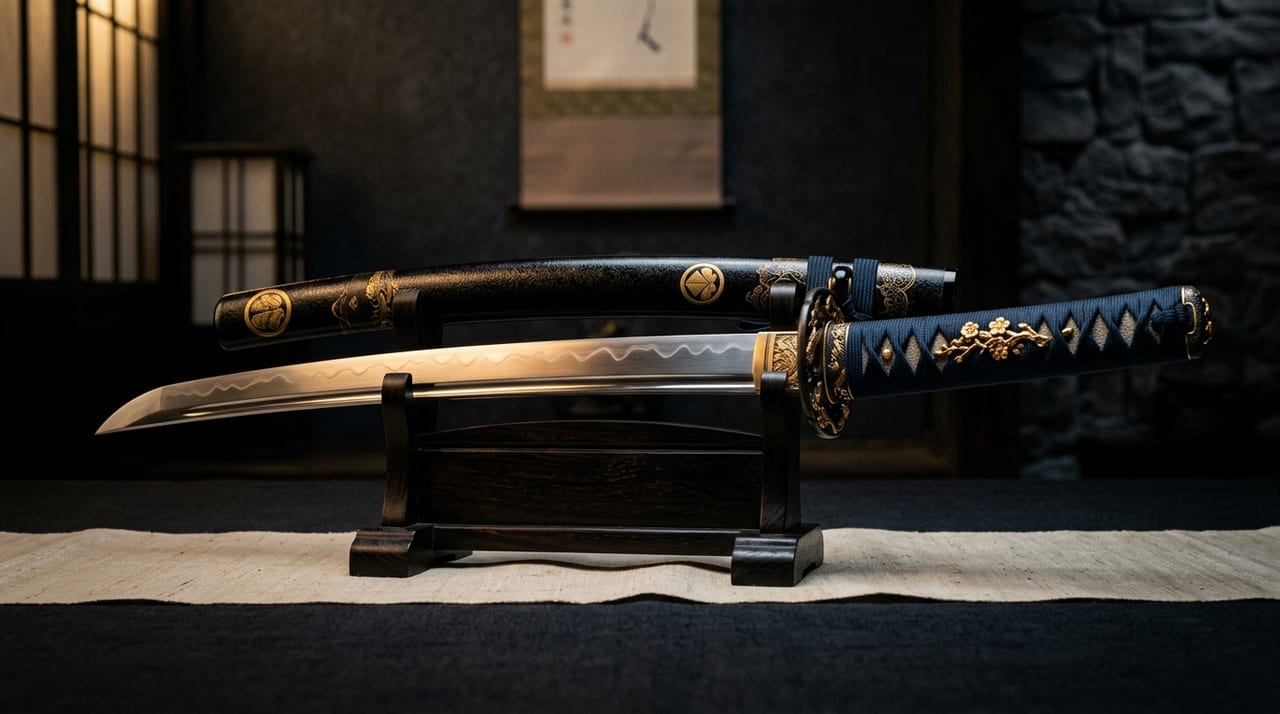 * Image is for illustrative purposes only.
Table of Contents
What Is Mokkō-gata — The Beauty Created by the Rhythm of Four Lobes
"Mokkō-gata" refers to a shape in which an oval has indentations at its four corners, making the whole appear as four petals. In English it is described as "quatrefoil" or "four-lobed."
As for the name "mokkō" (also read as "kiuri"), there are two competing theories: one holds that it resembles the cross-section of a uri (gourd), and another that it derives from the flower shape of the mokkō rose (Rosa banksiae). In any case, it had already established itself as a representative decorative motif in the aristocratic culture of the Heian period, where it was widely used on furniture, furnishings, clothing, and architectural ornamentation. As the warrior class rose to prominence, this aesthetic sensibility spread into the world of tōsōgu (sword fittings), and from the Muromachi period onward the mokkō-gata secured a firm position as a fundamental tsuba shape. Its true value lies in the fact that it has remained one of the most beloved shapes for over 600 years.
If the circular tsuba embodies "a complete universe," the mokkō-gata tsuba can be said to represent "a breathing organism." The lobes swelling in four directions, and the indentations between them, bring a dynamic rhythm to an otherwise static metal form.
The Basic Structure of Mokkō-gata — Individuality Created by Depth of Indentation and Proportions
Two elements that greatly influence the impression of a mokkō-gata are "depth of indentation" and "aspect ratio." The combination of these two produces a surprisingly wide variety of expressions even within the same "mokkō-gata" form.
- Shallow-indented mokkō (hira-mokkō): A gentle shape close to a plain oval. Also called "hira-mokkō," it evokes the refined, composed atmosphere of courtly taste. It was frequently adopted for the koshirae (mounting) of daimyo houses that prized elegance.
- Deep-indented mokkō: The indentations are sharply incised, making the four lobes appear as independent petals. Close in form to "shihō-mokkō," it combines dynamism with ruggedness. It was often used for combat-ready koshirae (mounting) of the Sengoku period.
- Vertically elongated mokkō: A mokkō-gata extended in the vertical direction. Because tsuba for uchigatana are constrained in horizontal width when worn at the hip, a vertically elongated proportion was necessarily common.
- Horizontally elongated mokkō: A mokkō-gata that is wider in the horizontal direction. Found on the large tachi tsuba, it imparts a grand and imposing character.
The combination with the thickness of the tsuba and the shape of the mimi (rim) must not be overlooked. A maru-mimi (rounded rim) finish gives a soft impression, while a kiri-mimi (cut rim) finish brings a sharp, taut impression. Even with the same depth of indentation, the treatment of the mimi can completely transform the overall atmosphere — an important point for appreciation.
Historical Transitions — How the Ages Transformed the Mokkō-gata
In the early Muromachi period, mokkō-gata tsuba were predominantly simple pieces with sukashi (openwork) on plain iron. After the Ōnin War (1467), as sword demand rose nationwide, tsuba makers competed in ornamentation while preserving functionality, and techniques combining pictorial sukashi patterns with the mokkō-gata developed rapidly.
In the Azuchi-Momoyama period, "nanban tsuba" appeared, influenced by Western metalworking techniques through the nanban trade. Mokkō-gata tsuba of this period often featured arabesque or geometric patterns in kiri-sukashi (cut openwork), displaying a distinctive beauty in which traditional Japanese-style motifs and exotic tastes intermixed.
Entering the Edo period, against the backdrop of an era of peace, the sword transformed from a weapon into a symbolic personal ornament embodying "the soul of the warrior," and the decorative quality of mokkō-gata tsuba rose sharply. Schools such as the Shōami school, the Gotō family, the Higo metalworkers, and the Nara metalworkers each added their own interpretations to the mokkō-gata, achieving remarkable advances in materials, techniques, and design.
After the Meiji Restoration, the Sword Abolishment Edict (Haitōrei) of 1876 caused demand for tōsōgu to plummet sharply, yet their appreciation as works of art and antiques rose in inverse proportion. Even today, the mokkō-gata remains a basic shape that contemporary tōsōgu craftsmen prefer to choose, and it continues to serve as an expressive arena where tradition and innovation intersect.
Mokkō-gata Tsuba by School — The Diversity of Individuality Expressed through a Single Shape
While each school shared the mokkō-gata as a common foundation, each produced entirely different expressions through its own philosophy and technical system.
- Shōami school mokkō tsuba: The mokkō tsuba of the Shōami school, which was active in Kyoto from the late Muromachi period through the early Edo period, are characterized by a standardized outline also called "Shōami-gata," combined with refined sukashi carving. A composition that makes use of the iron ground's texture while creating a dialogue between void and substance through kiri-sukashi represents the core of the Shōami school's aesthetics.
- Higo metalworkers' mokkō tsuba: The mokkō tsuba of the Higo metalworkers (four schools: the Hayashi, Hirata, Nishigaki, and Shimizu families), who served as retained craftsmen of Kumamoto domain, have restrained indentations and overall thickness, radiating a rugged presence. A philosophy that eliminates decoration as much as possible, regarding the subdued black luster of the iron ground itself as the highest beauty, is reflected even in the design of the shape. It can also be said that the character of Higo domain — which was governed by such forceful lords as Katō Kiyomasa and Hosokawa Tadaoki — nurtured this austere beauty.
- Gotō family mokkō tsuba: The mokkō-gata tsuba of the Gotō family, which continued the craft of sword-fitting metalwork as a hereditary trade from the late Muromachi period through the late Edo period, are typically characterized by refined designs featuring gold carving on a shakudō ground. Works finished in takabori (high relief) with family crests, birds and flowers, and classical motifs were favored for formal ceremonial koshirae (mounting) of warrior houses.
- Nara metalworkers' mokkō tsuba: The metalworkers of the Nara school, active in Nara from the mid to late Edo period, established a distinctive style combining realistic carving with the mokkō-gata tsuba. Among them, the works of Nara Toshinaga include exquisite mokkō-gata tsuba, in which delicate representations of animals and plants rendered in fine kebori (hair-line carving) harmonize beautifully with the mokkō outline.
Points of Appreciation for Mokkō-gata Tsuba — Elements to Observe and How to Read Them
When picking up and appreciating a mokkō-gata tsuba, observing in the following order makes it easier to approach the essence of the work.
- Grasp the overall silhouette. The position and depth of the indentations and the left-right and top-bottom symmetry determine its refinement. The slight asymmetry of handwork often produces a "vitality" that differs from mechanical uniformity.
- Check the finish of the outline (mimi and mine). Whether it is a rounded maru-mimi or a sharply cut kiri-mimi, and whether chamfering is present, allows one to read the period of production and the level of technique. Tsuba from before the early Edo period generally have more kiri-mimi, while from the mid period onward there is a tendency for maru-mimi and complex chamfering to increase.
- Observe the relationship between sukashi/carving and the shape. In a superior mokkō-gata tsuba, the sukashi motifs and the composition of the carving are designed with awareness of the mokkō outline, creating a sense of unity in which the shape and pattern enhance each other. Works in which shape and design do not mesh tend to create a mediocre overall impression, even if each individual element is excellent.
Conclusion — The Essence of a Shape Beloved Across 600 Years
The reason the mokkō-gata tsuba has continued to be loved for over 600 years from the Muromachi period to the present lies in the exquisite balance this shape possesses between "moderate individuality and universal beauty."
A circle is too perfect to assert individuality, while a square is too rigid. The mokkō-gata, positioned between the two, holds softness within regularity and harbors geometric order within organic curves. Neither a complete geometric form nor a purely natural form, it is precisely this ambiguous boundary that deeply resonates with the Japanese aesthetic sensibility — the sensibility that cherishes "ma" and finds "the one is the many."
When we stand before a single mokkō-gata tsuba, we are not merely looking at a shape in metal. In its four indentations we read the gaze of the nameless tsuba maker who created it, the spirit of the warrior who wore it at his hip, and the passion of the people who have preserved and passed down that form across hundreds of years.