Miyairi Yukihira: The Master Smith Who Transcended the Military Sword Era — A Nagano Craftsman's Unwavering Commitment to Tamahagane
 * Image is for illustrative purposes only.
Table of Contents
The Life of Miyairi Yukihira——A Master Swordsmith in Japan's Turbulent Showa Era
Miyairi Yukihira was born in Meiji 46 (1913) in Sakaki Village, Chiisagata District, Nagano Prefecture (present-day Sakaki Town). His father, Miyairi Daido, worked as a farmer while polishing swords as a side business, and young Yukihira grew up surrounded by the smell of iron and whetstones. His interest in swords naturally emerged as an extension of the family trade, and gradually it evolved into a lifelong mission.
In the early Showa period, after mastering the technique of sword-forging through self-study and apprenticeship with master swordmakers, Yukihira established his own workshop in Sakaki Town, Nagano Prefecture. At that time, the era was in the midst of militarism moving from the Sino-Japanese War to the Pacific War, and the world of Japanese swords was experiencing unprecedented demand. This was an era when, under pressure from the military demanding mass production of military swords, many swordmakers transitioned to mass-production systems using industrial steel materials. What choice Yukihira made in such an environment would define his subsequent evaluation.
The following is a timeline of major events in Yukihira's life mentioned in this text.
| Year | Event |
|---|---|
| Meiji 46 (1913) | Born in Sakaki Village, Chiisagata District, Nagano Prefecture |
| Showa 32 (1957) | Contributed technical expertise to experimental tatara operations in the Okuizumo region, Shimane Prefecture |
| Showa 38 (1963) | Designated as holder of important intangible cultural property (Living National Treasure) for the sword-forging technique of Japanese swords |
| Showa 52 (November 24, 1977) | Passed away at age 64 |
"Devotion to Tamahagane"——A Quiet Resistance Against the Military Sword Boom
The greatest reason Miyairi Yukihira is highly regarded by later generations is that even amid the military sword manufacturing boom of the Showa period, he steadfastly refused to use industrial steel materials and continued to insist on traditional tamahagane and tatara iron production.
At that time, obtaining tamahagane was extremely difficult. As Western steel manufacturing technology became widespread after the Meiji period, traditional tatara iron production rapidly declined, and stable supply of high-quality tamahagane had nearly ceased by the early Showa period. While holding orders from the Imperial Army, Yukihira refused any compromise in his selection of iron materials for sword-forging. He traveled throughout the country seeking old stocks of tamahagane and refined his technique of maximizing the use of his available materials. His belief that "a sword forged from industrial steel is not a Japanese sword" was not mere stubbornness, but rather an expression of his ethical commitment as a swordmaker to the cultural heritage of Japanese swords.
This stance may have created friction with the military. There was an incompatibility between the military's demand for mass production and Yukihira's production philosophy prioritizing quality. Nevertheless, Yukihira's approach of carefully forging each sword in his Sakaki workshop would become a spiritual pillar in the post-war revival of Japanese swords.
Sincerity in the Jihada——The Style and Characteristics of Miyairi Yukihira's Works
Miyairi Yukihira's swords are praised as "pure and powerful." His style valued the elegance naturally emanating from the quality of the iron itself, rather than elaborate ornamentation.
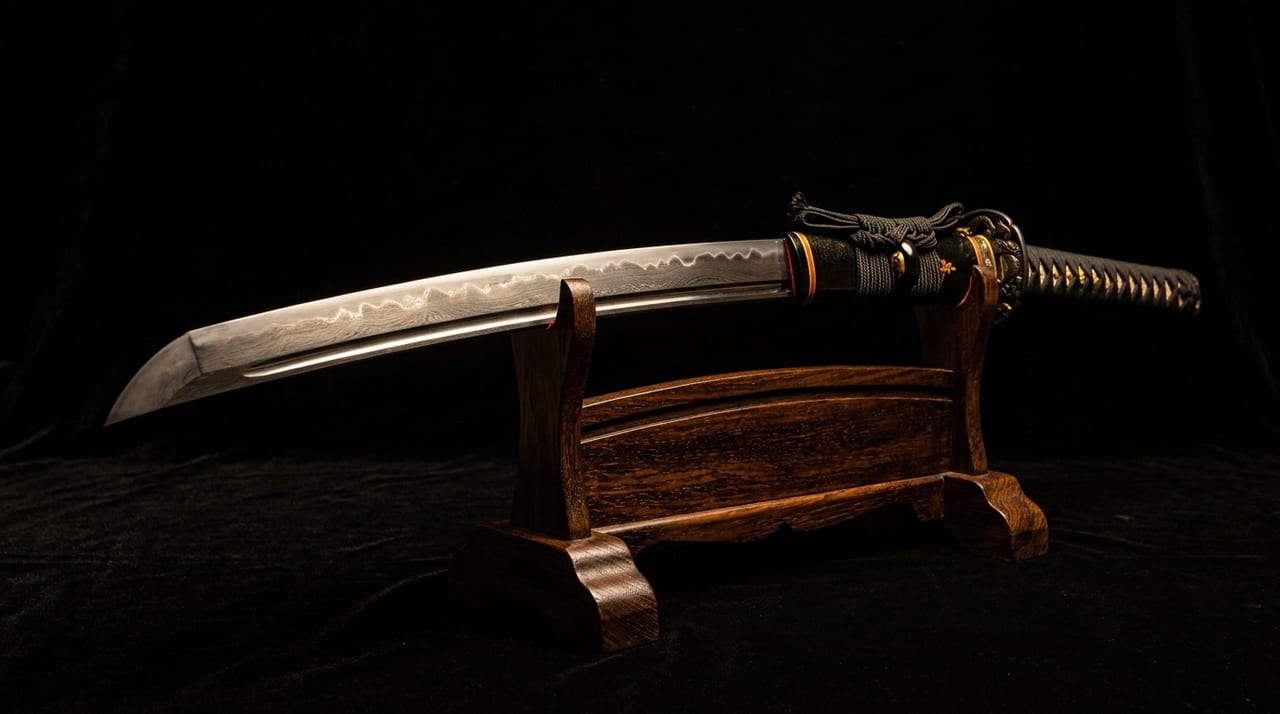
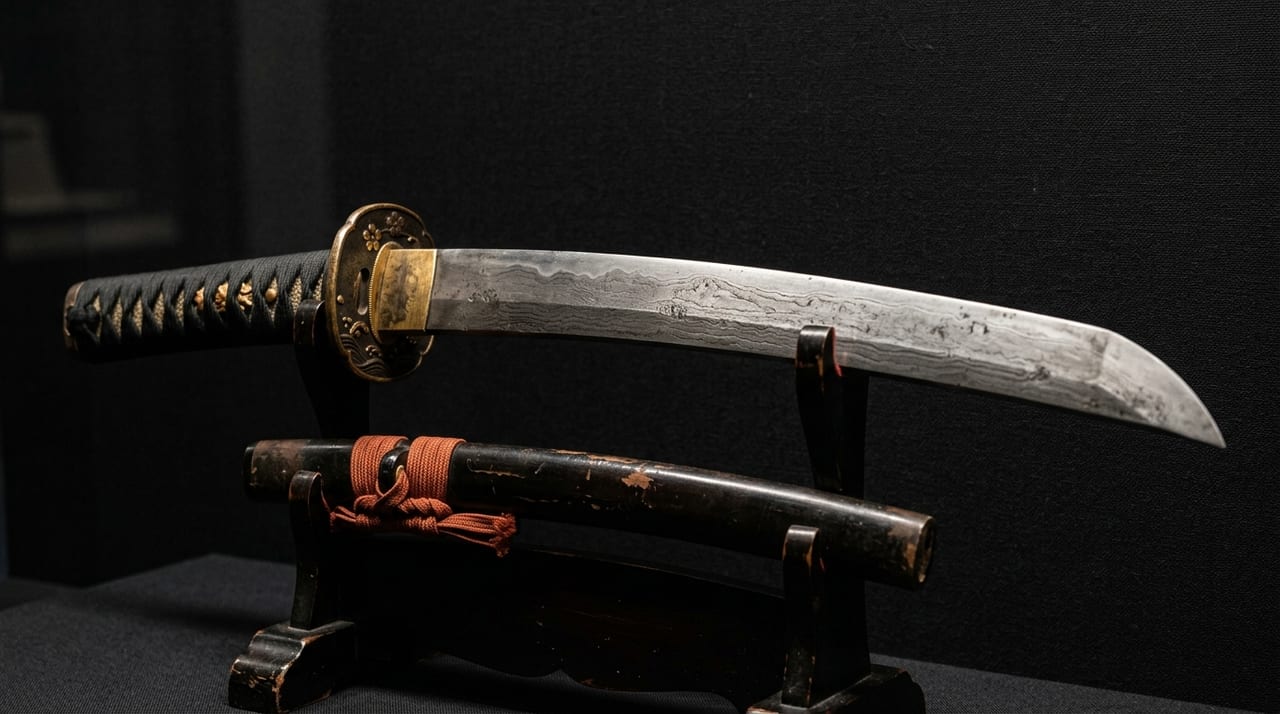
The jihada displays itame and mokume patterns flowing in neat order, with a gentle yet profound raised surface. This texture is born only through the folding and tempering technique of someone intimately familiar with the carbon distribution in tamahagane, and cannot be reproduced with industrial steel. The foundation of his style is based on the Soshu tradition, characterized by a bold and solid construction with well-rising nie and turbulent blade patterns. Within the varied blade pattern that intermixes small turbulent forms and crisscross patterns lies a definite sense of power. The kissaki is small yet well-defined, with no wasted form in the overall composition.
The post-war works created from the 1940s to 1950s, after the revival of tamahagane supply, show even greater refinement with the enrichment of materials. Authentic works by Yukihira are limited in number, and all confirmed works are highly regarded. In particular, the tanto and wakizashi preserved in the Nagano Prefectural History Museum and private collections have attracted scholarly attention as typical examples of the Yukihira style, where the texture of the jihada and the refinement of the blade pattern are unified.
The Revival of Tatara Iron Production——A Cultural Mission Beyond a Single Swordsmith
A significant achievement of Miyairi Yukihira that cannot be overlooked is his active participation in the tatara iron production revival movement.
After the post-war period, when the GHQ prohibition on sword manufacturing (1945-1953) was lifted, the Japanese sword world faced a materials problem. There were no tatara furnaces in Japan capable of producing high-quality tamahagane, and swordmakers were placed in a situation where even securing materials was extremely difficult. The Japan Art Sword Preservation Society (NBTHK), viewing this as a cultural crisis, established a tatara iron production revival project. Miyairi Yukihira played an important role as a technical advisor in this project.
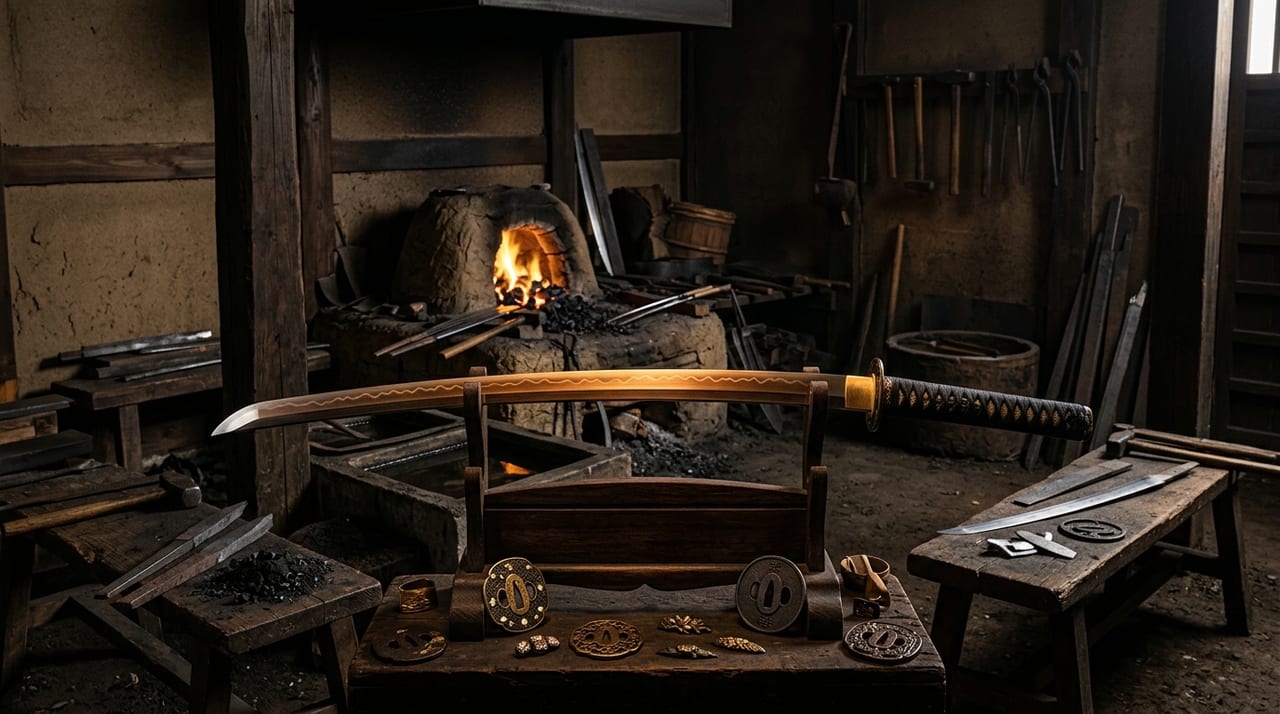
When experimental tatara operations resumed in the Okuizumo region of Shimane Prefecture in Showa 32 (1957), Yukihira's practical knowledge regarding tamahagane made an indispensable contribution. The opinion of someone who, from the perspective of a swordmaker, understood the "usable quality" of tamahagane must have been an extremely practical guide for the iron production side. Yukihira's expertise was particularly valuable in the following areas:
- Furnace structure
- Selection of iron sand
- Determination of operating temperature
In his determination to address the belief that "swords come from tamahagane" not merely within his personal workshop, but as a national and industrial challenge, we can see the magnanimity of Miyairi Yukihira as a swordsmith. The fact that modern tatara iron production can supply stable tamahagane to swordmakers is due to the accumulation of such efforts by predecessors.
Living National Treasure Designation and Farewell——Late-Life Glory and Sudden Passing
In Showa 38 (1963), Miyairi Yukihira was designated as a holder of important intangible cultural property—in other words, a Living National Treasure—for the sword-forging technique of Japanese swords. As the second swordsmith to receive this honor, it represents the nation's highest recognition not only of technical excellence but also of commitment to the preservation and transmission of Japanese swords as cultural heritage.
Fourteen years after the designation, on November 24, Showa 52 (1977), Miyairi Yukihira passed away at age 64. The untimely death of this master craftsman, who continued wielding his hammer until his final years, brought deep sorrow to the world of Japanese swords.
It was his eldest son, Miyairi Megumi (swordsmith name: Miyairi Kozaemon Yukihira), who inherited his father's will and technique. The eldest son also later attracted attention as a candidate for Living National Treasure status and continues to forge swords dedicated solely to tamahagane at the workshop in Sakaki Town. The name "Miyairi" has been associated for two generations with devotion to tamahagane, which is why the Sakaki area in Nagano is known as one of the sacred places of modern Japanese swords.
What Miyairi Yukihira Conveys to the Modern Era
The life of Miyairi Yukihira is a record of a swordsmith who did not succumb to the pressures of his era. He preserved tamahagane during the age of military sword mass production, devoted himself to its revival in the post-war period when supplies had been exhausted, and received national recognition of the legitimacy of his technique through his designation as a Living National Treasure.
His achievements are important not only among sword collectors and researchers but also in the broader context of Japanese traditional craftsmanship as a whole. The swords of Yukihira quietly but surely demonstrate the fact that authentic crafts are born only when materials, technique, and conviction are unified as one.
When one touches a sword forged in the Sakaki workshop, one can sense within its jihada the crystallization of sincerity that Miyairi Yukihira invested in tamahagane.