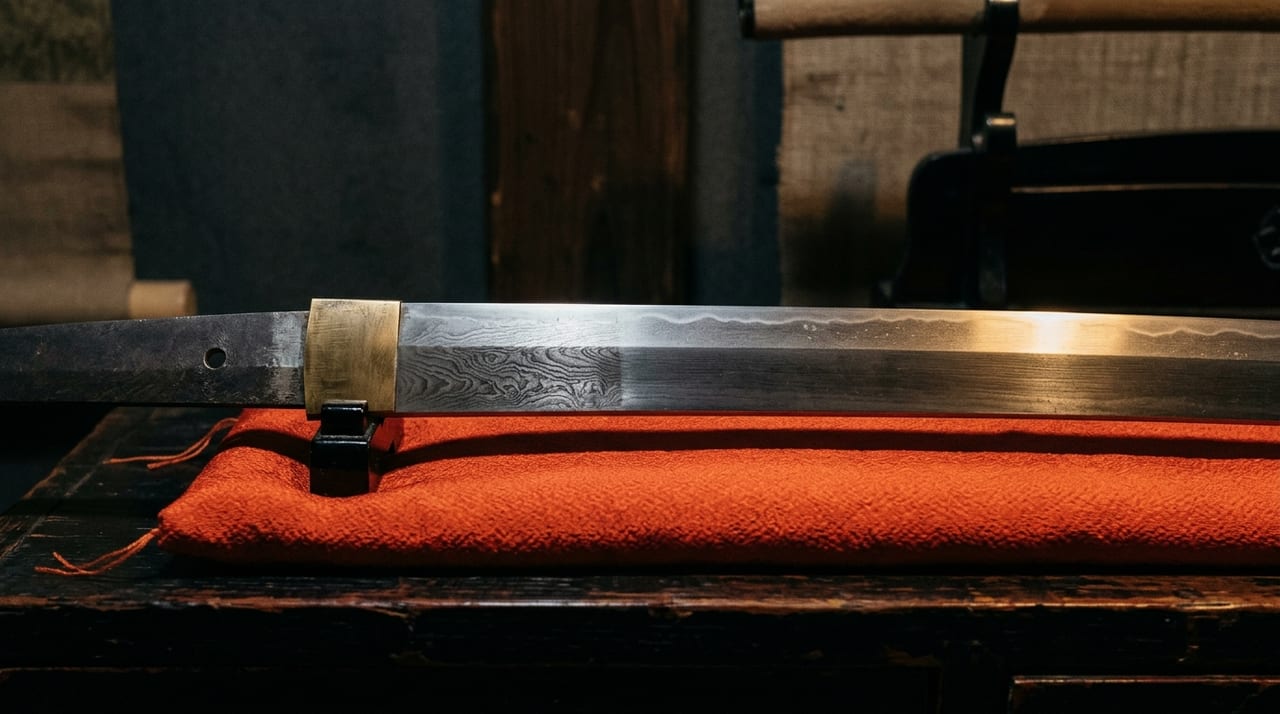
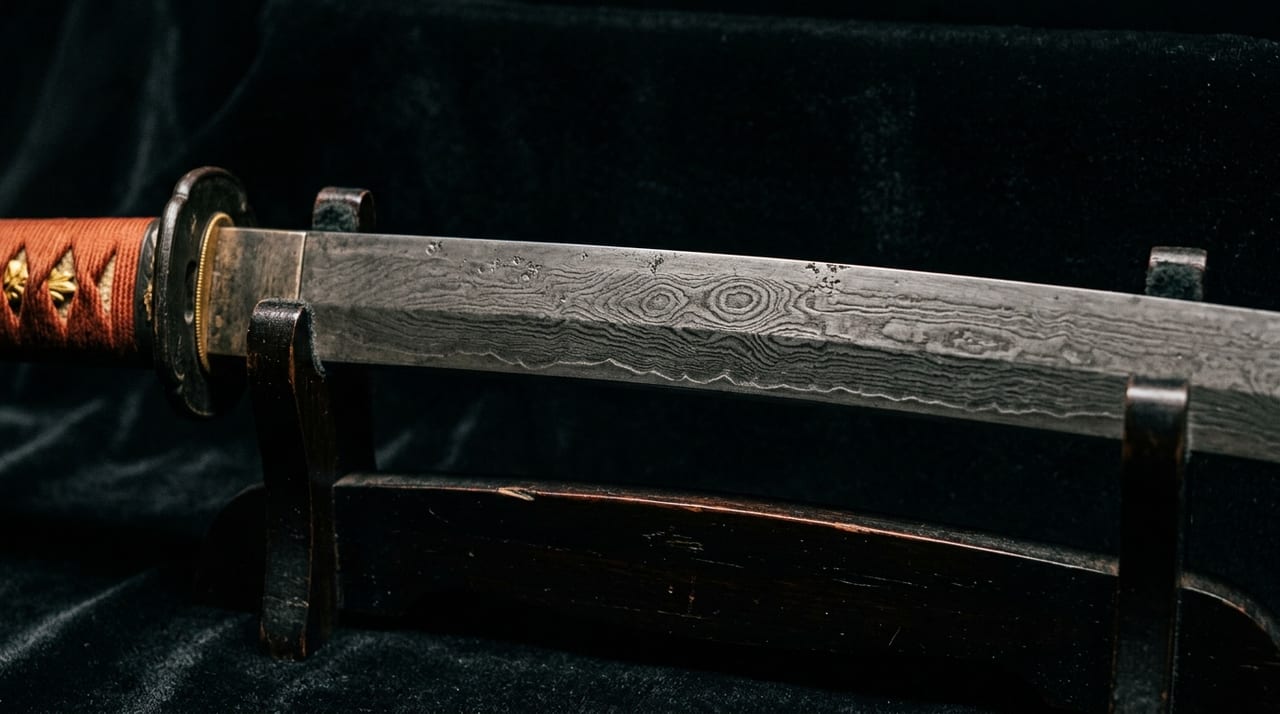
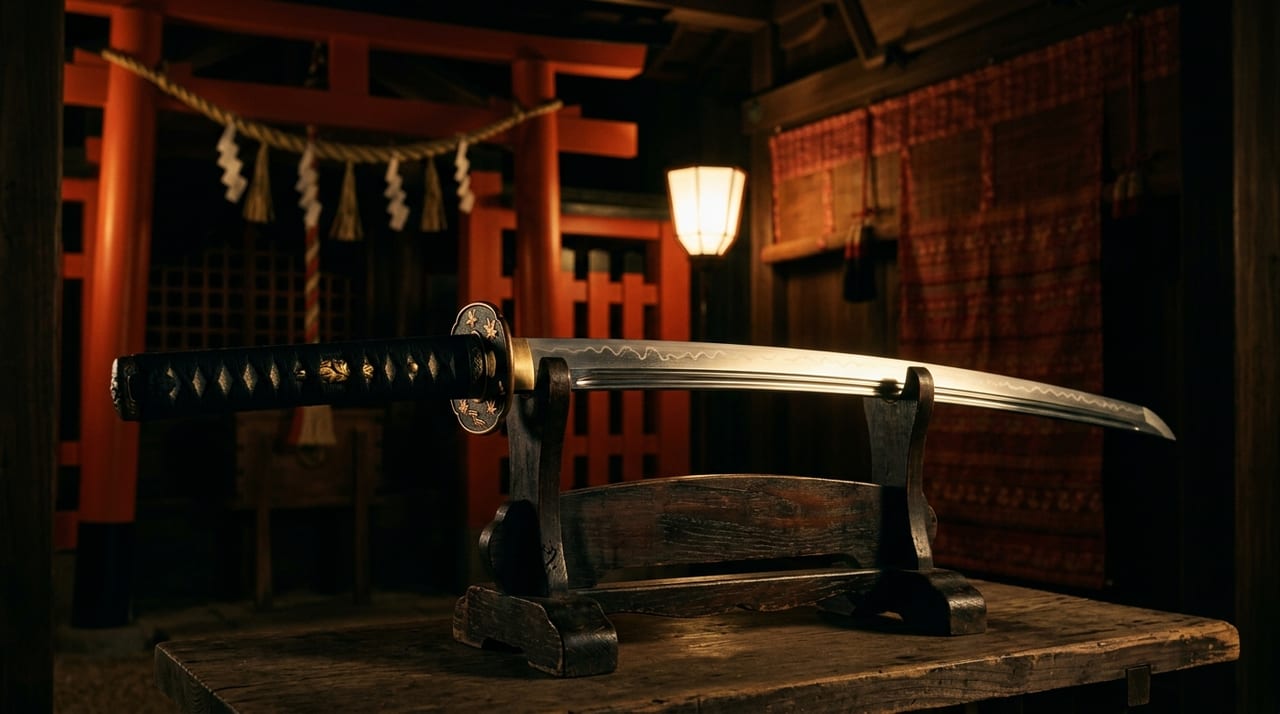
Senjuin School — the tōkō group considered the oldest of the Yamato Five Schools, archaically elegant blades nurtured by the mountain faith of Nara
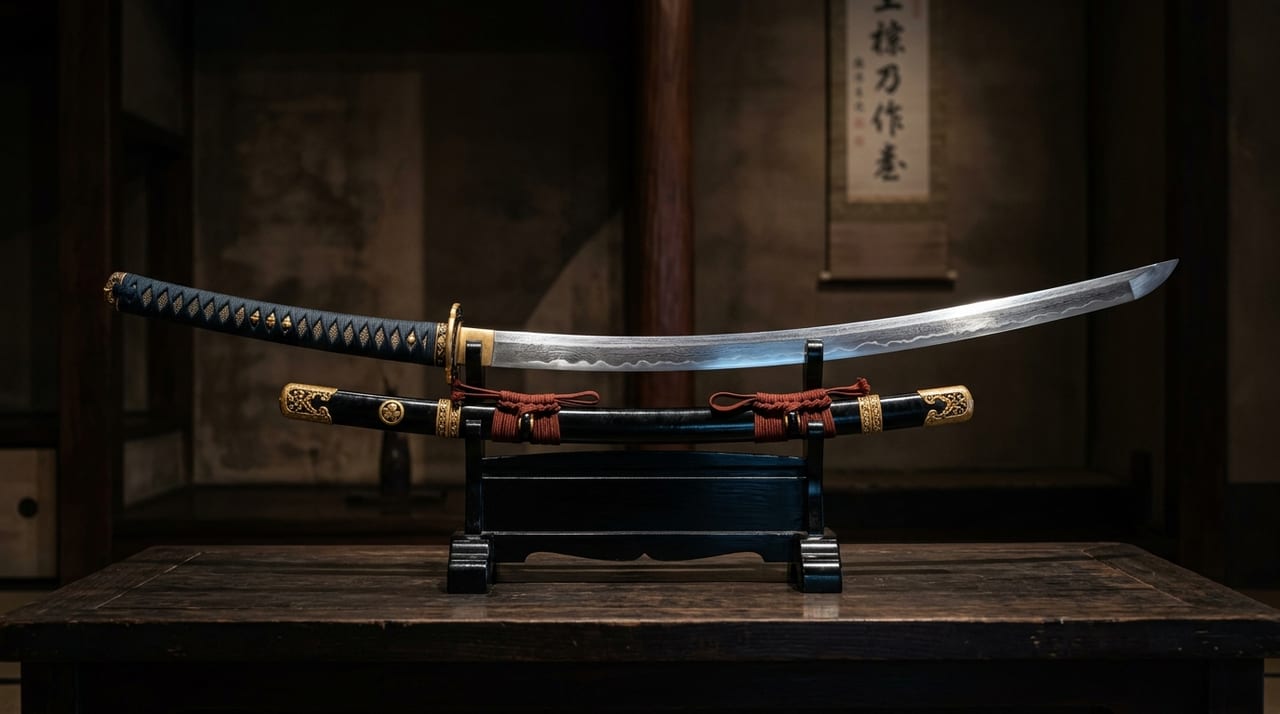 * Image is for illustrative purposes only.
Table of Contents
The School at the Source of the Yamato Five Schools
The Senjuin School (Senjuin-ha) is a tōkō group that flourished in Yamato Province, and is often placed as the oldest lineage among the Yamato Five Schools (Senjuin, Shikkake, Tegai, Taima, and Hōshō). Its name is said to derive from Senjuin Valley, traditionally located at the foot of Mount Wakakusa in Nara.
It is said to have flourished in the ancient period from the late Heian era through the Kamakura period, and is spoken of as one of the sources of the Yamato tōkō.
Yamato was the center of Japan's ancient state and a land where many powerful temples flourished. Sword production is said to have been fostered by the demand for weapons from the warrior monks attached to those temples, and the Yamato tōkō are thought to have continued forging blades within deep ties to temples and shrines. The fact that the name of the Senjuin School is traditionally derived from a place name associated with a temple speaks well to this character of the Yamato tōkō.
The Archaic Yamato-den Style
The Senjuin School's style is said to share with Yamato-den the characteristic of a jigane inclined toward masame and a hamon based on suguha. As befits work of an early age, some tachi show an elegant form with pronounced koshi-zori, the jigane mixes itame with masame, and the hamon is known to contain, within fine suguha or ko-midare, the characteristic activity typical of Yamato work.
Tachi from the late Heian to the early Kamakura period typically display an elegant form with a strong curve at the base that gradually eases toward the kissaki. Old works attributed to the Senjuin School also show a dignified configuration reflecting this period character, and the overall shape itself is a major point of appreciation.
The archaic, composed quality unique to this oldest stratum has a different appeal from later Yamato work in which the style became more settled, and it never fails to captivate those who view it.
Construction That Speaks of Yamato-den
A frequently cited characteristic of Yamato work is a construction with a high shinogi and wide shinogi-width. This form is said to reflect the spirit of Yamato tōkō who valued practicality, and a distinctive sense of reliability comes through when one holds the blade. The jigane has masame flowing with vigor, the hamon is in a suguha manner, and nie appears fully with fine activity along the edge — this is the distinctive quality unique to Yamato-den.
The charm of old works from the Senjuin School lies in their retaining a strongly archaic, generous quality from before this Yamato-den form had fully solidified.
As the Starting Point of the Yamato Tōkō
The Senjuin School is sometimes spoken of as the forerunner of the Yamato Five Schools — the Tegai School, Shikkake School, Taima, and Hōshō — that would later develop. It occupies an important position as the school that stands at the origin of the history of Yamato tōkō, which developed against the backdrop of demand from temples and shrines. The development of the Tegai School is also taken up in the related column on the Tegai School.
Each of the Yamato Five Schools is associated with the region and temples where it was based, and their styles share common characteristics. Tracing this lineage starting from the Senjuin School allows the world of the Yamato tōkō to be seen as a single connected stream. When studying Yamato-den, grounding oneself first in the Senjuin School as an old lineage should make the subsequent development of each school much easier to understand.
Mini Glossary
- masame: a kitae-hada in which the grain of the jigane runs straight, like the straight grain of wood. It is the kitae-hada symbolic of Yamato-den.
- uchinoke: an activity appearing in a crescent shape along the edge. It arises along the masame grain and is considered a characteristic sight in Yamato work.
- nijūba: an activity in which a second line resembling another edge appears alongside the suguha.
- hotsure: an activity in which the edge frays in fine, thread-like undulations.
Finding these delicate activities within the suguha, which may at first appear plain, is precisely the true pleasure of appreciating Yamato work.
Points of Appreciation
When appreciating old Yamato work beginning with the Senjuin School, one should focus on the elegant tachi shape, the masame-mixed jigane, and the delicate activity hidden within the suguha. Even without showiness, sensing the archaic and refined beauty is the true pleasure of savoring the oldest stratum of Yamato-den.
In practice, directing one's eye in the order of ① the overall shape first (position of the sori and height of the shinogi), ② then the jigane (the flow of the masame), and ③ finally the hamon (the activity within the suguha) makes it easier to grasp the character of Yamato work in an organized way. For those wishing to compare the differences in jigane among the Yamato Five Schools, the article comparing jigane across the Gokaden is also helpful.
How to Approach It Today
Yamato work of the oldest stratum survives in limited numbers, and opportunities to encounter actual examples are by no means frequent. It therefore becomes important to study oshigata and photographs in books and catalogues in advance, taking in the characteristics of the shape, jigane, and hamon beforehand. When one encounters Yamato work at an exhibition or sale, and is able to approach it carrying one's own questions — "How does the masame flow?" "What activity is there along the edge?" — appreciation shifts from passive viewing to active dialogue.
Furthermore, the significance of studying an old school such as the Senjuin School lies less in judging the authenticity of an individual blade than in sensing the atmosphere of an era close to the starting point of Japanese sword history. The true meaning of the word "archaic elegance" is something that truly falls into place only when one actually confronts old Yamato work.
Those with an interest in the history of the Senjuin School and the Yamato Five Schools are welcome to browse the list of featured works online and make purchases. For any questions, please use the inquiry form.