A Comparative Study of Jigane in the Gokaden: A Practical Appraisal Guide to Scientifically Analyzing Jihada Differences Across Bizen, Sōshū, Mino, Yamato, and Yamashiro
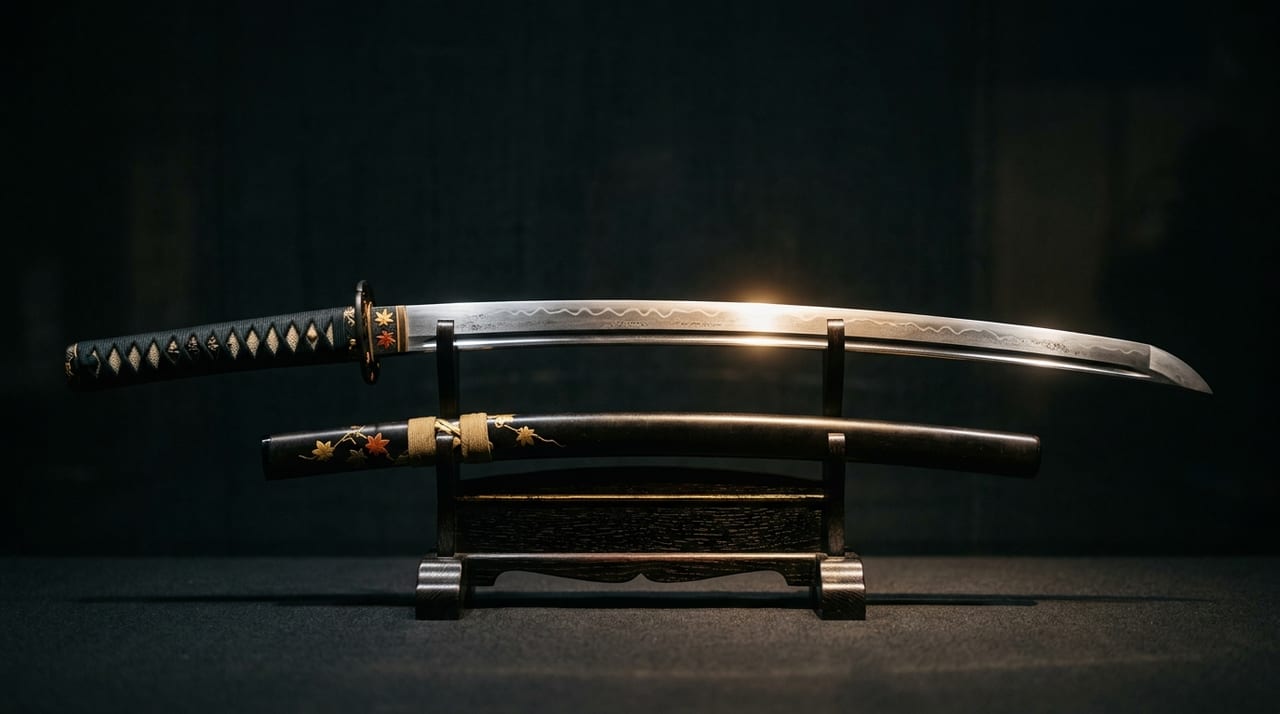 * Image is for illustrative purposes only.
Table of Contents
What Is Gokaden: The Foundations of Jigane Appraisal
Gokaden refers to the five schools and regions of origin regarded as the major traditions in the conventional classification system of Japanese swords: Bizen-den, Sōshū-den, Mino-den, Yamato-den, and Yamashiro-den. Because each of these five traditions developed its own smithing techniques, material selection, and heat treatment methods, clear differences also appear in the jigane — that is, the jihada — of the finished blade.
Jigane appraisal is the art of estimating the region of origin, school, and period of a sword by observing the patterns, luster, and texture of the kitae-hada appearing on the surface of the blade. Because the blade itself — not just the mei on the nakago — speaks to the school from which the tōkō came, experienced appraisers say "the sword speaks."
Jigane of Bizen-den: The World of Itame and Chōji Utsuri
Bizen-den (present-day southeastern Okayama Prefecture) has the longest history of any Japanese sword production center, producing large numbers of outstanding blades from the Kamakura period through the Muromachi period. The defining characteristic of its jigane is that itame forms the basis of the jihada.
Itame is a flowing pattern resembling the flat grain of wood that appears on the steel surface, arising from the distribution of trace elements in Bizen tamahagane and from the number of orikaeshi tanren cycles and temperature management. What is characteristic of Bizen-den blades is the appearance of utsuri within this itame.
Utsuri is a faint whitish band of luster that appears in the jigane parallel to the hamon (temper line). Chōji utsuri, seen particularly in Bizen-den kotō, is an utsuri that corresponds to the shape of the chōji hamon, and is regarded as one of the most important diagnostic features that makes a Bizen blade a Bizen blade. Utsuri is a phenomenon in which the non-uniformity of carbon distribution in the steel manifests optically; the yaki-ire (quenching) temperature, the method of tsuchioki (applying the clay coating), and the number of tanren cycles all influence it in combination.
Jigane of Sōshū-den: Large-Pattern Itame and Nie
Sōshū-den (present-day Kanagawa Prefecture) is the school established by Masamune in the late Kamakura period, possessing a distinctive aesthetic of steel described as "the strongest and most beautiful."
The jigane of Sōshū-den, compared with Bizen-den, often features a coarser grain with large-pattern itame as the basis. This is thought to result from the characteristics of the materials used in Sōshū and from the high-temperature tanren method.
The greatest distinguishing feature of Sōshū-den is the appearance of nie in the jigane. Nie is a brilliant, granular luster that appears on the steel surface, produced when fine particles of martensite crystals formed during yaki-ire reflect light. In Sōshū-den blades, nie appears not only in the hamon but also in the jigane (ji-nie), giving the entire blade a radiant beauty. The expression seen in Masamune's works — "inazuma and kinsuji run through the nie" — refers to this characteristic.
Jigane of Mino-den: The Mixture of Itame and Masame
Mino-den (present-day Gifu Prefecture) rose to prominence after the Ōnin War (1467) as a center of practical swords, and was widely favored by the warlords of the Sengoku period. The tōkō of Mino, also called "Seki kaji," are characterized by combining mass production with quality.
The jigane of Mino-den is characterized by a mixture of itame and masame. Masame tends to flow particularly near the hamachi and on the mune (back of the blade) side, creating variation across the overall jihada. This mixed-grain jihada arises from the distinctive tanren method of Mino, and differs clearly from the uniform itame of Bizen or the refined small itame of Yamashiro.
Jigane of Yamato-den: The Prominence of Masame and Forging Grain
Yamato-den (present-day Nara Prefecture) is a school that developed with temples and shrines in Nara as its customer base, supplying swords in a wide range of forms including wakizashi, naginata, and tachi. The Tegai School and the Senjuin School are representative lineages.
The jigane of Yamato-den tends to show a strong masame. Masame is a parallel-line pattern resembling the straight grain of wood, indicating a consistent direction in the orikaeshi tanren. The materials and tanren methods used by Yamato tōkō are thought to have brought about this emphasis on masame.
Jigane of Yamashiro-den: Small Itame and Refinement
Yamashiro-den (present-day Kyoto Prefecture) is regarded as the most refined of the traditions, shaped by the influence of court and aristocratic culture dating from the Heian period. The Rai School and the Ayanokōji School are representative examples.
The jigane of Yamashiro-den is characterized by an exceptionally fine and uniform small itame. As if reflecting the miyabi (elegance) of aristocratic culture, the pattern is orderly with little irregularity, and the luster is subdued and refined. Utsuri is not as pronounced as in Bizen, but the high uniformity of the jigane gives the viewer a sense of clarity and purity.
Practical Comparison of the Five Traditions' Jigane: Points of Caution in Appraisal
The jigane characteristics of the five traditions can be summarized as follows.
| Tradition | Jigane Characteristics |
|---|---|
| Bizen-den | Itame as the basis, with chōji utsuri appearing |
| Sōshū-den | Coarse grain with large-pattern itame; nie is prominent |
| Mino-den | A mixture of itame and masame |
| Yamato-den | Masame appears strongly |
| Yamashiro-den | Exceptionally fine and uniform small itame |
While the comparison of jigane across the five traditions is clear in theory, actual appraisal involves several points of caution. Tōkō from each region sometimes returned home after mastering techniques from other regions, making "the boundaries between origins" occasionally ambiguous. Cases such as the Jūtetsu of Masamune, where students from Bizen and Etchū learned from a Sōshū master, resulted in a blending of techniques.
Furthermore, the appearance of jigane changes greatly depending on the polishing condition and light source. Experts observe the jigane under specific angles and lighting conditions, making a comprehensive judgment from multiple observation points. It is dangerous for a beginner to assert an origin from jigane alone; comprehensive appraisal combining other characteristics such as the hamon, sori (curvature), the shape of the kissaki (point), and the form of the nakago (tang) is indispensable.