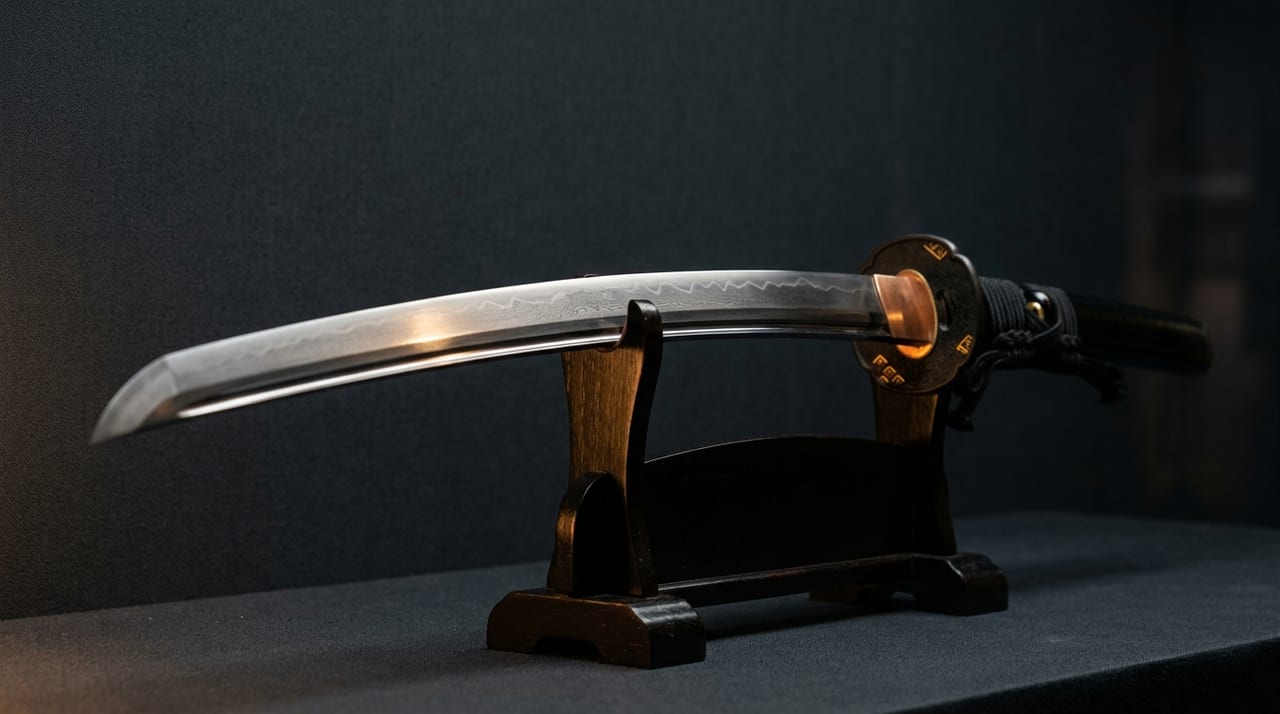
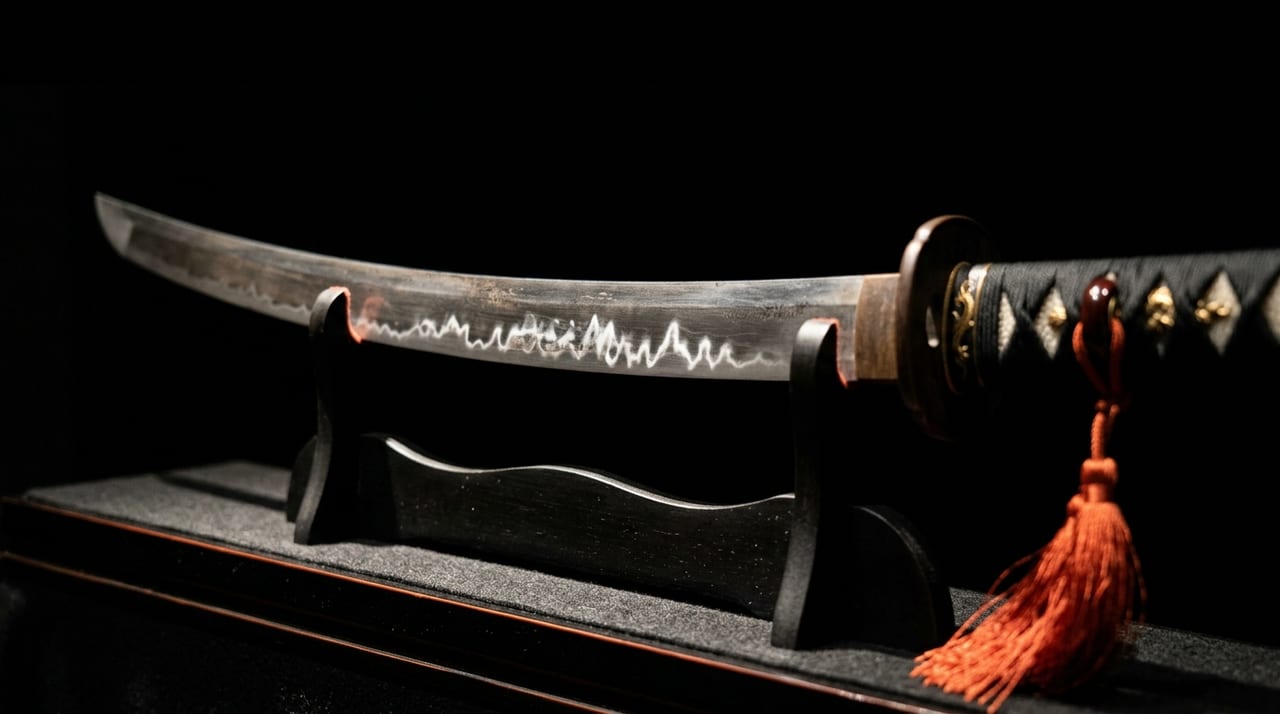
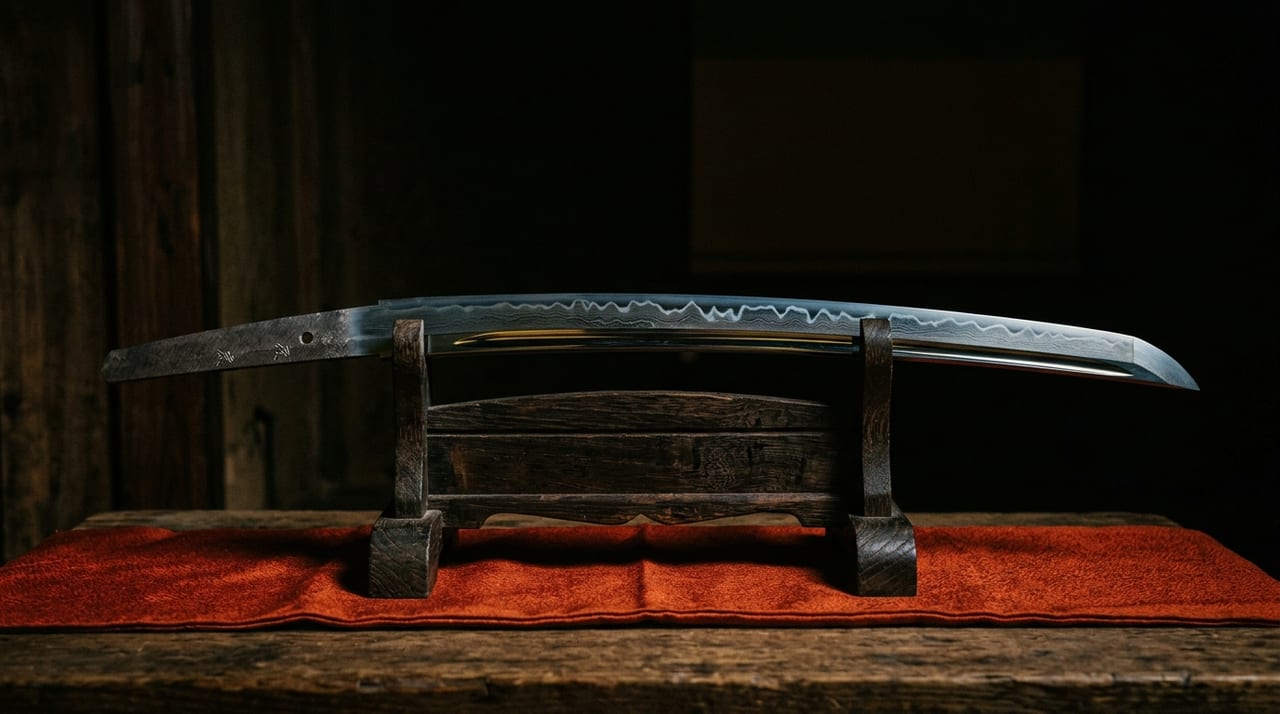
The Technique of Tsumiwakashi — The Science and Craftsman's Intuition Behind the Foundational Process of Stacking and Forge-welding Multiple Steel Pieces in Japanese Sword Making
 * Image is for illustrative purposes only.
Table of Contents
The "Preliminary Stage" Before Orikaeshi Tanren Determines Quality
When discussing the manufacturing process of Japanese swords, the most attention is given to orikaeshi tanren. It is widely known that the process of folding and forging tamahagane repeatedly determines the quality of a sword. However, specialized explanations of tsumiwakashi, the stage that precedes it, are surprisingly scarce. In recent years, as a reassessment of Japanese sword-making methods has advanced from the perspective of metallurgical engineering, the importance of tsumiwakashi has attracted increasing attention.
Tsumiwakashi is the process of stacking (tsumi) multiple selected pieces of tamahagane and forge-welding (tansetsu) them through furnace heating. This process, which creates the single consolidated block of steel (kogane) that serves as the material for orikaeshi tanren, is a critical step that directly determines the final quality of a Japanese sword.
From Selection to Stacking of Tamahagane
Tamahagane produced through tatara smelting is a non-uniform material that arrives at the tōshō's workshop carrying varying carbon content.
The tōshō breaks the tamahagane with a small hammer and roughly assesses the carbon content by examining the cross-section's color, fracture pattern, and coarseness of the crystals. Through this sorting process called "wari," the steel pieces are separated by their properties as follows.
| Part | Steel Used | Properties |
|---|---|---|
| Kawagane (outer hard section) | High-carbon steel | Hard and brittle |
| Shingane (inner flexible section) | Low-carbon steel | Flexible but tough |
The precision of the sorting eye determines the quality ceiling for all subsequent processes.
In tsumiwakashi, the sorted steel pieces are stacked on an iron plate (shitakura), covered with a "mud" mixture of straw ash (warabai) and water, and placed in the furnace. The mud serves as a flux (a bonding agent) that prevents the steel from oxidizing during heating, melts the oxide scale on the forge-welding surfaces, and facilitates direct metal-to-metal bonding. The precision of this flux effect largely determines the success or failure of tsumiwakashi.
Furnace Temperature Control — The Critical Point of 1300°C
The most critical aspect of tsumiwakashi is temperature control. The temperature required for forge-welding varies by steel type, but for tamahagane the guideline is roughly 1,200 to 1,350°C — the state in which the steel "boils" (niwaku).
The "boiling" state is judged visually. When the steel in the furnace shifts from an orange glow to a near-white luminescence and countless small sparks (wakibana) begin scattering from its surface, it is a sign that the optimal temperature for forge-welding has been reached. This state is called "wakihada," and the tōshō reads it to determine the moment to remove the steel from the furnace.
When the temperature is not appropriate, the following problems occur.
| Temperature Condition | Phenomenon | Result |
|---|---|---|
| Too low | Forge-welding becomes insufficient | Delamination (hagare) occurs during subsequent orikaeshi tanren |
| Too high | Yakefutori (loss of carbon, grain boundary melting) occurs | The steel becomes weakened |
This balance cannot be measured numerically and depends solely on the experience and visual judgment of a skilled tōshō. Some contemporary research has noted that minute differences in charcoal combustion rate and furnace environment during this process affect quality.
The Moment of Forge-welding — Precise Control of Hammer Force and Angle
The heated stack of steel removed from the furnace is placed on an anvil (kanatoko) and quickly struck with a large hammer (otsuchi) to forge-weld it. Because this first blow determines the overall shape, a coordinated series of strikes with the apprentice (sakite) is required.
During forge-welding, the angle of the strikes and the distribution of force are critical. While pressing the stacked steel together, care is taken to drive the oxide scale (noro) outward and prevent it from remaining inside. If noro becomes trapped inside, it becomes a kitae kizu (forging flaw) and a defect in the finished sword.
This work must be performed quickly because only the several dozen seconds immediately after removal from the furnace are within the optimal temperature range. As the steel cools, it becomes more viscous (nebari) and harder to strike, requiring reheating. Conversely, if it remains overheated, oxidation progresses. The coordinated consecutive strikes of the tōshō and apprentice make maximum use of this brief window. This "composite sensory perception" is the very core of tsumiwakashi technique, as the tōshō simultaneously senses the following elements.
- The sound of the hammer
- The luminescent color of the steel
- The way the noro scatters
The Mechanism of Forge-welding as Revealed by Modern Science
In modern metallurgical engineering, the forge-welding mechanism of tsumiwakashi has been partially elucidated.
Forge-welding of steel (solid-state bonding) is a phenomenon in which the flux (SiO2 and K2O in the straw ash) dissolves and removes the oxide film on the bonding surfaces, and clean metal surfaces make contact at high temperature and pressure, producing diffusion bonding. Iron atoms mutually diffuse across the bonding surfaces, eliminating any distinct boundary and forming a single unified steel.
Recent research has drawn attention to how the compositional ratio of the straw ash used as flux affects forge-welding quality. The silica and potassium content varies with the type of straw and combustion conditions, changing the melting point and viscosity. It is thought that the traditional tōshō's insistence on the type of straw also reflected an empirical pursuit of the optimal flux composition.
However, even with this theoretical understanding, in actual practice the climate, charcoal quality, furnace condition, and lot-by-lot variation in tamahagane properties all have an effect, so numerical management alone cannot achieve proper forge-welding. This is precisely why a tōshō's "empirical rules" remain indispensable.
Number of Tsumiwakashi Cycles and Homogenization of the Steel
Because a single round of tsumiwakashi and forge-welding is insufficient to homogenize the steel, the cycle of tsumiwakashi → forge-welding → folding is typically repeated two to three or more times.
The first round of tsumiwakashi begins with a scattered, non-uniform carbon content and carbon distribution, which gradually becomes more homogeneous through repeated forge-welding and folding. Complete homogenization is not necessarily the goal; it is important to intentionally separate the materials at the tsumiwakashi stage in order to achieve the desired carbon distribution of "low carbon for shingane, high carbon for kawagane."
Each tōkō school has its own approach to the number of tsumiwakashi cycles and how materials are combined, and this is reflected in the distinctive jigane of each school. Even using the same tamahagane, different tsumiwakashi procedures produce differences in the jihada's appearance (itame, ko-itame, mokume, and so forth). It could be said that the individuality of a school begins with the master craftsman's philosophy at the tsumiwakashi stage.
Conclusion: The Invisible Process Determines the Quality of the Sword
Tsumiwakashi is one of the most understated and inconspicuous processes in Japanese sword making, yet the carbon content sorting, forge-welding precision, and appropriateness of temperature control at this stage determine the quality foundation for every process that follows orikaeshi tanren. As the saying "a great sword begins with the material" suggests, the eye for selecting tamahagane and the forge-welding technique at the tsumiwakashi stage can be called the primary condition for the birth of a great sword.
Knowing that behind the subtle scenery dwelling in a sword's jihada lies layer upon layer of craftsman judgment and skill, beginning with tsumiwakashi, adds a dimension of depth to one's appreciation.