The Hōgen Rebellion and Heiji Rebellion (1156 and 1159) and Swords — Warriors and Sword Culture on the Eve of the Genpei Conflict
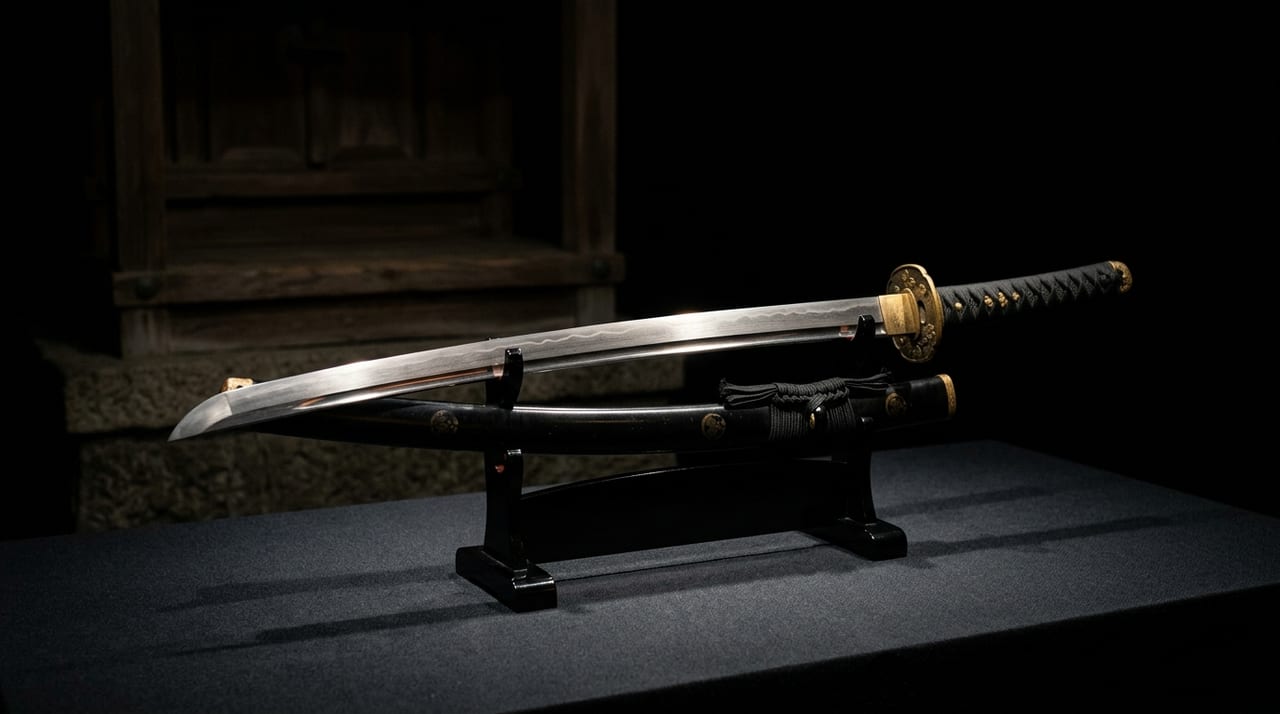 * Image is for illustrative purposes only.
Table of Contents
The Hōgen and Heiji Rebellions — Two Uprisings That Opened the Age of Warriors
The Hōgen Rebellion (1156) and the Heiji Rebellion (1159) were two political upheavals that occurred in rapid succession over a span of three years at the end of the Heian period. Both were triggered by power struggles within the imperial court, and it was through them that warriors stepped onto the stage of history as the "bearers of military force."
These two rebellions were also an important turning point in the history of Japanese swords. In this era, when warriors began to acquire a political standing independent of court aristocratic society, both the practical demands placed on swords and their cultural significance underwent a change.
The Hōgen Rebellion (1156) — When Swords Decided the Struggle Among Royalty and Aristocrats
Background and Course of the Rebellion
In 1156 (Hōgen 1), the death of Retired Emperor Toba triggered an intensification of the conflict over imperial succession. It was a complex power struggle in which the confrontation between Retired Emperor Sutoku (who sought to rule through an insei) and Emperor Go-Shirakawa (who sought to maintain direct imperial rule) was entangled with a split within the Fujiwara regent family (Fujiwara no Tadamichi vs. Fujiwara no Yorinaga).
Both sides mobilized warriors as their military force. On the side of Go-Shirakawa were Minamoto no Yoshitomo and Taira no Kiyomori, while on the side of Retired Emperor Sutoku were Minamoto no Tameyoshi, Minamoto no Tametomo, Taira no Tadamasa, and others.
The Bow and Sword of Minamoto no Tametomo — The Emergence of a Heroic Warrior
The warrior who left a particularly notable record in the Hōgen Rebellion is Minamoto no Tametomo. He was a warrior of tremendous strength said to have stood over 2 meters tall, and was known as a master of the bow.
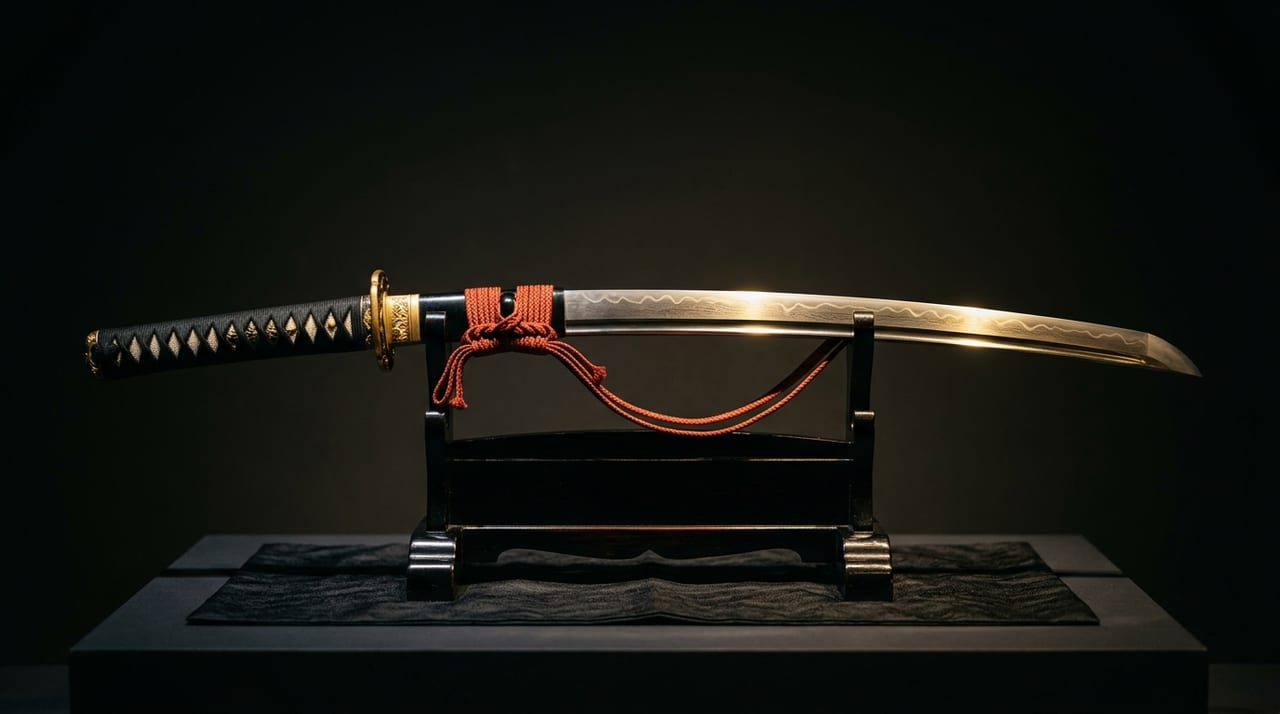
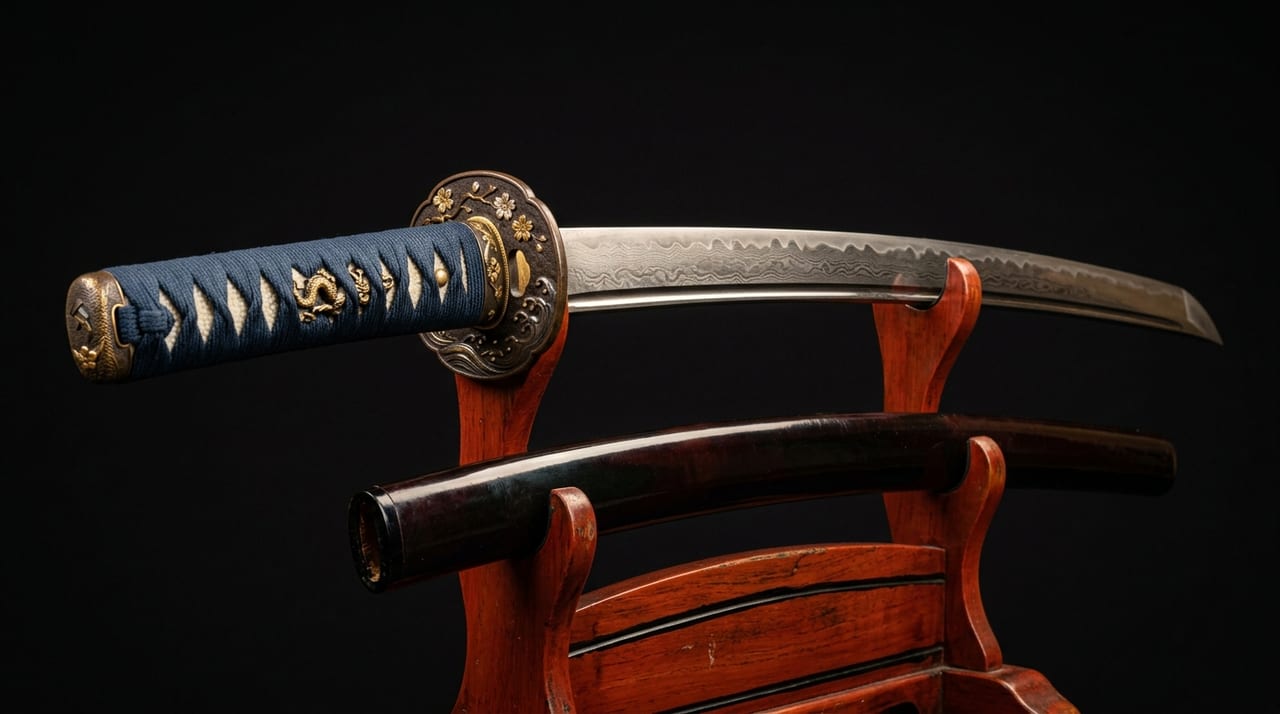
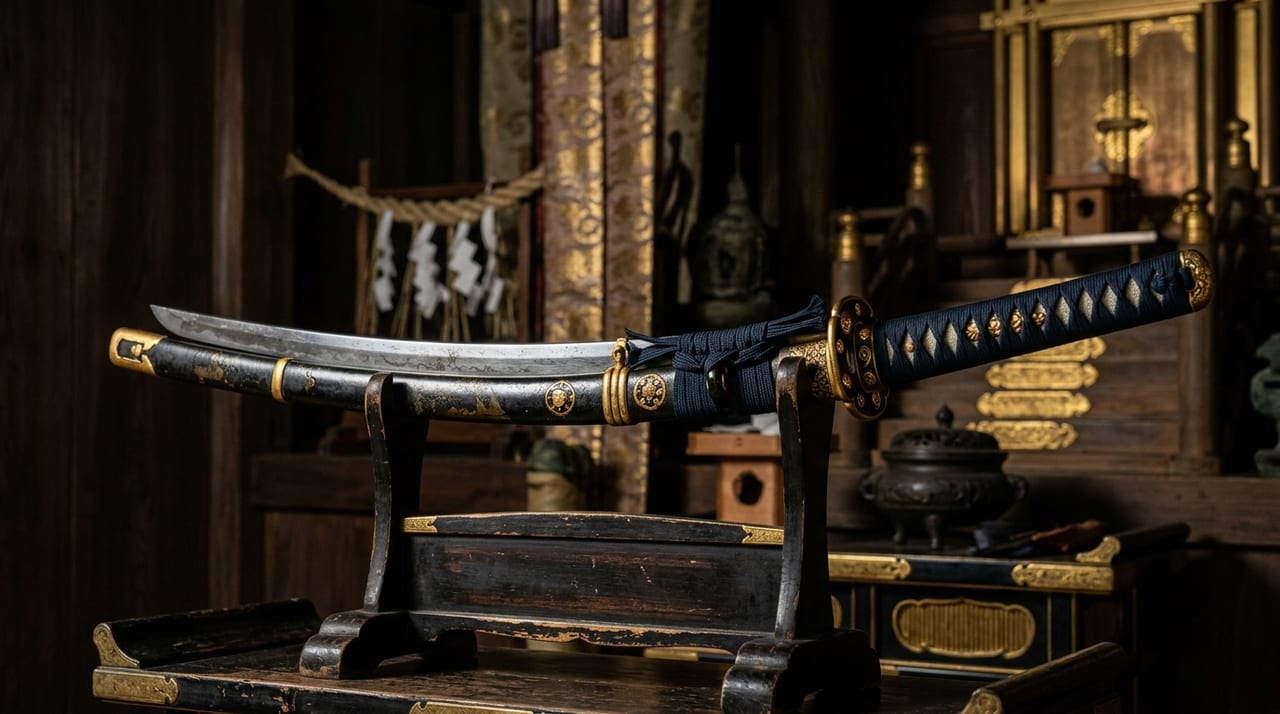
While the weapon most noted in relation to Tametomo was the "gōkyū" (powerful bow), as a warrior of the late Heian period he naturally carried a tachi as well. The tachi of the time took the form of koshi-zori established in the mid-Heian period — a shape suited to mounted combat, with a nagasa of roughly 2 shaku 5 sun to 3 shaku and a pronounced sori at the koshi portion.
Tametomo was later sentenced to exile, raised a revolt on Izu Ōshima, and died by his own hand. His formidable valor as a warrior was depicted repeatedly in later military tales and kabuki.
The Impact of the Rebellion's Outcome on Warrior Society
The warriors on the winning side of Emperor Go-Shirakawa — Minamoto no Yoshitomo and Taira no Kiyomori — gained authority as the military force of the court. Taira no Kiyomori in particular rose rapidly as the head of the Taira clan.
Meanwhile, the warriors on the losing side — Minamoto no Tameyoshi, Taira no Tadamasa, and others — were executed. Warriors facing one another as enemies, even kinsmen divided into opposing camps, with the defeated put to death without mercy — this was the beginning of a "warring-states logic" entirely different from the aristocratic armed conflicts of the early Heian period.
The Heiji Rebellion (1159) — The Power Struggle Among Warriors Intensifies
Course of the Rebellion — The Defeat of Minamoto no Yoshitomo
Just three years after the Hōgen Rebellion, in 1159 (Heiji 1), civil conflict broke out in Kyoto once again. Minamoto no Yoshitomo, who had distinguished himself in the Hōgen Rebellion, allied with Fujiwara no Nobuyori and raised an army, taking advantage of Taira no Kiyomori's absence from the capital.
However, Kiyomori hastened back to the capital, and the army of Minamoto no Yoshitomo was defeated. Yoshitomo was betrayed and killed by a retainer in Owari, and his eldest son Minamoto no Yoritomo — later the first shogun of the Kamakura shogunate — was exiled to Izu.
Taira no Kiyomori, who rose to prominence through the Heiji Rebellion, subsequently became in 1167 (Nin'an 2) the first warrior ever to assume the position of Daijō-daijin (Grand Minister of State). The two rebellions were the stepping stones to this achievement, though Kiyomori's assumption of the Daijō-daijin post came roughly eight years after the Heiji Rebellion.
Swords Depicted in the "Heiji Monogatari Emaki"
The "Heiji Monogatari Emaki" (illustrated scroll of the Tale of Heiji), produced between the late 13th and early 14th centuries, is a valuable visual record that depicts in detail the garb, weapons, and horses of warriors of the period.
The tachi depicted in the scroll have the following characteristics.
Physical Characteristics
- The blade has a pronounced koshi-zori (typical of the late Heian period)
- The nagasa reaches below the hip (approximately 2 shaku 5 sun to 3 shaku)
- Slender and elegant in appearance (somewhat different from the robust tachi of the Kamakura period)
- Many are depicted as ito-maki tachi (silk-wrapped tachi) fitted with ashiganagu (foot fittings)
In actual combat of the late Heian period, the tachi was primarily worn at the hip by mounted warriors and used on horseback. Foot soldiers (warriors on foot) often carried a naginata in addition to this.
The Rise of Eastern Warriors and Sword Culture
As a result of the Heiji Rebellion, the Taira clan under Taira no Kiyomori came to monopolize the central political sphere. However, Minamoto no Yoritomo, who had been exiled to Izu, later raised an army, and the Genpei War (the Jishō-Juei War, 1180–1185) began.
What deserves attention in this process is the rise of eastern warriors (warrior bands of the Kantō region). In the Kantō, the foundation was forming for the sword-producing regions that would develop in the Kamakura period — areas to which many tōkō of the Sōshū and Bizen-den traditions would migrate.
Swords of the Hōgen and Heiji Rebellion Period — Form and Technique
Characteristics of the Tachi of the Late Heian Period
The swords of the Hōgen and Heiji Rebellion period (mid-12th century) have the following characteristics.
Establishment of koshi-zori: The koshi-zori that emerged in the mid-Heian period (9th–10th centuries) had become fully established. The blade has a pronounced sori at the koshi (the portion toward the handle from the midpoint), a form well suited to drawing and striking downward on horseback.
Slender and elegant form: The tachi of the late Heian period are overall slender, with a relatively narrow mihaba that gives them an elegant impression. This stands in contrast to the later Kamakura period (when the robust form emerged after the Mongol invasions).
Production centers of kotō: The leading tōkō were centered in Yamashiro (Kyoto), Yamato (Nara), and Bizen (Okayama). In particular, tōkō of the Sanjō and Awataguchi schools of Yamashiro supplied high-grade tachi for the imperial court.
What Actual Combat in the Rebellions Demanded of Swords
The Hōgen and Heiji rebellions were primarily combat between mounted warriors. In actual battle, the bow and arrow was the main weapon, and the sword (tachi) was used in close-quarters fighting and single combat.
What deserves attention among the influences that practical demands exerted on sword-making is the demand for durability in swords. This was a period in which the tendency shifted away from the ceremonial and ornamental swords of the early Heian period toward a performance-first approach requiring swords that would not break, chip, or fail to cut in actual combat.
The Long-Term Impact of the Rebellions on Warrior Sword Culture
The Change in Warriors' Attitudes Toward Swords
Through the Hōgen and Heiji rebellions, the meaning of the sword for warriors underwent a change. The spiritual dimension was strengthened — swords came to be seen not merely as "weapons" but as "the soul of the warrior and instruments of oath."
Swords were also used by warriors defeated in the rebellions as the instrument of self-death, and swords became bound up with the culture of "the warrior's manner of dying."
Continuity Leading to the Genpei War
The progression from the Hōgen and Heiji rebellions to the Genpei War (the Jishō-Juei War) coincides in the history of Japanese swords with the "period of maturation of kotō." With the arrival of the Kamakura period, Japanese swords went on to develop both technically and culturally into a new stage — "the swords of a warrior government."
Conclusion — The Turning Point in the History of Japanese Swords Carved by the Two Rebellions
The Hōgen and Heiji rebellions did not bring about direct technical innovation in Japanese swords. However, these two uprisings were a decisive turning point in which warriors transformed from "hired military force in aristocratic society" into "bearers of an independent political authority."
That warriors held power also meant that swords — the tools of warriors — came to occupy a central position socially and culturally. The Hōgen and Heiji rebellions are an important chapter in the long history through which Japanese swords came to be recognized as "the soul of the warrior class."