Where to See Japanese Swords: A Guide to Japan's Best Museums and Galleries
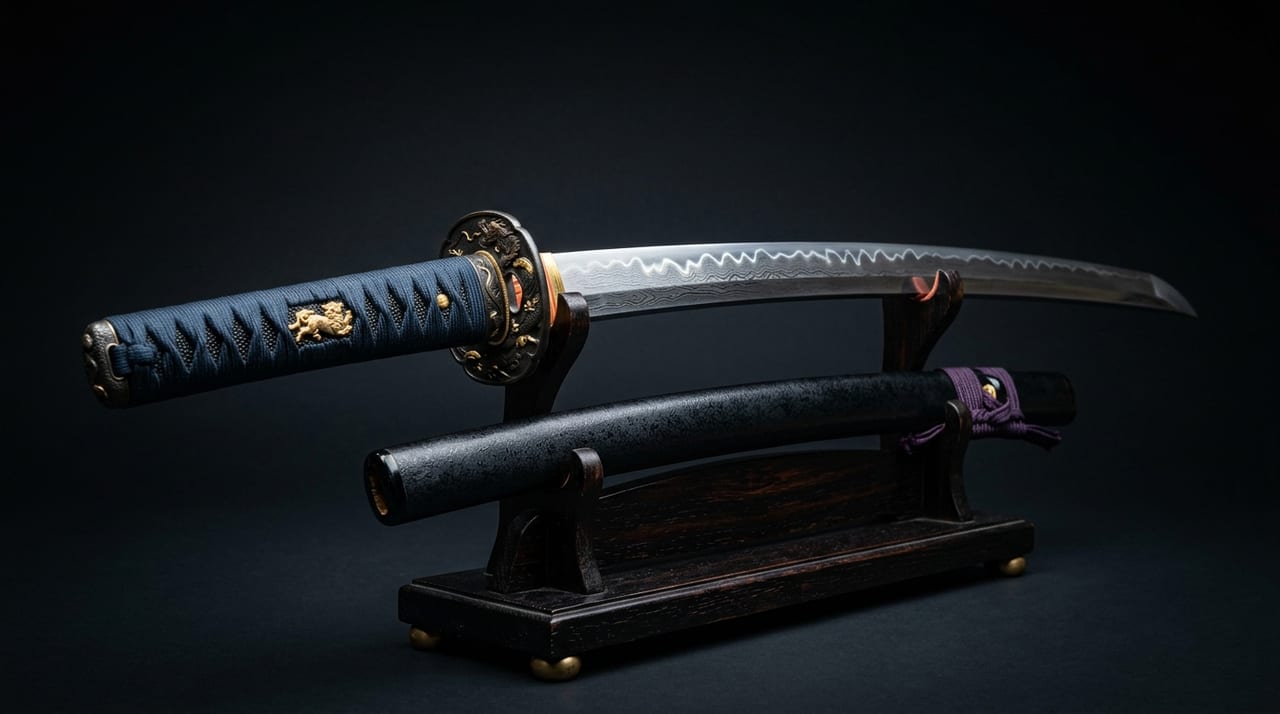 * Image is for illustrative purposes only.
Table of Contents
Tokyo National Museum (Tokyo, Ueno)
It boasts Japan's largest collection of Japanese swords. The collection includes important cultural properties and national treasures numbering in the hundreds of blades, and it is unique in housing two of the Five Swords Under Heaven: the "Mikazuki Munechika" and the "Dōji-giri Yasutsuna."
The "Mikazuki Munechika" is a tachi (long sword) allegedly forged by Sanjō Munechika, a master craftsman from Yamashiro Province in the late Heian period. Its name derives from the countless crescent moon-shaped workings visible throughout the blade. It passed from the Ashikaga shoguns to Toyotomi Hideyoshi and is now designated as a national treasure, preserved for posterity. The "Dōji-giri Yasutsuna" was forged by Yasutsuna of Hōki Province and takes its name from the legend of Minamoto no Raikō slaying the demon of Ōeyama. With a blade exceeding 80 centimeters in length, its magnificent form embodies the weighty presence of classical swords, and it too is designated as a national treasure.
While swords are permanently displayed in the main building, masterpieces of Five Swords Under Heaven caliber are sometimes rotated at longer intervals. It is recommended to check the official website before visiting to confirm which works are currently on display.
Kyoto National Museum (Kyoto, Higashiyama)
The museum features an excellent collection of tachi swords in the "Yamashiro tradition" and "Yamato tradition," styles distinctive to the ancient capital. The collection is rich in old swords from the late Heian through Kamakura periods, with masterpieces ranking as national treasures and important cultural properties. When the special exhibition "Japanese Swords" is held, sword enthusiasts gather from throughout the country, often forming long queues.
A key point for appreciation is that many Yamashiro tradition works are characterized by dense, finely detailed grain in the steel with straight-edge (suguha) and subtly undulating (komidare) blade patterns. By viewing works by Kyoto's representative swordsmiths—such as Sanjō, Awataguchi, and Rai—the distinctions from other schools become evident. While a certain number of swords are displayed in the permanent exhibition, it is wise to time your visit to coincide with special exhibitions.
Japanese Sword Museum (Tokyo, Sumida Ward)
Operated by the Japan Art Sword Preservation Society (NBTHK), a public interest incorporated association, this is a specialized museum dedicated to sword appreciation. In 2018, it relocated and underwent renovation near the Sumida Hokusai Museum, significantly improving its exhibition environment.
The permanent exhibition features katana, wakizashi, and tantō, along with sword mountings such as tsuba (guards), kozuka (small utility knives), and kōgai (hair ornaments), enabling comprehensive understanding of sword culture beyond the blades themselves. Special exhibitions held several times annually focus on particular swordsmiths, schools, or periods with in-depth content that satisfies even connoisseurs. The adjacent museum shop carries specialized publications on swords. The museum also serves as a venue for sword authentication and appraisal sessions, where on examination days one can experience the enthusiasm of active sword makers and collectors firsthand.
Tokugawa Art Museum (Nagoya, Higashi Ward)
This art museum houses the daimyo furnishings passed down through generations of the Owari Tokugawa family and is among the nation's finest in its sword collection. It displays numerous swords associated with the Tokugawa shoguns, beginning with the national treasure tachi inscribed "Rai Kunitoshi," many with elaborate mountings (koshirae) connected to the shogunal house.
Rai Kunitoshi was a master craftsman representing Yamashiro Province in the late Kamakura period, renowned for the orderly beauty of his blade patterns and the precision of his steelwork. The museum's greatest distinction is the ability to view swords not merely as blades but as complete works paired with elaborate mountings adorned with metalwork. Here you can truly experience the essence of swords as complete works of art, with blade and mounting unified into a single artistic whole. Viewing the adjacent Hōsabunko library alongside the museum deepens one's understanding of samurai culture.
Sano Art Museum (Shizuoka, Mishima)
Known as "Sano, the Sword Museum," this highly specialized institution is renowned among sword enthusiasts. The sword collection, including national treasures and important cultural properties gathered throughout the life of founder Sano Ryūichi, is regarded as among the nation's finest in both quality and quantity.
One notable piece is a katana reworked from a naginata, inscribed "Bishū Osafune jū Motoshige," a rare form that retains strong characteristics of the Nanboku-chō period style. Its pronounced curve and commanding presence embody the aesthetic sensibility of warriors of that era, exuding a forcefulness that distinguishes it from swords of other periods. The museum's several annual special exhibitions feature thematic, in-depth displays with careful explanatory texts appealing to both beginners and connoisseurs. It maintains strong popularity as part of a day-trip itinerary combined with a visit to Mishima Taisha shrine.
Sendai City Museum (Miyagi, Sendai)
The largest museum in the Tōhoku region, it houses numerous swords passed down through the Date family. It displays the cherished swords of successive Date clan lords, beginning with the famous one-eyed Date Masamune, as well as practical battle blades used in actual warfare, allowing visitors to appreciate the direct connection between lived samurai history and swords.
Particularly noteworthy is the coordinated display with materials related to the Date clan's celebrated Keichō Embassy to Europe. The contrast between Masamune's gaze toward the wider world and the sword culture that flourished alongside his vision creates a unique tension. Sendai is also the headquarters of M-Assets Inc., which operates TOUKENZA, making it a precious place where one can experience the living sword culture of Tōhoku.
Smart Touring! Key Points to Check Before Your Visit
Since sword exhibitions undergo regular rotations, checking the official website for the latest exhibition details is an absolute rule. In addition, the following points are worth keeping in mind:
- Check photography policies: Many museums prohibit photography of swords due to reflection and angle issues
- Adapt to the lighting: Allow your eyes to adjust for a few minutes after entering the exhibition room before examining the blade pattern, which makes it easier to see fine details
- Bring a magnifying glass: Useful for observing the fine carvings on guards and sword fittings (some museums provide these for loan)
- Purchase exhibition catalogs: Buying immediately after viewing while memories are fresh allows you to review details later with vivid recollection
When standing before an authentic sword, there are moments when you feel a presence that words cannot fully explain. That is the unique power that the art of the Japanese sword possesses. Please visit in person and make that experience your own.