The World of Presentation Sword Masters—The Pride and Production Reality of Craftsmen Who Forged the Finest Blades Offered to Shoguns and Emperors
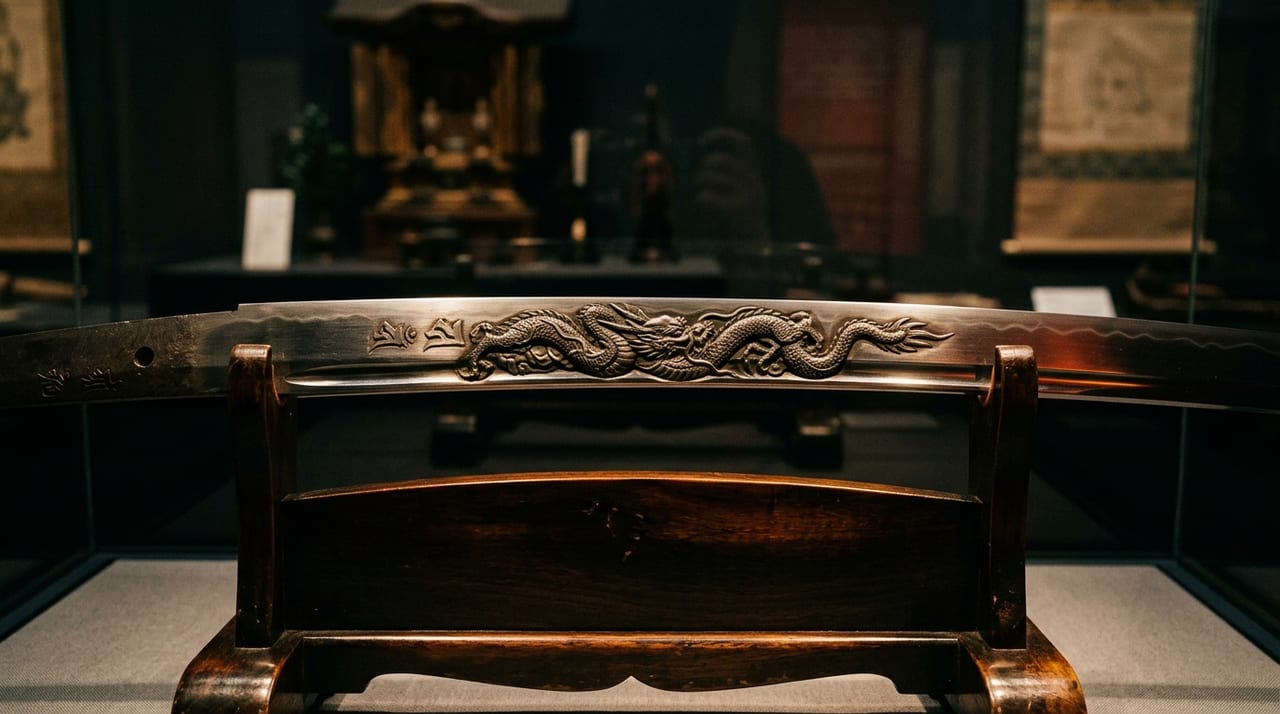 * Image is for illustrative purposes only.
Table of Contents
What is a Kenjoto? — Bladesmithing as the Ultimate Service
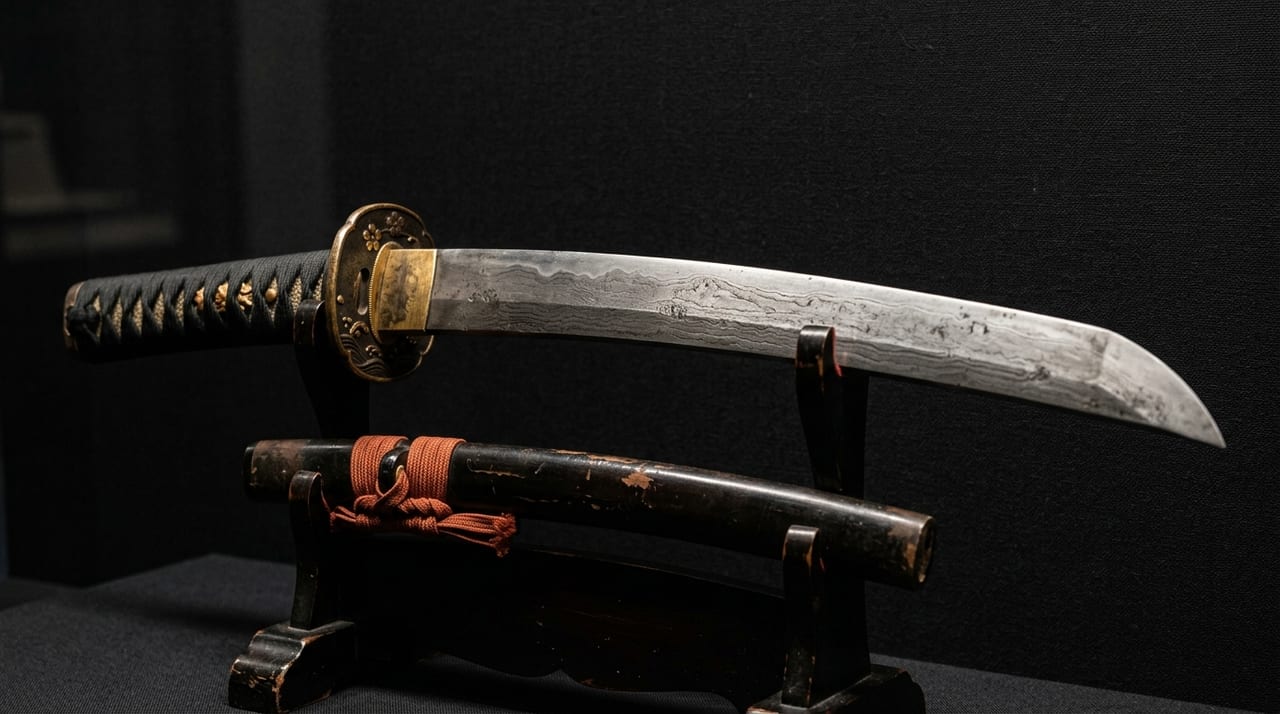
A kenjoto is a Japanese sword specially crafted to be presented to high-ranking figures of power such as the emperor, imperial family, shoguns, and daimyo. Unlike ordinary commissioned blades, the creation of a kenjoto was both the highest honor for a bladesmith and an ultimate challenge demanding absolute perfection.
The act of presentation held deep political and spiritual significance in Japanese samurai culture. When a bladesmith presented their work to the highest authority, it was not merely a commercial transaction, but an expression of their skill, sincerity, and loyalty as a craftsman. On the receiving end, those in power accepted the sword after evaluating the bladesmith's skill and spirit, thereby implicitly promising patronage and support.
The history of kenjoto is ancient; among the swords preserved in the Shosoin during the Nara period, some are believed to be blades presented to Emperor Shomu. During the Heian period, the practice of presenting fine swords as a courtesy to the imperial court became established, and following the founding of the Kamakura shogunate, presentation to the shogunal house was added. Through the Muromachi and Sengoku periods, the creation of kenjoto for the shogun and daimyo became most systematic and regular during the Edo period.
The Reality of Kenjoto Production — Differences from Standard Work
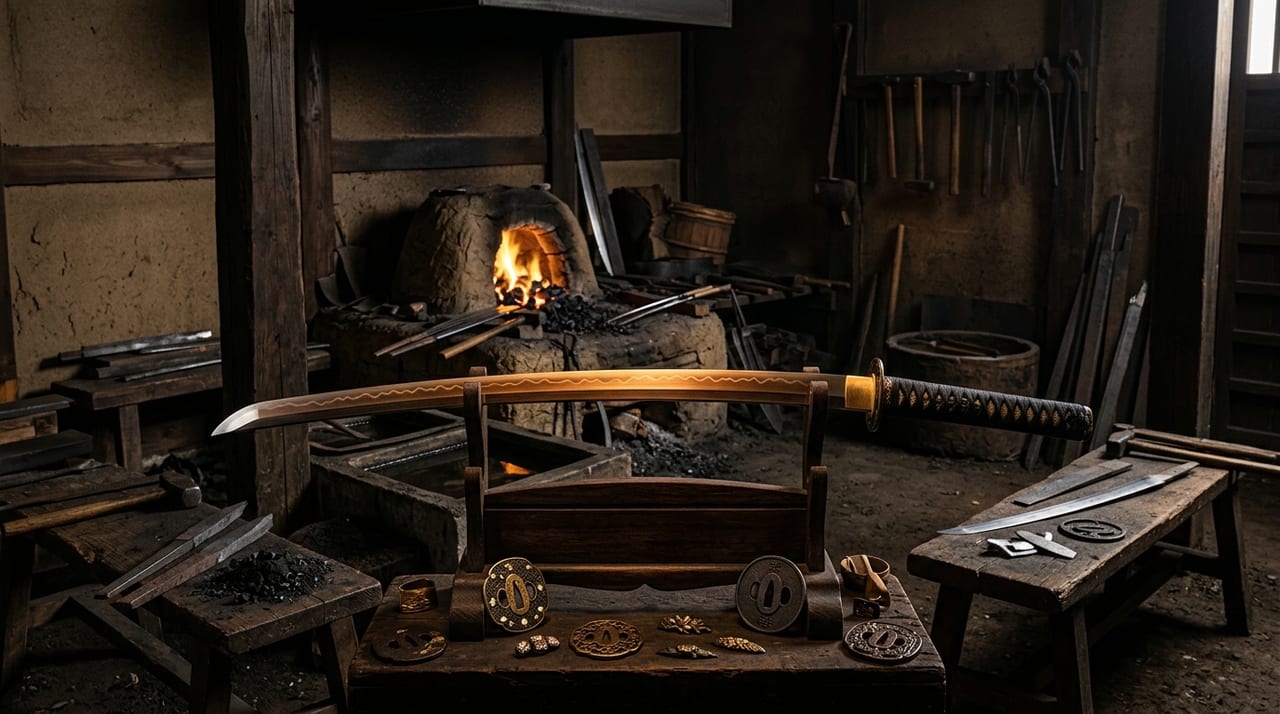
The production of kenjoto demanded precision and quality far exceeding normal standards at every stage of the process. From the selection of tamahagane as raw material through all stages of forging, quenching, polishing, and finishing, the bladesmith poured all their skill into the work.
First, the selection of tamahagane was conducted far more rigorously than normal. For kenjoto, tamahagane was selected from the finest material produced by tatara smelting, chosen by the craftsman's discerning eye. Using skilled judgment, the bladesmith evaluated the steel's color, texture, and carbon uniformity, and rejected any that showed even slight impurity.
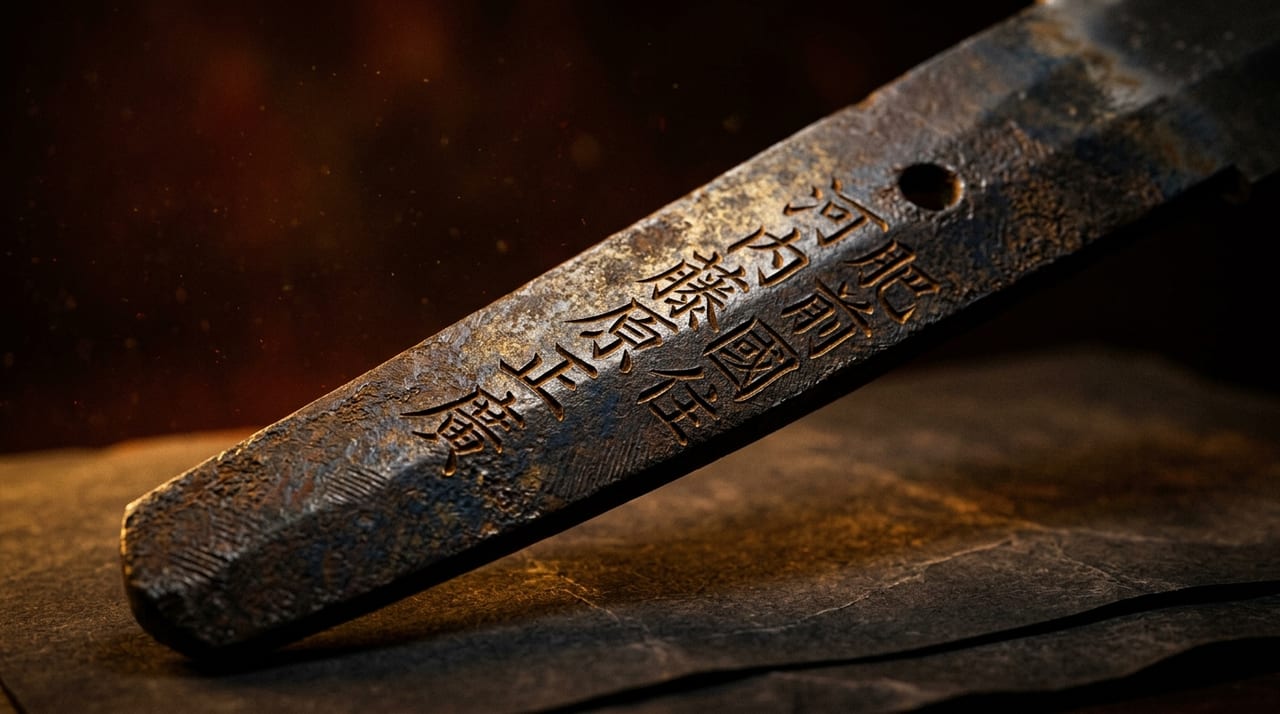
During forging, special attention was given to the number of folds in the forging process, temperature control, and uniformity of strike. It was customary for kenjoto to bear a mei, and this signature had to accurately record the bladesmith's name and the year of creation for posterity. Consequently, the nakago's form, finish, and the inscription of the mei were executed with greater care and time than in standard work.
Quenching—the application of clay and water—was the most demanding stage in kenjoto production. The bladesmith, always conscious that this blade was destined to be a kenjoto, paid meticulous attention to temperature judgment, timing of the quench, and how the blade was held. While ordinary commissioned pieces could be corrected or remade if flawed, the psychological weight of failing on a kenjoto was incomparably greater.
Gozen Kaji — The Pinnacle of Kenjoto Creation
Among all kenjoto production, a special place was occupied by "gozen kaji"—smithing before the lord. This was a ritual forging performed before the shogun, daimyo, or emperor and imperial family, and the completed blade became the presentation piece.
Records of gozen kaji remain in documents of various han during the Edo period, with examples throughout the land of renowned bladesmiths forging swords before their daimyo and presenting them on the spot. The bladesmith had to work in an environment entirely different from their normal forge—a specially prepared smithy set up for the occasion—under the watchful gaze of the daimyo and retainers. It was a spiritual ordeal requiring the display of all their skill while experiencing both extreme tension and a sense of honor.
Particularly renowned examples of gozen kaji for the shogunal house are those of Taikei Naotane and Suishinshi Masahide, representative bladesmiths of the late Edo shinshintō revival movement. The blades they forged before the Tokugawa shoguns are still highly valued as representing the pinnacle of the shinshintō revival movement.
The Political Effects of Kenjoto — What Bladesmiths Gained
For a bladesmith, the benefits of successfully creating a kenjoto for the shogun or daimyo were incalculable. The benefits gained included the following.
- The title of "goyotashi": This became the highest form of authorization as a bladesmith, dramatically raising his standing and having a profound effect in increasing both the quantity and quality of commissions.
- Kashihin (gifts from authority): Often bestowed by shoguns and daimyo, these included not only money but also clothing, tools, and official positions.
- Chigyo (stipends): Land and income granted to the bladesmith by the shogunate or han, which greatly elevated the bladesmith's social status.
Conversely, the price was steep if the presentation failed or if the presented blade was deemed defective. It could inflict fatal damage on the bladesmith's reputation, with the risk of orders drying up afterward. This pressure further drove bladesmiths to improve their technique, and the kenjoto culture became one of the driving forces for elevating the technical standard of Japanese swordsmanship.
The Inheritance of Kenjoto in the Modern Era
Even in the modern era, the practice of presenting swords in important imperial and governmental ceremonies has not entirely disappeared. For example, during the Grand Shrine of Ise's ritual renewal, new swords are commissioned for presentation to the new shrine buildings. In major imperial ceremonies such as a reigning emperor's enthronement, swords may also be presented in traditional form.
Modern bladesmiths who undertake kenjoto creation approach their work with the same spirit and skill as the master craftsmen of old. While employing the highest technical standards of today, they inherit the spirit of kenjoto creation since the Edo period—pursuing perfection and pouring one's entire being into breathing life into a single blade. The culture of kenjoto clearly demonstrates, even today, that the Japanese sword is a spiritual and cultural symbol transcending mere weapon or craft.