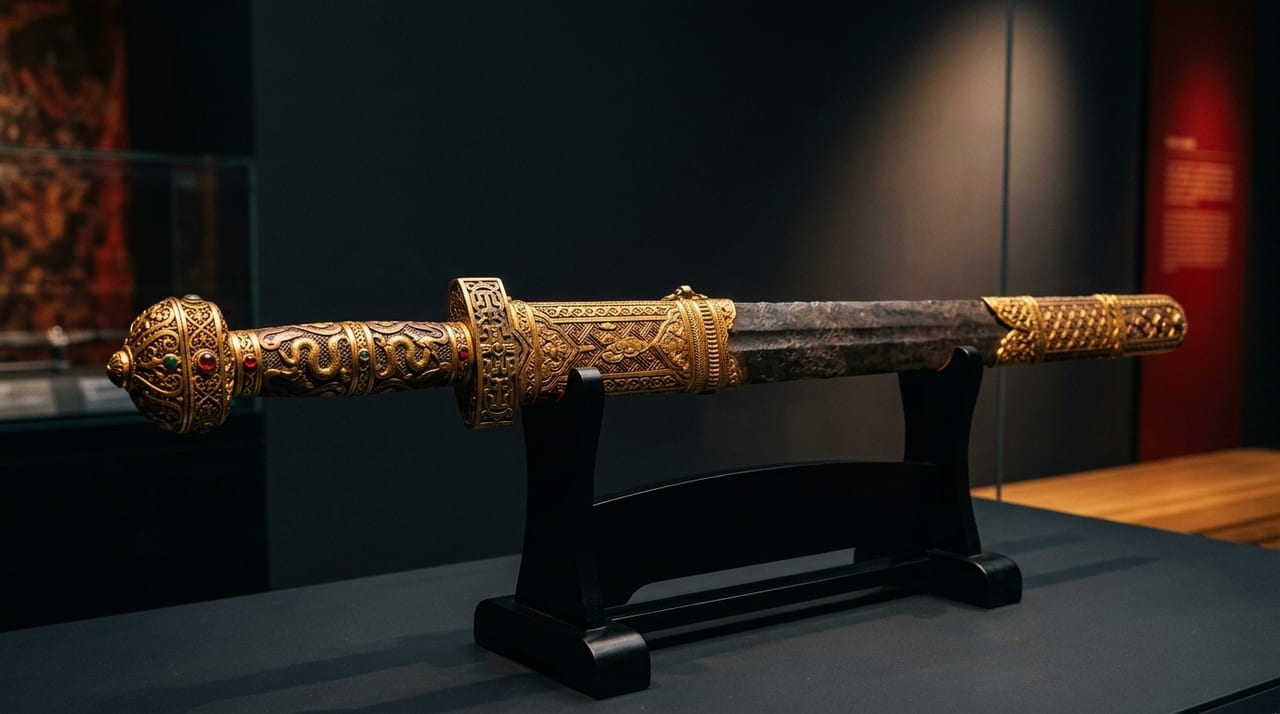
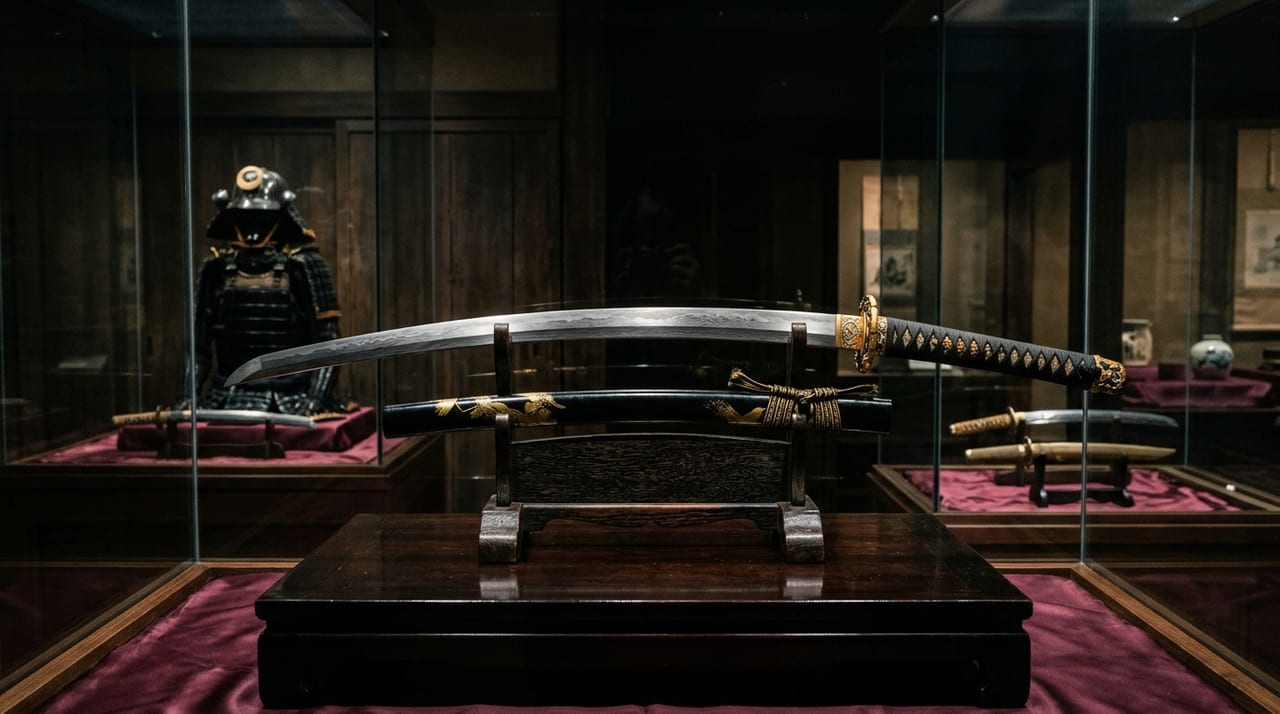
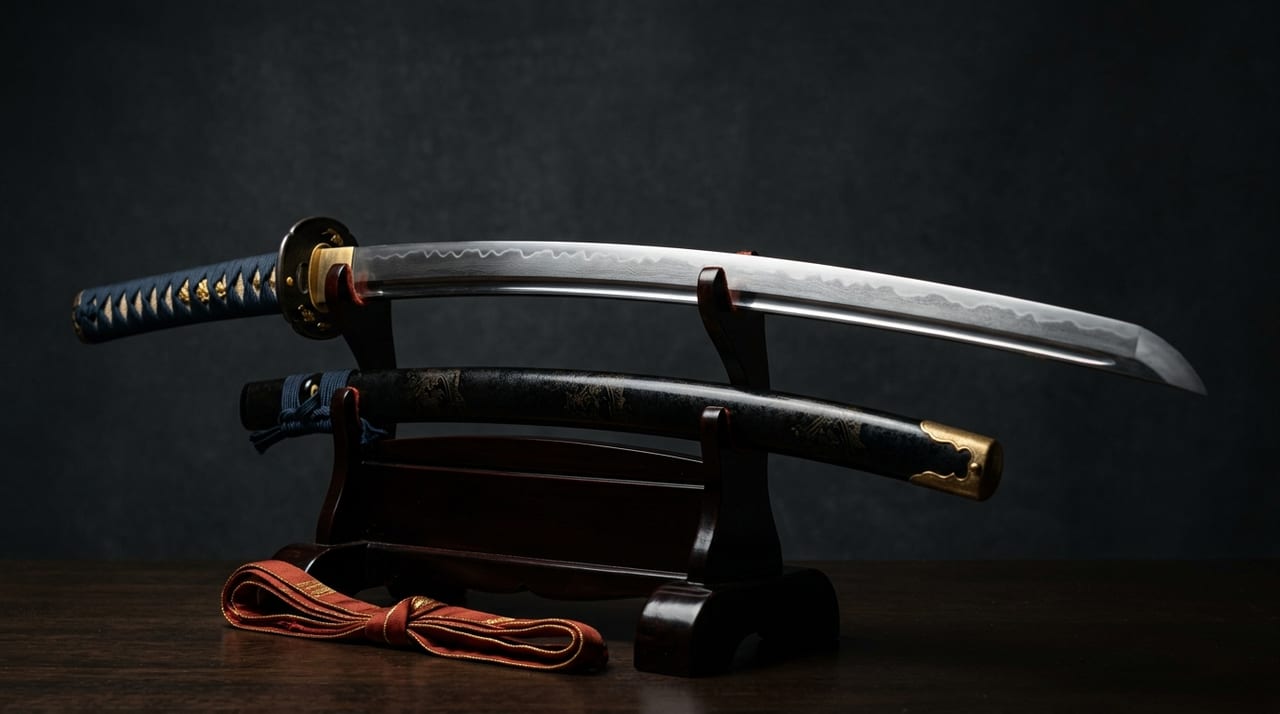
Oda Nobunaga (織田信長)'s Sword Patronage Activities—The Official Swordsmith System Established in the Azuchi Period and the Political Significance of Presented Swords
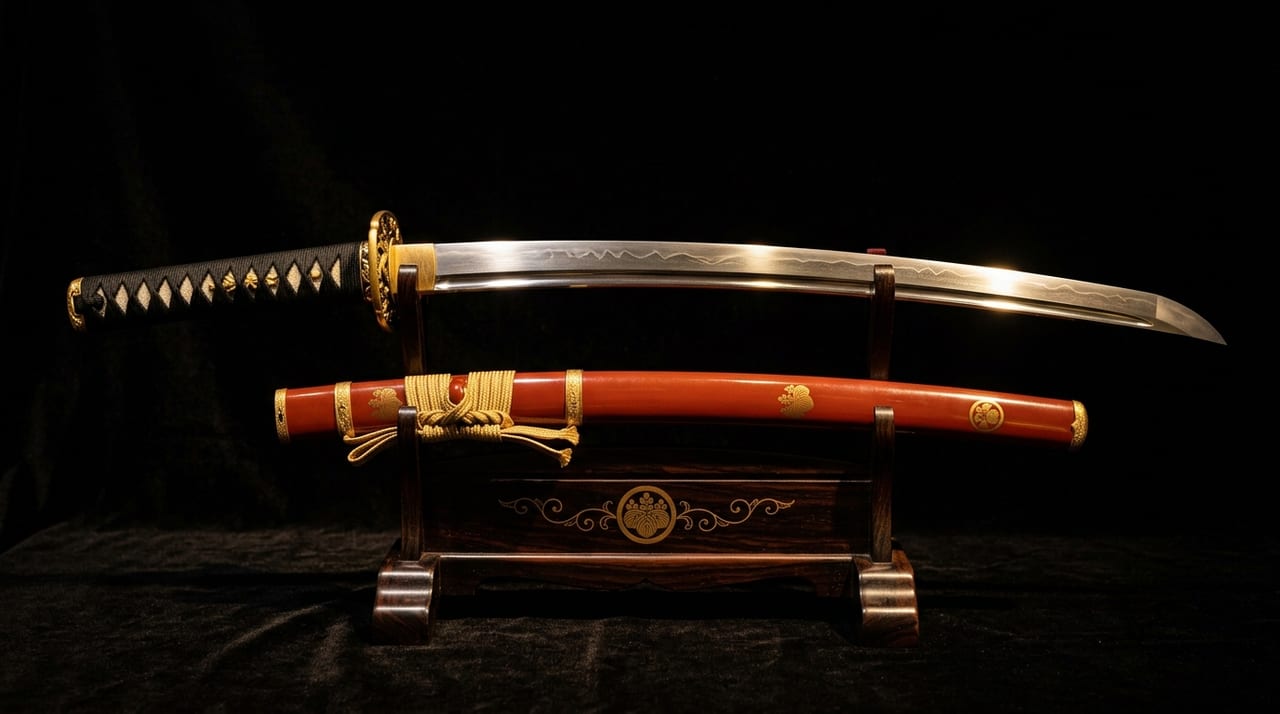 * Image is for illustrative purposes only.
Table of Contents
Nobunaga and Japanese Swords — Symbols of Military Power and Authority
Oda Nobunaga (1534–1582) is known as a Sengoku warlord who possessed deep attachment to and insight into Japanese swords. He valued Japanese swords not merely for their functional value as weapons, but skillfully utilized swords as tools of authority, diplomacy, and political assertion. Nobunaga's patronage of sword craftsmanship greatly shaped sword culture from the Sengoku period through the Azuchi-Momoyama period.
The systems and practices concerning swords that Nobunaga established while pursuing unification of the realm were inherited by the later Toyotomi and Tokugawa regimes, becoming the prototype of the "official sword-smith system" (goyou-toukou-seido) in early modern Japan. Understanding the framework of sword culture that Nobunaga established is essential for interpreting the history of Japanese swords as political and social history.
Azuchi Castle and the Gathering of Sword Smiths — Craftsman Patronage Based in the Castle Town
The construction of Azuchi Castle, which began in Tensho 4 (1576), was both a major project that visually demonstrated Nobunaga's authority and an opportunity to gather talented craftsmen and technicians in the castle town. Nobunaga summoned outstanding sword smiths from throughout the land to the Azuchi region and treated them generously as official sword smiths.
Among the sword smiths particularly favored by Nobunaga were the smiths of Mino and Seki, said to be successors of the Shizu lineage. Seki (Seki City, Gifu Prefecture) had long been a major center of sword production, and it was geographically close to Nobunaga's base at Gifu (Inabayama Castle). Nobunaga treated these sword smiths favorably as "official suppliers" and actively utilized their works as gifts to his retainers and diplomatic presents.
Furthermore, Nobunaga also devoted effort to improving the production environment for sword smiths during the transition period from the late koto (suekote) to shinto (new swords). By guaranteeing stable orders and supply of raw materials (tamahagane), he created an environment in which sword smiths could dedicate themselves to technical innovation.
Presentation and Conferment — Political Relations Mediated by Swords
The most noteworthy aspect of Nobunaga's sword diplomacy is the construction of political relations mediated by swords. It is confirmed in numerous historical documents that he actively utilized political communication combining sword "presentation" (kenjou) and "conferment" (kashi).
| Act | Direction | Political Meaning |
|---|---|---|
| Presentation (kenjou) | Retainer/Allied daimyo → Nobunaga | By displaying his appreciation of it, Nobunaga's acceptance of the presentation became a demonstration of recognizing the other's loyalty and ability |
| Conferment (kashi) | Nobunaga → Retainer | It was received as a demonstration of deep trust and favorable treatment toward that retainer |
Swords thus functioned not as mere weapons or property, but as a medium symbolizing political relations themselves.
After expelling Ashikaga Yoshiaki in Tensho 1 (1573) and effectively ending the Muromachi shogunate, Nobunaga repeatedly performed the act of presenting swords to Emperor Ogimachi as he consolidated his power base. While this was a traditional ritual by which the warrior class demonstrated military and financial power to the emperor and court, in Nobunaga's case it is believed to have had the clear political intent of asserting himself as "the ruler of the realm."
"Tenka Fubu" and the Symbolism of Swords — Ideology Embodied in a Seal
The seal "Tenka Fubu" (Unify the Realm through Force) that Nobunaga used is said to represent his will to pacify the realm through military power. It goes without saying that the Japanese sword is the symbol of this "force." Nobunaga, embodying the equation "sword = military power = authority," maximized the symbolic value that swords possessed.
It is recorded in historical documents such as the "Nobunaga-ko-ki" that Nobunaga was fond of excellent swords, and it is said that his collection included multiple celebrated swords of the time. Famous swords such as "Yagen Tōshirō" and "Yoshimoto Samonji" are said to have been in Nobunaga's possession, though there are various theories regarding historical confirmation.
What is certain, however, is that Nobunaga valued discernment in swords (connoisseurship) as one aspect of political acumen. The ability to distinguish fine swords, relate their provenance, and present them to appropriate recipients was part of the cultivation expected of the warlords and daimyo of that time, and Nobunaga possessed it at a high level.
The Influence of Nobunaga's Sword Culture on Later Periods
Nobunaga's patronage of swords was inherited by his successors Toyotomi Hideyoshi and Tokugawa Ieyasu and developed in even more refined forms.
- Toyotomi Hideyoshi: While collecting swords from peasants and temples/shrines through the "sword hunt" (katanagari), he was also known as a collector of fine swords, and it is said that the number of excellent swords he stored in paulownia boxes reached several hundred
- Tokugawa Ieyasu: After establishing the Edo shogunate, he systematically organized the conferment of swords to the Three Great Houses and daimyo, establishing an order within warrior society that incorporated swords as symbols of shogunal power
The framework that Nobunaga established during the Azuchi period—"patronizing sword smiths as official suppliers and utilizing swords as tools of political communication"—directly led to the system of officially retained sword smiths in the Edo period. The system by which each domain protected and cultivated the sword smiths under its rule and presented their works as objects of domain pride to the outside world was a direct continuation of the sword patronage culture pioneered by Nobunaga.
Though Nobunaga fell just a few years after the Azuchi period due to the Honnō-ji Incident (1582), the influence he exerted on sword culture is, like his significance as a warlord, deeply inscribed in the history of Japanese swords. His achievement in permeating the entire warrior society with the recognition that "swords are not mere weapons but symbols of authority and order" is highly evaluated today as Nobunaga's contribution to sword culture.