Burial Swords of the Kofun Period: Reading Royal Power and Political Meaning in the Swords of Fujinoki and Inariyama Tombs
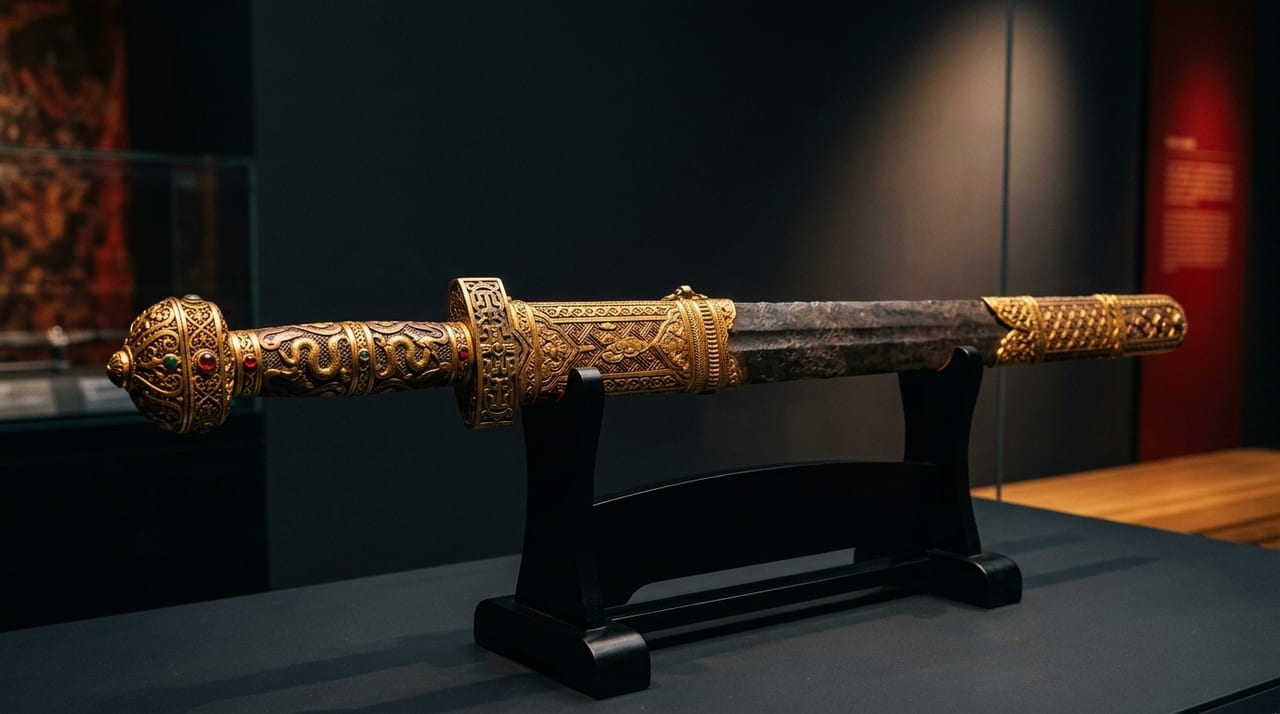 * Image is for illustrative purposes only.
Table of Contents
Swords of the Kofun Period—The Grave Goods That Tell of Power
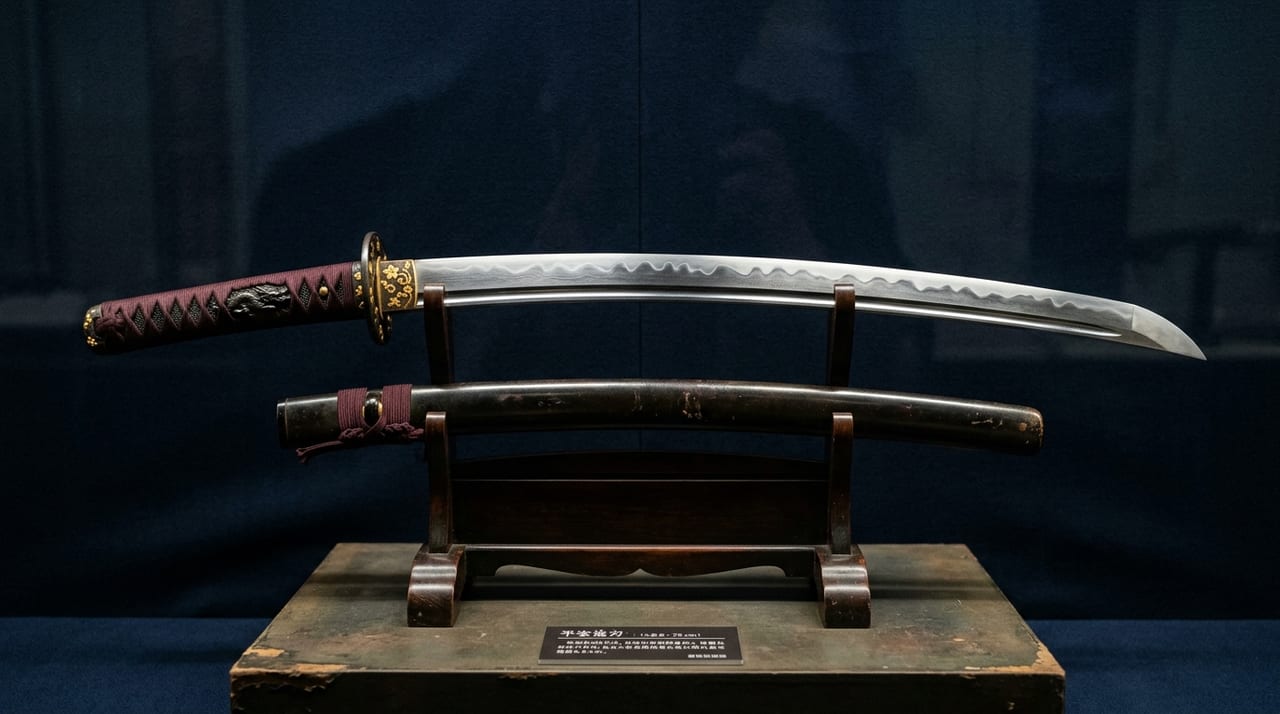
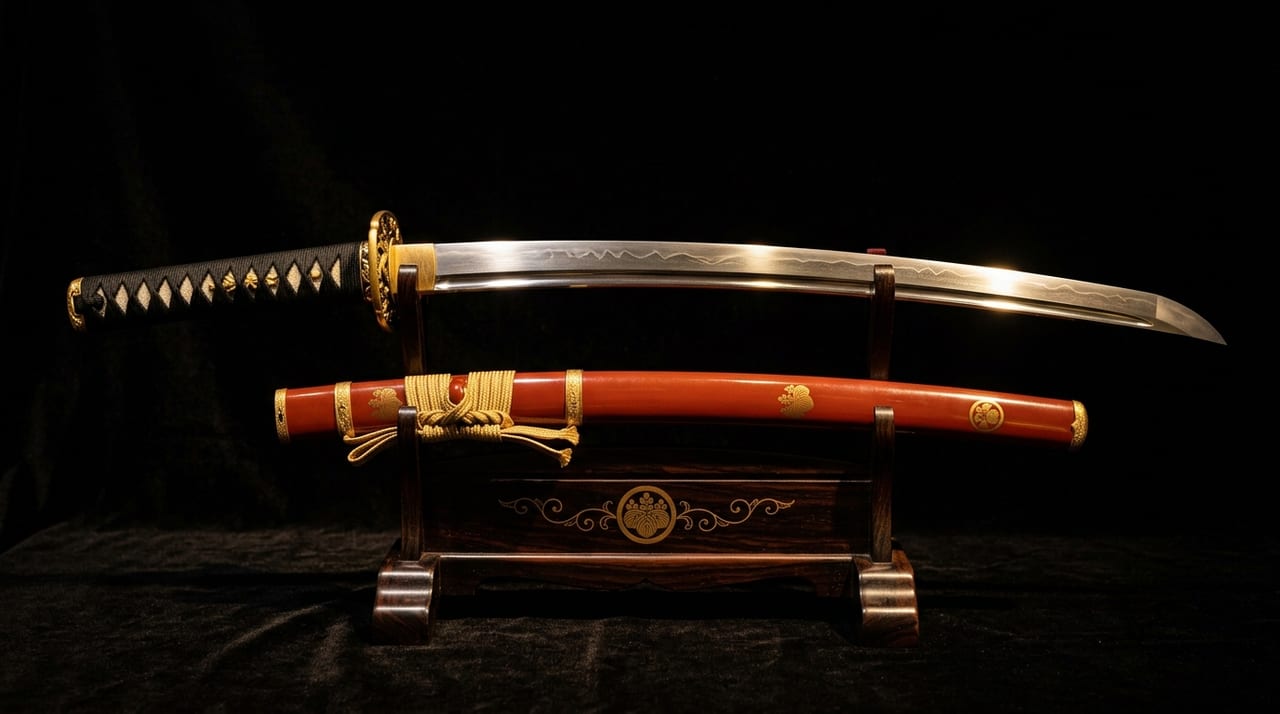
The Kofun period (late 3rd–7th centuries) was an era in which chieftains and royal powers possessing massive burial mounds (kofun) were established throughout the Japanese archipelago. Swords from this age took forms entirely different from the modern "Japanese sword"—primarily straight blades (chokutou: swords without curvature)—yet were buried in vast quantities as symbols of power.
The types, quantities, and placement of swords excavated from kofun are important archaeological materials for understanding the political structures, diplomatic relationships, and spiritual world of the time.
Types of Swords from the Kofun Period
The swords used and interred during the Kofun period were primarily of the following types.
Soken'ou Taichi (Simple-Ring-Pommel Large Swords)
Large straight blades with a simple ring-shaped (soken) pommel. This form was transmitted from the Korean Peninsula and continental China, and is frequently found buried in kofun dating to the 4th–5th centuries. The shape of the ring pommel was considered a symbol of authority, and such swords were often interred in the tombs of chieftain-class individuals.
Keitou Taichi (Jade-Shaped-Pommel Large Swords)
Large swords with a pommel shaped like a kei (a multi-angular form resembling a type of jade ornament). This form reflected the influence of Chinese Six Dynasties culture.
Kondo-Sou Taichi (Gold-Copper-Mounted Large Swords)
Elaborate large swords with sheaths, hilts, and fittings decorated in gilt copper (gold-plated bronze). These were high-status swords interred in the tombs of royal families and paramount chieftains, their meaning being more ritual and authoritative than practical.
Kenuki-Gata Taichi (Tweezers-Shaped Large Swords)
Large swords with tweezers-shaped (U-form) openwork metal hilts. These developed toward the Nara period and were used as formal military regalia.
The Fujinoki Kofun's Interred Swords—The Height of Luxury
The Fujinoki Kofun
The Fujinoki Kofun (located in Ikaruga Town, Ikoma District, Nara Prefecture, west of Horyu-ji Temple) is a circular mound (approximately 48 m in diameter) traditionally dated to the late 6th century. During excavations conducted between 1985 and 1988, an exceptionally abundant collection of grave goods was discovered within an unplundered stone coffin, making it one of the greatest discoveries in Kofun-period archaeology.
Contents of the Excavated Swords
The swords unearthed from within the stone coffin were as follows.
From the stone coffin, 5 large swords and 1 sword (6 pieces total) were excavated. At the center of this collection were kondo-sou taichi (elaborate large swords with sheaths, hilts, and belt fittings entirely covered in gilt copper), measuring approximately 80 cm in blade length and of considerable size. The sheaths bear finely incised designs of fish-scale patterns, scrollwork, and dragon motifs. The level of manufacturing technique represents the pinnacle of Japanese craftsmanship of the age, and it is thought that artisans from Baekje (Korean Peninsula) may have been involved in their production.
Other Swords and Blades: The burial also included silver-mounted swords and iron straight blades, with the stone coffin filled with not only swords but also horse trappings, beads, and crowns.
Whose Tomb Was It?
The identity of the person buried in the Fujinoki Kofun remains undetermined. Because the Ikaruga region (surrounding Horyu-ji Temple) is sacred ground associated with Prince Shotoku, members of the imperial family—likely the prince's siblings or cousins—are the strongest candidates. The high status of the kondo-sou taichi interred there suggests that the buried person was of the highest rank of royalty.
The Inariyana Kofun's Inscribed Iron Sword—Evidence of Yamato Royal Authority
The Inariyana Kofun
The Inariyana Kofun (located in Gyoda City, Saitama Prefecture) is one of the kofun in the Saitama Kofun group, traditionally dated to the late 5th or 6th century. During excavations in 1968, an iron sword (chokkin: a straight iron blade) was unearthed. Subsequent X-ray examination (1978) revealed that 115 characters of gold inlay inscription were engraved on the blade surface.
Contents and Significance of the Gold Inlay Inscription
The inscription records that a person named "Owake no Omi" served "Wakatakeru no Ookimi (Emperor Yuryaku)."
This inscription is historically of the utmost importance in the following respects:
- Confirmation of Yamato Royal Authority's Dominion: The inscription proves that local rulers in Saitama (Kanto region) served the "Great King" of Yamato (Kinki region), demonstrating that Yamato royal authority had extended political control over the Kanto region by the late 5th century.
- Use of the "Great King" Title: This is among the oldest domestic examples of the title "Great King" appearing in Japanese written records (rather than in historical chronicles, but in unearthed artifacts). It serves as crucial primary material for understanding the origins and development of the imperial system.
- Level of Gold Inlay Technique: The sophisticated technique of inlaying gold into an iron sword represents technology transmitted from the continent (China and the Korean Peninsula), demonstrating that Yamato royal authority was actively adopting continental culture.
The Political and Religious Meaning of Interred Swords
Swords as the Visualization of Power
During the Kofun period, the interment of swords was not merely an act of "burying weapons." The number, grade, and luxury of interred swords served as a political act demonstrating the buried person's power, status, and diplomatic relationships even after death. The ability of a chieftain to inter elaborate kondo-sou taichi was itself proof of the wealth and diplomatic networks such a person possessed.
Magical and Religious Meaning
Swords functioned as magical objects believed to possess the power to "ward off evil" and "protect spirits." The practice of placing swords around the coffin or beside the corpse was a religious act meant to pray for the deceased's peace and spiritual protection in the afterlife. The later Shinto veneration of sacred swords (such as the Kusanagi Sword and Futo-no-Mitama Sword) as divine objects represents a continuation of this Kofun-period belief in the spiritual power of swords.
The Influence of Continental Culture—Relations with the Korean Peninsula and China
The majority of swords interred during the Kofun period were either "imported goods" obtained through diplomacy and trade with the Korean Peninsula (Baekje, Gaya, and Silla) or the Chinese mainland, or "imitative pieces" produced in Japan by continental craftsmen (migrants). Relations with Baekje were particularly deep, and through exchange among royal families, swords, horse trappings, and metalworking techniques were transmitted to Japan. The kondo-sou taichi of the Fujinoki Kofun is a prime example of this.
This adoption of continental culture created the historical current that led to the establishment of the Nara-period ritsuryo state and the subsequent development of distinctly Japanese swords (tachi) in the Heian period.
Conclusion—The Dawn of Japanese History Told by Kofun Swords
The interred swords of the Kofun period are not the direct ancestors of the modern "Japanese sword." Nevertheless, the roles these swords embodied—"symbol of royal authority," "vessel of spiritual power," and "evidence of continental cultural adoption"—form the spiritual foundation of later Japanese sword culture.
The concept of "swords crafted with the utmost technique and resources" demonstrated by the kondo-sou taichi of the Fujinoki Kofun, and the culture of "recording information on sword blades" demonstrated by the inscribed iron sword of the Inariyana Kofun—these continue to live on in modern Japanese sword culture more than 1500 years later.