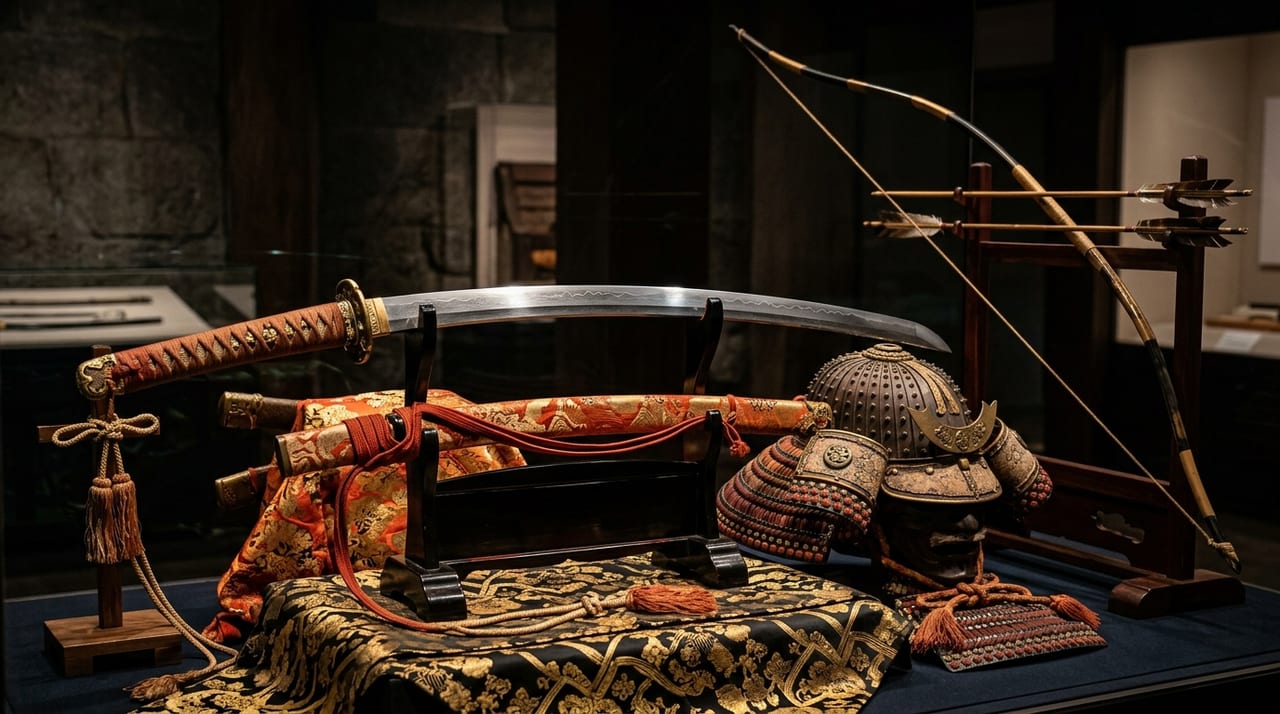
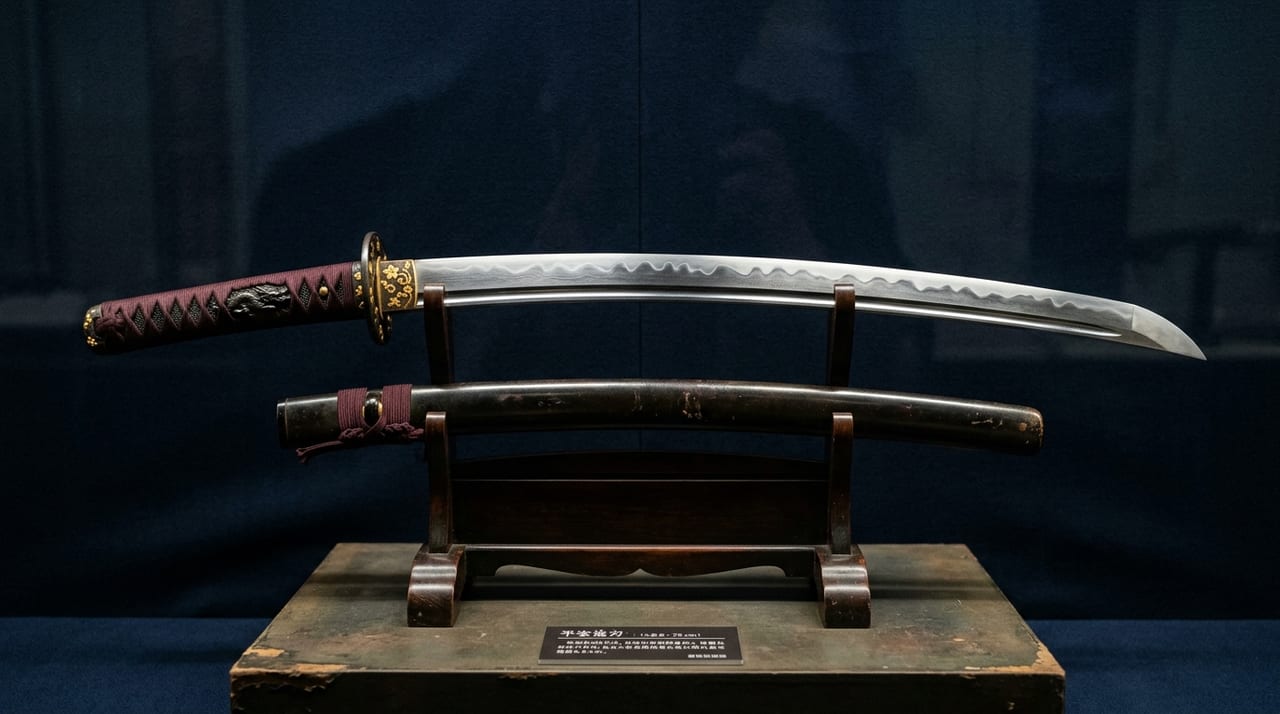
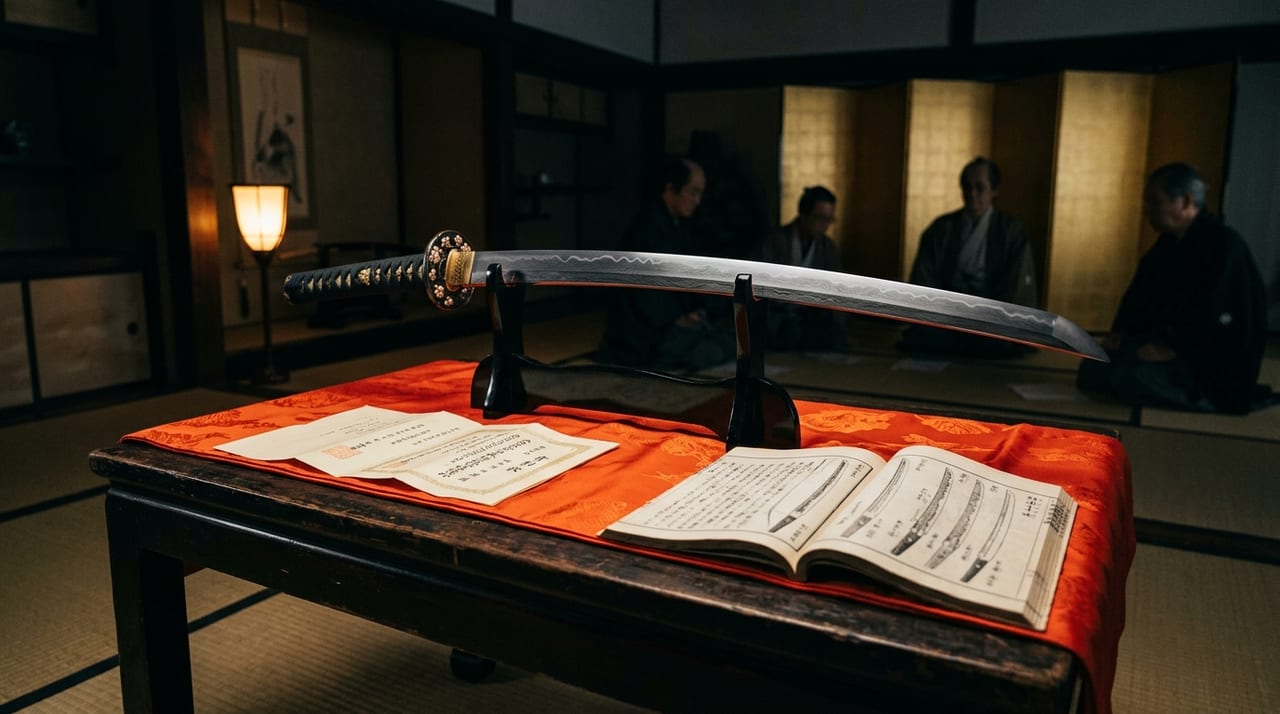
Swords Before the Tachi — Chokutō of the Kofun, Asuka, and Nara Periods and the Origins of the Nihontō
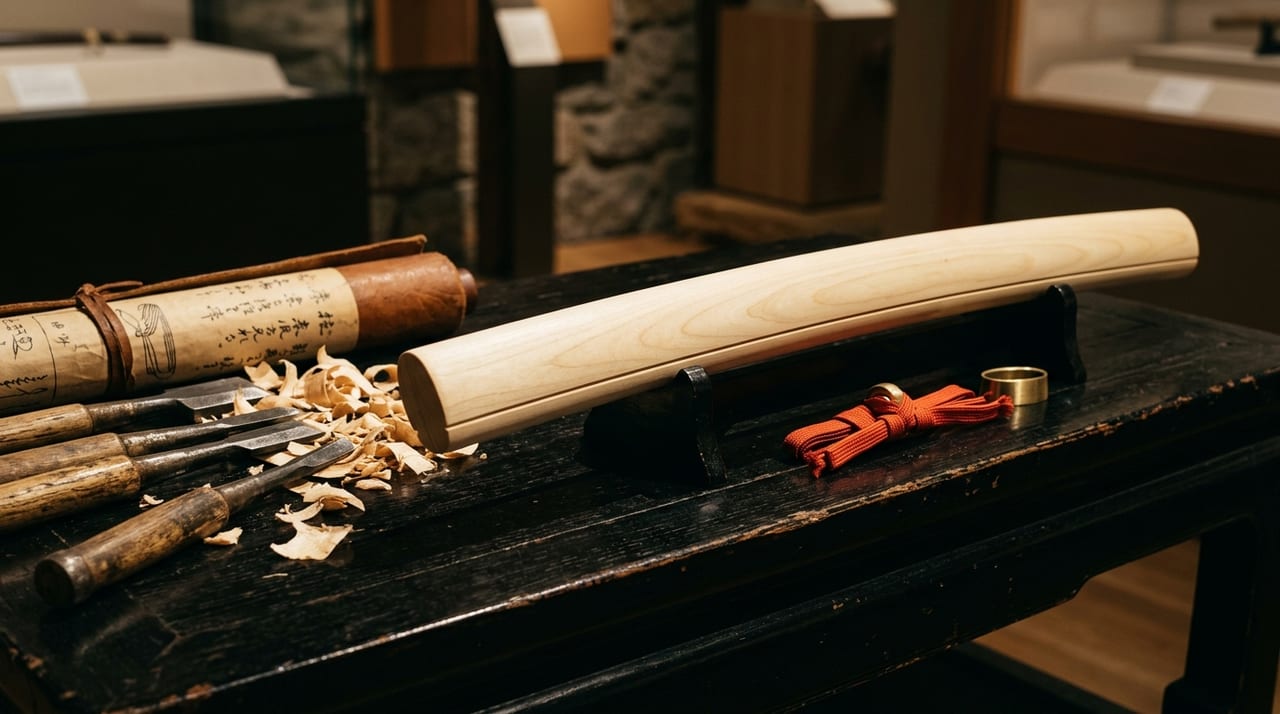 * Image is for illustrative purposes only.
Table of Contents
The Age of the Chokutō — From the Kofun Period to the Nara Period
Before the modern concept of the "nihontō" was established, swords on the Japanese archipelago can be broadly divided into two lineages. One is the chokutō tradition transmitted from the Korean Peninsula and China, and the other is the wantō tradition that developed uniquely on the Japanese archipelago.
From the Kofun period to the Asuka period (3rd–7th centuries), the dominant swords used by the ruling class of the Japanese archipelago were chokutō. These swords, with straight blades and either single- or double-edged construction, originated in the sword-making technology of China's Han dynasty and Three Kingdoms period, and were transmitted to Japan via the Korean Peninsula. Many of the iron swords excavated from kofun are chokutō, and for the ruling class of the time they served both as symbols of power and as practical weapons.
The manufacturing techniques for chokutō were strongly influenced by China, but gradually changed through use on the Japanese archipelago. Many elements were "Japanized," including the distribution of thickness between the blade edge and the mune, the proportions between the tsuka and the blade, and the method of making the fittings (tsuka and saya). However, chokutō of this period still strongly retained the character of "imitation of foreign technology."
The Emergence of the Wantō — From the Nara Period to the Early Heian Period
Between the 8th and 9th centuries, a dramatic change came to sword-making on the Japanese archipelago: the transition from chokutō to wantō.
Behind this change lies the development of combat styles unique to the Japanese archipelago. As mounted combat became dominant on the battlefield, demand grew for swords that were "more powerful in cutting and easier to draw in a single stroke" than chokutō. The wantō, with its sori, has a shape suited to cutting down enemies in mounted combat, and this military necessity is thought to have driven the change in shape.
At the same time, manufacturing techniques were also evolving. Techniques for controlling the hardness and flexibility of steel — such as "folded forging" and "reheating" — were refined, enabling the production of swords that were stronger and more durable. These techniques, while based on knowledge from China and Korea, evolved in their own unique direction through trial and error within Japan.
Culmination in the Tachi — From the Mid- to Late Heian Period
By the mid-Heian period of the 10th and 11th centuries, the nihontō reached one form of completion as the "tachi."
The tachi typically refers to a sword with a nagasa of 70 cm or more, deep sori, and a blade that is thickest at its center and tapers gradually toward the tip. The wearing style known as "tsuri-tachi," in which the sword is suspended from the saya and thrust through the belt, had become established as the standard equipment of the mounted warrior (buke).
During this period, sword-making came to be carried out systematically by specialized groups called tōkō. Clusters of kaji formed in regions blessed with iron resources and water, such as Yamashiro Province (present-day Kyoto Prefecture), Sagami Province (present-day Kanagawa Prefecture), and Bizen Province (present-day Okayama Prefecture), each developing its own techniques and styles. Also significant is the fact that during this same period, the tōkō's signature known as the mei came to be inscribed on the blade, making it possible to clearly identify each tōkō's individuality and skill.
The Functional Design of the Tachi — The Role of Sori
The defining feature of the tachi is the sori. This sori is not merely an aesthetic choice but the result of an extremely refined functional design.
A blade with sori maximizes cutting efficiency in mounted combat. When striking an enemy from horseback, the sori of the blade naturally causes "the contact surface against the enemy's shoulder or arm to approach perpendicular, increasing the penetrating force of the cut." It also makes upward diagonal cuts easier, and simplifies attacks that avoid the opponent's armor and shield.
Furthermore, sori also contributes to "efficiency of motion when drawing for a strike." Drawing a curved sword from its saya is smoother than drawing a chokutō, and the moment the draw is complete, the sword is already in a striking posture. This characteristic, which reduces time lost in combat, was extremely important in the life-or-death environment of actual battle.
Technical Completion — Jihada, Hamon, and Forging
During the age of the tachi, many of the aesthetic and technical characteristics of the nihontō were established.
Jihada — the pattern visible across the entire blade — is produced by repeatedly performing folded forging. The many varieties of jihada pattern are the result of deliberate forging by the kaji, and identifying these patterns provides important information for determining the tōkō and period.
- mokume
- itame
- masame
Hamon — the wave-like pattern visible along the edge — is produced by the concentration of carbon during yaki-ire (quenching). The pattern of the hamon is the most important indicator of a tōkō's school and period.
- suguha
- chōji-ha
- gunome-ha
- midare-ha
Many of these technical characteristics were completed during the age of the tachi (10th–13th centuries) and formed the foundation for the subsequent development of the nihontō.
From Tachi to Uchigatana — Another Shift in Combat Style
The era in which the tachi reigned as the definitive form eventually came to an end. With the advent of the Sengoku period (15th–16th centuries), combat styles changed dramatically once more.
In the Sengoku period, when massed infantry combat became the norm, the importance of mounted combat declined, and strikes delivered from tight infantry formations and over armor became dominant. Swords evolved in response to these changes, and the uchigatana — worn in the "sashi-uchigatana" style, thrust through the belt — became the new standard. The transition from tachi to uchigatana was another major technological shift that reflected changes in the combat environment in sword design.
From the chokutō of the Kofun period, to the tachi of the Heian period, and on to the uchigatana of the Sengoku period — the history of the nihontō is the story of a sword culture that evolved in form and function in response to the demands of each age, while always remaining a weapon of actual combat.