Heian Katana Tradition: From Kofun Straight Blade to Curved Blade Evolution
 * Image is for illustrative purposes only.
Table of Contents
The Age of Straight Swords—The Culture of Swords Transmitted from the Continent during the Kofun Period
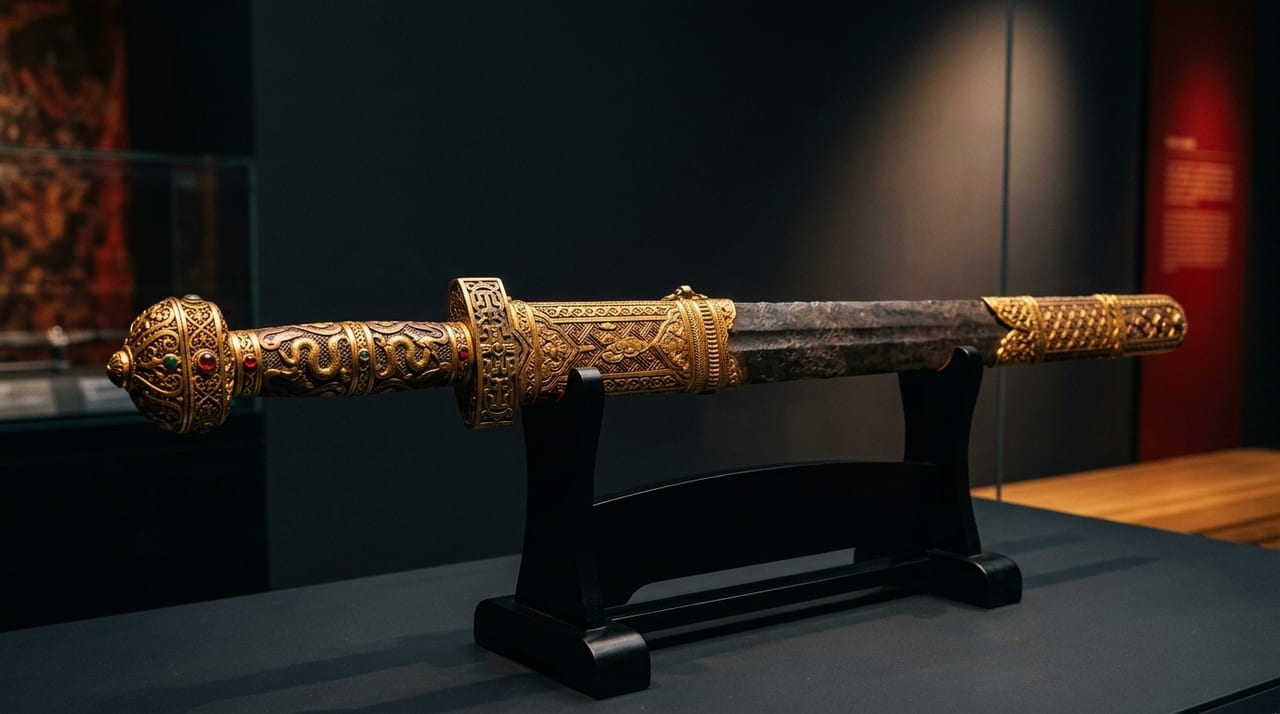
During the Kofun period (3rd–7th centuries), the Japanese archipelago was dominated by chokutou, or straight swords, transmitted from the continent. Their form was literally linear, manufactured based on metallurgical techniques from China and the Korean Peninsula. Examining excavated artifacts shows that the blade width was relatively broad, the blade itself was thin and uniformly forged, and the design was versatile, capable of accommodating both cutting and thrusting motions.
Continental straight swords were transmitted primarily to the ruling class of the Yamato court as ceremonial and authoritative objects. While existing alongside the bronze culture that continued from the Yayoi period, iron straight swords gradually began to be imitated and produced within the archipelago. Many straight swords excavated from kofun feature decoration using inlay technique, revealing that they served not only as functional weapons but also as symbols of authority.
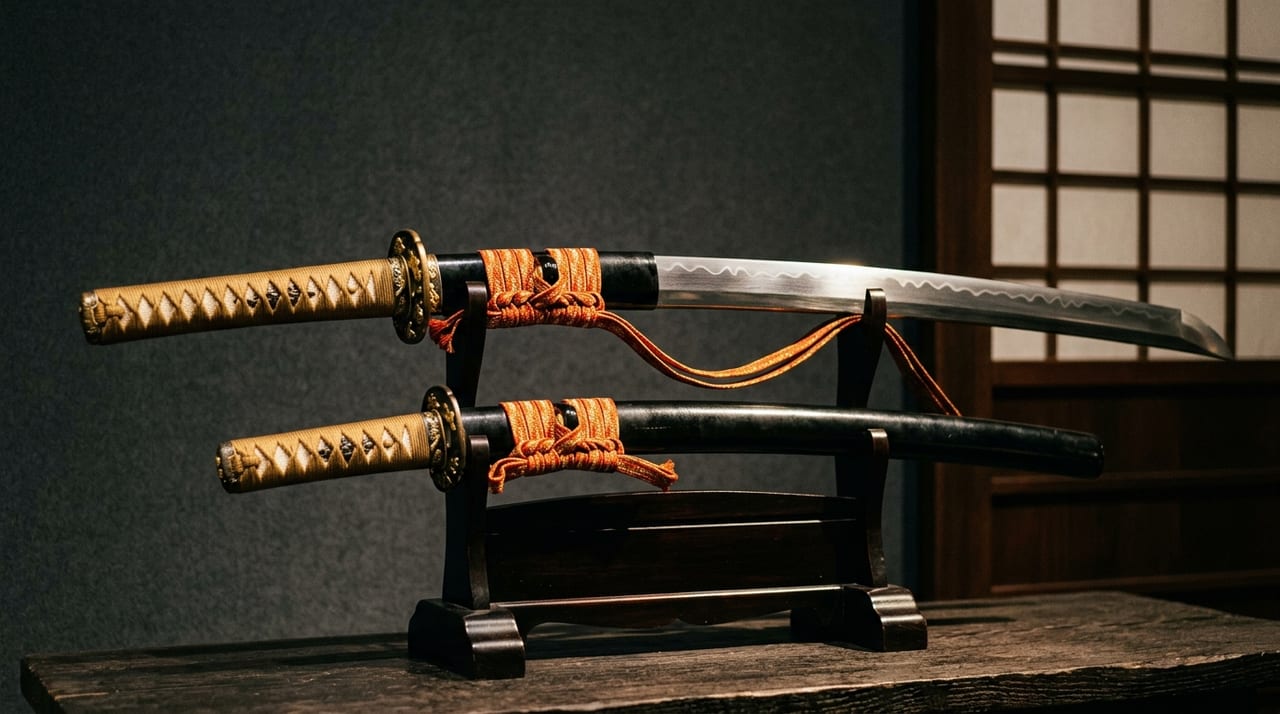
However, upon entering the Heian period (794–1185) through the Nara period (8th century), the form of swords and blades underwent dramatic change. The uniquely Japanese tachi, which possessed sori, or curve, was born, and the straight sword culture that had existed until then was rapidly replaced. Why did Japanese swords undergo such fundamental morphological transformation? The background lay in the convergence of three currents: military, technological, and cultural.
The Spread of Mounted Warfare and the Inevitability of "Sori"
The shift in combat style during the Heian period was the greatest factor determining the form of the sword. Before the Nara period, combat centered on collective battles by infantry, but as the Heian period began, mounted samurai rose to prominence centered in the eastern provinces, and the main actors on the battlefield shifted to samurai on horseback.
The blade shape required for swinging a sword from horseback differs entirely from the motion of thrusting a sword from the ground. When cutting an opponent from a galloping horse, a linear blade tends to stop the moment the blade enters flesh. In contrast, a curved blade continues to slide smoothly when performing a draw cut, allowing for deep slashing from a single blow on horseback.
From a physical standpoint, sori carries important significance. With appropriate curve in the blade, the center of gravity moves in an arc when the blade is swung down, allowing rotational force to be efficiently concentrated at the blade tip. Furthermore, impact is dispersed across the entire blade, providing the structural advantage of being less prone to breakage than straight swords.
Moreover, mounted warfare required complex movements: entrusting one's center of gravity to the stirrups while operating the reins with one hand and wielding a sword with the other. Therefore, a shape that was easy to handle with one hand and could be quickly withdrawn after striking—in other words, a design with curve concentrated in areas called koishizori (curve at the hilt) or sakizori (curve at the tip)—naturally became desirable.
Innovation in Metallurgy—Establishment of Tamahagane and Hardening Techniques
Running parallel to morphological transformation, the technology of iron smelting and forging also evolved significantly. This provided the technological foundation that made curved tachi realizable.
During the straight sword era, iron refinement was conducted at relatively low temperatures, making control of carbon content difficult. As a result, structures where the entire blade possessed uniform hardness were the mainstream. While this is simple as a manufacturing method, it could not escape the tradeoff of being too hard and prone to breaking, or too soft and edges becoming dull.
One innovation that Japanese swordsmiths reached in the Heian period was stable production of tamahagane. The tatara iron-smelting technique, which refines iron sand as raw material through prolonged smelting at low temperatures, became refined, enabling the sorting and differentiation of steels with varying carbon content. The composite structure of placing hard steel at the edge and soft steel at the core emerged precisely because material selection techniques became established during this period.
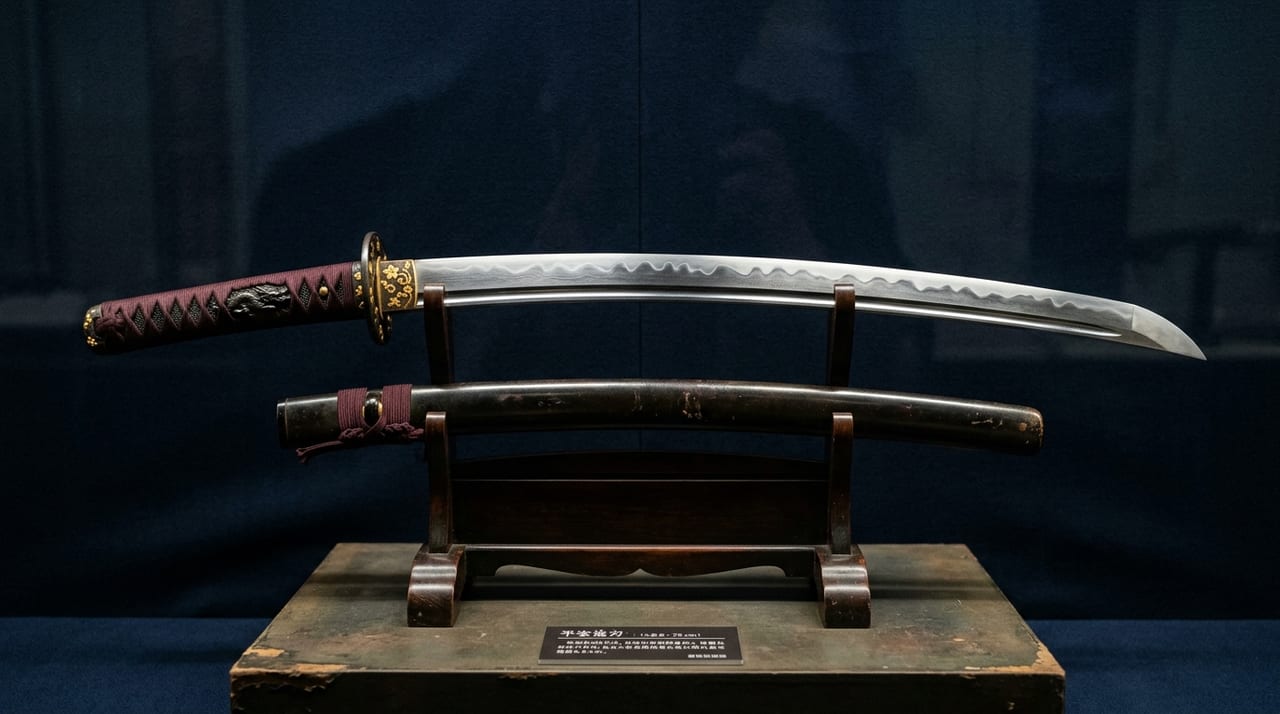
And the most crucial technological innovation was the establishment of yakiire, or hardening. This process, where a heated blade is rapidly cooled in water, dramatically increases edge hardness. Simultaneously, the difference in cooling speed between the back and edge brings about curve in the blade. In other words, the "sori" of the tachi is partly a byproduct that arose from advanced hardening techniques, with technological advancement propelling morphological transformation.
The hamon, or blade pattern, that emerges through hardening also diversified from this period onward. The pattern of light appearing at the boundary between edge and base metal directly demonstrates the technical skill of forging, later becoming an important criterion for aesthetic evaluation.
Dissolution of the Ritsuryo System and the Rise of the Samurai—Social Background
In understanding sword morphology changes, the transformation of contemporary social structure cannot be overlooked. The sakimori (frontier guards) and gundan (militia unit) systems, established under the ritsuryo state structure, gradually lost function from the late Nara through early Heian periods. As direct military mobilization by the central government became difficult, local power brokers organized private armed groups.
This birth of the samurai fundamentally changed sword demand and role. Rather than tools managed by the ritsuryo state's armories, the concept of "the samurai's sword," possessed by individual samurai as their identity, was born.
The sword transcended mere weapon to embody family lineage, honor, and spirituality. This transformation accelerated the aesthetic refinement of the tachi. The curve of the blade, the grain pattern of the base metal, and the design of the blade pattern became symbols expressing the owner's social standing and aesthetic sensibility. In the aristocratic society of the Heian period, superior tachi held high value as tribute to the court or as gifts, establishing cultural status transcending that of mere practical objects.
Establishment of the Yamashiro and Yamato Traditions—Birth of Regional Schools
From the mid-to-late Heian period, "sword-forging schools" possessing unique forging traditions formed in various regions. Among these, the Yamashiro-den of Yamashiro Province (present-day Kyoto Prefecture) and the Yamato-den of Yamato Province (present-day Nara Prefecture) are known as the oldest schools to establish the archetype of Japanese swords.
| School | Base | Characteristics |
|---|---|---|
| Yamashiro-den | Yamashiro Province (present-day Kyoto Prefecture) | Through proximity to the capital, connections with nobility and temples and shrines were strong, and it is said to have produced elegant and refined tachi |
| Yamato-den | Yamato Province (present-day Nara Prefecture) | Deeply connected with the great temples of Nara, transmitting unique forging techniques |
The tachi of both traditions became foundational stones that later swordsmiths regarded as models in the "kotou" (ancient swords).
The various traditions later systematized as the "gokaden" (five schools) from the Kamakura period onward also traced their roots to regional blacksmith culture of the Heian period in most cases. The origins of sword forging in Bizen Province (present-day Okayama Prefecture) are said to trace back to this period, and sword-forging groups with distinct materials, techniques, and aesthetic sensibilities formed across Japan.
From Straight Sword to Tachi—Meaning as a Cultural Turning Point
The change from the straight swords of the Kofun period to the tachi of the Heian period was not merely a change in sword form. It was an event reflecting the transformation of Japanese society itself.
It was no accident that Japan during the Kofun and Nara periods, which was in a phase of receiving continental culture, used straight swords derived from China and Korea. That uniquely Japanese tachi were born in the Heian period represents the very process by which Japan reinterpreted foreign culture in accordance with its own environment and needs, creating its own distinctive culture. One might say this was the manifestation of "national character culture" in the history of bladed weapons.
Military necessity promoted technological innovation, technological innovation brought forth new aesthetic standards, and aesthetic standards formed the identity of the samurai—this chain produced the Japanese sword, a cultural craft object without parallel. Most masterwork tachi transmitted to the present saw their form perfected from the late Heian through early Kamakura periods, and subsequent development of Japanese swords is nothing but variation and refinement of the prototype established during this period.
When appreciating swords, simply observing the depth of their curve or the form of their blade pattern allows the background of the era and region in which they were made to emerge. Straight sword to tachi—understanding the meaning of that transformation is the first step toward more deeply comprehending Japanese swords as works of art.