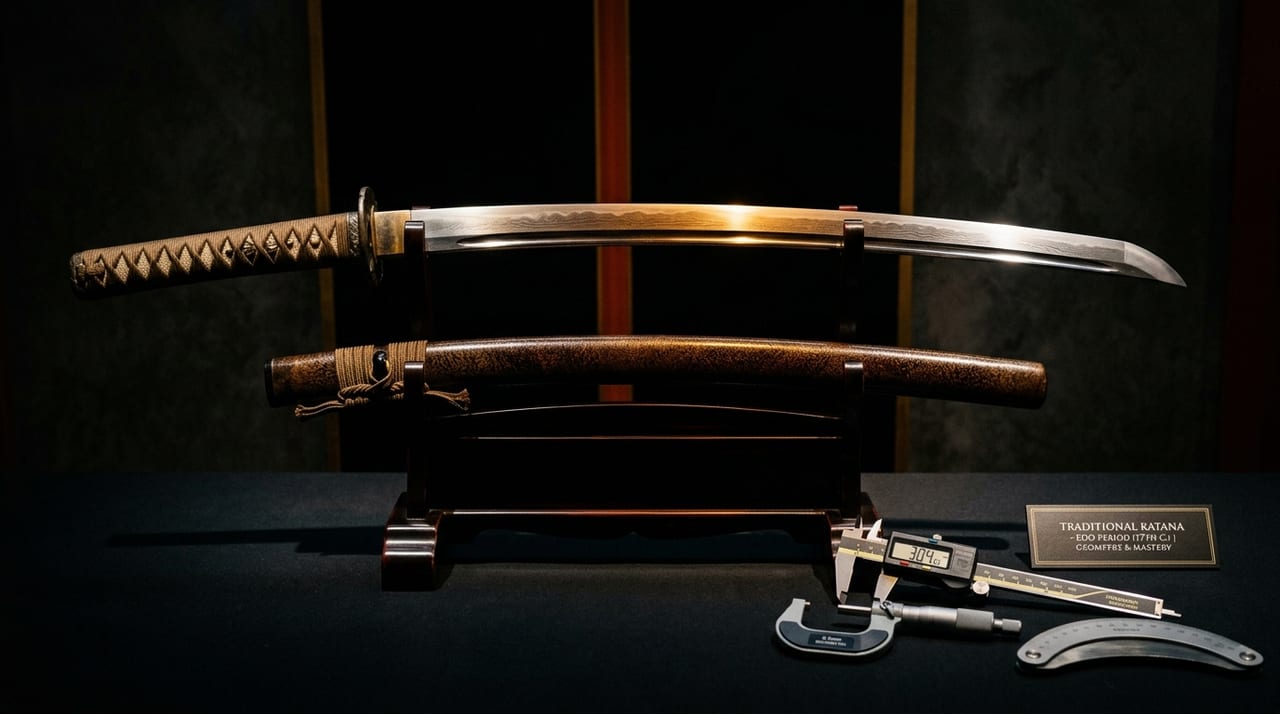
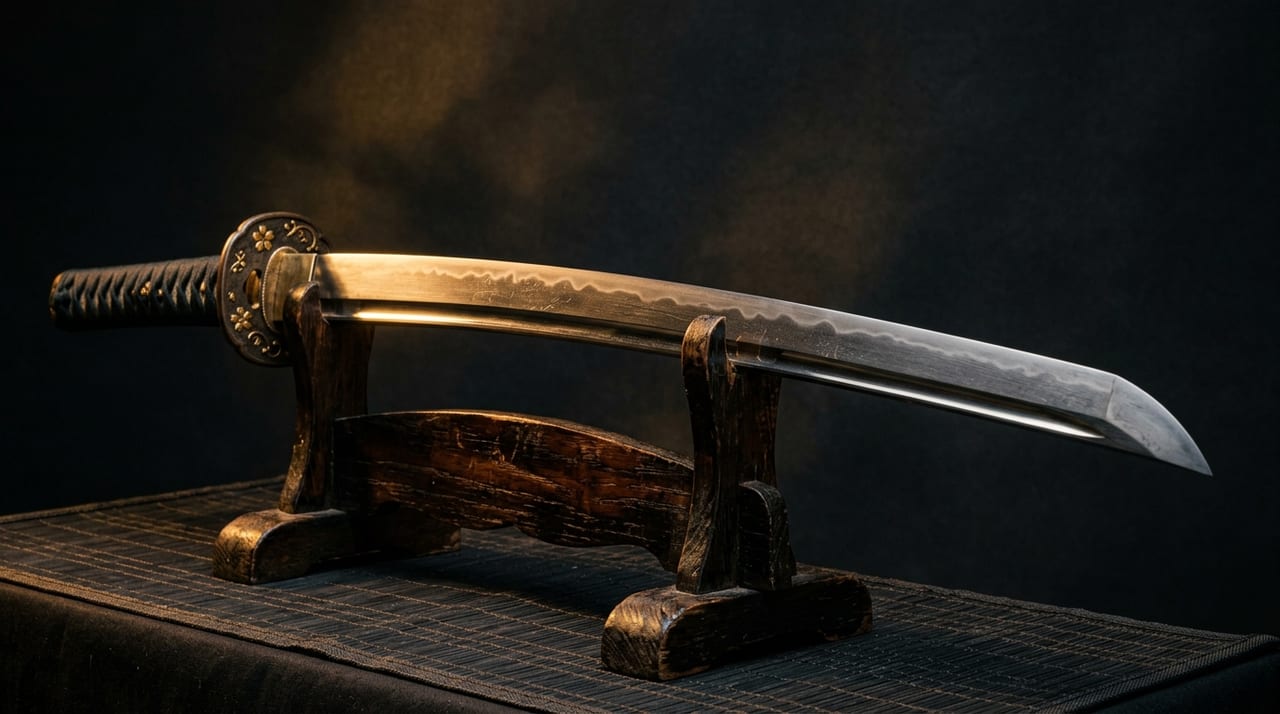
The Siege of Osaka and the Downsizing of Blades — How Combat Demands Shaped Katana Design
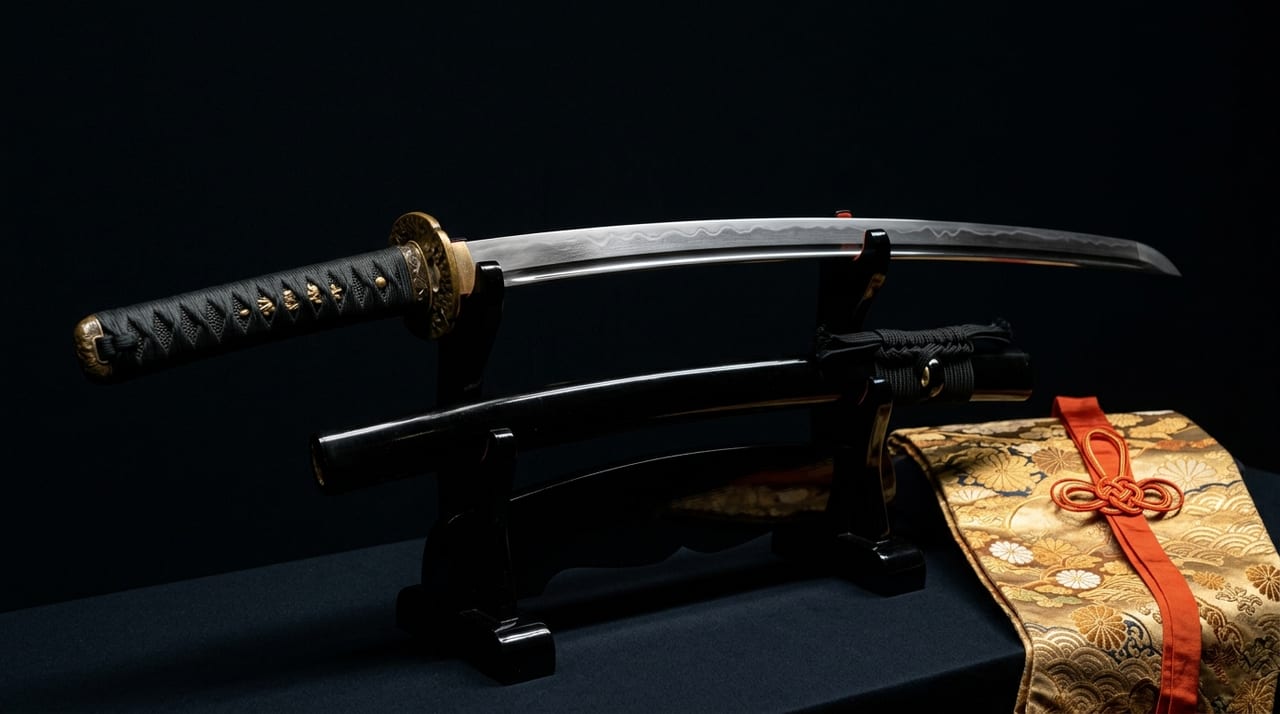 * Image is for illustrative purposes only.
Table of Contents
The Sengoku Era's Final Great Battle—What the Osaka Campaign Asked of the Sword
The Osaka Campaign, which began with the Winter Campaign in the 19th year of Keicho (1614) and concluded with the Summer Campaign in the following 20th year of Keicho (1615), was the final large-scale military clash that brought the Sengoku era to a close. In this battle, where the shogunate forces led by Tokugawa Ieyasu clashed with the Osaka side championing Toyotomi Hideyori, hundreds of thousands of soldiers were mobilized from throughout the country, and the flames of war spread across vast regions centered on Osaka Castle. More than a decade had passed since the Battle of Sekigahara, and many samurai had distanced themselves from actual combat. This collision, carried out in such circumstances, was imprinted deeply into the bodies and memories of the samurai as truly the "final real battle."
What this battle left behind extended far beyond mere political settlement. The insights gained from the swords carried by participating soldiers and actually used in combat would bring about undeniable changes to subsequent sword manufacturing and market direction. When the extreme conditions of war fed back into the artisans' design philosophy—the Osaka Campaign occupies an important position in sword history as a paradigmatic example of this.
The Background of Long-Bladed Uchigatana Favored in the Late Sengoku Era
From the late Sengoku era through the Azuchi-Momoyama period, when the major shift from tachi to uchigatana became established, the standard blade length of uchigatana was around 2 shaku (approximately 60 cm), or often exceeding this measurement. In this era, where large-scale battles in open fields were the primary theater, there was the practical advantage that the longer the blade, the greater the distance one could maintain from an opponent. In tactics designed for slashing attacks from horseback, longer swords were considered overwhelmingly advantageous.
Given the fierce practical combat experience in the Toyotomi regime's continental expeditions (Bunroku and Keicho campaigns), there was strong demand for long swords that combined durability and lethal power. Smiths also devoted their efforts to crafting long, robust uchigatana in response to the demands of the samurai class. The swords of this era were designed purely as tools for close-quarters combat in open fields, and one could say that the sense of "length = superiority" was widely shared throughout samurai society.
Even after Toyotomi Hideyoshi achieved unification of the realm, this tendency did not change significantly. The sense of sword dimensions that took actual combat into account continued, rooted in the samurai culture of the Azuchi-Momoyama period where the air of the Sengoku era still lingered.
The Limits of Long Swords Revealed by Castle Siege Warfare
What fundamentally distinguished the Osaka Campaign from conventional battles was that its fighting unfolded within and around the enormous fortress of Osaka Castle. In the Winter Campaign, there were offensive and defensive battles around various satellite castles and fortified perimeters; in the Summer Campaign, intense urban-warfare-like close-quarters combat unfolded both inside and outside the castle. Narrow corridors within the castle, close-quarters fighting around stone walls, moats and defensive structures laid out in all directions—within such complex structures, blade length became a hindrance rather than an asset.
While long swords were advantageous in open fields, they could not be swung freely in low-ceilinged interiors or crowded sections of castle compounds. The longer the blade, the more its full swing would be constrained once confined to a narrow space, potentially creating fatal openings. Conversely, wakizashi and short-bladed uchigatana were suited to quick thrusts and parries in confined spaces and are thought to have functioned surprisingly effectively in the special environment of castle siege warfare.
This experience remained as an intense practical realization for the soldiers. The sense of "long-sword superiority" that had prevailed since the Sengoku era was greatly shaken by the actual experience of castle siege warfare. This knowledge shared by hundreds of thousands of soldiers was imprinted in the memory of surviving samurai and would eventually function as feedback to the market.
Battle Memory Drives the Sword Market—Blade Shortening as a Rational Choice
In the early Edo period, after the Osaka Campaign concluded and unified rule by the Tokugawa shogunate was established, clear signs of change began appearing in the sword market. The overall trend in blade length of uchigatana began shifting from the previous 2-shaku standard to somewhat shorter measurements. This change was not merely a shift in fashion.
It was the result of samurai with actual combat experience approaching the market with a clear conception of what dimensions made swords truly practical. Receiving strong signals from the demand side, sword smiths shifted their manufacturing approach to respond. The shortening trend of this period can be seen as evidence that practical knowledge gained from the final great war had taken root deep within sword culture.
At the same time, smiths faced the technical challenge of how to maintain cutting performance and strength while reducing blade length. If blade length decreased, both reach and power would naturally decline. In response to this problem, smiths mobilized all the accumulated techniques of their various schools.
- Adjustment of blade spine thickness and material distribution
- Shinogi ridge shape
- Composition of hamon patterns
The reduction in form was not merely a simple "downsizing," but a fundamental reconstruction of design philosophy itself to extract maximum performance from shorter blades. The fact that early Edo smiths directly confronted this challenge led to the emergence of work that would be highly valued by later generations.
Transformation to Formal Regalia and Stabilization of Form
The movement toward convergence of sword form to shorter lengths was further reinforced as the Edo period progressed by forces distinct from actual combat. As warfare receded, the sword rapidly increased in significance as part of formal regalia indicating samurai status. Wearing a sword was a samurai prerogative, and how one wore one's sword served as a social expression of one's rank and refinement.
Excessively long swords hindered movement indoors and were considered unsuitable from the perspective of samurai etiquette. Dimensions that afforded portability and aesthetically balanced beauty became established as a standard of social refinement.
The standard form of uchigatana established during the Edo period through this process, while taking as its starting point the practical lessons inscribed by the final great war of the Osaka Campaign, was refined within the requirements of formal beauty and portability demanded by the peaceful samurai society that followed. One might say that practical insights and the demands of ritual order complemented each other while guiding sword form in a particular direction.
The History Told by Sword Dimensions—From a Collector's Perspective
Today, when appraising swords made around the time of the Osaka Campaign, the numerical value of blade length becomes an important clue for deciphering the historical context to which that sword belongs. By keeping the following progression in mind, one can achieve a more three-dimensional understanding of the historical character borne by any single sword.
- Late-Sengoku long-bladed uchigatana
- Shortening trend following the Osaka Campaign
- Stabilization of form from early through mid-Edo period
The numerical values of details such as blade spine thickness, material distribution, and curvature also reflect the design philosophy of the era in which the sword was made. Between the robust construction intended for open-field battles in the late Sengoku era and the refined design of the early Edo period based on lessons from castle siege warfare, even within the same category of "uchigatana," clear differences may appear in the proportions of various parts of the blade. Paying attention to such differences is one of the great pleasures of sword research.
The Osaka Campaign and the evolution of blade form vividly demonstrate how practical insights born from the extreme conditions of war can alter the direction of an entire craft culture. When one turns one's attention to the dimensions of a single sword in one's collection, there dwells within it the silent testimony of people who lived through a turning point in Japanese history.